
具体描述
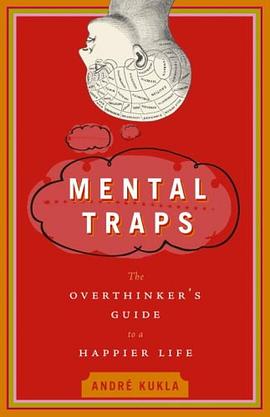
Mental Traps is André Kukla’s immensely enjoyable and down-to-earth catalogue of the everyday blunders we make in our thinking habits, how these traps can affect our entire lives, and what we can do about it.
Ever find yourself putting off even relatively minor tasks because of the many other little jobs that you’d have to tackle first? Or spending far too much time worrying about things you can’t change? Or living for the future, not for today? Truth is, we all do — and we all recognize that sometimes our ways of thinking just aren’t productive. When it comes to our daily lives, we often laugh off habits like procrastination as being human nature and just resolve to approach things differently next time. Or, when the issues facing us are enormous or traumatic, we might recognize that we’re dwelling on our problems, or otherwise spending our time on fruitless thinking, but have no idea how to get out of that miserable rut. Either way, it takes up a lot of our mental energy.
But as André Kukla makes clear in Mental Traps , what we don’t recognize — or at least admit to ourselves! — is how thinking unproductively about even the smallest elements of everyday life can mount up and keep us from being happy, from living life to the fullest. For what appear to be minor lapses are actually “habitual modes of thinking that disturb our ease, waste enormous amounts of our time, and deplete our energy without accomplishing anything of value for us or anyone else.” So whether we’re dealing with how to attain our major career goals or deciding when to serve the salad course at dinnertime, the end results can be much the same: readily identifiable patterns of wasteful thinking. These, in Kukla’s view, are the mental traps.
In his introduction, Kukla compares his method to that of naturalist’s guides, which take a very matter-of-fact approach to providing practical information. He then outlines eleven common mental traps, such as persistence, fixation, acceleration, procrastination and regulation. Devoting a chapter to each, he provides simple examples to help us to identify mental traps in our own thinking — and to recognize why it would be beneficial to change our ways. Our anxiety, our dissatisfaction, our disappointment — these are often the consequences of thinking about the world the wrong way. And it’s in the parallels he draws between the major and minor events of our lives that he truly brings his point home: How is refusing to eat olives like toiling at a job that has long ago lost all satisfaction? How is arriving at the airport too early a symptom of a life never fully lived? Again, what can seem to be a very inconsequential habit can actually signal bigger, more detrimental problems in our ways of thinking.
Kukla’s goal — one that we should share, in the end — is to help us realize how much more enjoyable our lives would be if we were a little more attentive to our thought processes. Just as Buddhism, from which the author has drawn many of his ideas, teaches that we should perform all of our acts mindfully, Kukla suggests that we make a conscious effort to step back, clear our minds, and simply observe how our thoughts develop. By doing so, we will begin to recognize unproductive patterns in our own thinking, and then we can try to avoid them. Ultimately, Kukla hopes that Mental Traps will help readers move towards what he calls a “liberated consciousness” — a state in which we no longer allow mental traps to inhibit our experiences. From having more energy to being able to act impulsively, we’d realize the benefits of living in the moment and feel truly free.
From the Hardcover edition.
作者简介
目录信息
读后感
用户评价
这本书在结构上的安排,展现出一种近乎建筑学上的精妙布局。它不是简单的章节堆砌,而更像是一套层层递进的理论体系。开篇部分似乎在建立基础框架,那些定义和基本假设,用词极其精确,如同奠基石一般坚固。随着章节的深入,你会发现后面的论点无一不是建立在前面章节已经铺设好的轨道之上。最让我印象深刻的是,作者在处理跨章节的引用和呼应时,运用了非常高超的技巧。他不会生硬地重复前文的观点,而是通过引入新的视角或反例,来反向印证早先提出的概念的普适性或局限性。这种螺旋上升的结构,使得阅读体验非常连贯且富有节奏感。我发现自己常常在读到某一章节的结论时,会不由自主地想起前几章某个不起眼的例子,然后猛然明白原来那早有伏笔。这绝非偶然,而是作者精心设计的阅读旅程,引导你一步步走向他想要你到达的那个复杂心智模型的全貌。如果只是零散地阅读片段,恐怕会错过理解全貌的关键。
评分这本书的论证过程,其严密性简直令人叹为观止。它不像某些励志书籍那样,仅仅提供一些模棱两可的建议,而是深入到行为和思维的底层逻辑进行解剖。我特别欣赏作者在提出一个观点后,是如何极其审慎地去考察其反面论点和潜在的反对意见的。他似乎总是在自己的论述中设置“思想的陷阱”,然后引导读者如何绕过这些陷阱。例如,在讨论“群体决策的非理性”时,他不仅分析了群体可能出现的偏差,还提前预设了“个体理性叠加必然导向群体理性”这种看似合理的反驳,然后用一系列精巧的实验结果来击碎这种直觉上的认知。这种亦正亦反的辩论方式,极大地提升了理论的说服力。读完之后,你很难再轻易接受一个未经充分检验的“常识”,因为你已经被训练去寻找论证链条中最薄弱的环节。这种思维的“防腐蚀”能力,是这本书带给我最持久的收获之一,它教会我如何像一个批判性的辩手一样审视接收到的每一个信息。
评分这本书的深度,让我不得不承认,它属于那种需要反复品读的经典之列。我第一次通读下来后,感觉像是走过了一片信息密度极高的森林,虽然领略了整体的壮阔,但很多细节可能在匆忙中被遗漏了。于是,我尝试着带着不同的关注点进行第二次阅读,比如,第二次我只关注作者对“情感卷入”在决策过程中影响的描述,第三次则专注于他对于“认知负荷管理”的建议。令人惊讶的是,每一次重读,都能发现新的层次和先前未曾注意到的细微之处。书中的一些概念,比如某种特定的思维定式,第一次读时觉得抽象,但结合第二次阅读时对具体案例的深入分析,突然间就变得鲜活起来,并开始在自己的日常生活中捕捉到它们的踪影。这说明这本书的内容具有极强的生命力和迁移性。它不是那种读完就束之高阁的娱乐品,而更像是一套不断可以激活和更新的认知工具箱,每一次启用,都能带来对自身思维模式更深一层的洞察。这种经得起时间考验和多角度审视的文本,才算得上是真正的佳作。
评分这本书的封面设计相当引人注目,那种深邃的蓝色调与中央那个仿佛被困住的抽象符号形成了强烈的视觉冲击,让人在书店里一眼就能被吸引住。我拿起它,首先注意到的是它的纸张质感,挺考究的,拿在手里沉甸甸的,不像是那种轻飘飘的快餐读物,这立刻给了我一种“这是一本值得认真对待的书”的预感。内页的排版也很舒服,字号适中,行距合理,即便需要长时间阅读,眼睛也不会感到太快疲劳。装帧的工艺也透露着一种匠心,书脊的粘合处理得非常牢固,可以完全平摊开来,方便在阅读时做笔记或者随时查阅。我当时在书店里翻阅了几页,看到作者的行文风格,发现他似乎非常注重逻辑的严谨性,每一句话都像是在精心构建一个论证的基石,而不是那种随心所欲的抒发。这种对细节的关注,从书籍的物理形态上就已经显现出来了,让人对内容抱有极高的期待,仿佛拿起的不只是一本书,而是一件精心打磨的工具。我尤其欣赏封面封底设计师对于留白的处理,那种恰到好处的疏密对比,让整体看起来既有深度又不失现代感,绝对是那种可以长期摆在书架上,时不时拿出来把玩的类型。
评分这本书的语言风格,初看之下,可能会让一些习惯了通俗易懂叙事的读者感到一丝门槛。作者似乎并没有刻意去迎合大众的阅读习惯,而是选择了一种更为古典、更偏向于学术论证的表达方式。句式往往比较长,充满了各种从句和复杂的修饰语,这要求读者必须全神贯注地去拆解每一个句子的核心含义。我记得翻到其中一章关于“认知的惰性”的讨论时,作者引用了几个相当晦涩难懂的心理学实验案例,他没有用大众化的比喻来解释,而是直接呈现了实验的原始数据和复杂的统计分析结果。这使得阅读过程变成了一种主动的智力挑战,你不能指望作者牵着你的手走完全程,而是必须自己去填补那些逻辑上的跳跃点。坦白说,我一开始有点吃力,读得很慢,时不时需要回头重读好几遍才能确信自己完全理解了作者的意图。但这正是这本书的魅力所在——它尊重读者的智力,鼓励你进行更深层次的思考,而不是提供廉价的“顿悟”。这种不妥协的叙事态度,反而建立了一种独特的权威感和信服力,让你觉得每一次读懂,都是一次真正的智力上的胜利。
评分 评分 评分 评分 评分