
具体描述
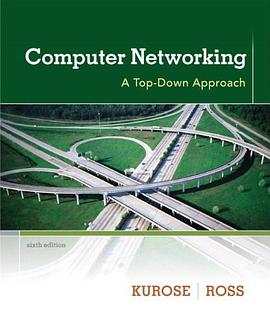
Computer Networking continues with an early emphasis on application-layer paradigms and application programming interfaces (the top layer), encouraging a hands-on experience with protocols and networking concepts, before working down the protocol stack to more abstract layers.
This book has become the dominant book for this course because of the authors’ reputations, the precision of explanation, the quality of the art program, and the value of their own supplements.
Visit the authors’ blog for information and resources to discuss the newest edition, as well as valuable insights, teaching tips, and discussion about the field of Computer Networking http://kuroseross.com
作者简介
Jim Kurose
Jim Kurose is a Distinguished University Professor of Computer Science at the University of Massachusetts, Amherst.
Dr. Kurose has received a number of recognitions for his educational activities including Outstanding Teacher Awards from the National Technological University (eight times), the University of Massachusetts, and the Northeast Association of Graduate Schools. He received the IEEE Taylor
Booth Education Medal and was recognized for his leadership of Massachusetts’ Commonwealth Information Technology Initiative. He has been the recipient of a GE Fellowship, an IBM Faculty Development Award, and a Lilly Teaching Fellowship.
Dr. Kurose is a former Editor-in-Chief of IEEE Transactions on Communications and of IEEE/ACM Transactions on Networking. He has been active in the program committees for IEEE Infocom, ACM SIGCOMM, ACM Internet Measurement Conference, and ACM SIGMETRICS for a number of years and has served as Technical Program Co-Chair for those conferences. He is a Fellow of the IEEE and the ACM. His research interests include network protocols and architecture, network measurement, sensor networks, multimedia communication, and modeling and performance evaluation. He holds a PhD in Computer Science from Columbia University.
Keith RossKeith Ross
Keith Ross is the Leonard J. Shustek Chair Professor and Head of the Computer Science Department at Polytechnic Institute of NYU. Before joining NYU-Poly in 2003, he was a professor at the University of Pennsylvania (13 years) and a professor at Eurecom Institute (5 years). He received a B.S.E.E from Tufts University, a M.S.E.E. from Columbia University, and a Ph.D. in Computer and Control Engineering from The University of Michigan. Keith Ross is also the founder and original CEO of Wimba, which develops online multimedia applications for e-learning and was acquired by Blackboard in 2010.
Professor Ross’s research interests are in security and privacy, social networks, peer-to-peer networking, Internet measurement, video streaming, content distribution networks, and stochastic modeling. He is an IEEE Fellow, recipient of the Infocom 2009 Best Paper Award, and recipient of 2011 and 2008 Best Paper Awards for Multimedia Communications (awarded by IEEE Communications Society). He has served on numerous journal editorial boards and conference program committees, including IEEE/ACM Transactions on Networking, ACM SIGCOMM, ACM CoNext, and ACM Internet Measurement Conference. He also has served as an advisor to the Federal Trade Commission on P2P file sharing.
目录信息
1.1 What Is the Internet? 2
1.1.1 A Nuts-and-Bolts Description 2
1.1.2 A Services Description 5
1.1.3 What Is a Protocol? 7
1.2 The Network Edge 9
1.2.1 Access Networks 12
1.2.3 Physical Media 18
1.3 The Network Core 22
1.3.1 Packet Switching 22
1.3.2 Circuit Switching 27
1.3.3 A Network of Networks 32
1.4 Delay, Loss, and Throughput in Packet-Switched Networks 35
1.4.1 Overview of Delay in Packet-Switched Networks 35
1.4.2 Queuing Delay and Packet Loss 39
1.4.3 End-to-End Delay 42
1.4.4 Throughput in Computer Networks 44
1.5 Protocol Layers and Their Service Models 47
1.5.1 Layered Architecture 47
1.5.2 Encapsulation 53
1.6 Networks Under Attack 55
1.7 History of Computer Networking and the Internet 60
1.7.1 The Development of Packet Switching: 1961—1972 60
1.7.2 Proprietary Networks and Internetworking: 1972—1980 62
1.7.3 A Proliferation of Networks: 1980—1990 63
1.7.4 The Internet Explosion: The 1990s 64
1.7.5 The New Millennium 65
1.8 Summary 66
Homework Problems and Questions 68
Problems 70
Wireshark Lab 78
Interview: Leonard Kleinrock 80
Chapter 2 Application Layer 83
2.1 Principles of Network Applications 84
2.1.1 Network Application Architectures 86
2.1.2 Processes Communicating 88
2.1.3 Transport Services Available to Applications 91
2.1.4 Transport Services Provided by the Internet 93
2.1.5 Application-Layer Protocols 96
2.1.6 Network Applications Covered in This Book 97
2.2 The Web and HTTP 98
2.2.1 Overview of HTTP 98
2.2.2 Non-Persistent and Persistent Connections 100
2.2.3 HTTP Message Format 103
2.2.4 User-Server Interaction: Cookies 108
2.2.5 Web Caching 110
2.2.6 The Conditional GET 114
2.3 File Transfer: FTP 116
2.3.1 FTP Commands and Replies 118
2.4 Electronic Mail in the Internet 118
2.4.1 SMTP 121
2.4.2 Comparison with HTTP 124
2.4.3 Mail Message Format 125
2.4.4 Mail Access Protocols 125
2.5 DNS–The Internet’s Directory Service 130
2.5.1 Services Provided by DNS 131
2.5.2 Overview of How DNS Works 133
2.5.3 DNS Records and Messages 139
2.6 Peer-to-Peer Applications 144
2.6.1 P2P File Distribution 145
2.6.2 Distributed Hash Tables (DHTs) 151
2.6.3 Case Study: P2P Internet Telephony with Skype 158
2.7 Socket Programming: Creating Network Applications 156
2.7.1 Socket Programming with UDP 157
2.7.2 Socket Programming with TCP 163
2.8 Summary 168
Homework Problems and Questions 169
Problems 171
Socket Programming Assignments 179
Wireshark Labs 181
Interview: Bram Cohen 182
Chapter 3 Transport Layer 185
3.1 Introduction and Transport-Layer Services 186
3.1.1 Relationship Between Transport and Network Layers 186
3.1.2 Overview of the Transport Layer in the Internet 189
3.2 Multiplexing and Demultiplexing 191
3.3 Connectionless Transport: UDP 198
3.3.1 UDP Segment Structure 202
3.3.2 UDP Checksum 202
3.4 Principles of Reliable Data Transfer 204
3.4.1 Building a Reliable Data Transfer Protocol 206
3.4.2 Pipelined Reliable Data Transfer Protocols 215
3.4.3 Go-Back-N (GBN) 218
3.4.4 Selective Repeat (SR) 223
3.5 Connection-Oriented Transport: TCP 230
3.5.1 The TCP Connection 231
3.5.2 TCP Segment Structure 233
3.5.3 Round-Trip Time Estimation and Timeout 238
3.5.4 Reliable Data Transfer 242
3.5.5 Flow Control 250
3.5.6 TCP Connection Management 252
3.6 Principles of Congestion Control 259
3.6.1 The Causes and the Costs of Congestion 259
3.6.2 Approaches to Congestion Control 265
3.6.3 Network-Assisted Congestion-Control Example:
ATM ABR Congestion Control 266
3.7 TCP Congestion Control 269
3.7.1 Fairness 279
3.8 Summary 283
Homework Problems and Questions 285
Problems 288
Programming Assignments 300
Wireshark Lab: Exploring TCP 301
Wireshark Lab: Exploring UDP 301
Interview: Sally Floyd 302
Chapter 4 The Network Layer 305
4.1 Introduction 306
4.1.1 Forwarding and Routing 308
4.1.2 Network Service Models 310
4.2 Virtual Circuit and Datagram Networks 313
4.2.1 Virtual-Circuit Networks 314
4.2.2 Datagram Networks 317
4.2.3 Origins of VC and Datagram Networks 319
4.3 What’s Inside a Router? 320
4.3.1 Input Processing 322
4.3.2 Switching 324
4.3.3 Output Processing 326
4.3.4 Where Does Queuing Occur? 327
4.3.5 The Routing Control Plane 331
4.4 The Internet Protocol (IP): Forwarding and Addressing in the Internet 331
4.4.1 Datagram Format 332
4.4.2 IPv4 Addressing 338
4.4.3 Internet Control Message Protocol (ICMP) 353
4.4.4 IPv6 356
4.4.5 A Brief Introduction into IP Security 362
4.5 Routing Algorithms 363
4.5.1 The Link-State (LS) Routing Algorithm 366
4.5.2 The Distance-Vector (DV) Routing Algorithm 371
4.5.3 Hierarchical Routing 379
4.6 Routing in the Internet 383
4.6.1 Intra-AS Routing in the Internet: RIP 384
4.6.2 Intra-AS Routing in the Internet: OSPF 388
4.6.3 Inter-AS Routing: BGP 390
4.7 Broadcast and Multicast Routing 399
4.7.1 Broadcast Routing Algorithms 400
4.7.2 Multicast 405
4.8 Summary 412
Homework Problems and Questions 413
Problems 416
Socket Programming Assignment 428
Programming Assignment 429
Wireshark Labs 430
Interview: Vinton G. Cerf 431
Chapter 5 The Link Layer: Links, Access Networks, and LANs 433
5.1 Introduction to the Link Layer 434
5.1.1 The Services Provided by the Link Layer 436
5.1.2 Where Is the Link Layer Implemented? 437
5.2 Error-Detection and -Correction Techniques 438
5.2.1 Parity Checks 440
5.2.2 Checksumming Methods 442
5.2.3 Cyclic Redundancy Check (CRC) 443
5.3 Multiple Access Links and Protocols 445
5.3.1 Channel Partitioning Protocols 448
5.3.2 Random Access Protocols 449
5.3.3 Taking-Turns Protocols 459
5.3.4 DOCSIS: The Link-Layer Protocol for Cable Internet Access 460
5.4 Switched Local Area Networks 461
5.4.1 Link-Layer Addressing and ARP 462
5.4.2 Ethernet 469
5.4.3 Link-Layer Switches 476
5.4.4 Virtual Local Area Networks (VLANs) 482
5.5 Link Virtualization: A Network as a Link Layer 486
5.5.1 Multiprotocol Label Switching (MPLS) 487
5.6 Data Center Networking 490
5.7 Retrospective: A Day in the Life of a Web Page Request 495
5.7.1 Getting Started: DHCP, UDP, IP, and Ethernet 495
5.7.2 Still Getting Started: DNS, ARP 497
5.7.3 Still Getting Started: Intra-Domain Routing to the DNS Server 498
5.7.4 Web Client-Server Interaction: TCP and HTTP 499
5.8 Summary 500
Homework Problems and Questions 502
Problems 503
Wireshark Labs 510
Interview: Simon S. Lam 511
Chapter 6 Wireless and Mobile Networks 513
6.1 Introduction 514
6.2 Wireless Links and Network Characteristics 519
6.2.1 CDMA 522
6.3 WiFi: 802.11 Wireless LANs 526
6.3.1 The 802.11 Architecture 527
6.3.2 The 802.11 MAC Protocol 531
6.3.3 The IEEE 802.11 Frame 537
6.3.4 Mobility in the Same IP Subnet 541
6.3.5 Advanced Features in 802.11 542
6.3.6 Personal Area Networks: Bluetooth and Zipbee 544
6.4 Cellular Internet Access 546
6.4.1 An Overview of Cellular Network Architecture 547
6.4.2 3G Cellular Data Networks: Extending the Internet to Cellular Subscribers 550
6.4.3 On to 4G: LTE 553
6.5 Mobility Management: Principles 555
6.5.1 Addressing 557
6.5.2 Routing to a Mobile Node 559
6.6 Mobile IP 564
6.7 Managing Mobility in Cellular Networks 570
6.7.1 Routing Calls to a Mobile User 571
6.7.2 Handoffs in GSM 572
6.8 Wireless and Mobility: Impact on Higher-Layer Protocols 575
6.9 Summary 578
Homework Problems and Questions 578
Problems 580
Wireshark Labs 583
Interview: Deborah Estrin 584
Chapter 7 Multimedia Networking 587
7.1 Multimedia Networking Applications 588
7.1.1 Properties of Video 588
7.1.2 Properties of Audio 590
7.1.3 Types of Multimedia Network Applications 591
7.2 Streaming Stored Video 593
7.2.1 UDP Streaming 595
7.2.2 HTTP Streaming 596
7.2.3 Adaptive Streaming and DASH 600
7.2.4 Content Distribution Networks 602
7.2.5 Case Studies: Netflix, YouTube, and KanKan 608
7.3 Voice-over-IP 612
7.3.1 Limitations of the Best-Effort IP Service 612
7.3.2 Removing Jitter at the Receiver for Audio 614
7.3.3 Recovering from Packet Loss 618
7.3.4 Case Study: Internet Telephony with Skype 621
7.4 Protocols for Real-Time Interactive Applications 623
7.4.1 RTP 623
7.4.2 SIP 626
7.5 Network Support for Multimedia 632
7.5.1 Dimensioning Best-Effort Networks 634
7.5.2 Providing Multiple Classes of Service 636
7.5.3 Diffserv 648
7.5.4 Per-Connection Quality-of-Service (QoS) Guarantees:
Resource Reservation and Call Admission 652
7.6 Summary 655
Homework Problems and Questions 656
Problems 658
Programming Assignment 666
Interview: Henning Schulzrinne 668
Chapter 8 Security in Computer Networks 671
8.1 What Is Network Security? 672
8.2 Principles of Cryptography 675
8.2.1 Symmetric Key Cryptography 676
8.2.2 Public Key Encryption 683
8.3 Message Integrity and Digital Signatures 688
8.3.1 Cryptographic Hash Functions 689
8.3.2 Message Authentication Code 691
8.3.3 Digital Signatures 693
8.4 End-Point Authentication 700
8.4.1 Authentication Protocol ap1.0 700
8.4.2 Authentication Protocol ap2.0 701
8.4.3 Authentication Protocol ap3.0 701
8.4.4 Authentication Protocol ap3.1 703
8.4.5 Authentication Protocol ap4.0 703
8.5 Securing E-mail 705
8.5.1 Secure E-mail 706
8.5.2 PGP 710
8.6 Securing TCP Connections: SSL 711
8.6.1 The Big Picture 713
8.6.2 A More Complete Picture 716
8.7 Network-Layer Security: IPsec and Virtual Private Networks 718
8.7.1 IPsec and Virtual Private Networks (VPNs) 718
8.7.2 The AH and ESP Protocols 720
8.7.3 Security Associations 720
8.7.4 The IPsec Datagram 721
8.7.5 IKE: Key Management in IPsec 725
8.8 Securing Wireless LANs 726
8.8.1 Wired Equivalent Privacy (WEP) 726
8.8.2 IEEE802.11i 728
8.9 Operational Security: Firewalls and Intrusion Detection Systems 731
8.9.1 Firewalls 731
8.9.2 Intrusion Detection Systems 739
8.10 Summary 742
Homework Problems and Questions 744
Problems 746
Wireshark Lab 752
IPsec Lab 752
Interview: Steven M. Bellovin 753
Chapter 9 Network Management 755
9.1 What Is Network Management? 756
9.2 The Infrastructure for Network Management 760
9.3 The Internet-Standard Management Framework 764
9.3.1 Structure of Management Information: SMI 766
9.3.2 Management Information Base: MIB 770
9.3.3 SNMP Protocol Operations and Transport Mappings 772
9.3.4 Security and Administration 775
9.4 ASN.1 778
9.5 Conclusion 783
Homework Problems and Questions 783
Problems 784
Interview: Jennifer Rexford 786
References 789
Index 823
· · · · · · (收起)
读后感
这是我看过翻译最好的几本书之一,感觉翻译很到位,而且由于书中内容本身组织的很好,所以一路看下来真的舒服,主要是思路特别流畅(自顶向下的思路还是强烈推荐)。对于入门者来说,强烈推荐,而且书中也说了,本书希望可以讲给高中生数学水平的人也能听得懂,所以对于本课程...
评分有时候我会想,计算机科学分门别类如此之多,前端、后台、数据挖掘、神经网络、编译器、算法、机器视觉...计算机科学大概是最会发明吓唬人的词汇的领域之一了吧?当我在想成为一个顶尖程序员的时候,我到底是想让自己掌握怎样的知识,或者是具备怎样的能力呢? 一开始我觉得这...
评分——这是一篇很严肃的科研读后感 在学习《计算机网络》这本书以前,我对网络的概念是什么样的呢?最理性的描述就是一些节点和节点之间关系组成的集合(via离散数学&数据结构与算法),不过这些都是理性思维的定义啦。假设一个文科生,或者是没有学过这两门课的人,可能会说:蜘...
评分 评分我只是想告诉你,这本书有配套的公开课可以听,不评价书本身,因为还没有彻底比较过,总之,适合自己的总是最好的。 地址:http://ocw.nthu.edu.tw/ocw/index.php?page=course&cid=13& 授課老師 黃能富 清華大學資訊工程學系 特聘教授 國立清華大學資訊工程系博士 (1986)...
用户评价
《Computer Networking》这本书提供了一种非常系统化的学习路径,对于想要理解互联网运作机制的读者来说,它就像一张详尽的地图。从物理层传输介质的特性,到数据链路层的MAC地址和交换机工作原理,再到网络层的IP地址规划和路由选择,作者层层递进,将复杂的网络架构分解成易于理解的模块。我特别欣赏书中关于以太网(Ethernet)的详细讲解,它不仅解释了MAC地址的唯一性和帧结构,还深入探讨了CSMA/CD这种早期冲突检测机制,让我理解了在共享介质环境下,设备是如何避免和处理数据冲突的。此外,书中对ARP协议的解释也相当精彩,它揭示了IP地址和MAC地址之间是如何关联起来的,是网络通信中不可或缺的一环。通过这本书,我能够更好地理解为什么不同的网络设备会在不同的层面发挥作用,以及它们是如何相互协作,最终实现端到端的通信。
评分《Computer Networking》这本书的语言风格非常人性化,即便是一些非常晦涩的计算机网络概念,也被作者用浅显易懂的语言和生动的例子解释得清晰明了。我特别喜欢书中在讲解网络拥塞控制时,作者引入的“交通堵塞”的比喻,它能够非常直观地说明当网络中的数据流量过大时,数据包会发生什么情况,以及TCP协议是如何通过各种机制来缓解和避免拥塞的。这种将技术问题与生活经验联系起来的做法,极大地降低了学习的门槛,也让学习过程充满了乐趣。书中对于丢包、延迟、抖动等网络性能指标的讲解,也让我明白这些指标是如何影响我们的在线体验的,例如视频会议的流畅度、在线游戏的响应速度等。这本书不仅教授了技术知识,更传递了一种解决问题的思维方式。
评分第一次翻开《Computer Networking》这本书,我本以为会面对一堆艰涩难懂的技术术语和复杂的图表,但出乎意料的是,它以一种非常平易近人的方式展开了网络世界的画卷。作者的叙述风格就像一位经验丰富的导师,循序渐进地引导着读者,从最基础的网络模型开始,逐步深入到各个层次的细节。书中对OSI七层模型和TCP/IP四层模型的对比分析,让我对网络通信的抽象分层有了清晰的认识,理解了为什么网络设计要采用这种模块化的方式,以及每一层在整个通信链条中扮演的角色。我特别欣赏书中关于数据封装和解封装的讲解,通过生动的比喻,将不同层协议如何将数据添加或移除头部信息的过程形象化,使得原本抽象的流程变得易于理解和记忆。此外,书中对一些关键网络设备的介绍,如路由器、交换机、集线器等,也让我对它们的物理形态和在网络中的作用有了更直观的认识。它们不再是遥不可及的概念,而是构成现代信息高速公路的基石。这本书的阅读体验是流畅的,它并没有在早期就用过多的细节压垮读者,而是像剥洋葱一样,一层一层地揭示网络的奥秘,让我保持着持续的好奇心和学习的动力。
评分《Computer Networking》这本书最让我印象深刻的是其对网络安全基础的探讨。在当今信息时代,网络安全已成为一项至关重要的议题,而这本书恰恰为我们提供了一个坚实的理论基础来理解其中的挑战与应对。作者在讲解网络协议的同时,并没有回避它们可能存在的安全隐患。例如,在讨论HTTP协议时,书中详细阐述了HTTP明文传输的脆弱性,以及HTTPS如何通过SSL/TLS加密来保护数据的机密性和完整性。这种对安全问题的关注,让我意识到学习网络技术不仅仅是了解其工作原理,更要理解如何保护网络免受攻击。书中还介绍了一些基本的加密和认证机制,虽然不深入到密码学的具体算法,但足以让我明白它们在保障网络通信安全中的关键作用。对于想要在网络安全领域深耕的初学者来说,这本书提供了一个非常好的起点,它能够帮助我们理解常见的网络攻击是如何发生的,以及相应的防御措施是如何工作的,从而建立起初步的安全意识和技术理解。
评分《Computer Networking》这本书的独特之处在于,它并非一本孤立的技术手册,而是将网络技术置于更广阔的通信和计算生态系统中进行阐释。作者并没有仅仅停留在协议的层面,而是也触及了网络架构、网络管理以及网络性能优化的相关概念。例如,书中对集线器、交换机和路由器的功能区分与协同工作进行了详细的讲解,让我明白了为什么在构建不同规模的网络时,需要选择不同的设备组合。它让我理解了集线器是简单的信号放大器,而交换机则能够根据MAC地址进行转发,从而提高网络效率,而路由器则负责连接不同的网络,进行IP地址的路由。此外,书中也简要提及了网络拓扑结构(如总线型、星型、环型)对网络性能的影响,以及一些基本的网络管理协议,这些都为我提供了一个更全面的视角来理解网络世界的运作。
评分一本真正引人入胜的网络技术书籍,往往不仅仅是知识的堆砌,更是一种思维的启迪,一种深入人心的探索。在《Computer Networking》这本书中,我感受到了作者倾注的每一份心血,那种对复杂概念抽丝剥茧的耐心,以及将枯燥技术讲解得如同故事一般引人入胜的功力。从最初接触网络的概念,到如今能够较为清晰地理解TCP/IP协议栈的运作原理,这本书无疑是我学习道路上的一座重要里程碑。它并没有简单地罗列各种协议的定义和端口号,而是深入剖析了它们是如何协同工作,如何解决现实世界中的网络通信难题的。特别是关于网络层和传输层的部分,作者通过大量的图示和类比,将IP地址的分配、路由选择的逻辑、UDP的无连接特性以及TCP的可靠传输机制讲解得淋漓尽致。我甚至能够想象出数据包在网络中穿梭的景象,每一个节点的决策过程,每一个协议字段的意义,都仿佛在我眼前鲜活起来。这本书的优点在于,它并没有止步于理论的讲解,而是将理论与实践紧密结合。书中穿插的许多案例分析,让我看到了这些抽象概念在实际网络部署和故障排除中的应用。例如,在讨论DNS时,作者不仅仅解释了域名解析的过程,还模拟了在客户端无法访问网站时,如何一步步排查DNS配置问题,这种实战性的指导对于我这样希望将理论应用于实践的学习者来说,是无价的。
评分阅读《Computer Networking》这本书的过程,本身就是一次对现代通信技术的探索之旅。它以一种非常清晰的逻辑,将我们日常生活中习以为常的网络连接,其背后复杂的工程实现一一呈现。书中对TCP三次握合和四次挥手的讲解,对我来说是理解可靠传输的关键。作者用生动形象的比喻,将握手过程描绘成一次仔细的对话,确保通信双方都准备就绪,再开始数据传输,并在结束时进行有序的清理。这种严谨性让我对TCP协议的健壮性有了更深的认识。同时,书中也对比了UDP协议的简单高效,解释了它在实时通信和DNS查询等场景中的优势,以及它牺牲可靠性换来的速度提升。这种对不同协议特性和适用场景的深入分析,让我能够根据具体需求选择最合适的通信方式,这对于未来的网络应用开发和设计是极其重要的。
评分不得不说,《Computer Networking》这本书的排版和图示设计也为我的阅读体验加分不少。书中的插图清晰、准确,能够非常有效地辅助理解复杂的网络拓扑和协议流程。例如,书中用于演示数据封装和解封装过程的图示,就比单纯的文字描述要直观得多。作者在章节安排上也充分考虑了读者的学习曲线,从最基础的概念开始,循序渐进地引入更高级的主题,使得学习过程既系统又不会过于突兀。我特别欣赏书中对于一些关键协议(如HTTP, FTP, SMTP)的详细解析,这些协议直接关系到我们日常的网络应用,了解它们的原理,能够让我们更深入地理解互联网是如何工作的。总而言之,这本书是一部内容扎实、讲解清晰、排版精美的网络技术入门佳作,强烈推荐给所有对计算机网络感兴趣的读者。
评分一本好的技术书籍,应该能够点燃读者的好奇心,并提供清晰的路径去满足这种好奇。《Computer Networking》无疑做到了这一点。这本书并没有仅仅停留在理论层面,而是通过大量的实际应用场景来阐释网络概念。例如,在讲解IP路由时,作者不仅仅介绍了路由算法的原理,还引用了现实世界中互联网路由是如何选择路径的例子,让我明白了为什么网络流量不会总是走最短的物理距离,而是会根据网络拥塞情况和路由策略动态调整。书中的一些网络命令(如ping, traceroute)的使用示例,也让我能够动手去验证书中的理论,这种理论与实践的结合,大大增强了我的学习效率和对知识的掌握程度。我尤其喜欢书中关于网络故障排除的部分,它教会了我如何像侦探一样,利用各种工具和方法,逐步定位和解决网络问题。这让我觉得学习网络技术不再是死记硬背,而是解决实际问题的艺术。
评分在我翻阅《Computer Networking》之前,我对“云”的概念总是有种模糊的认知,以为它仅仅是服务器的集合。但这本书通过讲解网络连接的各个环节,让我理解了“云”是如何通过强大的网络基础设施支撑起来的。从数据中心内部的局域网连接,到通过互联网进行跨区域的数据传输,再到用户如何通过各种终端设备接入云服务,每一个环节都离不开书中详细介绍的网络技术。我尤其对书中关于无线网络(Wi-Fi)的章节印象深刻,它解释了无线信号的传播原理、频段的使用以及安全认证机制,让我明白了为什么我们在使用Wi-Fi时需要连接到特定的网络,以及如何确保无线通信的私密性。这本书的价值在于,它能够将这些抽象的技术概念,与我们日常生活中所使用的各种设备和服务联系起来,从而让我们更深刻地理解现代信息社会的基石。
评分从上往下说才是入门王道!以前从下网上学看的云里雾里的,根本不知道为啥要有这么些个东西
评分application layer那块讲得很好
评分WEB-LIFE
评分application layer那块讲得很好
评分拜一个 不错