
具体描述
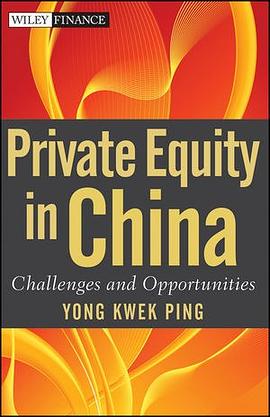
Learn valuable lessons from the newly successful private equity players in China and explore the challenges and opportunities offered in Chinese markets
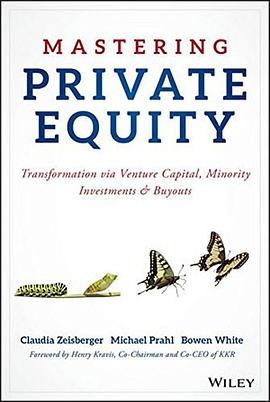
The first book to deal with private equity finance in China, Private Equity in China: Challenges and Opportunities provides much-needed guidance on an investment concept that has so far proved elusive in Asia. Focusing on the opportunities that the Chinese finance market offers to private equity firms, the book shows how these firms can strategically position themselves in order to maximize success in this new marketplace.
Private Equity in China includes in-depth case studies illustrating both successful and failed ventures by private equity firms operating in China, outlining the challenges faced by private equity firms in setting up new funds. It contains a collection of valuable experience and insights about acquiring companies and turning them around essential for any firm currently operating in, or considering entering, the Chinese market.
•Discusses the challenges faced by private equity firms in China including setting up the initial fund, fund raising, deal sourcing, deal execution, and monitoring and exit strategies
•Provides key insights drawn from keen observations and knowledge of the more mature private equity market in Western countries, analyzing the way forward for the Chinese private equity industry
•Discusses the role of renminbi-denominated funds in the development of the private equity industry in China
Breaking new ground in exploring and explaining the private equity market in China, the book offers incredible new insight into how equity companies can thrive in the Chinese marketplace.
作者简介
YONG KWEK PING has more than ten years of private equity investment experience in China. Kwek Ping started his first USD private equity China-focused growth fund in 2001 and has since made more than thirty investments in different cities in China across various industries, including manufacturing, mining, energy, food and beverage, and the retail sector. Kwek Ping has also planned and executed many successful exits through trade sales and pre-IPO transactions. Kwek Ping launched his first Chinese RMB private equity growth fund in 2010 with a total of USD and RMB fund size of more than US$3.0 billion under management. Kwek Ping's track record is well recognized, and he is frequently invited to speak at many international conferences and summits. Kwek Ping also teaches private equity courses at the Singapore Management University and is a Senior Fellow of the Wharton School, University of Pennsylvania, USA.
目录信息
Acknowledgments xvii
CHAPTER 1 Private Equity: An Introduction 1
Overview 1
Stages of Development of a Company 2
Differences between Private Equity and Venture Capital 5
Differences between Private Equity Investments and Corporate Mergers and Acquisitions 6
Inventis Private Equity Model 8
Structure of a Private Equity Fund 11
General Partners 11
Limited Partners 12
Investment Committee/Advisors 12
Professionals 12
Private Equity Investment Process 13
Planning, Fund-Raising, and Deal Sourcing 14
Due Diligence 16
Deal Structuring 18
Portfolio Management 21
Exit Strategies 24
CHAPTER 2 Overview of the Political, Macroeconomic, and Financial Landscape in China 33
Overview 33
Regulatory Environment 35
Chinese Government Agencies and Their Relevance to Private Equity 37
China’s Macroeconomic Conditions and Trends 45
Macroeconomic Condition 1: Inflation 48
Macroeconomic Condition 2: Widening Income Disparity 49
Macroeconomic Condition 3: Accelerated Aging Population Structure 50
Macroeconomic Trend 1: Increasing Urbanization 51
Macroeconomic Trend 2: Westward Shift in Industrialization and Development 53
Macroeconomic Trend 3: Strong Growth in Domestic Consumption 54
Macroeconomic Trend 4: Shift Toward Value-Added Industries 56
China’s Financial Markets 57
Key Phases of Developments in China’s Capital Markets 58
China’s Equity Markets 62
Foreign Listings on Chinese Exchanges 65
China’s Credit Market 67
Trust Financing 72
China’s Futures Markets: Commodity Exchanges and Derivatives Exchanges 73
Summary 75
CHAPTER 3 Private Equity in China 77
Overview 77
Key Market Trends and Developments 79
Private Minority Placement Quadrant 81
Private Majority Placement Quadrant 82
PIPE Minority Deals Quadrant 83
Private Equity Funds in China 97
Foreign-Owned Private Equity Funds (FOPE) 97
Chinese-Owned Private Equity Funds (COPE) 99
State-Owned Industrial Private Equity Funds (SOPE) 100
Hybrid Foreign/Chinese USD and RMB Private Equity Fund (HOPE) 101
Private Equity Investment Structures in China 102
Red Chip Structure or Round-Trip Investment 102
Onshore Structures 108
Leveraged Buyouts 112
Valuation Adjustment Mechanism 114
VAM in China’s Private Equity Industry 114
Financial Measures 116
Non-Financial Redemption Measures and Stock Offerings 117
Stock Offering: Expiration of VAM Agreement 119
Challenges of VAM 121
Exit Strategies for Private Equity Investment in China 121
Initial Public Offerings 122
Initial Public Offerings in Domestic Markets 125
Initial Public Offerings in Overseas Markets 129
Trade Sales 130
Secondary Sales 130
Leveraged Recapitalization/Distribution of Dividend 131
Benefits of Private Equity for China 132
The Case for Demutualization of Chinese Stock Exchanges through Private Equity Investments 136
CHAPTER 4 Renminbi Private Equity Fund 137
Overview 137
Setting Up and Fund-Raising in China 138
Investing in China 142
Exit Options for the RMB Fund 143
The Renminbi Private Equity Fund 144
Types of RMB Funds 145
Domestic Limited Partners 149
Private Equity Regulations and Incentives 159
RMB Funds’ Edge in Investing in China 160
Challenges and Opportunities for FOPE-RMB Funds 161
The Future of Domestic Limited Partners 162
Qualifi ed Foreign Limited Partnership Pilot Program 163
Management of Hybrid Funds 166
Onshore Legal Structures of RMB Funds 171
Restrictions for Foreign-Invested Partnerships (FIPs) 175
Treatment of FOPE-RMB Funds: Domestic or Foreign? 176
Exit Options for RMB Funds 177
Domestic Listings on Chinese Stock Exchanges 178
Private Equity Secondary Markets in China 179
China’s Domestic Limited Partners 180
Impacts of RMB Convertibility on RMB Private Equity Funds 181
RMB Private Equity Outbound Investments 182
CHAPTER 5 Investment Opportunities for Private Equity in China 187
Overview 187
Foreign Acquisition and National Security Review 189
China’s Five-Year Plan for National Economic and Social Development 191
China’s Seven Emerging Strategic Industries 195
Energy Saving and Environmental Protection 199
Renewable Energy 205
Alternative Energy Vehicles 210
Next Generation Information Technology 213
High-End Equipment Manufacturing 215
Biotechnology 217
New Materials 221
Investment Opportunities in China’s Energy Sector 224
Key Energy Security Concerns 224
Strategies to Tackle China’s Energy Challenges 227
Trends in the Oil and Gas Sector in China 230
Relationship between the Energy Firms and the Government 233
CHAPTER 6 Challenges and the Future of Private Equity in China 235
Overview 235
Fund-Raising 236
Deal Sourcing 238
Good Deals Are Getting Scarce, Valuations Becoming Too High 239
FOPE Funds Are Competing with COPE Funds in Deal Sourcing 239
Moving West 240
Consolidation Opportunities 240
Seeking Uniqueness from Other Funding Sources 241
Due Diligence 242
Reliability of Financial Statements 243
Intellectual Property Rights 245
Deal Structuring 247
Portfolio Management 250
Change from Boss Culture to Management Culture 251
Communication and Timely Information 251
Resistance to Change 252
Fighting for Control 253
Exit 255
Valuation Obstacles 256
China’s Private Equity Secondary Sales Market Is in the Nascent Stage 257
Foreign Exchange Controls and RMB Convertibility 258
Avoiding the Restriction or Seeking Local Government’s Aid 258
Gradual Loosening of Capital Inflows, Especially for Private Equity 259
Capital Outflows Are Strict, But Less Stringent than Inflows 259
The RMB Fund Advantage—Artificial and Temporary? 260
Media Reports and Public Perception 262
Guanxi Management 264
One Party to Gain Positive Career Prospects, the Other to Gain Justice Support 265
Private Equity Firms Do Not Invest in Green Fields, So No Need to Build Complicated Relationships 266
The Company Shareholders and Management Team Already Have Guanxi for Running the Business 266
Private Equity Firms Can Engage an External Consulting or Public Relations Firm 266
FOPE-RMB Funds 268
COPE-USD Funds 269
Leveraged Buyouts 270
Private Equity Professionals in China 271
Trend 1: From Foreign to Domestic Private Equity 273
Trend 2: From Investment Banks to Private Equity 274
Trend 3: From Traditional Industries to Private Equity 275
Trend 4: From Entrepreneurs to GPs and LPs 275
Conclusion 276
APPENDIX A Government Structure of the People’s Republic of China 281
APPENDIX B Key Points in a Private Placement Memorandum 287
APPENDIX C Geography of China 289
APPENDIX D Selected Private Equity Funds in Greater China 293
About the Author 299
Index 301
· · · · · · (收起)
读后感
用户评价
这本书的**语言风格极其犀利且不留情面**,完全没有那种常见的“教科书式”的温吞水。作者仿佛化身为一名身处牌桌中央的资深玩家,用一种近乎冷峻的笔触,剖析了近年来几次标志性的大型基金募资和投资失败案例背后的**“人性缺陷”与“结构性错配”**。尤其是在分析早期互联网泡沫破裂后,投资者如何迅速转向“硬科技”和“双边平台”赛道的心理动机时,那种对市场群体非理性行为的洞察力令人不寒而栗。它没有回避讨论那些敏感的退出难题,以及在“去杠杆”大潮中,一些基金是如何通过精妙的法律结构设计来缓冲冲击,而另一些则无可避免地走向清算。这种对风险的**“去魅”过程**,对于那些还在盲目追逐高估值神话的年轻从业者来说,无疑是一剂强效的清醒剂。文字的节奏把握得非常好,时而疾言厉色,时而又在关键处戛然而止,留给读者充分的时间去消化那些令人不安的现实。
评分坦白说,这本书的**阅读体验是极具挑战性的,但回报是巨大的**。它要求读者必须具备一定的金融基础知识,否则那些关于有限合伙协议(LPA)条款的细微差别、以及不同退出路径的税务影响分析,可能会让人感到吃力。然而,正是这种**对读者智力门槛的坚持**,保证了内容的纯粹度和专业度。它避免了对复杂概念的过度简化,而是直接展示了行业内部真实运作时的“原始代码”。我尤其喜欢它在讨论“价值创造”时所采取的审慎态度,它不再将“赋能”视为一句口号,而是通过量化的指标和案例分析,去衡量一笔投资究竟是带来了真正的技术升级,还是仅仅依靠监管套利或财务工程。这本书与其说是一本指南,不如说是一份**残酷的行业“体检报告”**,它准确地指出了行业在高速发展中积累的内伤与潜在的系统性风险。
评分我必须强调这本书在**案例选择上的独到眼光和研究的深度**。它并未满足于引用公开报道中那些耳熟能详的巨额交易,而是挖掘了一些鲜为人知、但对行业发展轨迹具有**决定性意义的“微观案例”**。例如,书中对某一特定区域性政府产业基金如何与地方城投平台进行捆绑操作,以实现特定基础设施建设资金闭环的详细描述,就为我们理解中国特色资本运作模式提供了一个绝佳的“切片”。这种细致入微的描写,不仅展现了交易的复杂性,更揭示了不同司法管辖权和监管层级下,**资本与权力如何进行动态博弈**。阅读时,我时不时需要停下来,查阅一下相关的政策文件背景,才能完全跟上作者对复杂金融工具链的拆解速度。对于那些寻求**实操层面深入见解**的专业人士来说,这部分内容是无可替代的宝贵财富。
评分这本书的叙事方式简直是一次**穿越时空的金融考古之旅**。作者没有停留在对宏观经济数据的简单罗列上,而是深入挖掘了那些塑造了当代中国私募股权图景的**隐秘的、常常被忽视的结构性力量**。我特别欣赏它对“关系”在交易撮合中扮演的核心角色的剖析,这种深入到文化肌理的观察,远超一般商业书籍的肤浅分析。它揭示了在缺乏成熟法律框架的早期阶段,人脉网络如何成为资本流动的润滑剂,以及这种“软权力”如何随着市场成熟而逐步被制度化的程序所取代或重塑的过程。读起来,就像是跟随一位经验丰富的历史学家,在尘封的档案中寻找那些决定了数万亿资产流向的关键决策点。从早期的政府引导基金的设立逻辑,到后来海归派专业人士带来的西方治理理念的碰撞与融合,每一个转折点都被描绘得有血有肉,让人能真切感受到政策风向与资本逐利本能之间的微妙张力。对于任何想理解中国金融市场复杂性的读者而言,这本书提供了一个极佳的、**非线性但逻辑严密的思维框架**,它让你明白,这里的成功,从来都不是简单的“复制粘贴”就能实现的。
评分这本书最令人耳目一新的地方在于其**跨学科的视野和理论构建的雄心**。作者没有将私募股权仅仅视为一种投资技术,而是将其置于更宏大的**“国家资本主义演进史”**的背景之下进行审视。它巧妙地借鉴了制度经济学和社会资本理论,来解释为什么某些国家的资本市场能高效配置资源,而另一些则容易陷入“寻租”的陷阱。书中的某一章节,将中国私募股权的扩张与地方政府的土地财政依赖性进行了大胆的关联分析,这个角度非常新颖,让我对过去几年房地产相关基金的激进扩张有了全新的理解。这种**将金融行为置于社会结构性变迁中的宏大叙事**,极大地拔高了这本书的格局。它不仅仅是教你如何“投”,更是引导你思考资本在中国这个特定土壤中**“为什么会这样投”**的深层动因。
评分养分十足
评分养分十足
评分The best book I've ever read about PE in China! I scanned some pages!
评分The best book I've ever read about PE in China! I scanned some pages!
评分The best book I've ever read about PE in China! I scanned some pages!