
具体描述
Book Description
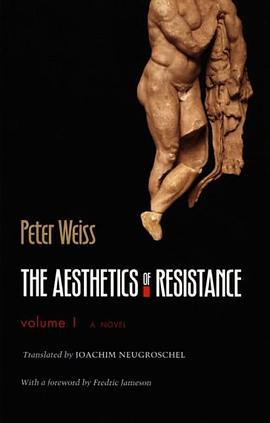
A major literary event, the publication of this masterful translation makes one of the towering works of twentieth-century German literature available to English-speaking readers for the first time. The three-volume novel The Aesthetics of Resistance is the magnum opus of Peter Weiss, the internationally renowned dramatist best known for his play Marat/Sade. The first volume, presented here, was initially published in Germany in 1975; the third and final volume in 1981, just six months before Weiss’s death.
Spanning from the late 1930s into World War II, this historical novel dramatizes anti-fascist resistance and the rise and fall of proletarian political parties in Europe. Living in Berlin in 1937, the unnamed narrator and his peers—sixteen and seventeen-year-old working-class students—seek ways to express their hatred for the Nazi regime. They meet in museums and galleries, and in their discussions they explore the affinity between political resistance and art, the connection at the heart of Weiss’s novel. Weiss suggests that meaning lies in the refusal of humans to renounce resistance, no matter how intense the oppression, and that it is in art that new models of political action and social understanding are to be found. The novel includes extended meditations on paintings, sculpture, and literature. Moving from the Berlin underground to the front lines of the Spanish Civil War and on to other parts of Europe, the story teems with characters, almost all of whom based on historical figures. The Aesthetics of Resistance is one of the truly great works of postwar German literature and an essential resource for understanding twentieth-century German history.
From the Back Cover
“[The Aesthetics of Resistance] . . . which [Peter Weiss] began when he was well over fifty, making a pilgrimage over the arid slopes of cutlural and contemporary history in the company of pavor nocturnus, the terror of the night, and laden with a monstrous weight of ideological ballast, is a magnum opus which sees itself . . . not only as the expression of an ephemeral wish for redemption, but as an expression of the will to be on the side of the victims at the end of time.”—W. G. Sebald, On the Natural History of Destruction
“The Aesthetics of Resistance is centrally important to any kind of assessment of twentieth-century German history.”—James Rolleston, editor of A Companion to the Works of Franz Kafka
作者简介
目录信息
读后感
用户评价
初次翻开这本书,我几乎被其深邃的哲学思辨和严谨的学术架构所震撼。它不仅仅是对特定历史时期艺术现象的梳理,更是一场对“抵抗”这一概念本身的本体论追问。作者似乎在不断地与康德、席勒等美学巨匠对话,但每一次对话都充满了反叛的火花。书中对符号学和权力结构关系的分析,细致入微,逻辑链条清晰得如同精密仪器。我特别欣赏作者如何运用后结构主义的理论工具,去解构那些看似坚不可摧的文化霸权。例如,在讨论到某些抵抗性文本的“可译性”时,作者提出的观点极具启发性,暗示了在抵抗的语境下,意义是如何被不断地生产和重塑的。这本书要求读者具备相当的理论基础,否则可能会在某些章节感到吃力,但一旦跟上作者的思维节奏,那种豁然开朗的体验是无与伦比的。它像是一份精密的路线图,指引我们穿越迷雾重重的文化迷宫。
评分老实说,这本书的行文结构对我来说,一开始有些散漫,仿佛作者的思绪在不同的历史时间点和艺术形式间自由跳跃。但随着阅读的深入,我逐渐体会到这种看似松散的结构,恰恰是为了更好地捕捉“抵抗”这一行为的非线性本质。它不是一个线性发展的过程,而是充满断裂、重复和突变的。作者在引入一些相对晦涩的艺术史案例时,并没有过多地进行背景介绍,而是直接将它们抛入理论的漩涡中,这种做法固然对读者提出了挑战,但也营造了一种沉浸式的、需要主动构建知识体系的氛围。我特别喜欢它对“审美疲劳”的讨论,并将其提升到了政治层面——当抵抗本身也开始成为一种模式时,如何保持其锋芒?这种自我反思的深度,是很多同类著作所欠缺的。它像一面镜子,不仅映照着我们所处的文化环境,也反思着批判理论自身的局限。
评分这部作品以一种令人耳目一新的视角审视了艺术与社会变革之间错综复杂的关系。作者没有采用常见的宏大叙事,而是深入到那些边缘的、常常被主流话语所忽视的文化实践中去,挖掘它们潜在的抵抗力量。尤其值得称赞的是,它对“美学”一词的重新定义,不再仅仅局限于传统意义上的形式愉悦,而是将其置于一个充满政治张力的场域中进行考察。书中的案例分析,无论是对街头艺术的解读,还是对地下音乐场景的考察,都展现出一种敏锐的洞察力,揭示了日常生活中美学选择如何成为一种无声的抗议。读完之后,你会发现,我们习以为常的审美习惯背后,可能隐藏着更深层次的意识形态斗争。它强迫读者走出舒适区,去质疑那些被奉为圭臬的“品味”标准,转而思考艺术在塑造或颠覆社会结构中所扮演的角色。这种对既有框架的挑战,使得这本书在当代文化研究领域具有不可替代的价值。它不是一本轻松的读物,但其提供的深刻见解绝对值得花费时间去咀嚼和消化。
评分这本书散发着一种坚韧、不妥协的知识分子气质。它不是一本迎合大众口味的畅销书,而是为那些真正愿意沉浸在复杂议题中的读者准备的。作者的语言如同精心雕琢的宝石,每一个词语都经过了精确的权衡,几乎找不到冗余的句子。在探讨美学与政治的交汇点时,书中所呈现的细微差别和微妙的权力转移,极大地拓宽了我对“激进”一词的理解。它让我意识到,真正的抵抗往往不是宏大的宣言,而是无数个细小、坚持不懈的审美实践的累积。读完后,我对于如何在一个看似高度同质化的社会中,保持思想的独立性和判断的清晰性,有了一种更为扎实和深刻的认识。这本书无疑会成为我案头常备的参考书目,每隔一段时间重读,都会有新的体悟。
评分这本书的阅读体验,与其说是在吸收知识,不如说是在参与一场持续的智力搏击。作者的文字风格极其冷峻、精确,带着一种近乎手术刀般精准的分析力度。它拒绝一切感伤和简单化的结论,而是坚持在复杂性和矛盾性中寻找真相。我读到后面几章时,常常需要停下来,对照着笔记反复思考其中的论证结构。这种“慢阅读”的过程,虽然耗费心神,却极大地提升了我对批判性思维的训练。特别是当作者将特定的艺术运动与非西方的反殖民叙事进行对照时,那种跨文化、跨学科的视野令人拍案叫绝。它没有提供廉价的希望或明确的行动指南,而是提供了一整套分析工具,教你如何去看待那些“不和谐”的声音。对于任何想超越表面现象,探究深层社会动力的研究者来说,这本书无疑是一份重量级的参考资料,充满了值得深挖的矿藏。
评分 评分 评分 评分 评分