
具体描述
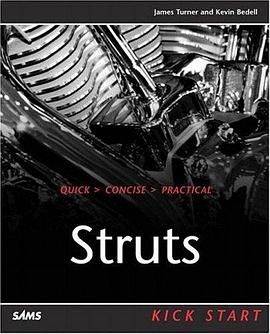
Learn to build applications with Jakarta Struts, the most popular JSP development framework. Struts Kick Start is a "hands-on" book filled with sample applications and code snippets you can reuse, and in-depth coverage of new features in Struts 1.1. If you are looking for a practical book that "shows you how to do it", then Struts Kick Start is for you. Plus, it's the first Struts book with detailed examples of the major Struts tags.</p>
The book begins with a discussion of Struts and its Model-View-Controller (MVC) architecture. The authors' then demonstrate Struts' power through the development of a non-trivial sample application - covering all the Struts components in a "how to use them" approach. You'll also see the Struts Tag Library in action - use tags for HTML, javabeans, logical operations and more. You'll learn to use Struts with JBoss for EJB's, with Apache Axis to publish and use Web Services, and with JUnit for testing and debugging. The authors work with the latest Struts 1.1 features including DynaForms, Tiles and the Validator. </p>
The book includes a CD-ROM containing the tools discussed in the book: Struts 1.1 beta 2, Java 2 Standard Edition, JBoss 3.0.3, MySQL 3.23, XDoclet, Torque, Tomcat, Ant, Axis, Cactus, and JUnit. Plus, it comes with an electronic, fully searchable version of the book. </p>
From the Inside Cover:</p>
"Struts Kick Start is a good resource for learning about Struts, and it willhelp you get up to speed quickly."</p>
- Craig McClanahan, Creator of Struts</p>
Thoroughly covers the essential features of Struts in a clear and readable style.</p>
Struts Kick Start is a solid starting point for learning how to develop webapplications using Struts. The authors start you off by reviewing thefoundational technologies on which Struts is based, and immediately get into thesorts of practical "how to" information and examples that get you up to speedquickly.</p>
Notable features that I really appreciated include the coverage on integrationwith other technologies (such as EJBs and web services), using Ant to set upyour development environment, and the fact that the software goodies you needare available on the included CD. Struts does not live in a vacuum—it is one ofthe tools in the developer's toolkit, so knowing how it works with othertechnologies is very useful.</p>
Of particular importance is the coverage on testing your web application as youbuild and maintain it. Developing a solid testing methodology, and a substantialsuite of tests (to protect yourself against regressions), is criticallyimportant to a rapid development cycle that still needs to produce high qualityapplications. Coverage of testing, though, tends to be minimal in many booksabout programming technologies. James and Kevin provide specific advice on howto use the JUnit and Cactus testing frameworks with your Struts based applications.</p>
作者简介
目录信息
读后感
用户评价
我是一个视觉学习者,对纯文本的理论讲解往往难以产生深刻印象。因此,我通常对那些充斥着大段代码和复杂流程图的书籍敬而远之。然而,这本书的排版和图文结合的策略令人耳目一新。它不是那种密密麻麻、让人一眼就产生阅读疲劳的样式。恰恰相反,每当引入一个新的概念,比如数据流的走向或者组件间的通信时,书中总会配上清晰、简洁的UML或流程图示,这些图示不是那种为了凑页数而做的花哨装饰,而是真正帮助理解复杂交互的关键工具。举个例子,关于Tiles布局管理器的讲解,光靠文字描述复杂的区域继承和覆盖规则几乎是不可能理解透彻的,但书中通过色彩分明的图示,将父模板和子模板之间的关系直观地展示了出来,让我瞬间领悟了其中的精妙之处。这种对阅读体验的重视,使得学习过程变得不那么枯燥和抽象,反而像是在玩一个逻辑严谨的拼图游戏,非常符合现代开发人员快速吸收信息的习惯。
评分说实话,市面上的技术书籍,很多都是那种“写给已经入门的人看”的流水账,把API文档用更具可读性的文字堆砌一遍,真正想让人快速掌握核心思想的凤毛麟角。但《Struts Kick Start》在这方面做得非常出色,它注重的是“实战思维的培养”,而不是死记硬背。我最欣赏它处理异常和校验逻辑的方式。在企业应用中,数据合法性和健壮性是生命线,Struts的Validator框架如果配置不当,轻则功能异常,重则安全隐患。这本书没有回避这些复杂的场景,反而将它们拆解成一个个独立的小模块进行讲解,比如如何自定义校验规则,如何将校验失败的错误信息精准地反馈给用户界面。更绝的是,它还穿插了一些关于性能优化的前期思考,比如何时应该使用重用Action而不是每次都创建新实例,这些细节虽然看似微小,却决定了一个应用在真实压力下的表现。对于我这种追求代码质量和系统稳定性的开发者来说,这种从宏观架构到微观实现的全面覆盖,是非常宝贵的财富,它教会我的不仅仅是如何让代码跑起来,更是如何让代码“跑得好”。
评分这本书简直是为我这种半路出家、对传统Web开发框架望而生畏的家伙量身定做的!我过去一直用PHP或者一些更轻量级的工具,但随着项目复杂度陡增,团队开始要求采用更健壮的企业级解决方案,Struts这个名字就频繁地出现在视野里。说实话,刚开始看那些官方文档和技术论坛的帖子,我感觉自己像是在攀登一座陡峭的冰山,各种MVC、ActionForm、DispatchAction、Tiles配置……一堆术语砸下来,让人头晕目眩。然而,当我翻开这本《Struts Kick Start》时,那种焦虑感奇迹般地消退了。作者的叙述方式极其平易近人,他没有一上来就抛出晦涩难懂的API细节,而是从最基础的“为什么需要一个框架”开始讲起,把MVC模式的精髓用生活化的例子串联起来。我印象最深的是关于Action类的讲解,它没有堆砌代码,而是清晰地展示了如何将用户输入安全、有效地映射到业务逻辑层,而且书中对配置文件的解读简直是庖丁解牛,那些原来看着像天书的XML标签,一下子就变得逻辑清晰,仿佛作者就在旁边手把手教你如何搭建第一个“Hello World”应用。这本书的成功之处在于,它成功地架起了一座从“不知道”到“能上手”的坚固桥梁,让人在构建第一个可用项目时充满信心,而不是在半途因为看不懂配置而放弃。
评分我对很多技术教程的“版本保守”现象深感不满,很多书籍出版后技术栈就停留在N年前的古董版本上,阅读价值大打折扣。因此,当我发现《Struts Kick Start》在对Struts 1.x版本进行深入讲解的同时,也适当地讨论了当时社区正在转向的未来趋势,这一点让我感到非常惊喜。它并没有强迫读者完全沉浸在旧有的生态中,而是以一种非常成熟的态度,分析了Struts架构的优势所在,同时也坦诚地指出了其在现代Web开发范式下可能面临的局限性。例如,书中在讨论ActionForm的生命周期时,会对比性地提及一些新兴框架处理数据绑定更为简洁的方式,这体现了作者的深度和远见。这种“知其然,更知其所以然”的讲解方式,使得这本书不仅仅是一本操作手册,更像是一份关于Web MVC设计哲学和演进历史的精炼报告。它帮助我建立了一个更宽广的技术视野,让我明白当前所学的技术是如何一步步发展而来的,这对我在未来技术选型时做出更明智的决策至关重要。
评分这本书最让我感到惊喜的是它对“项目落地”的关注度。很多教程停留在环境搭建和单个功能的实现上,但一旦涉及到真实的部署、打包和维护,读者往往就束手无策了。这本《Struts Kick Start》则非常务实地涵盖了从开发到生产的“最后一公里”。我尤其欣赏它专门辟出章节讲解WAR包的结构、不同应用服务器(如Tomcat和WebLogic)的部署差异,以及如何利用Ant或Maven进行自动化构建。这些实操层面的经验分享,对于一个刚从本地IDE环境走向企业级部署的新手来说,是无价的。我曾经因为一个莫名其妙的Class Loading错误在服务器上挣扎了两天,最后发现只是一个库的版本冲突导致,而类似的问题,书中都有基于实战经验的排查思路和解决方案模板。它教会了我如何像一个“老兵”一样思考部署和维护问题,这使得我不仅仅学会了写代码,更学会了如何“交付”一个完整的企业级应用,这种全面的能力提升,远超我预期的技术深度。
评分 评分 评分 评分 评分