
具体描述
‘Ever since the world began, men have been subject to various tricks of Fortune’
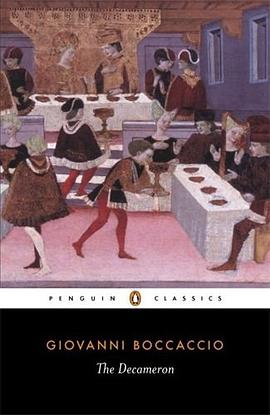
In the summer of 1348, as the Black Death ravages their city, ten young Florentines take refuge in the countryside. They amuse themselves by each telling a story a day for the ten days they are destined to remain there – a hundred stories of love, adventure and surprising twists of fate. Less preoccupied with abstract concepts of morality or religion than earthly values, the tales range from the bawdy Peronella hiding her lover in a tub to Ser Cepperallo, who, despite his unholy effrontery, becomes a Saint. The result is a towering monument of European literature and a masterpiece of imaginative narrative.
This is the second edition of G. H. McWilliam’s acclaimed translation of the Decameron. In his introduction Professor McWilliam illuminates the worlds of Boccaccio and of his storytellers, showing Boccaccio as a master of vivid and exciting prose fiction.
作者简介
目录信息
Translator's Introduction
Select Bibliography
THE DECAMERON
Prologue
First Day
(Introduction)
1. Ser Cepperello deceives a holy friar with a false confession, then he dies; and although in life he was a most wicked man, in death he is reputed to be a Saint, and is called Saint Ciappelletto.
2. A Jew called Abraham, his curiosity being aroused by Jehannot de Chevigny, goes to the court of Rome; and when he sees the depravity of the clergy, he returns to Paris and becomes a Christian.
3. Melchizedek the Jew, with a story about three rings, avoids a most dangerous trap laid for him by Saladin.
4. A monk, having committed a sin deserving of very severe punishment, escapes the consequences by politely reproaching his abbot with the very same fault.
5. The Marchionness of Montferrat, with the aid of a chicken banquet and a few well-chosen words, restrains the extravagant passion of the King of France.
6. With a clever remark, an honest man exposes the wicked hypocrisy of the religious.
7. Bergamino, with the help of a story about Primas and the Abbot of Cluny, tellingly chides Can Grande della Scala for a sudden fit of parsimony.
8. With a few prettily spoken words, Guiglielmo Borsiere punctures the avarice of Ermino de' Grimaldi.
9. The King of Cyprus is transformed, on receiving a sharp rebuke from a lady of Gascony, from a weakling into a man of courage.
10. Master Alberto of Bologna neatly turns the tables on a lady who was intent upon making him blush for being in love with her.
(Conclusion)
Second Day
(Introduction)
1. Martellino, having pretended to be paralysed, gives the impression that he has been cured by being placed on the body of Saint Arrigo. When his deception is discovered, he is beaten, arrested, and very nearly hanged: but in the end he saves his skin.
2. Rinaldo d'Asti is robbed, turns up at Castel Guiglielmo, and is provided with hospitality by a widow. Then, having recovered his belongings, he returns home safe and sound.
3. Three young men squander their fortunes, reducing themselves to penury. A nephew of theirs, left penniless, is on his way home when he falls in with an abbot, whom he discovers to be the daughter of the King of England. She later marries him and makes good all the losses suffered by his uncles, restoring them to positions of honour.
4. Landolfo Rufolo is ruined and turns to piracy; he is captured by the Genoese and shipwrecked, but survives by clinging to a chest, full of very precious jewels; finally, having been succoured by a woman on Corfu, he returns home rich.
5. Andreuccio of Perugia comes to buy horses in Naples, where in the course of a single night he is overtaken by three serious misfortunes, all of which he survives, and he returns home with a ruby.
6. Madonna Beritola, having lost her two sons, is found on an island with two roebucks and taken to Lunigiana, where one of her sons, having entered the service of her lord and master, makes love to the daughter of the house and is thrown into prison. After the Sicilian rebellion against King Charles, the son is recognized by his mother, he marries his master's daughter, he is reunited with his brother, and they are all restored to positions of great honour.
7. The Sultan of Babylon sends his daughter off to marry the King of Algarve. Owing to a series of mishaps, she passes through the hands of nine men in various places within the space of four years. Finally, having been restored to her father as a virgin, she sets off, as before, to become the King of Algarve's wife.
8. The Count of Antwerp, being falsely accused, goes into exile and leaves his two children in different parts of England. Unknown to them, he returns from Ireland to find them comfortably placed. Then he serves as a groom in the army of the King of France, and having established his innocence, is restored to his former rank.
9. Bernabo of Genoa is tricked by Ambrogiuolo, loses his money, and orders his innocent wife to be killed. She escapes, however, and, disguising herself as a man, enters the service of the Sultan. Having traced the swindler, she lures her husband to Alexandria, where Ambrogiuolo is punished and she abandons her disguise, after which she and Bernabo return to Genoa, laden with riches.
10. Paganino of Monaco steals the wife of Messer Ricciardo di Chinzica, who, on learning where she is, goes and makes friends with Paganino. He asks Paganino to restore her to him, and Paganino agrees on condition that he obtains her consent. She refuses to go back with Messer Ricciardo, and after his death becomes Paganino's wife. (Conclusion)
Third Day
(Introduction)
1. Masetto of Lamporrechio pretends to be dumb, and becomes a gardener at a convent, where all the nuns combine forces to take him off to bed with them.
2. A groom makes love to King Agilulf's wife. Agilulf finds out, keeps quiet about it, tracks down the culprit, and shears his hair. The shorn man shears all the others, thus avoiding an unpleasant fate.
3. Under the pretext of going to confession and being very pure-minded, a lady who is enamoured of a young man induces a solemn friar to pave the way unwittingly for the total fulfilment of her desires.
4. Dom Felice teaches Friar Puccio how to attain blessedness by carrying out a certain penance, and whilst Friar Puccio is following his instructions, Dom Felice has a high old time with the penitent's wife.
5. Zima presents a palfrey to Messer Francesco Vergellesi, who responds by granting him permission to converse with his wife. She is unable to speak, but Zima answers her on her behalf, and in due course his reply comes true.
6. Ricciardo Minutolo loves the wife of Filippello Sighinolfo, and on hearing of her jealous disposition he tricks her into believing that Filippello has arranged to meet his own wife on the following day at a bagnio and persuades her to go there and see for herself. Later she learns that she has been with Ricciardo, when all the time she thought she was with her husband.
7. Tedaldo, exasperated with his mistress, goes away from Florence. Returning after a long absence disguised as a pilgrim, he talks to the lady, induces her to acknowledge her error, and liberates her husband, who has been convicted of murdering Tedalod and is about to be executed. He then effects a reconciliation between the husband and his own brothers; and thereafter he discreetly enjoys the company of his mistress.
8. Ferondo, having consumed a special powder, is buried for dead. The Abbot who is cavorting with his wife removes hiim from his tomb, imprisons him, and makes him believe he is in Purgatory. He is later resurrected, and raises as his own a child begotten on his wife by the Abbot.
9. Gilette of Narbonne, having cured the King of France of a fistula, asks him for the hand of Bertrand of Roussillon in marriage. Bertrand marries her against his will, then goes off in high dudgeon to Florence, where he pays court to a young woman whom Gilette impersonates, sleeping with him and presenting him with two children. In this way, he finally comes to love her and acknowledge her as his wife.
10. Alibech becomes a recluse, and after being taught by the monk, Rustico, to put the devil back in Hell, she is eventually taken away to become the wife of Neerbal. (Conclusion)
Fourth Day
(Introduction)
1. Tancredi, Prince of Salerno, kills his daughter's lover and sends her his heart in a golden chalice; she besprinkles the heart with a poisonous liquid, which she then drinks, and so dies.
2. Friar Alberto, having given a lady to understand that the Angel Gabriel is in love with her, assumes the Angel's form and goes regularly to bed with her, until, in terror of her kinsfolk, he leaps out of the window and takes shelter in the house of a pauper; the latter disguises him as a savage and takes him on the following day to the city square, where he is recognized and seized by his fellow friars, and placed under permanent lock and key.
3. Three young men fall in love with three sisters and elope with them to Crete. The eldest sister kills her lover in a fit of jealousy; the second, by giving herself to the Duke of Crete, saves her sister's life but is in turn killed by her own lover, who flees with the eldest sister. The murder is imputed to the third lover and the third sister, who are arrested and forced to make a confession. Fearing execution, they bribe their gaolers and flee, impoverished, to Rhodes, where they die in penury.
4. Gerbino, violating a pledge given by his grandfather King William, attacks a ship belonging to the King of Tunis with the object of abducting the latter's daughter. She is killed by those aboard the ship, he kills them, and afterwards he is beheaded.
5. Lisabetta's brothers murder her lover. He appears to her in a dream and shows her where he is buried. She secretly disinters the head and places it in a pot of basil, over which she weeps for a long time every day. In the end her brothers take it away from her, and shortly thereafter she dies of grief.
6. Andreuola loves Gabriotto. She tells him of a dream she has had, and he tells her of another. He dies suddenly in her arms, and whilst she and a maidservant of hers are carrying him back to his own house, they are arrested by the officers of the watch. She explains how matters stand, and the chief magistrate attempts to ravish her, but she wards him off. Her father is informed, her innocence is established, and he secures her release. Being determined not to go on living in the world, she enters a nunnery.
7. Simona loves Pasquino; they are together in a garden; Pasquino rubs a sage-leaf against his teeth, and dies. Simona is arrested, and, with the intention of showing the judge how Pasquino met his death, she rubs one of the same leaves against her own teeth, and dies in identical fashion.
8. Girolamo loves Salvestra; he is prevailed upon by his mother to go to Paris, and on his return he finds Salvestra married. Having secretly entered her house, he lies down and dies at her side; his body is taken to a church, where Salvestra lies down beside him, and she too dies.
9. Guillaume de Roussilon causes his wife to eat the heart of her lover, Guillaume de Cabestanh, whom he has secretly murdered. When she finds out, she kills herself by leaping from a lofty casement to the ground below, and is subsequently buried with the man she loved.
10. The wife of a physician, mistakenly assuming her lover, who has taken an opiate, to be dead, deposits him in a trunk, which is carried off to their house by two money-lenders with the man still inside it. On coming to his senses, he is seized as a thief, but the lady's maidservant tells the judge that it was she who put him in the trunk, thereby saving him from the gallows, whilst the usurers are sentenced to pay a fine for making off with the trunk. (Conclusion)
Fifth Day
(Introduction)
1. Cimon acquires wisdom through falling in love with Iphigenia, whom he later abducts on the high seas. After being imprisoned at Rhodes, he is released by Lysimachus, with whom he abducts both Iphigenia and Cassandra whilst they are celebrating their nuptials. They then flee with their ladies to Crete, whence after marrying them they are summoned back with their wives to their respective homes.
2. Gostanza, in love with Martuccio Gomito, hears that he has died, and in her despair she puts to sea alone in a small boat, which is carried by the wind to Susa; she finds him, alive and well, in Tunis, and makes herself known to him, whereupon Martuccio, who stands high in the King's esteem on account of certain advice he had offered him, marries her and brings her back with a rich fortune to Lipari.
3. Pietro Boccamazza flees with Agnolella; they encounter some brigands; the girl takes refuge in a forest, and is conducted to a castle; Pietro is captured by the brigands, but escapes from their clutches, and after one or two further adventures, he reaches the castle where Agnolella is, marries her, and returns with her to Rome.
4. Ricciardo Manardi is discovered by Messer Lizio da Valbona with his daughter, whom he marries, and remains on good terms with her father.
5. Before he dies, Guidotto da Cremona consigns to Giacomino da Pavia a young girl, who later on, in Faenza, is wooed by Giannole di Severino and Minghino di Mingole; these two come to blows, but when the girl is identified as Giannole's sister, she is given in marriage to Minghino.
6. Gianni of Procida is found with the girl he loves, who had been handed over to King Frederick. He and the girl are tied to a stake, and are about to be burnt when he is recognized by Ruggieri de Loria. He is then set free, and afterwards they are married.
7. Teodoro falls in love with Violante, the daughter of his master, Messer Amerigo. He gets her with child, and is sentenced to die on the gallows. But whilst he is being whipped along the road to his execution, he is recognized by his father and set at liberty, after which he and Violante become husband and wife.
8. In his love for a young lady of the Traversari family, Nastagio degli Onesti squanders his wealth without being loved in return. He is entreated by his friends to leave the city, and goes away to Classe, where he sees a girl being hunted down and killed by a horseman, and devoured by a brace of hounds. He then invites his kinsfolk and the lady he loves to a banquet, where this same girl is torn to pieces before the eyes of his beloved, who, fearing a similar fate, accepts Nastagio as her husband.
9. In courting a lady who does not return his love, Federigo degli Alberighi spends the whole of his substance, being left with nothing but a falcon, which, since his larder is bare, he offers to his lady to eat when she calls to see him at his house. On discovering the truth of the matter, she has a change of heart, accepts him as her husband, and makes a rich man of him.
10. Pietro di Vinciolo goes out to sup with Ercolano, and his wife lets a young man in to keep her company. Pietro returns, and she conceals the youth beneath a chicken coop. Pietro tells her that a young man has been discovered in Ercolano's house, having been concealed there by Ercolano's wife, whose conduct she severely censures. As ill luck would have it, an ass steps on the fingers of the fellow hiding beneath the coop, causing him to yell with pain. Pietro rushes to the spot and sees him, thus discovering his wife's deception. But in the end, by reason of his own depravity, he arrives at an understanding with her. (Conclusion)
Sixth Day
(Introduction)
1. A knight offers to take Madonna Oretta riding through the realm of narrative, but makes such a poor job of it that she begs him to put her down.
2. By means of a single phrase, Cisti the Baker shows Messer Geri Spina that he is being unreasonable.
3. With a quick retort, Monna Nonna de'Pulci puts a stop to the unseemly banter of the Bishop of Florence.
4. Currado Gianfigliazzi's cook, Chichibio, converts his master's anger into laughter with a quick word in the nick of time, and saves himself from the unpleasant fate with which Currado had threatened him.
5. Messer Forese da Rabatta and Master Giotto, the painter, returning from Mugello, poke fun at one another's disreputable appearance.
6. Michele Scalza proves to certain young men that the Baronci are the most noble family in the whole wide world, and wins a supper.
7. Madonna Filippa is discovered by her husband with a lover and called before the magistrate, but by a prompt and ingenious answer she secures her acquittal and causes the statue to be amended.
8. Fresco urges his niece not to look at herself in the glass, if, as she has claimed, she cannot bear the sight of horrid people.
9. With a barbed saying, Guido Cavalacanti politely delivers an insult to certain Florentine gentlemen who had taken him by surprise.
10. Friar Cipolla promises a crowd of country folk that he will show them a feather of the Angel Gabriel, and on finding that some bits of coal have been put in its place, he proclaims that these were left over from the roasting of Saint Lawrence. (Conclusion)
Seventh Day
(Introduction)
1. Gianni Lotteringhi hears a tapping at his door in the night; he awakens his wife, and she leads him to believe it is a werewolf, whereupon they go and exorcize it with a prayer, and the knocking stops.
2. Peronella hides her lover in a tub when her husband returns home unexpectedly. Her husband has sold the tub, but she tells him that she herself has already sold it to a man who is inspecting it from the inside to see if it is sound. Leaping forth from the tub, the man getst he husband to scrape it out and carry it back to his house for him.
3. Friar Rinaldo goes to bed with his godchild's mother; her husband finds them together in the bedroom, and they give him to understand that the Friar was charming away the child's worms.
4. Tofano locks his wife out of the house one night, and his wife, having pleaded with him in vain to let her in, pretends to throw herself down a well, into which she hurls an enormous stone. Tofano emerges from the house and rushes to the well, whereupon she steals inside, bolts the door on her husband, and rains abuse upon him at the top of her voice.
5. A jealous husband disguises himself as a priest and confesses his wife, by whom he is given to understand that she loves a priest who comes to her every night. And whilst the husband is secretly keeping watch for him at the front door, the wife admits her lover by way of the roof and passes the time in his arms.
6. Whilst she is entertaining Leonetto, Madonna Isabella is visited by Messer Lambertuccio, who has fallen in love with her. Her husband returning unexpectedly, she sends Messer Lambertuccio running forth from the house with a dagger in his hand, and Leonetto is taken home a little later on by her husband.
7. Lodovico discloses to Madonna Beatrice how deeply he loves her, whereupon she persuades her husband, Egano, to impersonate her in a garden, and goes to bed with Lodovico, who in due course gets up, goes into the garden, and gives Egano a hiding.
8. A husband grows suspicious of his wife, and discovers that her lover comes to her at night, forewarning her of his arrival by means of a string attached to her toe. Whilst the husband is giving chase to the lover, his wife gets out of bed and puts another woman in her place, who receives a beating from the husband and has her tresses cut off. The husband then goes to fetch his wife's brothers, who, on discovering that his story is untrue, subject him to a torrent of abuse.
9. Lydia, wife of Nicostratos, falls in love with Pyrrhus, who sets her three tasks as a proof of her sincerity. She performs all three, in addition to which she makes love to Pyrrhus in her husband's presence, causing Nicostratos to believe that his eyes have been deceiving him.
10. Two Sienese fall in love with a woman of whose child one of them is the godfather. This man dies, returns to his companion from the afterworld in fulfilment of a promise he had given him, and describes what people do there. (Conclusion)
Eighth Day
(Introduction)
1. Gulfardo borrows from Guasparruolo a sum of money equivalent to the amount he has agreed to pay the latter's wife in return for letting him sleep with her. He gives her the money, but later tells Guasparruolo, in her presence, that he has handed it back to his wife, and she has to admit it.
2. The priest of Varlungo goes to bed with Monna Belcolore, leaving her his cloak by way of payment; then, having borrowed a mortar from her, he sends it back and asks her to return the cloak which he had left with her as a pledge. The good woman hands it over, and gives him a piece of her mind.
3. Calandrino, Bruno and Buffalmacco set off in search of the heliotrope along the banks of the Mugnone. Thinking he has found it, Calandrino staggers home carrying an enormous load of stones, and his wife gives him a piece of her mind, causing him to lose his temper and beat her up. Then finally, he tells his companions what they have known all along.
4. The Provost of Fiesole falls in love with a widow, but his love is not reciprocated. He goes to bed with her maid, thinking it to be the widow, and the lady's brothers cause him to be found there by his bishop.
5. Three young men pull down the breeches of a judge from the Marches whilst he is administering the law on the Florentine bench.
6. Bruno and Buffalmacco steal a pig from Calandrino. Pretending to help him find it again, they persuade him to submit to a test using ginger sweets and Vernaccia wine. They give him two sweets, one after the other, consisting of dog ginger seasoned with aloes, so that it appears that he has stolen the pig himself. And finally they extract money from him, by threatening to tell his wife about it.
7. A scholar falls in love with a widow, who, being in love with someone else, causes him to spend a winter's night waiting for her in the snow. But on a later occasion, as a result of following his advice, she is forced to spend a whole day, in mid July, at the top of a tower, where, being completely naked, she is exposed to the flies and the gadflies and the rays of the sun.
8. A story concerning two close friends, of whom the first goes to bed with the wife of the second. The second man finds out, and compels his wife to lock the first man in a chest, on which he makes love to his friend's wife whilst he is trapped inside.
9. Being eager to "go the course" with a company of revellers, Master Simone, a physician, is prevailed upon by Bruno and Buffalmacco to proceed by night to a certain spot, where he is thrown by Buffalmacco into a ditch and left to wallow in its filth.
10. A Sicilian lady cleverly relieves a merchant of the goods he has brought to Palermo. He later returns there pretending to have brought a much more valuable cargo, and after having borrowed a sum of money from the lady, leaves her with nothing but a quantity of water and tow. (Conclusion)
Ninth Day
(Introduction)
1. Madonna Francesca is wooed by a certain Rinuccio and a certain Alessandro, but is not herself in love with either. She therefore induces the one to enter a tomb and pose as a corpse, and the other to go in and fetch him out, and since neither succeeds in completing his allotted task, she discreetly rids herself of both.
2. An abbess rises hurriedly from her bed in the dark when it is reported to her that one of her nuns is abed with a lover. But being with a priest at the time, the Abbess claps his breeches on her head, mistaking them for her veil. On pointing this out to the Abbess, the accused nun is set at liberty, and thenceforth she is able to forgather with her lover at her leisure.
3. Egged on by Bruno and Buffalmacco and Nello, Master Simone persuades Calandrino that he is pregnant. Calandrino then supplies the three men with capons and money for obtaining a certain medicine, and recovers from his pregnancy without giving birth.
4. Cecco Fortarrigo gambles away everything he possesses at Buonconvento, together with the money of Cecco Angiulieri. He then pursues Cecco Angiulieri in his shirt claiming that he has been robbed, causes him to be seized by peasants, dons his clothes, mounts his palfrey, and rides away leaving Angiulieri standing there in his shirt.
5. Calandrino falls in love with a young woman, and Bruno provides him with a magic scroll, with which he no sooner touches her than she goes off with him. But on being discovered with the girl by his wife, he finds himself in very serious trouble.
6. Two young men lodge overnight at a cottage, where one of them goes and sleeps with their host's daughter, whilst his wife inadvertently sleeps with the other. The one who was with the daughter clambers into bed beside her father, mistaking him for his companion, and tells him all about it. A great furore then ensues, and the wife, realizing her mistake, gets into her daughter's bed, whence with a timely explanation she restores the peace.
7. Talano d'Imolese dreams that his wife is savaged all about the throat and the face by a wolf, and tells her to ttake care; but she ignores his warning, and the dream comes true.
8. Biondello plays a trick on Ciacco in regard of a breakfast, whereupon Ciacco discreetly avenges himself, causing Biondello to receive a terrible hiding.
9. Two young men ask Solomon's advice, the first as to how he may win people's love, the second as to how he should punish his obstinate wife. Solomon replies by telling the former to love, and the latter to go to Goosebridge.
10. Father Gianni is prevailed upon by Neighbour Pietro to cast a spell in order to turn his wife into a mare; but when he comes to fasten on the tail, Neighbour Pietro, by saying that he didn't want a tail, completely ruins the spell. (Conclusion)
Tenth Day
(Introduction)
1. A worthy knight enters the service of the King of Spain, by whom he feels that he is ill-requited; so the King gives him irrefutable proof that the fault lies, not with himself, but with the knight's own cruel fortune, in the end rewarding him most handsomely.
2. Ghino di Tacco captures the Abbot of Cluny, cures him of a stomach ailment, and then releases him. The Abbot returns to the court of Rome, where he reconciles Ghino with Pope Boniface and creates him a Knight Hospitaller.
3. Mithridanes is filled with envy over Nathan's reputation for courtesy, and sets out to murder him. He comes across Nathan by accident but fails to recognize him, and after learning from Nathan's own lips the best way to carry out his intentions, he finds Nathan in a copse, as arranged. When he realizes who it is, he is filled with shame, and thenceforth becomes Nathan's friend.
4. Messer Gentile de'Carisendi comes from Modena and takes from the tomb the lady he loves, who has been buried for dead. She revives and gives birth to a male child, and later Messer Gentile restores her and the child to Niccoluccio Caccianimico, the lady's husband.
5. Madonna Dianora asks Messer Ansaldo for a beautiful May garden in the month of January, and Messer Ansaldo fulfils her request after hiring the services of a magician. Her husband then gives her permission to submit to Messer Ansaldo's pleasure, but on hearing of the husband's liberality Messer Ansalod releases her from her promise, whilst the magician excuses Messer Ansaldo from the payment of any fee.
6. King Charles the Old, victorious in battle, falls in love with a young girl; but later he repents of his foolish fancy, and bestows both her and her sister honourably in marriage.
7. On hearing that a young woman called Lisa has fallen ill on account of her fervent love for him, King Peter goes to comfort her, and later on he marries her to a young nobleman; and having kissed her on the brow, he thenceforth always styles himself her knight.
8. Sophronia, thinking she has married Gisippus, has really married Titus Quintus Fulvius, with whom she goes off to Rome, where Gisippus turns up in abject poverty. Believing that Titus has snubbed him, he confesses to a murder so that he will be put to death. But Titus recognizes him, and claims that he himself has done the murder, in order to secure Gisippus' release. On perceiving this, the real murderer gives himself up, whereupon all three are released by Octavianus. Titus then bestows his sister upon Gisippus in marriage, and shares with him all he possesses.
9. Messer Torello offers hospitality to Saladin, who is disguised as a merchant. A Crusade is launched, and before setting off Messer Torello instructs his wife that, failing his return, she may remarry by a certain date. He is taken prisoner, but his skill in training hawks brings him to the notice of the Sultan, who recognizes him, reminds him of their previous encounter, and entertains him most lavishly. And when Messer Torello falls ill, he is conveyed by magic in the space of a single night to Pavia, where his wife's second marriage is about to be solemnized. But he is recognized by his wife at the wedding-feast, whence he returns with her to his house.
10. The Marquis of Saluzzo, obliged by the entreaties of his subjects to take a wife, follows his personal whims and marries the daughter of a peasant. She bears him two children, and he gives her the impression that he has put them to death. Later on, pretending that she has incurred his displeasure and that he has remarried, he arranges for his own daughter to return home and passes her off as his bride, having meanwhile turned his wife out of doors in no more than the shift she is wearing. But on finding that she endures it all with patience, he cherishes her all the more deeply, brings her back to his house, shows her their children, who have now grown up, and honours her as the Marchioness, causing others to honour her likewise. (Conclusion)
Author's Epilogue
Notes
Maps
Indexes
· · · · · · (收起)
读后感
说实话,为<十日谈>写小标题,我的第一反应是"很黄很美丽",但为了避免被说是标题党,所以委屈下这本名著,屈就下"很好很强大"吧. 要说这本小说,咽下吐沫,如数家珍呀.与中国的三言二拍合称中西双璧,是我小时候最喜欢看的名著读物了(为维护我的光辉形象,请大家在读物两字后自觉加上"...
评分初1的时候读了这本书感觉自己被忽悠了,去找语文老师,老师曰:只有阅读人类龌龊的一面才能体会到世界的美好。 撞墙中。
评分 评分 评分用户评价
《十日谈》给我带来的震撼,不仅仅在于其故事的丰富性,更在于它所展现出的对人性的深刻洞察。博卡乔并没有回避人性中那些阴暗、甚至是丑陋的一面,他以一种近乎无畏的坦率,将人性的复杂与矛盾展现在读者面前。然而,这种直白并非是为了哗众取宠,而是源于他对人类生存状态的深刻理解。即使在那些看似荒诞、甚至有些粗俗的故事中,我也能感受到作者对人类处境的悲悯与同情。那些身处困境、却依然努力求生,用智慧和勇气对抗命运的角色,无不让我动容。我尤其喜欢作者对于女性角色的塑造,她们不再是传统意义上被动的、软弱的形象,而是拥有独立思想、敢于追求爱情和自由的个体。她们的聪明才智、她们的坚韧不拔,都让我看到了那个时代女性身上所蕴含的强大力量。书中对教会的讽刺和批判,也展现了博卡乔作为一个时代的思想家,对社会不公现象的敏锐觉察和勇敢发声。这种批判精神,在那个年代是难能可贵的。阅读《十日谈》,就像是在探索一个充满未知与惊喜的迷宫,每一条小径都可能通往意想不到的风景,每一个故事都可能揭示出人性的某个侧面。它让我更加理解,生活本身就是如此的多元和复杂,而人性,更是需要我们用一颗包容而审慎的心去品读。
评分这是一本真正意义上的“生命之书”。《十日谈》的魅力在于它的不拘一格,以及那种对生活本身的热爱与礼赞。博卡乔笔下的世界,充满了勃勃生机,即便是面对瘟疫的阴影,那些年轻人们也选择用讲故事的方式来度过难关,这本身就是一种对生命力量的歌颂。我被那些充满智慧和幽默感的故事深深吸引,它们时而让人捧腹大笑,时而又引人深思。作者对于爱情的描绘,更是多样且真实,它既有纯洁美好的憧憬,也有情欲的冲动,更有那种超越阶级和世俗的勇敢追求。读到那些因为爱情而勇敢反抗,或是用智慧化解困境的情节时,我能感受到一种强大的情感共鸣。博卡乔并没有回避生活中的不幸和苦难,但他总是能在绝望中找到一丝希望,在平凡中发现不凡。他以一种极其生动和贴近生活的方式,讲述着关于人类情感、欲望、智慧和命运的故事。这本书的书页之间,仿佛充满了阳光、酒香和人们的笑声,它让我感受到了一种蓬勃的生命力,一种对生活的热情和热爱。每次阅读,都能从中汲取到新的力量和感悟,它让我在纷繁复杂的世界里,找到一种简单而纯粹的快乐。
评分《十日谈》是一部跨越时空的巨著,它的价值不仅在于文学本身,更在于它所蕴含的历史和文化信息。博卡乔通过这些故事,为我们打开了一扇通往十四世纪意大利的窗户,让我们得以窥见那个时代的社会结构、宗教信仰、经济活动以及人们的日常生活。我惊叹于作者对细节的把握,从服饰、饮食到风俗习惯,都描绘得栩栩如生,仿佛亲历其境。更让我着迷的是,书中对于人际关系的描绘,无论是家庭内部的矛盾,还是朋友之间的情谊,抑或是陌生人之间的互动,都展现了那个时代人们复杂的社会关系网。那些充满智慧的对话,那些巧妙的计谋,以及那些出人意料的转折,都让我拍案叫绝。作者对于人性的洞察,更是穿越了时空的界限,依然具有深刻的现实意义。那些关于贪婪、嫉妒、背叛的故事,以及关于忠诚、善良、智慧的故事,都在提醒着我们,无论时代如何变迁,人性的基本特质似乎从未改变。这本书是一部百科全书式的作品,它让我不仅享受了阅读的乐趣,更获得了丰富的知识和深刻的思考,它让我更加理解人类社会的演变和发展。
评分《十日谈》是一部真正意义上的“人民的史诗”。博卡乔以其独特的视角和精湛的笔触,将十四世纪意大利社会的各个阶层、各种人物,都刻画得栩栩如生。我惊叹于作者对不同人物命运的描绘,他们有的因为智慧而改变命运,有的因为爱情而勇敢抗争,有的则因为贪婪而走向毁灭。这些故事,虽然发生在遥远的过去,但其中所展现的人性,却依然具有普世的价值。我尤其欣赏作者对女性角色的塑造,她们不再是传统意义上被动的、附属的存在,而是拥有独立思想、敢于追求自由和幸福的个体。她们的聪明才智、她们的坚韧不拔,都让我深受启发。书中对教会的讽刺和批判,也显示了博卡乔作为那个时代思想的先驱,对社会不公现象的敏锐洞察和勇敢批判。阅读《十日谈》,就像是在进行一场跨越时空的对话,与那些生活在不同时代的人们进行心灵的交流。它不仅让我了解了历史,更让我对人性和社会有了更深刻的认识,它是一部值得反复品读的经典之作。
评分《十日谈》是一部充满智慧和生命力的作品。博卡乔以其精湛的叙事技巧,将十位青年男女逃离瘟疫的背景与他们轮流讲述的故事巧妙地结合在一起。我被书中故事情节的多样性所深深吸引,从风趣的轶事到悲伤的传奇,无所不包。博卡乔的语言风格,时而幽默风趣,时而又深沉感人,能够精准地把握不同故事的情感基调。我尤其赞赏作者对人性的深刻洞察,他毫不回避人性的复杂与矛盾,真实地展现了人们的欲望、情感、智慧和愚蠢。那些充满机智和幽默感的故事,常常能让人忍俊不禁,同时也能引发对生活和人性的思考。书中对爱情的描绘,更是丰富多彩,它既有对纯洁爱情的赞美,也有对情欲的直白展现,还有对婚姻的探讨,以及对社会偏见的挑战。这些故事,不仅仅是娱乐,更是一种对生活的深刻理解和感悟,它让我看到了人类在困境中依然能够保持乐观和创造力的强大生命力。
评分初次翻开《十日谈》,我被它那如潮水般涌来的故事性深深吸引,仿佛置身于一个由无数个声音汇聚而成的古老集市。博卡乔用他那精湛的笔触,将十四世纪佛罗伦萨的社会百态、人性幽微,以及那时代的风俗人情,一一描绘得淋漓尽致。每一则故事,都像是从某个角落里拾取的珍宝,闪烁着不同于凡俗的光芒。我尤其欣赏作者在塑造人物时所展现出的细腻与真实,无论是风流倜傥的骑士,还是狡黠聪明的商人,亦或是那些被命运捉弄的普通人,他们都拥有着鲜活的生命力,仿佛就生活在我们身边,他们的喜怒哀乐、他们的爱恨情仇,都通过文字触动着我的心弦。有时,我会为一个角色的命运而扼腕叹息,有时,又会为他们的智慧与勇气而喝彩。这种沉浸式的阅读体验,让我感觉自己不仅仅是一个旁观者,更像是参与到了那个时代的故事之中,与书中的人物一同经历着生活的悲欢离合。博卡乔的叙事手法也是我极为推崇的,他善于营造氛围,用生动形象的语言描绘场景,使得画面感十足,读来如同观看一场精彩的戏剧。他对于爱情、命运、道德等主题的探讨,也引发了我许多思考。这本书不仅仅是故事的集合,更是一面映照人性和社会的镜子,让我得以窥见那个遥远时代的人们是如何生活、如何思考、如何感受的。
评分每当我翻开《十日谈》,总会有一种回到家乡般的亲切感,又带着一丝初次相遇的兴奋。《十日谈》的叙事结构非常独特,十位年轻人为了躲避瘟疫而逃离城市,在乡村的别墅里轮流讲故事,这种框架本身就充满了艺术性和趣味性。故事的题材广泛,涵盖了爱情、婚姻、家庭、宗教、政治等方方面面,几乎无所不包。博卡乔的语言风格,既有优雅的文采,又不失生动活泼的口语化表达,使得故事读起来毫无阅读障碍,反而充满了自然的韵律感。我尤其喜欢书中那些充满了讽刺和幽默的故事,它们常常以一种戏谑的方式揭示出社会中的虚伪和不公,令人在笑声中反思。那些聪明机智的人物,总能用出人意料的方式化解危机,或是实现自己的目标,这让我大开眼界。同时,书中也描绘了许多感人至深的爱情故事,它们或轰轰烈烈,或细水长流,都展现了人类情感的丰富与深刻。读《十日谈》,就像是走进了一个由无数个精彩故事组成的奇幻世界,每一页都充满了惊喜和期待。它不仅是一部文学作品,更是一种生活态度的展现,一种在困境中依然保持乐观和创造力的精神。
评分《十日谈》给我带来的阅读体验,是一种沉浸式的、全方位的感官享受。博卡乔的语言,时而如诗般优美,时而如流水般流畅,时而又带着一种辛辣的讽刺,但无论何时,都充满了生命的力量。他对于场景的描绘,极为细致生动,从阳光明媚的乡村别墅,到充满瘟疫阴影的城市街道,都仿佛呈现在眼前。而人物的对话,更是各具特色,不同身份、不同性格的人物,都有着与之相匹配的语言风格。我特别喜欢书中那些充满智慧和幽默感的故事,它们常常以一种巧妙的方式,揭示出人性的弱点和社会的弊病,让人在笑声中反思。同时,那些感人至深的爱情故事,也让我为之动容,它们展现了人类情感的复杂与深刻,以及对真爱的执着追求。博卡乔的叙事,不仅仅是讲故事,更是在传递一种对生活的态度——即使在最艰难的时刻,也要保持乐观、保持创造力、保持对生活的热爱。这本书就像一个万花筒,每一次翻开,都能看到不同的色彩和图案,每一次阅读,都能获得新的启示和感悟。
评分初次接触《十日谈》,我便被其独特的叙事结构和丰富的故事内容所吸引。博卡乔巧妙地运用了“框架故事”的手法,将十位青年男女的故事串联起来,这种结构本身就充满了文学的张力。更重要的是,这些故事并非孤立存在,而是相互呼应,共同构建了一个生动而立体的十四世纪意大利社会图景。我尤为欣赏作者在人物塑造上的细腻与真实,无论是那些风流倜傥的骑士,还是那些精明世故的商人,抑或是那些命运多舛的普通人,他们都拥有着鲜活的生命力和复杂的人性。博卡乔毫不避讳地展现了人性的光明与黑暗,他的笔下,既有令人赞叹的智慧与勇气,也有令人唏嘘的贪婪与背叛。这种真实而多维度的呈现,使得人物形象更加立体和可信。书中对于爱情的描绘,更是丰富多样,它既有对纯洁爱情的赞美,也有对情欲的直白描写,还有对婚姻的探讨,以及对社会偏见的反抗。这些故事,不仅仅是娱乐,更是对人生百态的深刻洞察,让我得以在笑声与叹息中,领悟人生的真谛。
评分《十日谈》的吸引力,在于它如同一幅徐徐展开的画卷,将那个时代的社会风情、人性百态,以最真实、最生动的笔触呈现出来。博卡乔的叙事手法,如同一个技艺精湛的说书人,娓娓道来,引人入胜。故事的题材极其广泛,从皇室贵族的奢华生活,到市井小民的酸甜苦辣,无所不包。我特别欣赏作者对爱情的描绘,它不是单一的、理想化的,而是包含了各种形式的爱:纯洁的初恋、炽热的情欲、忠诚的婚姻,甚至是对禁忌之爱的探索。这些描绘都极其真实,触及了人类情感最根本的层面。书中对宗教的批判,也显示了博卡乔作为那个时代进步思想家的勇气和洞见,他对教会的腐败和虚伪毫不留情地予以揭露,这种批判精神令人敬佩。而那些充满智慧和幽默感的故事,更是让我忍俊不禁,它揭示了人性的狡黠和机智,也展现了人们在复杂环境中生存的智慧。每当我阅读《十日谈》,都感觉自己仿佛置身于那个历史悠久的时代,与书中人物一同经历着他们的悲欢离合。这本书不仅仅是故事的堆砌,更是一部关于人性和社会生活的百科全书,它让我对生活有了更深的理解和感悟。
评分小黄书?
评分匪夷所思的故事,脑洞极大
评分It makes you laugh and think~
评分非常有趣的100个小故事 古时民风相当开放heehee
评分匪夷所思的故事,脑洞极大