
具体描述
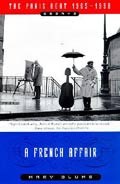
Mary Blume brings her insight, humor, and unique perspective to bear on the French--their leaders, their cars, their museums, and more--in this collection of 66 essays from her "International Herald Tribune" columns over the past 33 years. 11 line drawings. 4 photos.
Even the most dedicated expat rarely manages to completely fit into an adopted foreign culture. It's precisely this quality that allows American Mary Blume to so thoughtfully observe and record Paris, the city that's served as her home for over three decades, though its ways may still mystify her. In A French Affair--a collection of essays published in the International Herald Tribune--the columnist deftly captures the quirks and changes that are visible only to those who live in France, though they may be most interesting to those who don't.
In these commentaries--ranging from the opening of invention conventions to the mire of bureaucracy that accompanies the naming of a street (which may only be named after dead people, preferably deceased for at least 15 years)--Blume unveils the French quest for perfection in a world that's perfectly imperfect because of French design, and how the logic of Descartes's descendents--regarding such points as grammar--is sometimes extreme to the point of being irrational. She captures trends, from the fashionable la ratte potato to the metric system. She records notable moments---the death of a designer, the opening of a charm school for men--and notable people, such as Renoir's jet-setting son and Simone de Beauvoir. Of course, this being a book about France, Blume occasionally delves into food, be it the inner workings of a soup kitchen or the launching of cooking classes taught by royalty. With these witty and insightful short snippets, Blume provides small, crystal-clear windows into true French life--a rare accomplishment from an expatriate or a native.
--Melissa Rossi
Blume, an International Herald Tribune columnist, lived in Paris for more than three decades, during which these columns were written. In total, these snippets of life in Paris present the city in all its complexity. Her portrayals bring to mind Sanche de Gramont, who in his classic The French (1969) forever brush-stroked Parisians in a grating cultural study. Blume, though, is a more concise de Gramont (succinctness, of course, is forced upon her by the discipline of her craft) and also a more sympathetic one. Her focus rests on such items as the first Parisian charm school for boys, the last old-time soup kitchen in Paris (when one customer was offered a Gauloise cigarette, which he turned down, saying he only smoked Marlboros!), or Mouna, an "acrobat of ideas" who is trying to turn the Luxembourg Gardens into another Hyde Park Speaker's Corner. These and 58 other essays and reviews offer sweeping insights from both Blume's outsider status as an American and her insider status as a three-decades resident. Illustrated with witty and stylish cartoons by Ronald Searle.
Allen Weakland
Blume has lived in France for over three decades. Here is a collection of 61 of her International Herald Tribune columns, which includes commentary on French social and cultural life and profiles of writers and film directors. She describes, among other things, a museum built in honor of the bearded lady of Thaon, Clementine Delait; a street still waiting to be named; and an uprising led by the regulars of a restaurant who do not want things to change under the new managementAall of which read like absurdist comedy. Illustrations by Ronald Searle enhance the irreverent and perceptive text. These essays give us an insider's view of things quintessentially French, but a collection of columns, by nature, tends to be dated. Not an essential purchase.
ARavi Shenoy, Hinsdale P.L., IL
A collection of essays on life in France, by an American who's lived there since 1965. Everyone who's ever been there, as well as some who haven't, has an opinion to offer about France. If one goes by the number of books published about France in the United States, Americans, in particular, seem fascinated with the French way of life. Perhaps it's the sophistication of the French, their seemingly effortless sense of style. Maybe it's the food, or the wine, or the language, or the art. Or maybe, as Mary Blume so aptly demonstrates in the title of her book, a visit to France is like a love affair, remembered accordinglywith regret, with affection, with passion, frustration, or disgust. The essays in this collection were written over the course of Blume's thirty years as a columnist at the International Herald Tribune, and offer a welcome perspectivethat of an American who, while intimately familiar with France (and in particular with Paris), remains enough of an outsider to comment clearly and honestly on what she sees. The book is assembled in three sections. It opens with ``Paris France,'' which includes diverse commentary on the people, places, and customs of the city; continues with ``Rites and Rules,'' which illustrates some of the country's idiosyncrasies; then concludes with ``Words and Images,'' in which the author expands her geographical area of reference in interviews with some of Europe's most celebrated artists, writers, photographers, and filmmakers. Blume is a gifted journalist who sits back and lets her subjects describe themselves; in this way she evokes some marvelous responses from, for instance, Marguerite Duras, who says, in inimitably French fashion: ``I have a certain idea of myself. One can call it pretentious, I don't care. It's what I think.'' Ronald Searle's whimsical drawings, interspersed throughout, are a perfect complement to Blume's observations. Francophile seeks affair, for short or long-term? This book meets all requirements.
Jane Kramer European correspondent, The New Yorker Mary Blume writes like an angel and thinks like a devil -- which the French will tell you is the hallmark of a civilized mind. Reading Blume, I like to imagine Montaigne or Montesquieu curled up somewhere with the same story and a glass of, say, Diamond Creek cabernet, savoring both, trusting both, enchanted to discover that the new world of their dark and most exotic fantasies had finally produced such remarkably kindred clarity and style. Blume is the one American writing in Paris who comes anywhere close to the great essayist tradition that once defined the culture but that most native Parisians have in fact lost -- one that proceeds from wit, wisdom, erudition, and above all from an understanding that the deepest ironies are gentle, and amount to an embrace that includes us all, in our folly, faults, and poignant, blundering affectation.
"America and France have always had a special relationship. In fact, it would not be an exaggeration to say that the two have enjoyed a love affair of sorts, with all the love/hate dynamics that suggests. From Benjamin Franklin charming Louis XVI to Jackie Kennedy enchanting Charles de Gaulle, the two peoples have fascinated and repelled each other. Mary Blume has cultivated her own love affair with this often inscrutable land - France."--BOOK JACKET. "Quintessentially American, she has managed that fine trick of not assimilating, and yet coming to know, in the fullest sense, the place and the people in all their often sublime and sometimes ridiculous complexity. In the pieces themselves, whether she turns her penetrating lens on Frenchmen or their money or their socks, whether a bearded lady or simone de Beauvoir, street performers or members of the Academie Francaise, whether the newest chic potato or the eternally chic St. Germain de Pres, whether the events of May '68 or the last presidential elections, she sees what would pass unseen - were she not there to notice it."
--BOOK JACKET.
Mary Blume is a columnist at the International Herald Tribune and the author of Cte d'Azur: Inventing the French Riviera.
length: (cm)21.4 width:(cm) 13.7
作者简介
目录信息
读后感
用户评价
这本书的叙事视角非常独特,它不是那种高高在上的全知视角,更像是一个深入到骨髓的观察者,带着一种既疏离又热爱的复杂情感在审视着一切。作者仿佛是那个时代的一个隐形人,记录下了那些最真实、最不加修饰的瞬间。我尤其注意到了他对城市声音景观的描绘,这常常是其他作品忽略的细节。是老式雪铁龙汽车的引擎声,还是露天市场里讨价还价的喧嚣,甚至是深夜酒吧里泄露出的萨克斯风旋律,这些元素共同构建了一个无比立体的巴黎声景。这种对环境的深度沉浸,使得书中的场景不再是简单的背景,而成了推动情节发展的关键力量。读到一些情节时,我甚至会不自觉地屏住呼吸,生怕惊扰了那个被作者小心翼翼保存下来的瞬间。这是一种非常高级的文学技巧,让读者从被动的接受者,变成了主动的参与者。
评分这本书真是让我着迷,那种沉浸式的体验,仿佛我真的穿越回了上世纪六十年代的巴黎。从翻开扉页的那一刻起,作者细腻的笔触就将我带入了一个充满香颂、咖啡馆烟雾和街头艺术的迷人世界。我尤其喜欢他对那个时代文化氛围的捕捉,那种介于战后复苏的激情与现代主义思潮涌动的复杂情绪,被他描绘得淋漓尽致。书中的人物塑造极其成功,每一个角色都鲜活得仿佛随时会从纸面上走下来,带着他们各自的秘密和对生活的热望。我仿佛能闻到塞纳河畔清晨薄雾的味道,听到协和广场上匆忙的脚步声。那种对细节的执着,对历史场景的精准复现,让人不得不佩服作者深厚的功底。这本书不仅仅是一部小说,更像是一部私人化的巴黎编年史,记录了城市在变迁中的灵魂。读完之后,我感觉自己的精神仿佛完成了一次长途旅行,带着一身巴黎特有的慵懒与智慧,久久不能平复。这绝对是那种值得反复品味,每次都能发现新亮点的佳作。
评分老实说,我一开始是抱着试一试的心态开始读的,毕竟涉及跨越三十年的时间线,很容易写得松散。但令我惊喜的是,作者对叙事节奏的把控堪称大师级别。故事线索交织得错落有致,既有宏大历史背景的铺陈,又不乏小人物命运的细腻刻画。每一次时间跳跃,都处理得如同电影镜头平滑地切换,既保证了阅读的连贯性,又凸显了不同时间段特有的时代烙印。比如,他如何巧妙地将七十年代的社会动荡融入到主角的个人选择中,处理得既自然又富有张力,绝非生硬的“背景板”式叙事。我尤其欣赏那种内在的张力,人物间的对话充满了潜台词,你得自己去挖掘那些没有明说出来的情感暗流。这需要读者投入相当的专注力,但回报也是巨大的。读完之后,你会觉得自己的心智也跟着故事中的人物一起成长了,那种满足感是很多快餐式阅读无法比拟的。
评分这部作品的魅力,很大程度上源于它那种不事张扬的真实感。它没有刻意去美化那个年代的“浪漫”,而是坦诚地展示了光鲜背后的艰辛、理想主义的幻灭以及人性的幽微之处。我欣赏作者敢于触碰那些“不完美”的角落,比如名利场的虚伪,或者革命激情退却后的迷茫。这种诚实,反而赋予了整部作品一种更持久的力量。它让你思考,在历史的大转折点上,个体如何坚守自我,如何定义所谓的“成功”或“幸福”。书中关于友谊和背叛的描写尤其触动我,它们是如此的复杂和灰色,没有绝对的好人或坏人,只有在特定环境下做出选择的凡人。每一次阅读高潮,都伴随着一种对人性的深刻洞察,这让这本书的价值远远超出了单纯的故事叙述。它提供了一个绝佳的参照系,让我们得以审视自己身处的时代。
评分如果用一个词来形容这本书给我的感觉,那就是“韵味悠长”。它不是那种读完就扔的畅销书,它的文字里沉淀着时间的重量,需要你放慢脚步去品味。作者的词汇选择极其考究,很多地方的句子结构和措辞,带着一种古典的优雅,但又巧妙地融入了那个时代特有的那种先锋精神。我甚至发现自己会时不时地停下来,回味某一句描述,感叹作者是如何将一个复杂的意象用如此精炼的语言表达出来的。这种阅读体验,更像是与一位学识渊博的朋友在进行一场深入的午后交谈,他引经据典,娓娓道来,让你在不知不觉中,对生活和历史有了更深一层的理解。它成功地在历史的厚重感和个人情感的轻盈之间找到了一个完美的平衡点,让人在感到时代洪流冲击力的同时,也为个体命运的韧性而动容。
评分 评分 评分 评分 评分