
具体描述
Book Description
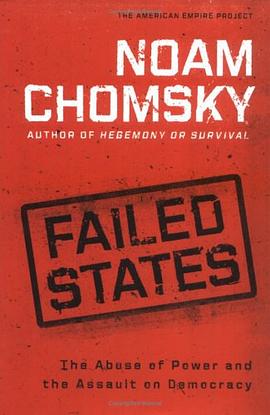
The United States has repeatedly asserted its right to intervene against "failed states" around the globe. In this much anticipated sequel to his international bestseller Hegemony or Survival, Noam Chomsky turns the tables, charging the United States with being a "failed state," and thus a danger to its own people and the world. "Failed states" Chomsky writes, are those that do not protect their citizens from violence and perhaps even destruction, that regard themselves as beyond the reach of domestic or international law, and that suffer from a democratic deficit, having democratic forms but with limited substance. Exploring recent U.S. foreign and domestic policies, Chomsky assesses Washington's escalation of the nuclear risk; the dangerous consequences of the occupation of Iraq; and America's self-exemption from international law. He also examines an American electoral system that frustrates genuine political alternatives, thus impeding any meaningful democracy. Forceful, lucid, and meticulously documented, Failed States offers a comprehensive analysis of a global superpower that has long claimed the right to reshape other nations while its own democratic institutions are in severe crisis, and its policies and practices have recklessly placed the world on the brink of disaster. Systematically dismantling America's claim to being the world's arbiter of democracy, Failed States is Chomsky's most focused -- and urgent -- critique to date.
From Publishers Weekly
Forget Iraq and Sudan--America is the foremost failed state, argues the latest polemic from America's most controversial Left intellectual. Chomsky (Imperial Ambitions) contends the U.S. government wallows in lawless military aggression (the Iraq war is merely the latest example); ignores public opinion on everything from global warming to social spending and foreign policy; and jeopardizes domestic security by under-funding homeland defense in favor of tax cuts for the rich and by provoking hatred and instability abroad that may lead to terrorist blowback or nuclear conflict. Ranging haphazardly from the Seminole War forward, Chomsky's jeremiad views American interventionism as a pageant of imperialist power-plays motivated by crass business interests. Disdaining euphemisms, he denounces American "terror" and "war crimes," castigates the public-bamboozling "government-media propaganda campaign" and floats comparisons to Mongols and Nazis. Chomsky's fans will love it, but even mainstream critics are catching up to the substance of his take on Bush Administration policies; meanwhile his uncompromising moral sensibility, icy logic and withering sarcasm remain in a class by themselves. Required reading for every thoughtful citizen.
From AudioFile
Beware of unsupported assertions! Beware of zealotry! Beware of righteous indignation! In other words, take Noam Chomsky with a grain of salt. The ground-breaking linguist and vociferous political iconoclast launches yet another jeremiad on the world situation and American culpability. What he calls "failed states," the rest of us may know as "rogue states," those whose citizens are in chaos and fear, and whose policies threaten international stability. Without blunting Chomsky's message, gravelly voiced Alan Sklar ably emphasizes his eloquence and dials down his shrillness. He eases the way for the objective listener to judge Chomsky's interpretation of current events, to separate the wheat from the chaff of his arguments. Y.R.
About Author
Noam Chomsky is the author of numerous bestselling political works, from American Power and the New Mandarins in the 1960s to Hegemony or Survival in 2003. A professor of linguistics and philosophy at MIT, he lives outside Boston, Massachusetts.
Book Dimension
Height (mm) 242 Width (mm) 164
作者简介
目录信息
读后感
用户评价
说实话,这本书的学术气味非常浓重,我得承认,有些章节我不得不跳读,因为那种密集的学术术语和理论框架的堆砌,对于非专业读者来说,确实构筑了一道不小的门槛。然而,当作者终于将理论的棱镜聚焦到具体的、令人心碎的人类故事上时,那份力量是毁灭性的。他讲述了在权力彻底崩溃的边缘,普通家庭为了生存所做的那些令人唏嘘的权衡与牺牲。那些关于物资分配的描写,那种近乎原始的、关于信任如何瓦解成零的瞬间,笔触极其精准,让你仿佛能闻到空气中弥漫的绝望气息。这不是一部空谈理论的著作,它始终扎根于最残酷的现实土壤。它最成功的地方,在于成功地描绘了“空心化”的过程——不是一夜之间的爆炸,而是结构性腐蚀的漫长、无声的内爆。读完之后,我对于那些在电视新闻中一闪而过的动荡地区,有了一种更为复杂和人性化的理解,不再仅仅是简单的“好人”与“坏人”的二元对立叙事。
评分这本书的排版和字体设计简直是一场视觉上的灾难,厚厚的纸张和紧凑的行距让我在通勤阅读时总是感到眼睛疲惫。但是,一旦我能克服这些外在的干扰,沉浸到文字的海洋中,那种知识的震撼力是无法抗拒的。作者对历史的把握极为精妙,他擅长在时间轴的两端之间进行跳跃式的比较,比如他会突然将十九世纪中叶某个地区的族群冲突与当代新兴国家的治理困境并置讨论,以此来揭示某些深层次的结构性缺陷是如何穿越时空的。我个人最喜欢的部分是关于“非正规经济体”如何成为维持社会运转的隐形基础设施的那一段。作者以一种近乎民族志的视角,描绘了在官方机构失效后,那些看似边缘的交易网络如何悄然承担起了物资调配、安全保障乃至纠纷解决的功能,这颠覆了我以往对“混乱”的简单认知。这本书迫使我重新审视“秩序”的定义,意识到秩序并非总是自上而下的产物,它也可能是在权力真空的缝隙中野蛮生长出来的适应性结构。这本书的阅读过程,与其说是学习,不如说是一种对既有认知的系统性颠覆。
评分我不得不说,这本书的阅读体验是极具挑战性的,它不像那些畅销书那样提供即时的满足感,反而更像是一场需要高度专注的智力攀登。作者似乎并不在乎读者的阅读舒适度,他毫不留情地抛出了大量的理论模型和复杂的社会动力学分析,要求读者必须跟上他的思维步伐。尤其是在描述社会凝聚力崩溃的阶段,那种对人类集体无意识行为的揭露,读起来令人感到一丝寒意。我花了整整一周的时间才啃完其中关于“合法性危机”的那几章,因为里面引用了大量我不太熟悉的法理学和人类学文献。但正是这种不妥协的深度,让这本书的价值凸显出来。它不是在贩卖简单的解决方案,而是在逼迫读者直面那些最难以启齿的治理难题。我尤其欣赏作者在处理道德困境时的那种克制,他没有轻易地下判断,而是将复杂性本身作为核心议题呈现出来,留给读者大量的空间去思考和自我诘问。这本书更像是一部研究人类社会组织极限的冷峻实验报告,看完之后,对许多现实世界的冲突会产生一种全新的、更加审慎的理解角度。
评分这本书的结构布局非常独特,它没有采用传统的章节划分方式,而是更像一个巨大的、互相交叉的知识网络。你可以在任何一个节点深入下去,然后被引向另一个相关的论点,这种阅读路径的开放性,反而带来了一种探索的乐趣。作者对全球化背景下“碎片化治理”的分析尤其具有前瞻性。他认为,现代的权力分散,很多时候并非源于内部的瓦解,而是外部的压力,比如跨国资本流动、非国家安全威胁等,如何巧妙地侵蚀了主权国家的治理能力。我记得有一段论述,关于“数字主权”的消亡,作者用非常精炼的语言总结了互联网时代信息流如何绕过传统边境管控,重塑了地方的权力生态,这个观点让我茅塞顿开。这本书的文字风格是冷静而又充满洞察力的,它用一种近乎外科手术般的精确性,剖开了现代社会的某些脆弱环节。它不是一本读起来轻松愉快的书,但绝对是一本能让你在读完后,看待整个世界运转方式发生根本性改变的里程碑式的作品,其重量远超其纸面厚度。
评分这本厚重的书,拿到手里就感觉分量十足,装帧朴实,没有那些花里胡哨的装饰,一看就知道内容是扎实的。翻开扉页,一股油墨的清香扑鼻而来,让人忍不住想立刻沉浸其中。作者的叙事风格非常沉稳,像一位经验丰富的历史学家在娓娓道来,每一个论断都建立在大量的案例和详实的数据之上。初读之下,我印象最深的是他对“权力真空”的剖析,他没有用那种宏大叙事的方式去笼统地概括,而是深入到具体社区的微观层面,描绘了在中央权威瓦解后,地方武装、宗族势力以及非国家行为体如何迅速填补权力空白的过程。特别是在探讨资源控制权转移的那一部分,作者对比了几个不同大洲的案例,展示了在缺乏有效治理结构时,经济活动是如何扭曲,社会契约又是如何被无形中撕毁的。这种细致入微的观察和冷静的笔触,使得原本抽象的政治学概念变得鲜活可感,让我对理解复杂社会结构有了更深刻的体认。整本书的逻辑链条非常清晰,从宏观的制度失灵到微观的社会互动,层层递进,读完后感觉像是经历了一次严谨而漫长的心灵漫游,收获颇丰,值得反复品味。
评分What Corporate America's foreign policy is about: ensure access to market, energy, and other key resources; a single standard (what is often called in media, "double standards", is really a misnomer). Chomsky backs you up on what you suspect US is about with loads of evidence from Iraq, to Nicaragua, to Mid-east, and to, ironically, US itself.
评分What Corporate America's foreign policy is about: ensure access to market, energy, and other key resources; a single standard (what is often called in media, "double standards", is really a misnomer). Chomsky backs you up on what you suspect US is about with loads of evidence from Iraq, to Nicaragua, to Mid-east, and to, ironically, US itself.
评分What Corporate America's foreign policy is about: ensure access to market, energy, and other key resources; a single standard (what is often called in media, "double standards", is really a misnomer). Chomsky backs you up on what you suspect US is about with loads of evidence from Iraq, to Nicaragua, to Mid-east, and to, ironically, US itself.
评分What Corporate America's foreign policy is about: ensure access to market, energy, and other key resources; a single standard (what is often called in media, "double standards", is really a misnomer). Chomsky backs you up on what you suspect US is about with loads of evidence from Iraq, to Nicaragua, to Mid-east, and to, ironically, US itself.
评分What Corporate America's foreign policy is about: ensure access to market, energy, and other key resources; a single standard (what is often called in media, "double standards", is really a misnomer). Chomsky backs you up on what you suspect US is about with loads of evidence from Iraq, to Nicaragua, to Mid-east, and to, ironically, US itself.