
具体描述
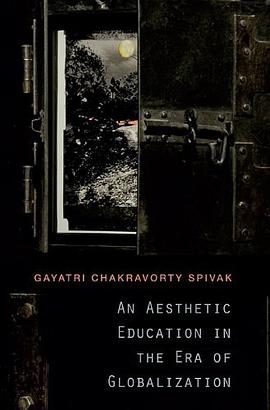
During the past twenty years, the world's most renowned critical theorist--the scholar who defined the field of postcolonial studies--h as experienced a radical reorientation in her thinking. Finding the neat polarities of tradition and modernity, colonial and postcolonial, no longer sufficient for interpreting the globalized present, she turns elsewhere to make her central argument: that aesthetic education is the last available instrument for implementing global justice and democracy. Spivak's unwillingness to sacrifice the ethical in the name of the aesthetic, or to sacrifice the aesthetic in grappling with the political, makes her task formidable. As she wrestles with these fraught relationships, she rewrites Friedrich Schiller's concept of play as double bind, reading Gregory Bateson with Gramsci as she negotiates Immanuel Kant, while in dialogue with her teacher Paul de Man. Among the concerns Spivak addresses is this: Are we ready to forfeit the wealth of the world's languages in the name of global communication? "Even a good globalization (the failed dream of socialism) requires the uniformity which the diversity of mother-tongues must challenge," Spivak writes. "The tower of Babel is our refuge." In essays on theory, translation, Marxism, gender, and world literature, and on writers such as Assia Djebar, J. M. Coetzee, and Rabindranath Tagore, Spivak argues for the social urgency of the humanities and renews the case for literary studies, imprisoned in the corporate university. "Perhaps," she writes, "the literary can still do something."
This captivating collection of lectures delivered over the course of a quarter century asks us to attend to the profoundly democratic possibilities of the imagination. Aesthetic education empowers us to apprehend and negotiate what Spivak calls the "double bind at the heart of democracy." At a time when the humanities are expected to genuflect before the sciences and privatization and professionalization displace knowledge, Spivak urges us not only to stand tall but to insist that ethical solidarities are only possible through the rigorous training of the imagination.--Angela Y. Davis, University of California, Santa Cruz
Spivak remains an indispensable leader and guide in the exhilarating conceptual adventure--the trip--which, since the late sixties, we've called theory. Aesthetic Education presents us with lessons that she has learnt on the way--difficult, defiant, sober lessons for these unpromising times. They demand our attention.--Simon During, University of Queensland
[A] rewarding series of meditations on the possibility of reading, learning, and teaching that would encourage the full flowering of cultural, sexual, and linguistic diversity and resist the homogenizing force of globalization...The gathered texts are a testament to a fundamental faith in the power of literature that is never less than inspiring.-- (11/11/2011)
Gayatri Chakravorty Spivak's latest collection of essays offers a timely reminder of what the real and powerful ends of education might be...[The essays] cover the breadth of an extraordinary intellectual career...The essays, for all their diversity, have the quality of a cumulative, long retrospection, a slow-burning consideration of what it means to teach, how faultily we do it and how we might do better by those who most want to learn and have least opportunity...It is, though, Spivak's assertion, after Schiller, that an aesthetic education remains the strongest resource available for the cause of global justice and democracy. The homogenizing and pacifying effects of globalization, which Spivak so routinely lambasts, here, she argues, can never extend "to the sensory equipment of the experiencing being." And here she has never sounded more persuasive, identifying in arts education the evocation of a phenomenology at feeling and the engendering of critical thinking that are posited beyond the logic of capital.-- (04/06/2012)
作者简介
目录信息
读后感
用户评价
读完《全球化时代的审美教育》这本书,我最大的感受就是它撕开了某些教育“真相”的遮羞布。我们经常听到关于“核心竞争力”、“创新能力”的讨论,这些固然重要,但这本书却像一位老友,用温和却充满力量的语言,提醒我那些被遗忘的声音。它让我意识到,在信息泛滥、文化边界日益模糊的今天,我们需要的不仅仅是获取信息的能力,更是“解读”信息、并从中提炼出意义的能力,而这正是审美教育所能赋予的。作者在书中对一些当代教育现象的剖析,让我颇有共鸣。比如,当我们在追求效率和成果的时候,是否过于急功近利,而忽略了培养学生慢下来、去感受、去体验的能力?审美教育并非是培养一堆艺术家,而是培养一批能够以更广阔的视野、更深刻的理解、更丰富的情感去面对世界的人。它是一种“生活方式”,一种“存在方式”。这本书的价值在于,它提供了一种不同的视角,一种更加人文关怀的视角,去思考教育的本质,去理解个体在全球化背景下的生存之道。我发现,原来我们一直在缺失一些非常根本的东西,而这本书恰恰填补了那些空白。
评分最近读了《全球化时代的审美教育》这本书,着实被它深刻的洞察力和前瞻性所折服。在这样一个前所未有的全球化进程中,我们见证了各种文化、思想、价值的激烈碰撞与融合,同时也面临着信息过载、身份认同模糊等诸多挑战。在这种背景下,这本书提出并深入探讨了审美教育的关键性作用,这让我耳目一新。作者并没有将审美教育局限于传统的艺术范畴,而是将其扩展为一种理解世界、塑造个体、以及应对全球性问题的核心能力。他强调,在全球化时代,个体需要培养出一种能够辨别、欣赏、并创造美的能力,这不仅是丰富个人精神生活的重要途径,更是保持批判性思维、促进跨文化理解、乃至推动社会进步的基石。书中的论述,既有理论的深度,又不乏现实的关照,让我看到了一个更加全面、更具人文关怀的教育图景。它鼓励我们跳出狭隘的实用主义视角,重新审视教育的真正目标——培养具有独立思考能力、深刻人文情怀、以及全球视野的个体,而这正是审美教育所能提供的宝贵财富。
评分我最近读完了一本叫做《全球化时代的审美教育》的书,它像一股清流,让我对当下教育的许多固有认知产生了动摇。一直以来,我们似乎都在追求一种标准化的、面向职业技能的教育模式,仿佛艺术和人文的价值只是锦上添花,甚至被视为奢侈品。然而,这本书却坚定地站在了另一个角度,它深入探讨了在全球化浪潮下,个人如何在全球文化交织、信息爆炸的时代,依然能够培养出敏锐的审美感知力,以及这种能力对于个体全面发展的重要性。作者并没有空泛地赞美艺术,而是将审美教育置于一个更加宏观的社会和历史语境中,强调它如何能够帮助我们理解和应对全球化带来的复杂性,如何塑造我们对世界的判断和体验,以及如何让我们在海量信息中辨别真伪、保持独立思考。书中关于“在地化”与“全球化”如何相互作用,以及审美教育在其中扮演的角色,给了我很多启发。它让我反思,我们是不是过于强调“被世界所需要”,而忽略了“如何成为一个完整而有深度的人”。这本书让我重新审视教育的初心,不再仅仅是知识的传授,更是心灵的塑造和审美的启蒙,这对于身处这个快速变化的时代里的我们来说,尤为珍贵。
评分《全球化时代的审美教育》这本书,就像一位睿智的长者,以一种沉静而有力的方式,引导我重新审视了教育与个体成长的关系。我们生活在一个信息爆炸、界限模糊的时代,全球化的浪潮裹挟着我们,带来了前所未有的机遇,也带来了深刻的挑战。在这股洪流中,作者敏锐地捕捉到了一个容易被忽视但却至关重要的议题——审美教育。他不仅仅是呼吁要多学点艺术,而是将审美能力视为一种“核心素养”,一种在复杂的全球环境中生存、发展、并保持独立思考的关键能力。书中的观点,如同一盏明灯,照亮了我对于教育本质的理解。它让我反思,我们是否过于追求某种单一的“成功模式”,而忽略了培养个体丰富的情感体验、深刻的洞察力,以及对多元文化的包容与欣赏?审美教育,在作者的笔下,不再是可有可无的“点缀”,而是构建完整人格、促进个体与世界深度连接的“根基”。这本书的价值在于,它提供了一个超越实用主义的维度,让我们重新思考教育的终极目标:如何培养出既能适应时代,又能保持自我,并能为世界带来独特价值的个体。
评分这本书《全球化时代的审美教育》的出现,简直像一场及时雨,精准地解答了我心中长久以来的困惑。一直以来,我总觉得当下的教育体系,特别是高等教育,似乎过于功利化,过于注重培养“即战力”,而忽略了学生内在的成长和精神世界的丰富。当我们都在谈论如何“适应”全球化,如何“融入”国际社会时,这本书却提出了一个更深层次的问题:在这样一个多元文化碰撞、价值体系日益复杂的世界里,我们如何保持独立的人格,如何拥有鉴别真伪、理解差异的智慧?作者将审美教育提升到了一个前所未有的高度,它不仅仅是关于艺术的欣赏,更是关于如何培养一种敏感、深刻、并富有创造力的感知能力。这种能力,能够帮助我们在信息的洪流中找到方向,在文化的差异中发现共鸣,在快速的变化中保持内心的宁静。书中的论述,逻辑清晰,引人入胜,让我不禁一次次停下来思考,我们究竟在为谁而教育?又在培养怎样的人?它让我意识到,一个真正有价值的教育,应该能够点亮个体的心灵,赋予生命以意义,而不是仅仅填充知识的容器。
评分 评分 评分 评分 评分