
具体描述
A WISE AND FUNNY COLLECTION OF MODERN-DAY PARABLES ABOUT THE TIES BETWEEN HUMANS AND THEIR GODS
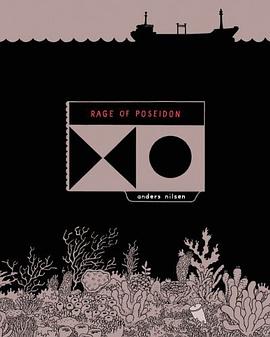
Imagine you are Poseidon at the dawn of the twenty-first century. The oceans are dying and sailors have long since stopped paying tribute. They just don't don't need you anymore. What do you do? Perhaps, seeking answers, you go exploring. Maybe you end up in Wisconsin and discover the pleasures of the iced latte. And then, perhaps, everything goes wrong.
Anders Nilsen, author of Big Questions and Don’t Go Where I Can’t Follow, explores questions like these in his newest work, a darkly funny meditation on religion and faith with a modern twist. Rage of Poseidon brings all of the philosophical depth of Nilsen’s earlier work to bear on contemporary society, asking how a twenty-first century child might respond to being sacrificed on a mountaintop, and probing the role gods like Venus and Bacchus might have in the world of today. Nilsen works in a unique style for these short stories, distilling individual moments in black silhouette on a spare white background. Above all, though, he immerses us seamlessly in a world where gods and humans are more alike than not, forcing us to recognize the humor in our (and their) desperation.
Rage of Poseidon is devastating, insightful, and beautiful hewn; it’s a wry triumph in an all-new style from a masterful artist.
PRAISE FOR RAGE OF POSEIDON
Nilsen’s attractively packaged graphic novel consists of a single, long sheet of paper that accordions together to fit between the book’s covers. Each “page” consists of a silhouetted, woodblocklike illustration, accompanied by a subtitle, and represents a single panel in a series of comic strips. Seven in all, these strips range in length from one to twenty panels, but all address the same issues: the interaction between the mythologies of ancient Greece and Judeo-Christianity, and the continuing relevance of each... School Library Journal
Whether writing through birds or gods, the mundane or the divine, Nilsen’s true subject matter remains much the same: explorations of metaphysical and existential concerns, here more directly concerned with faith and religion than elsewhere... the stories and their surface content, the writing and the illustration make this perhaps Nilsen’s most readily accessible work to date. Robot 6 - Comic Book Resources
A darkly humorous anthology of tales putting a modern twist on Greek myths and Christian religious stories. Los Angeles Times
[Rage of Poseidon is] Anders Nilsen's trenchant (and fucking hilarious) accordioned extension of Greek myths... Austin Chronicle - Best Books of 2013
作者简介
Anders Nilsen began self publishing in 1999 by photocopying drawings and comics from his sketchbooks and stapling them together into a mini-comic called Big Questions.
In the time since he has drawn numerous strips and graphic novels including Dogs and Water, Big Questions, Don't Go Where I Can't Follow, Rage of Poseidon, The End, and others. His work has been anthologized in Kramer's Ergot, Best American Comics, and Mome, amongst others. His illustrations have appeared on a number of book covers, and in newspapers and magazines.
Nilsen's work has garnered several Ignatz awards, and Big Questions received the 2012 Lynd Ward Prize for Graphic Novel of the Year, as well as a citation as one of the New York Times' 100 Notable Books of 2011. He also still self publishes work now and then. Nilsen grew up in Minneapolis and New Hampshire and studied art at the University of New Mexico and, briefly, at the School of the Art Institute of Chicago. He currently lives in Minneapolis.
目录信息
读后感
用户评价
我必须承认,这本书的阅读难度是偏高的,它不是那种可以轻松地窝在沙发上消遣的作品。它要求读者保持高度的专注力,因为信息的密度实在太大了,每一个段落都可能隐藏着影响后续剧情走向的关键线索。然而,正是这种需要“努力”去理解的过程,极大地增加了阅读的成就感。当我终于将一个复杂的人物关系网或是一段晦涩的古代文献的含义梳理清楚时,那种豁然开朗的喜悦感,是其他轻松读物无法比拟的。作者采用了多重视角叙事,并且在时间线上进行了跳跃处理,这使得故事的整体结构像一个复杂的万花筒,需要读者不断地旋转和重组才能看到完整的图案。对于那些喜欢挑战智力、享受解谜过程的读者来说,这本书绝对是福音。它不会迁就你的惰性,但它绝对会用其宏大的结构和精妙的布局来回报你的耐心。
评分读完这本书,我发现自己对“风暴”的认知都被重塑了。它不再仅仅是一种自然现象,而更像是一种具有自我意识的、古老的“意志”的具现化。这本书的叙事节奏非常像一场酝酿已久的完美风暴,起初只是微风拂面,让人感到惬意,但随着篇章的推进,那种不祥的预感越来越强烈,直到最后的高潮,所有的元素——人类的贪婪、神祇的愤怒、命运的嘲弄——都汇聚在一起,爆发出了毁灭性的力量。我印象最深的是作者对环境描写所使用的比喻,简直是天马行空,却又无比贴切。比如他描述海面平静时的状态,说“如同被遗忘的巨大蓝色瞳孔,冷漠地映照着虚无”,这种充满诗意的恐怖感,让人回味无穷。它成功地将神话传说中的浪漫主义色彩,与现实主义的残酷性完美地融合在一起,提供了一种既审美又发人深省的阅读体验。
评分这本小说简直是让我夜不能寐,那种扑面而来的史诗感和命运的沉重感,真是让人喘不过气来。作者的笔触细腻得仿佛能触摸到古希腊神祇的皮肤,每一个角色的内心挣扎都被刻画得入木三分。我尤其欣赏他对世界观设定的那种宏大与微小并存的处理方式。你既能感受到海洋深处那种无尽的、令人敬畏的力量,也能体会到凡人在神力阴影下求生的那种卑微与坚韧。情节的推进不是那种平铺直叙的线性发展,而是充满了巧妙的伏笔和令人拍案叫绝的反转。有那么几个瞬间,我甚至感觉自己就是那个被卷入巨大漩涡中的船员,耳边是狂风的呼啸和海浪的怒吼,那种真实的代入感,太震撼了。而且,这本书的语言风格非常讲究,古典韵味十足,读起来像是在品鉴一件精心雕琢的艺术品,每一个词的选择都恰到好处,既不显得晦涩难懂,又充满了文学的力量。我一口气读完了,合上书页时,感觉自己仿佛经历了一场漫长而深刻的洗礼,对“敬畏”这个词有了全新的理解。
评分这本书给我的感觉,就像是收到了一张来自远古时代的、布满裂痕的羊皮卷轴,上面记载着不为人知的秘密和令人心悸的预言。它的魅力在于那种难以言喻的“异域感”和“禁忌感”。作者显然是下了大功夫去研究了相关的历史和神话体系,但高明之处在于,他没有生硬地堆砌资料,而是将这些元素巧妙地融入到了角色的日常行动和对话之中,自然而然地构建了一个可信且令人信服的古代世界。我特别喜欢其中关于“祭司阶层”的刻画,他们那种看似虔诚,实则深藏不露的政治手腕,比那些直接挥舞神力的神祗更让人感到一丝寒意。这本书的氛围营造是一绝,那种潮湿、咸涩、带着硫磺味的空气仿佛能穿透纸面。我甚至在阅读时下意识地放轻了脚步声,生怕惊扰了那些在历史长河中沉睡的秘密。这种沉浸式的体验,是我近年来阅读小说中非常罕见且珍贵的享受。
评分说实话,我刚开始翻阅这本书的时候,并没有抱太高的期望,毕竟神话题材的书籍太多了,很容易落入俗套。但是,这本书彻底颠覆了我的预期。它最成功的地方在于,它没有将神祇塑造成高高在上、不食人间烟火的符号,而是赋予了他们极其复杂且充满缺陷的人性。你看到的不是刻板的“神”,而是拥有强大力量、却同样受制于欲望、嫉妒和愤怒的“存在”。这种深度的挖掘,让整个故事的张力一下子提升了。比如,书中对某种古老誓约被打破后引发的连锁反应的描写,那种对“因果报应”的探讨,充满了哲学思辨的味道。叙事节奏的把握更是精准,时而如暴风雨般疾速,信息量爆炸,让人肾上腺素飙升;时而又慢下来,聚焦于人物微妙的情绪变化,让你有时间去品味那种宿命的悲凉。我非常喜欢作者在关键转折点上留白的艺术,没有一股脑地把所有解释都塞给你,而是鼓励读者自己去填补那些空白,参与到故事的构建中去。读完之后,脑子里留下的不是单纯的故事情节,而是一连串关于权力、牺牲与救赎的深刻思考。
评分希腊神话和圣经故事的现代社会阐释;荒诞的无神世界里神对尊严和信念的维护;第二人称叙事,文体很像社交媒体;黑白极简插画,仿照tapestry的装订方式
评分希腊神话和圣经故事的现代社会阐释;荒诞的无神世界里神对尊严和信念的维护;第二人称叙事,文体很像社交媒体;黑白极简插画,仿照tapestry的装订方式
评分希腊神话和圣经故事的现代社会阐释;荒诞的无神世界里神对尊严和信念的维护;第二人称叙事,文体很像社交媒体;黑白极简插画,仿照tapestry的装订方式
评分希腊神话和圣经故事的现代社会阐释;荒诞的无神世界里神对尊严和信念的维护;第二人称叙事,文体很像社交媒体;黑白极简插画,仿照tapestry的装订方式
评分希腊神话和圣经故事的现代社会阐释;荒诞的无神世界里神对尊严和信念的维护;第二人称叙事,文体很像社交媒体;黑白极简插画,仿照tapestry的装订方式