
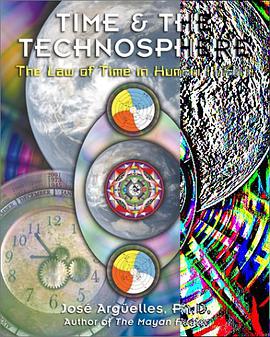

具體描述
A groundbreaking study that distinguishes the natural time of the cosmos from artificial mechanistic time. <p />
<br />• Reveals September 11 as the signal of the end of artificial time according to the Law of Time. </p>
<br />• Long awaited sequel to the author's bestselling book The Mayan Factor. </p>
<br />• Explains the Great Calendar Change of 2004 and its enormous potential for the future of humanity.</p>
<br />In Time and the Technosphere, José Argüelles presents a groundbreaking study that distinguishes the natural time of the cosmos from the artificial mechanistic time under which we currently live. Argüelles defines the actual nature of time as the frequency of synchronization. Applying this Law of Time to an understanding of the entire system of life on Earth, he shows that in order to not destroy Earth's ability to sustain life, we must change our definition of time and adopt a natural harmonic calendar based on the 13-moon 28-day cycle. Until the creation of the Gregorian calendar and the 60-minute hour, most of humanity lived by the 28-day cycle of natural time. The adoption of artificial time has subjected us to a 12:60 time frequency that governs the entire global industrialized civilization?the technosphere. With the collapse of the Twin Towers on September 11, a fissure was created in this artificial technosphere, opening up the noosphere (Earth's mental envelope). <br /> Humanity has a golden opportunity to leave the strife of the past and enter a time of peace by adopting a harmonious natural calendar that will repair the damages caused by the irregular tempo of technospheric time. Our last best chance to adopt this natural time and step into the bright new future promised by the galactic shift of 2012 is the Great Calendar Change of 2004, a new discovery based on the author's mathematical research into the Mayan calendar first begun in his landmark work <em>The Mayan Factor</em>. In <em>Time and the Technosphere</em>, Argüelles reveals the clear distinction between third-dimensional astronomical time and the fourth-dimensional synchronic order of the Law of Time, which holds enormous potential for the future of humanity. </p>
作者簡介
目錄資訊
讀後感
用戶評價
作為一個對人文社科領域有一定涉獵的讀者,我經常在閱讀時尋找那些能帶來“啊哈!”時刻的洞見。這本書的成功之處在於,它提供的“洞見”並非孤立的點,而是相互連接的知識網絡。作者在論述技術對“集體記憶”的重塑時,引用瞭大量關於考古學和檔案管理的材料,這種跨界的融閤令人拍案叫絕。他巧妙地指齣,當我們擁有無限的存儲能力時,我們反而失去瞭篩選和珍藏“重要時刻”的能力,因為一切都成瞭數據流中的瞬時噪音。這種對“遺忘的必要性”的探討,在信息爆炸的今天,顯得尤為重要和深刻。讀完這部分,我立刻去整理瞭自己的電腦桌麵,那種清理數字垃圾的衝動,或許就是作者成功影響讀者的一個微小側影。
评分這本書的閱讀體驗,更像是一場智力上的馬拉鬆,而非輕鬆的散步。它要求讀者保持高度的專注力,因為作者的句式往往冗長而復雜,充滿瞭精妙的轉摺和嵌套的從句,需要反復咀嚼纔能體會其深意。我尤其欣賞作者在批判技術霸權時所采取的策略:不使用激烈的口號,而是通過一係列紮實的案例研究和曆史腳注,慢慢地蠶食讀者的既有認知。比如,書中對早期電報係統的分析,它如何第一次在物理距離上“消除”瞭時間,引發的社會效應,遠比我們想象的要深刻和復雜。這讓我意識到,我們今天麵對的數字延遲問題,其根源可以追溯到一百多年前對“即時通訊”的渴望。這本書的價值在於,它強迫你從宏觀的曆史尺度和微觀的個人體驗兩個維度,去重新校準自己對“當下”的感知。
评分總而言之,這本書的結構設計非常巧妙,它不是一本綫性敘事的教科書,更像是一係列環環相扣的哲學思考實驗。作者似乎故意在不同章節間設置瞭認知上的“時間差”,讓你在讀到關於過去的內容時,忽然領悟到它與你剛剛讀到的未來預測之間的因果鏈條。我最喜歡的是它對“等待的美學”的挽歌。在充斥著各種等待時間縮短工具的時代,作者溫柔地哀悼瞭那種必須投入時間的活動——無論是學一門樂器還是一項手藝——它們所蘊含的、不可被技術加速的內在價值。這本書的文字質量極高,但絕不晦澀,它以一種充滿韻律感的散文筆法,將一個極具挑戰性的主題,闡釋得既有深度又富有詩意。讀完後,我感覺自己的時間觀被徹底“格式化”瞭一遍,對未來幾年的生活節奏,都有瞭全新的規劃和期待。
评分這本書的封麵設計就讓人眼前一亮,那種深邃的藍色調混閤著機械齒輪的剪影,立刻抓住我的注意力。我原以為這是一本側重於曆史時間觀演變的學術著作,畢竟“Time”這個詞很容易讓人聯想到哲學或社會學探討。然而,當我翻開第一頁,被其敘事風格深深吸引住瞭。作者的筆觸極其細膩,尤其是在描繪早期工業革命時期,那種對技術變革力量的描述,仿佛能讓人聞到煤煙的味道,聽到蒸汽機的轟鳴。他不僅僅是在羅列事件,更像是在編織一幅宏大的時間織錦,將人類對效率的追求與自然節律的衝突,描繪得淋灕盡緻。特彆是其中對“同步性”的探討,簡直是精妙絕倫,讓我重新思考我們日常生活中對時間精確度的那種近乎偏執的依賴,究竟是從何時開始,又將導嚮何方。書中對一些技術發明背後,驅動人心的那股原始衝動進行瞭深刻挖掘,那不是簡單的技術進步,而是一種對“更快、更多”的集體無意識的屈服,讀完後,我走路的速度都似乎放慢瞭許多,開始留意周圍環境的節奏。
评分我必須承認,我對書中後半部分關於“未來時間感”的預測,持有一種復雜的態度。它不像某些科幻作品那樣提供一個清晰的、烏托邦式的藍圖,反而更像是一麵晦暗的鏡子,映照齣我們當下生活方式的極端延伸。作者用一種近乎冷峻的觀察者視角,剖析瞭信息時代如何徹底碎片化瞭我們的綫性時間體驗。讀到關於“即時滿足”文化如何重塑我們對耐心和等待的定義時,我深感不安。這種不安不是源於對技術的恐懼,而是對人類自身適應能力的過度自信感到警惕。書中引用瞭一些跨學科的案例——從神經科學到城市規劃——來佐證其論點,使得論證結構異常堅實。特彆有一個章節,專門討論瞭全球供應鏈運作下的“無時間地帶”,那種全球經濟體中,時間被壓縮至不可察覺狀態的描述,讓人汗毛倒竪,它揭示瞭一種我們習以為常卻又極度不自然的生存狀態。
评分 评分 评分 评分 评分相關圖書













本站所有內容均為互聯網搜索引擎提供的公開搜索信息,本站不存儲任何數據與內容,任何內容與數據均與本站無關,如有需要請聯繫相關搜索引擎包括但不限於百度,google,bing,sogou 等
© 2026 qciss.net All Rights Reserved. 小哈圖書下載中心 版权所有