
具体描述
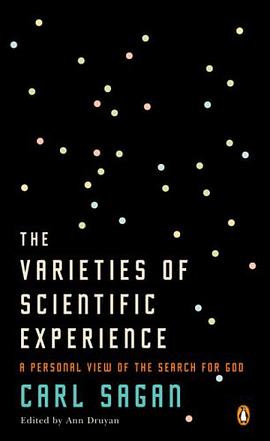
Carl Sagan’s prophetic vision of the tragic resurgence of fundamentalism and the hope-filled potential of the next great development in human spirituality The late great astronomer and astrophysicist describes his personal search to understand the nature of the sacred in the vastness of the cosmos. Exhibiting a breadth of intellect nothing short of astounding, Sagan presents his views on a wide range of topics, including the likelihood of intelligent life on other planets, creationism and so-called intelligent design, and a new concept of science as “informed worship.” Originally presented at the centennial celebration of the famous Gifford Lectures in Scotland in 1985 but never published, this book offers a unique encounter with one of the most remarkable minds of the twentieth century.
作者简介
From The Washington Post's Book World/washingtonpost.com
Reviewed by Wray Herbert
In 1877, the Italian astronomer Giovanni Schiaparelli was looking at Mars through his new telescope, and he noticed intricate etchings in the equatorial region of the planet's surface. Schiaparelli called these lines canali, by which he probably meant something like "gullies" or "grooves," but his coinage got wrongly translated into English as "canals." It was a regrettable linguistic slip.
The idea of Martian canals grabbed the imagination of American astronomer Percival Lowell, scion of the famous Boston Lowell clan, who spun out an elaborate story of a Martian civilization with a central planetary government and the technological wizardry to engineer a massive system of aqueducts. Lowell even used his own Arizona observatory to identify the Martian capital, called Solis Lacus.
There are no canals on Mars. No cities either, and no government. Indeed, no signs of past life whatsoever, as we know today. All of this was an elaborate phantasm of Lowell's fertile mind, yet as late as the 1950s, popular culture was saturated with imagery of Martians as a technologically advanced extraterrestrial race.
The late Carl Sagan used the misbegotten tale of Martian engineers, in his 1985 Gifford Lectures in Natural Theology at the University of Glasgow, as a cautionary tale about the power of belief and yearning to trump science and reason. The Cornell University astrophysicist, Pulitzer Prize-winning author and TV personality was alarmed by the persistence of such magical thinking even into the late 20th century, despite tremendous scientific progress in understanding both human nature and the cosmos. He used the prestigious lecture series (collected here for the first time by his widow and long-time collaborator, Ann Druyan) as an opportunity to challenge the evidence for everything from the Bermuda Triangle to UFOs to angels and deities. But just as important, he used the lectures to spell out his views on the common ground shared by science and spirituality.
Sagan does not deny the existence of God. Nor does he affirm it. As he quips in the lively Q&A section appended to the lectures, "Absence of evidence is not evidence of absence." What Sagan does do is insist on the primacy of scientific method and scientific evidence, and he holds the many and various "proofs" of God's existence up to these scientific standards. Most are found wanting. But Sagan is not harsh in his critiques of religious thought; he is more perplexed by theology's narrow and unimaginative vision.
Why would an all-powerful God work only on a local (and recent) project like the Earth when there is a vast, 15-billion-year-old universe out there, with countless galaxies containing countless stars and the possibility of countless worlds? Why didn't God let us know about quantum mechanics and natural selection and cosmology from the get-go? And why would theologians insist on such a provincial version of the creation and God's imagination?
Sagan is not being flip or heretical, though he is intellectually playful and obviously likes the fray. Sagan took his own spirituality seriously -- indeed, he defined science as "informed worship." The closest he comes to articulating his own view of God is to describe admiringly the philosophies of Spinoza and Einstein, who basically considered God the sum total of all the laws of physics. These laws, he emphasizes again and again, govern not just the Earth and humanity but every solar system and every star and every galaxy. They are not local ordinances.
Central to Sagan's personal search for the existence of God is the question of other life in the universe. For him, the requirements for proof of extraterrestrial intelligence are essentially the same requirements for proof of angels or demigods or a God. Sagan spends much of one lecture on the so-called Drake equation, which is a way of estimating the number of technologically advanced civilizations in the galaxy. The equation incorporates several values, including the rate of star formation, the fraction of stars with planets around them, the fraction likely to have evolved intelligent life and so forth.
The confounding value is L, which stands for the average lifetime of a technologically advanced civilization. If you plug in an optimistic value, assuming such civilizations are long-lived, then the equation predicts that there are millions of intelligent societies out there, and likely one just a few hundred light years away. That's a long way by spaceship, but really right next door if you're going at the speed of light, which means that our radio telescopes should be able to pick up signals from other advanced beings who want to contact us.
But what if the value of L is low? What if technologically advanced civilizations don't last very long on average? If highly intelligent races tend to perish quickly, then the Drake equation predicts not millions of such civilizations but one. Us. We are alone.
In 1985, Sagan was especially concerned about the 55,000 nuclear warheads strategically placed around the globe, threatening to make Earth a cosmological loser. A recurring theme in these lectures is that our scientific prowess is double-edged, revealing the awesomeness of nature while landing us in great peril.
Yet this is not a dour book. Far from it. Sagan was fundamentally an optimist, and The Varieties of Scientific Experience is mostly a joyful, celebratory meditation on nature and the expansiveness of the human spirit. The volume was published on the 10th anniversary of Sagan's death in December 1996. For those who have sorely missed his clear and wise voice, it will be received as a gift.
目录信息
读后感
卡尔·萨根死了,死于上帝之子耶酥诞生两千年后,公元1996年12月20日。 他的灵魂,或曰他的精神,或曰他的思维,缓缓离开了那具肉体,那具使用了62年后被骨髓癌毁坏的躯壳,开始向天界升去。实际上,“升”和“降”的词语用在这儿已不合适,冥界中没有上下左右之分...
评分对于信仰上帝的人,重要的是不是证明上帝的存在,而是理解其教义和精神,从中启发出令人觉悟的线索。凡是设法证明上帝存在的人,都是对其信仰的误读。要注重其语言和意象对精神的滋润,而不是通过证明和探索让他变成冰冷的事实。 “只有当我们相信上帝远超人类对他所能想...
评分本来想读一本关于外星生物的天文学书,没想到出了前面几章讲了一些天文学基础之外,大部分居然真的将的是上帝,以及宗教与科学的关系。我还是再去看看《宇宙》吧。 最后的一些提问回答部分很是精彩,尤其是卡尔萨根与一位物理学家的对话,简直是一场高水品的逻辑辩论赛,而且还...
评分http://blog.sina.com.cn/s/blog_636d1d3a0100n22r.html (写在前边的话:如果你是一个虔诚的信教者,这篇文字中的某些说法或许会让你觉得有所冒犯。但是我想说,我无意造成这种冒犯,我只是在这里阐述自己并不完善的一些关于这一主题的个人见解。以及更多的是,描述我在阅读...
评分卡尔·萨根死了,死于上帝之子耶酥诞生两千年后,公元1996年12月20日。 他的灵魂,或曰他的精神,或曰他的思维,缓缓离开了那具肉体,那具使用了62年后被骨髓癌毁坏的躯壳,开始向天界升去。实际上,“升”和“降”的词语用在这儿已不合适,冥界中没有上下左右之分...
用户评价
这本书的写作风格非常独特,它不像很多科普读物那样枯燥乏味,而是充满了叙事性和感染力。作者似乎有一种魔力,能够将最复杂的科学概念用最生动形象的语言描绘出来,让人仿佛亲身经历了那些科学发现的过程。我尤其欣赏作者在书中对科学研究方法和思维方式的探讨,他深入浅出地剖析了科学家是如何从日常的观察中发现问题,如何设计实验来验证假设,以及在遇到困难时如何坚持不懈地寻求答案。这些内容对于任何希望提升自己解决问题能力的人来说,都具有极高的参考价值。他分享的那些科学家的故事,更是充满了戏剧性和激励性,让我们看到,伟大的科学成就背后,往往是无数次的失败、挫折和坚持。这本书让我意识到,科学不仅仅是知识的积累,更是一种精神,一种对真理不懈追求的精神。它也让我对科学家的生活和工作有了更深的理解,他们并非高高在上、不食人间烟火的神,而是有着普通人的喜怒哀乐、困惑与挣扎,但正是这份坚持,让他们最终跨越了认知的鸿沟。
评分这本书的价值远不止于其内容的深度,更在于其传递的思考方式和人文精神。作者并非仅仅在传授科学知识,他更是在引导读者去思考科学的本质,去理解科学与人类自身的关系。他用一种非常温和而有力的笔触,探讨了科学在人类文明发展中所扮演的角色,以及它如何塑造了我们的世界观和价值观。我尤其欣赏书中对科学与哲学、艺术之间联系的阐述,这让我看到了科学并非独立于人类精神世界的存在,而是与之相互依存、相互促进的。作者的思考是跨越学科界限的,他将科学的理性精神与人文的关怀相结合,为读者提供了一种更加全面和深刻的理解世界的视角。阅读这本书,就像是在与一位智者对话,每一次的交流都让我受益匪浅,让我对科学、对人生、对宇宙有了更深层次的感悟。它鼓励我保持开放的心态,去接纳新的思想,去质疑既定的观念,并始终保持着对未知世界的好奇和探索的勇气。
评分作为一名对科学充满热情但非专业人士,我发现这本书简直是一场及时雨。它以一种非常容易理解的方式,为我揭示了科学的魅力所在。作者的写作功底非常深厚,他能够将那些看似高深莫测的科学理论,用通俗易懂的语言阐释清楚,并且通过丰富的实例和类比,让读者能够轻松地掌握其中的要义。我特别喜欢书中对那些科学史上的关键人物和事件的讲述,这些故事不仅引人入胜,更让我看到了科学是如何一步步发展演变的。作者并没有简单地罗列事实,而是深入探讨了这些发现背后的思想渊源和时代背景,这让我对科学的理解更加立体和全面。读完这本书,我感觉自己仿佛也经历了一次科学的洗礼,对科学的态度不再是敬畏,而是多了一份亲近和热爱。它也让我认识到,科学并非遥不可及,每个人都可以通过学习和思考,去感受科学的乐趣,去参与到这场探索人类知识边界的伟大事业中。
评分这是一本极具启发性的读物,它不仅拓宽了我的科学视野,更激发了我对宇宙和生命的好奇心。作者以一种非常个人化的方式,分享了他对科学世界的观察和体验,这种真诚和坦率,使得整本书读起来非常亲切。我被书中对各种科学现象的精彩解读所吸引,从微观的粒子到宏观的宇宙,从生命进化的奥秘到人类意识的本质,作者都以其独到的见解和深刻的洞察力,为我们呈现了一个丰富多彩的科学图景。他并没有回避科学中的争议和不确定性,反而坦然地讨论了那些尚未解决的难题,这让我更加理解科学的本质是不断探索和修正的过程。书中对不同学科之间交叉融合的描绘,也让我看到了科学的整体性和统一性,那些看似独立的领域,在更宏观的视角下,都指向了同一片广阔的星空。阅读过程中,我经常会停下来思考,这本书促使我审视自己对世界的看法,并鼓励我去拥抱未知,去探索那些隐藏在表面之下的深刻联系。
评分这本书给我留下了深刻的印象,它不仅仅是一本关于科学的书,更像是一次探索,一次对人类认知极限的深入触碰。作者以一种极其个人化却又无比普遍的视角,娓娓道来科学发展过程中那些令人惊叹的里程碑,以及支撑这些突破的那些非凡的头脑。我尤其喜欢他对不同科学领域之间联系的阐述,那些看似风马牛不相及的学科,在作者的笔下却能展现出惊人的和谐与统一,仿佛宇宙万物都遵循着某种隐藏的、深邃的规律。阅读的过程,就像是在进行一场思想的冒险,每一次翻页都可能带来新的启迪,每一次阅读都像是在拓展自己认知的边界。书中的许多例子都非常有说服力,作者不仅引用了大量权威的研究成果,还巧妙地融入了他个人的见解和思考,使得整本书既有严谨的科学依据,又不失人文关怀和哲学深度。读完后,我感觉自己对科学的理解上升到了一个新的层面,不再仅仅是冰冷的公式和实验,而是充满了生命力、创造力和对未知永不满足的渴望。它也让我更加敬畏那些为人类知识进步做出贡献的先驱们,他们的坚持、智慧和勇气,才是照亮我们前进道路的火星。
评分 评分 评分 评分 评分