
具体描述
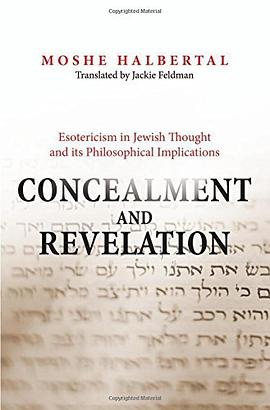
During the twelfth and thirteenth centuries, great new trends of Jewish thought emerged whose widely varied representatives - Kabbalists, philosophers, and astrologers - each claimed that their particular understanding revealed the actual secret of the Torah. They presented their own readings in a coded fashion that has come to be regarded by many as the very essence of esotericism. "Concealment and Revelation" takes us on a fascinating journey to the depths of the esoteric imagination. Carefully tracing the rise of esotericism and its function in medieval Jewish thought, Moshe Halbertal's richly detailed historical and cultural analysis gradually builds conceptual-philosophical force to culminate in a masterful phenomenological taxonomy of esotericism and its paradoxes. Among the questions addressed: What are the internal justifications that esoteric traditions provide for their own existence, especially in the Jewish world, in which the spread of knowledge was of great importance? How do esoteric teachings coexist with the revealed tradition, and what is the relationship between the various esoteric teachings that compete with that revealed tradition? Halbertal concludes that, through the medium of the concealed, Jewish thinkers integrated into the heart of the Jewish tradition diverse cultural influences such as Aristotelianism, Neoplatonism, and Hermeticisims. And the creation of an added concealed layer, unregulated and open-ended, became the source of the most daring and radical interpretations of the tradition.
作者简介
During the twelfth and thirteenth centuries, great new trends of Jewish thought emerged whose widely varied representatives--Kabbalists, philosophers, and astrologers--each claimed that their particular understanding revealed the actual secret of the Torah. They presented their own readings in a coded fashion that has come to be regarded by many as the very essence of esotericism. Concealment and Revelation takes us on a fascinating journey to the depths of the esoteric imagination. Carefully tracing the rise of esotericism and its function in medieval Jewish thought, Moshe Halbertal's richly detailed historical and cultural analysis gradually builds conceptual-philosophical force to culminate in a masterful phenomenological taxonomy of esotericism and its paradoxes.
Among the questions addressed: What are the internal justifications that esoteric traditions provide for their own existence, especially in the Jewish world, in which the spread of knowledge was of great importance? How do esoteric teachings coexist with the revealed tradition, and what is the relationship between the various esoteric teachings that compete with that revealed tradition?
Halbertal concludes that, through the medium of the concealed, Jewish thinkers integrated into the heart of the Jewish tradition diverse cultural influences such as Aristotelianism, Neoplatonism, and Hermeticisims. And the creation of an added concealed layer, unregulated and open-ended, became the source of the most daring and radical interpretations of the tradition.
Moshe Halbertal is professor of philosophy at the Hebrew University of Jerusalem, a fellow at the Shalom Hartman Institute, and the Gruss Professor at New York University Law School. He is the author of People of the Book and the coauthor (with Avishai Margalit) of Idolatry.
目录信息
读后感
用户评价
这部作品最令人拍案叫绝的地方,在于它对“视角”的操控达到了炉火纯青的地步。我们跟随的角色,他们的认知本身就是有缺陷的,他们的回忆是不可靠的,他们的判断充满了偏见。作者巧妙地利用这种不可靠叙事者的特性,构建了一个多层次的现实结构。随着故事的推进,我感觉自己就像一个蹩脚的侦探,手握的证据一会儿指向A,一会儿又指向B,所有的“事实”都像是浸泡在酸液中的老照片,边缘模糊,色彩失真。更绝妙的是,作者并没有提供一个清晰的“官方版本”供读者对照,而是将解读的权力彻底交给了读者。这导致了一种非常有趣的阅读体验——我的解读随着我自身心境的变化而波动。初读时对某个反派角色的憎恶,在读到他童年创伤的侧面描写后,立刻转变为一种复杂的同情,而这种情感的摇摆,正是作者成功之处。这本书不是提供答案的,它是在抛出更深刻的问题:我们如何确定我们所知道的一切,不是别人精心铺设的陷阱?
评分我必须坦言,这是一本需要耐心的书,但它的回报是丰盛的。如果期待那种快速、爽快的阅读体验,这本书恐怕会让人感到沮丧。它的语言风格是沉郁而富有音乐性的,大量的长句和复杂的从句构建出一种古典的、近乎宿命论的氛围。书中人物的对话精妙绝伦,充满了言外之意和未尽之言,很多时候,角色之间真正的交流发生在他们沉默的对视和微小的肢体语言中。我个人非常喜欢作者对“象征意义”的运用,比如反复出现的镜子、被锁上的阁楼,以及永远走不完的回廊,这些意象并非简单的装饰,而是深度嵌入到主题结构之中的核心构件。整本书像一座精心设计的迷宫,每一条通路都通向另一个岔路口,而终点似乎并不重要,重要的是你在探索过程中逐渐认清自己的局限。它不是一本让人读完后会拍案叫绝的爆米花小说,而是一部需要在夜深人静时,点上一盏昏黄的台灯,伴随着一杯浓烈的黑咖啡才能品味其厚重的佳作。
评分阅读这本书的过程,与其说是在看一个故事,不如说是在经历一场对“可信度”的持续审问。作者似乎对传统的叙事结构抱有一种近乎反叛的态度,情节的推进往往不是线性的,而是通过碎片化的记忆、日记片段以及旁观者的片面叙述交织而成。这要求读者必须全程保持高度的警觉和分析能力,稍有不慎,便可能错过某个关键的暗示。我发现自己常常需要停下来,翻回前几章,重新审视某个角色的某一句话,试图从中挖掘出被刻意隐藏的层次。这本书的魅力,正在于它拒绝被简单归类——它时而像一部冷峻的心理惊悚片,时而又像一出探讨哲学悖论的舞台剧。我尤其佩服作者处理“信息差”的手法,每一次信息的不对称,都不是为了制造廉价的惊吓,而是为了揭示人性在压力之下如何扭曲自我认知。读完后,我久久无法从那种被反复欺骗和自我欺骗的氛围中抽离出来,它迫使我去思考,我们日常所见的“真实”,究竟有多少成分是自愿的盲从。
评分这本小说,坦白说,读起来就像是在黑暗的走廊里摸索,每一步都伴随着心跳声的加剧。作者的笔触极其细腻,描绘出了一种无所不在的压抑感,仿佛整个故事都被一层看不见的幕布笼罩着。我特别欣赏它对人物内心挣扎的刻画,那种想要呐喊却又被无形的力量钳制住的感觉,真实得让人窒息。书中对于环境的渲染也极为到位,无论是那终日弥漫着雾气的港口小镇,还是那些光线昏暗、摆设老旧的房间,都成为了角色情感的外化。每一次“真相”的边缘闪现,都伴随着更深一层的迷雾,让人既期待又恐惧。叙事节奏的掌控堪称大师级别,它从不急于抛出重磅炸弹,而是像慢炖的浓汤,一点点地将复杂的人性与宿命的纠葛熬煮出来。读到中段时,我曾一度以为自己把握住了作者的意图,但紧接着一个精妙的反转,又将我彻底打入新的不确定性之中。这种在明确与模糊之间反复拉扯的阅读体验,无疑是极其耗费心神的,但那种最终豁然开朗(或者说,接受了更深层困惑)的体验,又是无与伦比的满足。
评分这是一部文学性极强的作品,它毫不掩饰地展示了对文字的敬畏与驾驭能力。它的节奏是缓慢的,但绝不拖沓,每一个场景的铺陈、每一段环境的描述,都服务于烘托一种缓慢腐蚀人心的基调。与市面上许多追求速度和冲击力的作品不同,这本书选择了一条更艰难的道路:通过对细节的极致捕捉来构建情感的深度。我仿佛能闻到那些老旧书页和潮湿木头发霉的气味,感受到角色们皮肤上凝结的汗水和绝望。它探讨的不仅仅是外部的阴谋,更是个人在面对系统性压迫时,灵魂深处如何进行自我辩护和最终溃败的过程。阅读它需要投入大量的情感资源,因为它强迫你进入角色的痛苦之中,去感受那种被孤立、被误解,甚至被自我放逐的深沉悲凉。读完合上书本的那一刻,我的内心感受到的不是故事的终结,而是一种悠长的回响,仿佛那些未竟的对话和未解的谜团,仍在空气中持续震荡。
评分 评分 评分 评分 评分