
具体描述
GENERAL INTRODUCTION
UNCOVERING THE STRUCTURE OF THE TEACHING
Though his teaching is highly systematic, there is no single text that can be ascribed to the Buddha in which he defines the architecture of the Dhamma, the scaffolding upon which he has framed his specific expressions of the doctrine. In the course of his long ministry, the Buddha taught in different ways as determined by occasion and circumstances. Sometimes he would enunciate invariable principles that stand at the heart of the teaching. Sometimes he would adapt the teaching to accord with the proclivities and aptitudes of the people who came to him for guidance. Sometimes he would adjust his exposition to fit a situation that required a particular response. But throughout the collections of texts that have come down to us as authorized “Word of the Buddha,” we do not find a single sutta, a single discourse, in which the Buddha has drawn together all the elements of his teaching and assigned them to their appropriate place within some comprehensive system.
While in a literate culture in which systematic thought is highly prized the lack of such a text with a unifying function might be viewed as a defect, in an entirely oral culture—as was the culture in which the Buddha lived and moved—the lack of a descriptive key to the Dhamma would hardly be considered significant. Within this culture neither teacher nor student aimed at conceptual completeness. The teacher did not intend to present a complete system of ideas; his pupils did not aspire to learn a complete system of ideas. The aim that united them in the process of learning—the process of transmission—was that of practical training, self-transformation, the realization of truth, and unshakable liberation of the mind. This does not mean, however, that the teaching was always expediently adapted to the situation at hand. At times the Buddha would present more panoramic views of the Dhamma that united many components of the path in a graded or Wide-ranging structure. But though there are several discourses that exhibit a broad scope, they still do not embrace all elements of the Dhamma in one overarching scheme.
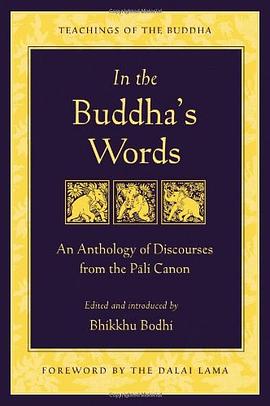
The purpose of the present book is to develop and exemplify such a scheme. I here attempt to provide a comprehensive picture of the Buddha’s teaching that incorporates a wide variety of suttas into an organic structure. This structure, I hope, will bring to light the intentional pattern underlying the Buddha’s formulation of the Dhamma and thus provide the reader with guidelines for understanding Early Buddhism as a whole. I have selected the suttas almost entirely from the four major collections or Nikayas of the Päli Canon, though I have also included a few texts from the Udana and Itivuttaka, two small books of the fifth collection, the Khuddaka Nikaya. Each chapter opens with its own introduction, in which I explain the basic concepts of Early Buddhism that the texts exemplify and show how the texts give expression to these ideas.
I will briefly supply background information about the Nikayas later in this introduction. First, however, I want to outline the scheme that I have devised to organize the suttas. Although my particular use of this scheme may be original, it is not sheer innovation but is based upon a threefold distinction that the Päli commentaries make among the types of benefits to which the practice of the Dhamma leads: (1) welfare and happiness visible in this present life; (2) welfare and happiness pertaining to future lives; and (3) the ultimate good, Nibbãna (Skt: nirvana).
Three preliminary chapters are designed to lead up to those that embody this threefold scheme. Chapter I is a survey of the human condition as it is apart from the appearance of a Buddha in the world. Perhaps this was the way human life appeared to the Bodhisatta—the future Buddha—as he dwelled in the Tusita heaven gazing down upon the earth, awaiting the appropriate occasion to descend and take his final birth. We behold a world in which human beings are driven helplessly toward old age and death; in which they are spun around by circumstances so that they are oppressed by bodily pain, cast down by failure and misfortune, made anxious and fearful by change and deterioration. It is a world in which people aspire to live in harmony, but in which their untamed emotions repeatedly compel them, against their better judgment, to lock horns in conflicts that escalate into violence and wholesale devastation. Finally, taking the broadest view of all, it is a world in which sentient beings are propelled forward, by their own ignorance and craving, from one life to the next, wandering blindly through the cycle of rebirths called samsãra.
Chapter II gives an account of the Buddha’s descent into this world. He comes as the “one person” who appears out of compassion for the world, whose arising in the world is “the manifestation of great light.” We follow the story of his conception and birth, of his renunciation and quest for enlightenment, of his realization of the Dhamma, and of his decision to teach. The chapter ends with his first discourse to the five monks, his first disciples, in the Deer Park near Bärãnasi.
Chapter III is intended to sketch the special features of the Buddha’s teaching, and by implication, the attitude with which a prospective student should approach the teaching. The texts tell us that the Dhanima is not a secret or esoteric teaching but one which “shines when taught openly.” It does not demand blind faith in authoritarian scriptures, in divine revelations, or infallible dogmas, but invites investigation and appeals to personal experience as the ultimate criterion for determining its validity. The teaching is concerned with the arising and cessation of suffering, which can be observed in one’s own experience. It does not set up even the Buddha as an unimpeachable authority but invites us to examine him to determine whether he fully deserves our trust and confidence. Finally, it offers a step-by-step procedure whereby we can put the teaching to the test, and by doing so realize the ultimate truth for ourselves.
With chapter IV, we come to texts dealing with the first of the three types of benefit the Buddha’s teaching is intended to bring. This is called “the welfare and happiness visible in this present life” (ditthadhamma-hitasukha), the happiness that comes from following ethical norms in one’s family relationships, livelyhood, and communal activities. Although Early Buddhism is often depicted as a radical discipline of renunciation directed to a transcendental goal, the Nikayas reveal the Buddha to have been a compassionate and pragmatic teacher who was intent on promoting a social order in which people can live together peacefully and harmoniously in accordance with ethical guidelines. This aspect of Early Buddhism is evident in the Buddha’s teachings on the duties of children to their parents, on the mutual obligations of husbands and wives, on right livelihood, on the duties of the ruler toward his subjects, and on the principles of communal harmony and respect.
The second type of benefit to which the Buddha’s teaching leads is the subject of chapter V. called the welfare and happiness pertaining to the future life (samparayika-hitasukha). This is the happiness achieved by obtaining a fortunate rebirth and success in future lives through one’s accumulation of merit. The term “merit” (puñna) refers to wholesome kamma (Skt: karma) considered in terms of its capacity to produce favorable results within the round of rebirths. I begin this chapter with a selection of texts on the teaching of kamma and rebirth. This leads us to general texts on the idea of merit, followed by selections on the three principal “bases of merit” recognized in the Buddha’s discourses: giving (dana), moral discipline (sda), and meditation (bhavana). Since meditation figures prominently in the third type of benefit, the kind of meditation emphasized here, as a basis for merit, is that productive of the most abundant mundane fruits, the four “divine abodes” (brahmavihara), particularly the development of loving-kindness.
Chapter VI is transitional, intended to prepare the way for the chapters to follow. While demonstrating that the practice of his teaching does indeed conduce to happiness and good fortune within the bounds of mundane life, in order to lead people beyond these bounds, the Buddha exposes the danger and inadequacy in all conditioned existence. He shows the defects in sensual pleasures, the shortcomings of material success, the inevitability of death, and the impermanence of all conditioned realms of being. To arouse in his disciples an aspiration for the ultimate good, Nibbana, the Buddha again and again underscores the perils of sarnsära. Thus this chapter comes to a climax with two dramatic texts that dwell on the misery of bondage to the round of repeated birth and death.
The following four chapters are devoted to the third benefit that the Buddha’s teaching is intended to bring: the ultimate good (paramattha), the attainment of Nibbana. The first of these, chapter VII, gives a general overview of the path to liberation, which is treated analytically through definitions of the factors of the Noble Eightfold Path and dynamically through an account of the training of the monk. A long sutta on the graduated path surveys the monastic training from the monk’s initial entry upon the life of renunciation to his attainment of arahantship, the final goal.
Chapter VIII focuses upon the taming of the mind, the major emphasis in the monastic training. I here present texts that discuss the obstacles to mental development, the means of overcoming these obstacles, different methods of meditation, and the states to be attained when the obstacles are overcome and the disciple gains mastery over the mind. In this chapter I introduce the distinction between samatha and vipassana, serenity and insight, the one leading to samadhi or concentration, the other to panna or wisdom. However, I include texts that treat insight only in terms of the methods used to generate it, not in terms of its actual contents.
Chapter IX, titled “Shining the Light of Wisdom,” deals with the content of insight. For Early Buddhism, and indeed for almost all schools of Buddhism, insight or wisdom is the principal instrument of liberation. Thus in this chapter I focus on the Buddha’s teachings about such topics pivotal to the development of wisdom as right view, the five aggregates, the six sense bases, the eighteen elements, dependent origination, and the Four Noble Truths. This chapter ends with a selection of texts on Nibbäna, the ultimate goal of wisdom.
The final goal is not achieved abruptly but by passing through a series of stages that transforms an individual from a worldling into an arahant, a liberated one. Thus chapter X, “The Planes of Realization,” offers a selection of texts on the main stages along the way. I first present the series of stages as a progressive sequence; then I return to the starting point and examine three major milestones within this progression: stream-entry, the stage of nonreturner, and arahantship. I conclude with a selection of suttas on the Buddha, the foremost among the arahants, here spoken of under the epithet he used most often when referring to himself, the Tathagata.
作者简介
目录信息
读后感
用户评价
我一直认为,真正的好书,能够让我们在阅读的过程中,不断地反思和成长。《在佛陀的话语中》这本书,无疑就是这样一本能够触及灵魂的好书。它不仅仅提供知识,更重要的是,它能够改变我们看待世界和自己的方式。 书中对于“涅槃”的解释,让我不再将它视为一种遥不可及的境界,而是看作一种当下的体验,一种内心解脱的状态。这种理解,极大地减轻了我对未来的焦虑,让我能够更加专注于当下,更加珍惜此刻的宁静。
评分在我看来,《在佛陀的话语中》这本书,最可贵之处在于它能够将深刻的哲学思想,以一种极其易于理解和实践的方式呈现出来。我一直认为,真正的智慧,不应该是只存在于象牙塔里的理论,而应该能够融入我们的日常生活,指导我们的行为。这本书恰恰做到了这一点。 书中对于“四圣谛”的阐述,让我对苦、集、灭、道有了更深刻的理解。它并非是关于悲观的宣扬,而是关于如何认清痛苦的本质,找到痛苦的根源,并最终实现解脱的完整路径。作者通过引用佛陀的开示,将这些古老的真理,与现代人的生活体验连接起来,让我感受到一种跨越时空的共鸣。
评分当我翻开《在佛陀的话语中》这本书时,我并没有抱有太高的期望。我曾读过一些介绍佛教的书籍,但它们往往过于学术化,或者过于宗教化,让我难以产生共鸣。然而,这本书却以一种出乎意料的方式,触动了我内心最柔软的部分。它没有试图将我变成一个佛教徒,而是以一种尊重和理解的态度,引领我去探索那些关于生命意义的终极问题。 书中对“缘起”的解释,是我在这本书中最大的收获之一。佛陀的“缘起”,并非是一种宿命论,而是一种关于事物相互依存,相互影响的深刻洞察。理解了缘起,就等于理解了世界运行的法则,也就能够理解我们自己的行为是如何影响着周围的一切。我开始更加审慎地对待自己的言行,因为我知道,每一个微小的举动,都可能引发一系列的连锁反应。这种责任感,伴随着一种对生命的敬畏,让我对生活有了全新的视角。
评分读完《在佛陀的话语中》这本书,我感到一种久违的平静和喜悦。它没有让我感到压力,也没有让我感到负担,反而让我觉得,我对生命的理解变得更加透彻,我对自己的生活有了更多的掌控感。 书中对于“无常”的阐述,并没有带来悲观,反而让我更加珍惜眼前的一切,更加懂得活在当下。这种对无常的接纳,让我能够更从容地面对生命中的起伏变化。
评分我是一个对哲学和宗教都抱有浓厚兴趣的人,多年来阅读了不少关于不同信仰的书籍,但《在佛陀的话语中》这本书,给我带来的启迪是前所未有的。它不仅仅是一本关于佛教的书,更是一本关于如何认识自己、如何与世界和谐相处的智慧之书。 书中关于“神通”和“禅定”的论述,并没有被夸大或神秘化,而是将其置于佛陀整体教法的框架下进行阐释,强调了它们作为修行过程中的辅助工具,其最终目的仍是熄灭烦恼,证悟真理。这种严谨的态度,让我对佛法有了更清晰、更理性的认识,避免了被一些表面的神奇现象所迷惑。
评分这本书带给我的震撼,不仅仅在于其内容的深度,更在于其叙述的艺术。作者以一种非常温和且富有同情心的方式,将佛陀的教诲呈现在我们面前。我一直认为,真正的智慧,不应该是高高在上,令人难以企及的,而应该是能够触及人心,唤醒潜能的。而《在佛陀的话语中》恰恰做到了这一点。它没有使用任何哗众取宠的语言,也没有刻意去渲染神秘感,而是用一种质朴、真诚的语言,去阐述那些关于生命、关于心灵最根本的真理。 在阅读过程中,我尤其被书中对于“慈悲”和“智慧”的阐述所打动。书中将慈悲视为一种普世的、无条件的爱,而智慧则是对事物真实本质的洞察。这两者并非独立存在,而是相互依存,相辅相成。佛陀的教诲,正是引导我们如何培养这两种品质,从而实现内心的转化和提升。我记得书中有一段关于“无我”的论述,它并非否定个体的存在,而是指出了我们对“我”的执着,是导致痛苦的根源。这种解释,让我对“无我”这一概念有了全新的认识,不再将其视为一种虚无主义,而是看作一种解脱束缚的契机。
评分我不得不说,《在佛陀的话语中》这本书,为我打开了一个全新的世界。在此之前,我对佛教的理解,更多地停留在一些表面的概念,比如轮回、业报,但对于这些概念背后的深刻含义,却知之甚少。这本书,通过对佛陀原始教诲的梳理和呈现,让我得以一窥佛教思想体系的精妙之处。作者不仅仅是简单地罗列佛经,而是将它们串联起来,形成一个完整的知识体系,让我们能够更系统地理解佛陀的教法。 书中对于“八正道”的阐述,给我留下了极其深刻的印象。它不仅仅是八个道德准则,更是通往解脱的完整道路,涵盖了正见、正思维、正语、正业、正命、正精进、正念、正定。作者通过引用佛陀的实际开示,让我们明白,这八个方面是如何相互关联,如何共同作用,引导我们走出痛苦的循环。我开始尝试在日常生活中去实践这些原则,虽然过程充满挑战,但我能感受到一丝丝微妙的变化,一种更加清晰的自我认知,一种更平静的心态。
评分我最近读完了一本叫做《在佛陀的话语中》的书,它给我的感受实在太深刻了,以至于我花了很长时间才整理好自己的思绪来写下这篇评价。这本书,与其说是一本书,不如说是一扇门,一扇通往古老智慧,通往内心平静的门。我一直对佛教抱有浓厚的兴趣,但传统意义上的佛教经典,比如《阿含经》或者《大藏经》的某些部分,对于一个初学者来说,确实会显得有些晦涩难懂,充满了大量的术语和仪式性的描述,很容易让人望而却步。然而,《在佛陀的话语中》这本书,却以一种极其令人惊叹的方式,将佛陀最核心、最精华的教诲,以一种逻辑清晰、条理分明的方式呈现出来。它不是对佛经的简单摘录,而是经过精心编排和组织,将不同佛经中关于同一主题的论述汇集在一起,从而形成了一个更加完整和深入的理解。 例如,当书中探讨“苦”的本质时,它并没有仅仅停留在字面上的痛苦,而是深入剖析了“苦”的根源,包括我们对无常的执着,对自我的幻灭,以及对感官享乐的追逐。它引用了佛陀在不同场合下,针对不同根器的弟子所说的开示,这些开示并非相互矛盾,而是像多棱镜一样,从不同的角度折射出“苦”的复杂性和普遍性。读到这里,我才真正明白,原来我们日常生活中感受到的烦恼,无论是失落、焦虑,还是不满,都并非偶然,而是有其深刻的因果联系。书中的论述,就像一位循循善诱的老师,一步步引导我剥开层层迷雾,看到那个隐藏在一切烦恼背后的真实原因。这种体验,比任何零散的关于“保持积极”的建议都来得更为根本和持久。
评分《在佛陀的话语中》这本书,给我最大的惊喜,在于它能够如此清晰地阐释那些看似复杂难懂的佛教概念。作者以一种极其精炼和生动的方式,将佛陀的教诲,如同珍珠一般串联起来,让我们能够清晰地看到它们之间的内在逻辑和深刻含义。 书中对于“善知识”的论述,让我深刻认识到,在追求智慧的道路上,一位好的引导者是多么重要。而这本书,本身就如同一位循循善诱的善知识,引导我一步步走向更深的觉悟。
评分《在佛陀的话语中》这本书,给我最直观的感受就是一种宁静的力量。在快节奏、充满压力的现代社会,我们常常感到迷失和焦虑,而这本书,就像一股清流,洗涤着我躁动不安的心灵。它没有强迫我去接受任何观点,而是以一种温和的引导,让我自己去发现那些能够带给我平和与智慧的答案。 书中对于“布施”和“持戒”的论述,让我明白了这些并非是简单的宗教仪式,而是培养慈悲心和智慧的实践方法。当我尝试在生活中去实践这些原则时,我发现自己与他人的关系变得更加融洽,内心也充满了更多的喜悦。
评分真正读了佛经我才发现,佛教的妙处在于: 1.意象不错 2.中译本文辞工整,英译本废物 3.用在其他地方可以增加文学色彩 此外无他
评分真正读了佛经我才发现,佛教的妙处在于: 1.意象不错 2.中译本文辞工整,英译本废物 3.用在其他地方可以增加文学色彩 此外无他
评分经文节选+分析论文,闻思修到证果的编译顺序,脉络清晰查阅方便。Nikaya/Agama都没读透简直不好意思说自己在学大乘。基础要牢靠,不要眼高手低…
评分巴利经藏诠释 菩提长老 Bhikkhu Bodhi
评分巴利经藏诠释 菩提长老 Bhikkhu Bodhi