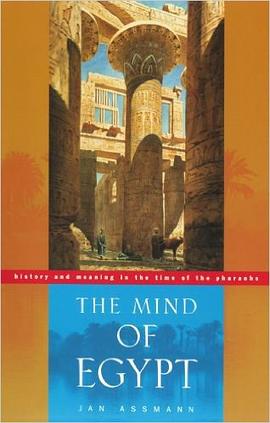

具体描述
"Writing a history of the development of the ancient Egyptian mind," wrote the Swiss historian Jacob Burckhardt a century and a half ago, is "an impossibility." Today, observes Jan Assmann, we know "infinitely more about Egypt" than did the scholars of Burckhardt's day. But, even so, the ancient Egyptian mind continues to elude us.
Turning to what he calls "the hidden face of history," Assmann explores the meaning of the Egyptian past to the ancients themselves. For them, history, that chronicle of pharaohs and empires, began with the recognition that humans, not gods or demigods, controlled earthly affairs. From the beginning of the Old Kingdom to the time of the Ptolemy dynasty, the idea of the state was central to Egyptians' view of themselves in the world. With this centralized power, Assmann argues, grew other ideas, such as the notion that the stone of the pyramids was "an eternalized form of the body" and that our short time on earth was "something more akin to a dream than to reality." Full of learned discussions on such matters as the origins and development of hieroglyphic writing and the evolution of funereal architecture, Assmann's book offers a fascinating view of ancient history, and of ancient ways of thinking. --Gregory McNamee --This text refers to an out of print or unavailable edition of this title.
From Publishers Weekly
Originally published in 1996, this is both an intellectual history of ancient Egypt and an exploration in which "the course of events forms the backdrop and the discourses generating and reflecting meaning occupy the front of the stage." In other words, here's a book about history and how it's made and interpreted as much as it is about Egypt. Assmann's dense and scholarly tome draws on a wide variety of sources, from literature and archeology to iconography, to trace a portrait of Egyptian civilization from 5000 B.C.E. to the beginnings of Christianity. It has no central thesis, as such, but examines a fascinating array of material, some of it well known (Piye's victory stele) and some of it more obscure (a wide variety of hymns and literary lamentations). The translation is by and large excellent, and yet the book is still rather difficult to wade through. The author's preoccupation with theory may trouble readers who are accustomed to a more narrative presentation; his application of the concept of Cosmotheism is traditional, for example, and so the introduction of terminology like Cosmohermeneutics seems to complicate things unnecessarily. Assmann (Moses the Egyptian; The Search for God in Ancient Egypt) is a distinguished Egyptologist, and this book will appeal greatly to the field's academics and professionals, as well as seriously dedicated Egyptophiles. Unfortunately, one of the major attractions in any publication on ancient Egypt is absent good photographs of the culture's spectacular legacy in art (there are only eight illustrations). There are, however, endnotes, a basic chronology, and a useful key to the Egyptian gods.
作者简介
目录信息
读后感
"History appears to us today not as an abstract and immutable category, but as a culutral form that changes in accordance with the semantic framework that the society places it in. History is profoundly a human affair; we produce it by producing meaning....
评分"History appears to us today not as an abstract and immutable category, but as a culutral form that changes in accordance with the semantic framework that the society places it in. History is profoundly a human affair; we produce it by producing meaning....
评分"History appears to us today not as an abstract and immutable category, but as a culutral form that changes in accordance with the semantic framework that the society places it in. History is profoundly a human affair; we produce it by producing meaning....
评分"History appears to us today not as an abstract and immutable category, but as a culutral form that changes in accordance with the semantic framework that the society places it in. History is profoundly a human affair; we produce it by producing meaning....
评分"History appears to us today not as an abstract and immutable category, but as a culutral form that changes in accordance with the semantic framework that the society places it in. History is profoundly a human affair; we produce it by producing meaning....
用户评价
阅读《The Mind of Egypt》的过程,就像是缓缓揭开一层层古老的面纱,露出底下那颗既熟悉又陌生的埃及心灵。作者以一种非常细腻且富有同情心的方式,去呈现那些生活在几千年前的人们的喜怒哀乐,他们的信仰,他们的恐惧,以及他们对生命的理解。我印象最深刻的是书中对于“家庭”和“社会责任”的探讨。古埃及人并非我们想象中那样,只关注来世或神祇,他们同样珍视尘世的生活,重视亲情,并且在社会结构中扮演着自己的角色。书中通过一些生动的细节,例如日常的契约、家庭的祭祀,甚至是刑罚的记录,都揭示了古埃及人对秩序、公正以及集体福祉的追求。我能够感受到,即使在遥远的过去,人类对于和谐社会、良好人际关系的渴望,也是如此强烈。这本书让我跳出了对古埃及“宏大叙事”的固有印象,而是看到了那些构成文明肌理的普通人的生活和思想,这使得整个文明变得更加真实和有温度。
评分我一直对古埃及的文明抱有浓厚的兴趣,但很多时候,市面上的一些书籍往往侧重于宏伟的建筑、精美的文物,或者笼统地讲述历史进程。然而,《The Mind of Egypt》却提供了一种全新的视角,它不是在展示古埃及的“外在”,而是在探索其“内在”。书中对于“灵魂”和“来世”观念的解析,简直像是一场心灵的探险。我从未如此清晰地意识到,古埃及人是如何将死亡视为生命的一个必然环节,并且为此精心准备。他们对身体的保存、对墓葬的复杂设计,以及那些描绘死亡与重生场景的艺术品,不再仅仅是历史的遗迹,而是他们内心深处对永恒的渴望和对生命意义的独特诠释。书中关于“卡”(Ka)和“巴”(Ba)的概念,更是让我对古埃及人复杂而精妙的灵魂观有了更直观的认识。我惊叹于他们如何在一个远古的时代,就发展出如此丰富而深刻的哲学思想,去理解生命的本质和死后的旅程。读完这本书,我感觉自己对古埃及的认识不再停留在表面,而是触及到了他们精神世界的内核。
评分坦白说,我拿到这本书时,并没有预设一个非常明确的阅读期待,但我很快就被它的独特魅力所吸引。《The Mind of Egypt》没有采用那种枯燥的学术论文形式,也没有流于表面化的文化介绍。相反,它以一种近乎散文的笔触,带领读者潜入古埃及人的意识深处。我惊讶于作者能够如此精准地把握古埃及人在面对“不确定性”时的态度,以及他们如何通过宗教仪式、占卜和对神祇的祈祷来寻求安慰和指引。书中对“死亡的恐惧”和“对永生的渴望”的描绘,尤其让我产生了强烈的共鸣。我看到了古埃及人如何试图通过各种方式来战胜时间和遗忘,他们对永恒生命的追求,不仅仅是对肉体的不朽,更是对精神和记忆的延续。这种对生命终极问题的深刻思考,在任何时代都具有普遍的意义。这本书让我意识到,即使在遥远的过去,人类的内心世界也充满了复杂的情感和深刻的哲学探究,而《The Mind of Egypt》恰恰是解读这一切的绝佳钥匙。
评分这本书就像是一场穿越时空的邀请,让我得以窥见古埃及人那令人着迷的内心世界。作者并没有简单地罗列历史事实或考古发现,而是尝试去理解那些早已消逝的灵魂是如何思考、感受和与世界互动的。我尤其被书中对“玛阿特”(Ma'at)概念的深入探讨所吸引,这不仅仅是一个抽象的伦理准则,更是古埃及人理解宇宙秩序、社会和谐以及个人道德责任的核心。书中的描述让我仿佛能听到他们对公平、真理和平衡的追求,感受到他们在面对生死、神灵和来世时的敬畏与期盼。作者运用了大量生动的案例,从法老陵墓中的壁画到日常生活中的祷文,将这些遥远的思想具象化,使得原本可能枯燥的历史变得鲜活有趣。我经常在阅读时陷入沉思,试图将自己的现代视角与古埃及人的精神世界进行对照,这种跨越时空的对话,既拓展了我的视野,也让我对人类普遍的精神追求有了更深刻的理解。这本书并非那种快速浏览就能获取信息的读物,它需要你放慢脚步,细细品味,让那些古老的智慧在心中慢慢发酵。
评分这本书给我带来的阅读体验,更像是一次沉浸式的考古发掘,只不过这一次挖掘的是思想的土壤,而非物质的遗骸。《The Mind of Egypt》巧妙地将文学、宗教、哲学以及日常生活中的碎片信息编织在一起,勾勒出一幅古埃及人精神世界的全景图。我特别喜欢书中对古埃及神话故事的解读,它们不再是简单的神鬼传说,而是古埃及人解释世界运行规律、社会伦理以及个体情感的载体。每一个神祇,每一个神话事件,都蕴含着他们对宇宙秩序、善恶对立、以及人类命运的思考。作者的文字充满了一种引人入胜的叙事感,让我仿佛置身于尼罗河畔,亲耳聆听那些古老的智慧。我尤其对书中关于“书写”和“知识”在古埃及社会中的地位的描述感到震撼。文字本身就被赋予了神圣的力量,记录下来的思想和历史,成为连接过去、现在和未来的桥梁。这本书让我认识到,古埃及文明的伟大,不仅在于其物质的辉煌,更在于其精神的深度和持久的生命力。
评分Assmann误我....
评分Assmann误我....
评分Assmann误我....
评分Assmann误我....
评分Assmann误我....