
具体描述
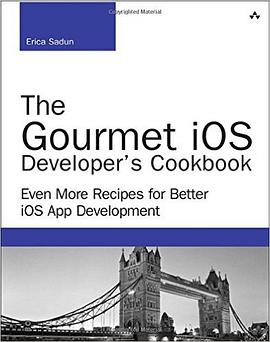
The Gourmet iOS Developer’s Cookbook
offers a fresh banquet of delicious cutting-edge iOS programming recipes for projects both big and small. Renowned iOS programming expert Erica Sadun brings together reliable, proven code for creating today’s richest, most robust apps.
Sadun presents innovative ways to make the most of AVFoundation, Text Kit, animation, adaptive interface programming, and much more. As in all of her iOS best-sellers, this pragmatic guide translates modern best practices into working code, distilling key concepts into recipes you can understand and build on.
This is more than just cut-and-paste; using examples, Sadun offers a deep dive into the “how” and “why” of advanced iOS development. The code reflects iOS’s latest capabilities, and every chapter groups related tasks together, so you can jump straight to your solution.
Coverage includes
Providing advanced speech generation and barcode recognition features through AVFoundation Automatically updating app text presentation based on user preferences and expectations Extending rich, flexible text throughout your apps with UIKit and Text Kit Seamlessly migrating text designs between iOS screens and other destinations Generating attributed text strings from HTML sources Integrating real-world physics for exciting animations and interactions Creating better interfaces with dynamic animators--and overcoming their pitfalls Achieving greater visual impact with improved user alerts and popovers Implementing clever and compelling effects with non-rectangular views Building adaptive apps that gracefully respond to any iOS display, orientation, or screen Streamlining development with expert methods, functions, and techniques Exploring the core concepts you’ll need to migrate successfully to Swift
This book’s source code is frequently updated by the author and can be downloaded at https://github.com/erica/iOS-Gourmet-Cookbook.
作者简介
Erica Sadun is the bestselling author, coauthor, and contributor to three dozen books on programming, digital media, Web design, and other topics- Sadun holds a Ph.D. in Computer Science from Georgia Tech's renowned Graphics, Visualization, and Usability Center.
目录信息
Chapter 1: Media 1
Speech 1
Other Options 3
Delegate Callbacks 3
Dictation 5
Creating Barcodes 5
Filter Parameters 5
Building Codes 6
Reading Barcodes 8
Listening for Metadata Objects 10
Responding to Metadata 11
Extracting Bounds 13
Enhancing Recognition 14
Detecting Faces 14
Building AVFoundation Movies 14
Creating a Pixel Buffer 16
Drawing into the Pixel Buffer 17
Expressive Drawing 18
Building Movies from Frames 19
Adding Images to Movies 23
Wrap-up 24
Chapter 2: Dynamic Typography 25
Type Size and User Needs 25
How Dynamic Type Works 25
Listening for Type Updates 28
Handling Dynamic Type with Attributes 31
Scanning for Text Style Ranges 32
Applying Text Style Ranges 34
Attribute-Ready Dynamic Elements 35
Custom Fonts Faces 36
Dynamic Text Views 37
Custom Sizing 38
Font Descriptors 39
Descriptor Challenges 40
Fonts with Multiple Variations 41
Using String Attributes to Modify Fonts 42
Dynamic Type Gotchas 43
Wrap-up 43
Chapter 3: Text Kit 45
Creating Complex Text Layouts 45
Glyphs 46
Text Storage 55
Layout Managers 56
Text Containers 56
Adaptive Flow 58
Insets 60
Exclusion Paths 60
Bounding Rectangles 62
Using Text Kit to Add Touch to Labels 63
Establishing Text Kit 63
Synchronizing 64
Translating Coordinates 65
Glyphs and Characters 66
Checking for Links 67
Adding Visual Feedback 67
Draggable Exclusion Zones 69
Building PDFs with Text Kit 71
Printing Text View Data 73
Printing PDF Data 74
Wrap-up 74
Chapter 4: Attributed Strings and Document Containers 75
Class Enhancements 75
String Attachments 77
Building Attributed Strings from HTML 78
Document Type Dictionaries 79
Converting HTML Source to Attributed Strings 80
Converting Attributed Strings to Document Representations 81
Generating HTML from Attributed Strings 82
Markup Initialization 83
RTF and RTFD 83
The RTFD Container 84
Initializing Attributed Strings from a File 84
Converting RTFD Text to Data 85
Writing RTFD Containers from Data 86
Inspecting Attributes 87
Establishing Document Attributes 89
Enhancing Attributed Strings 91
Returning Copies with New Attributes 92
Adjusting Attributes 93
Extending Mutable Attributed Strings 94
Text Ranges 95
Calculating Positions 95
Position Geometry 95
Updating Selection Points 97
Hardware Key Support 97
Wrap-up 99
Chapter 5: Animation 101
Keyframe Animation 101
Building Physics with Keyframes 103
Blocking Animators 105
UIKit Spring-Based Animations 106
Practical Uses for Spring Animations 108
System Animations 109
Motion Effects 109
Building Planes 110
Shadow Effects 111
Custom Transition Animations 113
Delegation 114
Building Transitioning Objects 114
Implicit Animations 116
Building an Animation-Ready Layer 116
Building a View Around a Layer 118
Timing 118
Coordinating Animations 119
Building Implicit Completion Blocks 120
Animating Custom Properties 121
Intercepting Updates 122
Drawing Properties 123
Wrap-up 124
Chapter 6: Dynamic Animators 125
Physics-Based Behaviors 125
Building Dynamics 126
Detecting Pauses 127
Creating a Frame-Watching Dynamic Behavior 131
Implementing Snap Zones 133
Leveraging Real-World Physics 135
Connecting a Gravity Behavior to Device Acceleration 137
Creating Boundaries 138
Enhancing View Dynamics 138
Custom Behaviors 139
Creating Custom Dynamic Items 139
Subverting Dynamic Behaviors 141
Better Custom Dynamic Behaviors 142
Custom Secondary Behaviors 144
Collection Views and Dynamic Animators 147
Custom Flow Layouts 147
Returning Layout Attributes 148
Updating Behaviors 149
Building a Dynamic Alert View 150
Connecting Up the Jelly 150
Drawing the View 152
Deploying Jelly 154
Wrap-up 154
Chapter 7: Presentations 155
Alerts 155
Class Deprecations 155
Building Alerts 156
Enabling and Disabling Alert Buttons 161
Adding Text Fields 162
Mask Views 164
Shape Layer Masking 164
Building Mask Views 166
Building Effect Views 169
Building a Blur Effect 170
Adding Vibrancy Effects 171
Animating Effect Views 172
Building Popovers 175
Supporting Bubbles 176
Presenting Popovers 177
Wrap-up 177
Chapter 8: Shape Magic 179
How to Shape a View 179
Expanding Beyond Circles 180
Resizing Bezier Paths 180
Building a Bezier-Based Shape Image View 184
Working with Unclosed Shapes 185
Adding Borders to Shaped Views 187
Building Shaped Buttons 190
Adding Attention-Grabbing Animations to Shaped Views 193
Wrap-up 199
Chapter 9: Adaptive Deployment 201
Traits 201
Trait Properties 202
Defining Traits 202
Combining Trait Collections 203
Designing for Traits 204
UIScreen Properties 205
Coordinate Spaces 205
Application Frame 206
Screen Bounds 206
Scale 207
Rotation 207
Size Classes and Assets 208
Basic Deployment 208
UIKit and Image Views 210
The UIImageAsset Class 210
Building Images from PDFs 211
Overriding Trait Collections 214
Building Side-by-Side iPhone Split Views 215
A Bit More About iOS 8 Split View Controllers 218
Wrap-up 219
Chapter 10: Development Helpers 221
All the Lorems 221
Placeholder Text 221
Image Ipsums 223
Generating Random User Data 225
Bulk Names 225
Generating Random Feeds 227
Random Everything 228
Directives 229
Converting Comments to Warnings 229
Warnings 231
Testing for the Simulator 232
Errors 232
Testing for Inclusion 233
Messages 234
Wrapping Pragmas 234
Overriding Diagnostics 235
Unused Variable Warnings 235
Marking Non-null and Nullable Items 236
Developer Tweaks 236
Saving Files from the Simulator 237
Tighter Logging 238
Wrap-up 238
Chapter 11: A Taste of Swift 239
Swift Versus Objective-C 239
Building iOS Apps in Swift 240
Optionals 243
Inferred Types 244
The Optional Enumeration 245
Unwrapping Optionals 246
Assigning Values to Non-optionals 248
Cocoa Touch Patterns 248
Hybrid Language Development 251
Calling Objective-C from Swift 252
Accessing Classes 252
Calling Swift from Objective-C 253
Preparing Swift for Objective-C 254
Class Descent 255
Building the Basics 256
Watching Progress 257
Learning Swift 259
Wrap-up 260
Index 261
· · · · · · (收起)
读后感
用户评价
说实话,市面上很多技术书籍的“前沿性”都非常成问题,它们总是慢半拍,等你项目开发到一半了,才发现书里的技术点已经过时或者被新的标准取代。然而,《The Gourmet iOS Developer's Cookbook》在“新”和“深”之间找到了一个极佳的平衡点。它没有盲目追逐每一个新框架的表面光鲜,而是审慎地选取了那些已经展现出长期潜力,并且解决了现有痛点的技术点进行深度剖析。例如,关于 Swift Concurrency (async/await) 的应用,它并没有停留在官方文档的示例上,而是深入探讨了在混杂着传统 GCD 和 Combine 的遗留代码库中,如何安全、平滑地进行现代化改造。作者提供了一套行之有效的“渐进式迁移”策略,详细说明了如何识别线程安全风险点,并用 `withCheckedContinuation` 等高级接口进行精确的桥接。这对于那些正在维护大型、复杂、多年历史的项目团队来说,简直是雪中送炭。它让你明白,技术升级不是推倒重来,而是一个需要精妙设计和谨慎执行的工程壮举。这种务实且具有前瞻性的内容选择,让这本书的生命周期得以大大延长。
评分作为一名对代码美学有着近乎偏执追求的开发者,我向来对那些只有功能实现而缺乏优雅性的代码不屑一顾。这本书恰恰满足了我对“干净”和“高效”的双重要求。它的代码示例,每一个都是经过精心打磨的典范。我特别留意了其中关于 Combine 框架在复杂事件流处理中的应用实例。现在的项目越来越依赖响应式编程范式,但很多教程往往只停留在基础的 `sink` 和 `map` 上。这本书则展示了如何运用 `merge`, `combineLatest` 配合自定义 `Operator` 来解决跨多个数据源的状态同步难题。最让我拍案叫绝的是,作者在处理错误恢复和重试逻辑时,所采用的策略简直是艺术品级别的——它不仅保证了业务逻辑的正确性,更重要的是,它将错误处理的代码优雅地从主业务流程中剥离出来,使得整个数据流看起来清晰、流畅,几乎没有冗余的 `if let` 或 `guard let` 嵌套。这种对代码可读性和维护性的极致追求,深深地影响了我后续的编码习惯。读这本书的过程,与其说是学习新技术,不如说是在进行一场高级的代码艺术鉴赏,让你领悟到,最好的技术实现,一定是性能与美学并存的。
评分这本书简直是为我这种在iOS开发这条路上摸爬滚打多年的“老兵”量身定做的“续命良方”!说实话,刚拿到手的时候,我还有点将信将疑,毕竟市面上的“食谱”类技术书籍多如牛毛,很多都是浅尝辄止,甚至有些还停留在几年前的旧技术栈上,买回来基本就是压箱底的灰尘收集器。但是《The Gourmet iOS Developer's Cookbook: Even More Recipes for Better iOS App Development》完全颠覆了我的预期。它不是那种空泛地讲解理论的书,而是真正深入到实战的“战术手册”。我尤其欣赏它对那些“疑难杂症”的解决方案。比如,我最近就在一个复杂的自定义导航手势中遇到了性能瓶颈,试了好几种方法都收效甚微,正准备硬着头皮重构整个模块时,翻到了关于“高效处理手势冲突与优化动画帧率”的那一章。作者没有直接甩给我一堆晦涩的代码,而是先用清晰的逻辑图剖析了冲突产生的根本原因,然后提供了几套不同层级的优化策略,从基础的 `UIGestureRecognizerDelegate` 的精妙运用,到更深层次的 CADisplayLink 调度,每一步都说得明明白白。这种循序渐进、直击痛点的讲解方式,让我感觉自己不是在看书,而是在和一个经验丰富的资深同行进行一对一的深度 Code Review。对于任何想要将自己的 App 从“能跑”提升到“跑得优雅、跑得稳定”的开发者来说,这本书简直是无价之宝,它提供的不是简单的“怎么做”,而是“为什么这么做会更好”的底层认知。
评分我必须坦率地讲,这本书的视野之广,远超乎我最初的想象。我原本以为它会集中火力在 Swift 5.x 的新特性或者 SwiftUI 的某些高级布局技巧上,毕竟这是近两年最热门的话题。然而,翻开目录才发现,它对那些看似“陈旧”但实际应用场景极广的技术栈也给予了足够的尊重和深入的挖掘。特别是关于底层数据持久化和网络通信优化的部分,那简直是一场对经典框架的“重温与升华”。作者并没有满足于使用标准的 Core Data 或 URLSession,而是深入探讨了如何在特定场景下对它们进行“魔改”以应对极端需求。比如,书中关于在低带宽环境下实现智能缓存失效策略的探讨,它不仅展示了如何编写一个健壮的缓存层,更巧妙地结合了文件系统权限管理和后台任务调度,确保即使用户在网络不佳时也能获得接近线上的体验。这种宏观架构设计和微观实现细节兼顾的能力,是很多技术书籍所缺乏的。很多教程只会教你搭积木,而这本书教你的却是如何设计并冶炼出那些高强度的“连接件”。我感觉自己读完后,看待整个应用架构的眼光都变得更加锐利和全面,不再局限于单一模块的优化,而是能够从整个用户生命周期的角度去思考性能的取舍和平衡。
评分购买这本书的初衷,其实是希望能找到一些能让我代码库的“健壮性”得到质的飞跃的技巧。在 App 提交审核时,那些偶发的崩溃和内存泄漏常常是最大的拦路虎。这本书中关于调试和性能分析的部分,简直是为“疑难杂症专家”准备的工具箱。它没有浪费笔墨在 Xcode 自带的 Instruments 的基础操作上,而是直接跳到了那些高级追踪技巧。我最喜欢的是它对“虚拟内存碎片化”和“后台进程调度不当”导致的隐性性能衰退的分析方法。作者展示了如何利用低层级的系统日志和自定义的内存标记,来追踪那些看似随机出现的内存峰值。更重要的是,它给出了一套标准化的“性能审计流程”,而不是零散的“小技巧”。当你面对一个不知道从何下手的性能问题时,这本书提供的流程图和诊断思路,能够迅速帮你定位到问题的核心区域。这种系统性的解决问题的思维框架,远比单纯的知识点积累更为宝贵,它训练的不是你的记忆力,而是你的工程师直觉和分析能力。读完之后,我感觉自己对App的生命周期管理和资源控制有了一种全新的、更具掌控力的信心。
评分内容真的很棒!但是,但是这用词真是太TM难啃了,难道是我英文变差了,读别的英文书没这个问题的啊。已加入iOS开发进阶套餐!
评分内容真的很棒!但是,但是这用词真是太TM难啃了,难道是我英文变差了,读别的英文书没这个问题的啊。已加入iOS开发进阶套餐!
评分内容真的很棒!但是,但是这用词真是太TM难啃了,难道是我英文变差了,读别的英文书没这个问题的啊。已加入iOS开发进阶套餐!
评分内容真的很棒!但是,但是这用词真是太TM难啃了,难道是我英文变差了,读别的英文书没这个问题的啊。已加入iOS开发进阶套餐!
评分内容真的很棒!但是,但是这用词真是太TM难啃了,难道是我英文变差了,读别的英文书没这个问题的啊。已加入iOS开发进阶套餐!