
具体描述
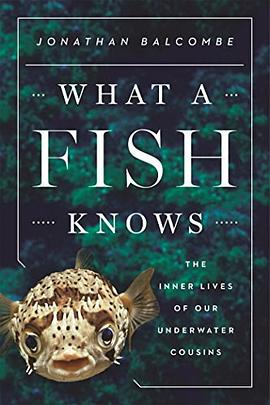
An underwater exploration that overturns myths about fishes and reveals their complex lives, from tool use to social behavior
There are more than thirty thousand species of fish--more than all mammals, birds, reptiles, and amphibians combined. But for all their breathtaking diversity and beauty, we rarely consider how fish think, feel, and behave. In What a Fish Knows, the ethologist Jonathan Balcombe takes us under the sea and to the other side of the aquarium glass to reveal what fishes can do, how they do it, and why. Introducing the latest revelations in animal behavior and biology, Balcombe upends our assumptions about fish, exposing them not as unfeeling, dead-eyed creatures but as sentient, aware, social--even Machiavellian. They conduct elaborate courtship rituals and develop lifelong bonds with shoal-mates. They also plan, hunt cooperatively, use tools, punish wrongdoers, curry favor, and deceive one another. Fish possess sophisticated senses that rival our own. The reef-dwelling damselfish identifies its brethren by face patterns visible only in ultraviolet light, and some species communicate among themselves in murky waters using electric signals. Highlighting these breakthrough discoveries and others from his own encounters with fish, Balcombe inspires a more enlightened appraisal of marine life.
An illuminating journey into the world of underwater science, What a Fish Knows will forever change your view of our aquatic cousins--your pet goldfish included.
作者简介
Jonathan Balcombe is the director of animal sentience at the Humane Society Institute for Science and Policy and the author of four books, including Second Nature and Pleasurable Kingdom. A popular radio guest, he has also appeared on the National Geographic Channel and in several documentaries, and he is a frequent contributor of features and opinions to The New York Times, The Washington Post, The Wall Street Journal,Nature, and more.
目录信息
读后感
我很感激巴尔科姆博士写了这样一本信息量充足、有见解、可读性高的书籍,阅读此书就像是开启一次了解鱼类感知的旅行。我迫切地希望任何一个关注生命,对其他生物,特别是对鱼类有同情心的人阅读这本书,甚至买一本分享给你的朋友们。 巴尔科姆博士的这本书既包括深度研究,又有...
用户评价
这本书的封面设计简直是艺术品,那种深邃的蓝色调配上几尾跃动的鱼影,让人一眼就被吸引住,仿佛能感受到水下的微凉与神秘。我通常对科普读物抱有一种敬畏但又略带距离感的态度,但这本书在设计上就成功地拉近了与读者的距离。我迫不及待地翻开扉页,第一印象是排版极其考究,字体选择既兼顾了易读性,又透着一股沉稳的学术气息。作者似乎非常注重读者的阅读体验,图文的穿插布局非常自然,没有那种硬塞知识点的感觉。我特别喜欢它在介绍基础概念时所采用的类比手法,那些关于鱼类感官世界的描述,即便对于完全没有生物学背景的人来说,也能立刻领会到其中的精妙之处。这本书的开篇部分,没有急于抛出复杂的理论,而是像一位耐心的向导,领着我们慢慢潜入水域,去观察那些日常生活中容易被我们忽略的生命形态。阅读过程中,我数次停下来,仅仅是为了回味某一个描述的精准度——那种对细节的捕捉,绝非一般作者能够企及。它让我对“水下世界”的认知,不再停留在食物链的简单层级,而是扩展到了一个充满复杂社会结构和情感交流的微观宇宙。
评分读完这本书的某个章节后,我产生了一种强烈的冲动,想立刻去水族馆,或者干脆去野外的溪边,重新审视那些水中的居民。这本书的叙事方式极富感染力,它不是干巴巴地陈述“鱼会这样做”,而是通过大量的实证案例和生动的场景还原,让我们“看见”它们是怎样做的。比如,它对鱼类学习能力的描述,彻底颠覆了我过去对它们“低等生物”的刻板印象。作者似乎有一种魔力,能将原本晦涩的神经生物学知识,转化为可以被大众理解的生动故事。我尤其欣赏作者在行文间流露出的那种对生命的深切敬畏,这使得整本书的基调充满了人文关怀,而非纯粹的科学堆砌。在探讨鱼类的交流系统时,文字的节奏感非常强,时而舒缓细腻,描绘声波在水中的传播;时而又紧张激烈,再现捕食者与猎物之间的信息战。这种叙事张力的把握,使得阅读过程充满了期待感,仿佛我正在参与一场场水下谍战,而不是在阅读一本严肃的科学著作。
评分这本书的后半部分,开始深入探讨人类活动对鱼类生存的深刻影响,其严肃性和紧迫感让人不得不深思。作者没有停留在简单的环保呼吁,而是从鱼类的行为生态学和种群动态的角度,量化和剖析了污染、过度捕捞以及栖息地破坏所带来的连锁反应。这种基于扎实科学数据的批判,显得尤为有力,它不仅仅是情感上的控诉,更是理智上的警示。特别是在讨论特定物种的适应性变化时,文字中流露出的那种无奈与忧虑,透过纸面直达人心。我能感受到作者不仅是一位伟大的观察者,更是一位深沉的守护者。这本书的价值,远超出了科普的范畴,它更像是一份写给地球公民的生态备忘录。它成功地将科学的严谨性与伦理的紧迫性完美结合,读完之后,你很难再以过去的眼光去看待餐桌上的鱼,或是海平面上的渔船,那份沉甸甸的责任感油然而生。
评分让我印象最为深刻的是作者对“非视觉感官”的细致剖析。我们人类作为视觉主导的物种,很容易忽略了水下世界中那些依赖振动、化学信号甚至电场来导航和交流的生命体。这本书用极具画面感的语言,描绘了鱼类如何“听见”水流的细微变化,如何通过“嗅觉”构建起复杂的水下地图,甚至如何利用侧线系统感知周围生物的意图。这种感官世界的重塑,带来了一种奇特的“去中心化”体验,让我意识到我们人类的感知系统是多么的狭隘和片面。作者在描述这些独特的生物学机制时,总是能找到恰到好处的日常参照物,比如将侧线系统的感应比喻成“全身长满了毛孔的雷达”,这样的比喻非常直观有效。它不仅仅是知识的传授,更是一种感官的拓展训练,让我的想象力也随之在幽暗的水体中漫游,去体验那种与我们完全不同的存在方式。
评分这本书的结构安排堪称教科书级别,逻辑推进得一丝不苟却又不失灵活性。它似乎遵循着一种由浅入深、由表及里的探索路径。一开始,我们聚焦于鱼类的基本生理结构和生存策略,那是构建整个水下生态理解的基石。随后,作者巧妙地将讨论转向了更具哲学意味的层面——鱼类的“自我意识”与“社会性”。这部分内容的论证过程极其严密,引用了大量跨学科的研究成果,但行文却极其流畅,没有半点晦涩难懂的阻碍感。我常常在想,要整理出如此庞杂的信息并形成如此清晰的脉络,需要多么浩瀚的知识储备和多么精湛的笔力。它不是简单地罗列事实,而是构建了一个完整的认知框架,让我们能够站在一个更高的维度去理解为什么鱼类在数亿年的进化中能够占据如此重要的生态位。读完之后,我感觉自己对生物学、环境学乃至是哲学思考都有了一个全新的切入点,这种知识的“溢出效应”是很多同类书籍所不具备的。
评分因为作者实在太执着于解释悲壮的海洋伦理学,又加上读得太慢,一度想打3星。然鹅最后两章讲的sex life和parenting真是大开眼界,附录配图直接挽回了5星!(为何丝毫不提河鱼,人家不是fishie么?你再如何劝说,然鹅我还是爱吃🐟🐟
评分Pop science无端多了许多说教
评分因为作者实在太执着于解释悲壮的海洋伦理学,又加上读得太慢,一度想打3星。然鹅最后两章讲的sex life和parenting真是大开眼界,附录配图直接挽回了5星!(为何丝毫不提河鱼,人家不是fishie么?你再如何劝说,然鹅我还是爱吃🐟🐟
评分因为作者实在太执着于解释悲壮的海洋伦理学,又加上读得太慢,一度想打3星。然鹅最后两章讲的sex life和parenting真是大开眼界,附录配图直接挽回了5星!(为何丝毫不提河鱼,人家不是fishie么?你再如何劝说,然鹅我还是爱吃🐟🐟
评分Pop science无端多了许多说教