
具体描述
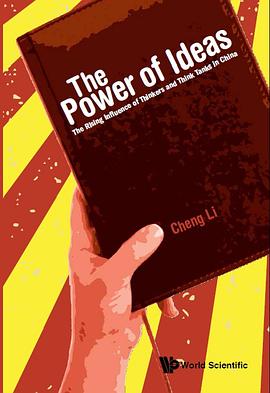
China's momentous socioeconomic transformation is not taking place in an intellectual vacuum: Chinese scholars and public intellectuals are actively engaged in fervent discussions about the country's domestic and foreign policies, demographic constraints, and ever-growing integration into the world community. This book focuses on China's major think tanks where policies are initiated, and on a few prominent thinkers who influence the way in which elites and the general public understand and deal with the various issues confronting the country.
The book examines a number of factors contributing to the rapid rise of Chinese think tanks in the reform era. These include the leadership's call for "scientific decision-making," the need for specialized expertise in economy and finance as China becomes an economic powerhouse, the demand for opinion leaders in the wake of a telecommunication revolution driven by social media, the accumulation of human and financial capital, and the increasing utility of the "revolving door" nature of think tanks.
It has been widely noted that think tanks and policy advisors have played an important role in influencing the strategic thinking of the top leadership, including the formation of ideas such as the "Three Represents," "China's peaceful rise," "One Belt and One Road," and the founding of the Asian Infrastructure Investment Bank (AIIB). In 2014, President Xi Jinping made think tank development a national strategy, and he claimed that "building a new type of think tank with Chinese characteristics is an important and pressing mission."
Though the media outside China has often reported on this important development, it has all but escaped rigorous scholarly scrutiny. This book will categorize Chinese think tanks by their various forms, such as government agencies, university-based think tanks, private think tanks, business research centers or consultancies, and civil society groups. It will not only analyze the problems and challenges in China's think tank development, but also reveal the power of ideas in this increasingly dynamic and diverse country.
作者简介
Cheng Li is Director and Senior Fellow at the Brookings Institution's John L Thornton China Center. Dr Li is also a director of the National Committee on US–China Relations, a member of the Academic Advisory Team of the Congressional US–China Working Group, and a member of the Council on Foreign Relations. He is the author/editor of numerous books, including Rediscovering China: Dynamics and Dilemmas of Reform (1997), China's Leaders: The New Generation (2001), Bridging Minds Across the Pacific: The Sino–US Educational Exchange (2005), China's Changing Political Landscape: Prospects for Democracy (2008), China's Emerging Middle Class: Beyond Economic Transformation (2010), The Road to Zhongnanhai: High-Level Leadership Groups on the Eve of the 18th Party Congress (2012, in Chinese), China's Political Development: Chinese and American Perspectives (2014), and Chinese Politics in the Xi Jinping Era: Reassessing Collective Leadership (forthcoming 2016). He is the principal editor of the Thornton Center Chinese Thinkers Series published by the Brookings Institution Press.
Dr Li has advised a wide range of US government, education, research, business and not-for-profit organizations on work in China. Dr Li has frequently been called upon to share his unique perspective and insights as an expert on China. He recently appeared on BBC, CCTV, CNN, C-SPAN, ABC World News with Diane Sawyer, NPR Diane Rehm Show, and the PBS Charlie Rose Show. Li grew up in Shanghai during the Cultural Revolution. In 1985, he came to the United States when he later received an MA in Asian Studies from the University of California and a PhD in Political Science from Princeton University.
目录信息
· · · · · · (收起)
读后感
用户评价
如果用一个词来概括这本书对我的影响,那一定是“催化剂”。它像是一剂强效的思维催化剂,激发了我内心深处对知识的好奇心和探究欲。阅读过程中,我发现自己开始不受控制地联想到其他领域的内容——比如读到关于信息熵的论述,我会立刻想到我正在看的某部小说结构;读到关于早期人类社会组织形态的分析,我会反思我所在公司当前的决策机制。这本书成功地打破了学科壁垒,将看似分散的知识点通过底层逻辑的力量聚合在一起。它没有直接提供任何“如何成功的秘诀”或者“如何思考”的操作指南,但这恰恰是它的高明之处。它提供的是一个看待世界的全新“透镜”,一旦你习惯了用这个透镜观察,你就会发现,原来世界上的万事万物都是可以被连接起来的,而关键就在于你是否拥有足够清晰和开放的视角。这是一本需要反复咀嚼、并且值得在人生的不同阶段重读的里程碑式的作品。
评分这本书最让我感到耳目一新的是它对于“失败的思想”的重视程度。我们通常读到的都是那些“成功者”的传记,那些最终被历史证明是正确的理论。然而,这位作者花了相当大的篇幅去探讨那些曾经轰轰烈烈、却最终被证明是死胡同的哲学流派、社会实验或者科学猜想。他没有将它们简单地视为历史的注脚,而是深入分析了它们失败的原因,认为正是这些“不成功的尝试”为后来的成功铺平了道路,或者至少为我们提供了宝贵的教训。这种对“错误”的尊重,让我意识到,思想的演进并非一条直线,而是充满了无数的岔路口和回旋。通过研究这些“失败者”,我反而更好地理解了“成功”是如何艰难地挣脱既有框架的束缚的。这极大地缓解了我对完美主义的焦虑,让我明白了在探索未知时,犯错是多么具有建设性的一部分。
评分我得说,这本书的结构设计简直是鬼斧神工。它不是那种线性推进的叙事,更像是一张精密编织的网,各个章节之间充满了精妙的呼应和回响。我发现自己经常需要停下来,翻回前面的章节去印证某个观点,然后恍然大悟——原来作者早在一开始就埋下了伏笔。这种设计极大地增强了阅读的互动性和探索性。它要求读者必须全神贯注,稍有走神,可能就会错过那个将两个看似不相干的理论串联起来的关键连接点。我印象最深的是关于“集体无意识”与“技术伦理”的对比分析部分,作者没有直接给出结论,而是通过对比不同文化背景下对“进步”的定义,引出了对当代社会中技术滥用现象的深刻反思。这种层层递进、抽丝剥茧的写作手法,让结论的得出显得无比自然和具有说服力。它不像某些说教式的书籍那样咄咄逼人,而是温和地引导你走进作者的逻辑迷宫,最终让你自己找到出口,并由衷地赞叹这条路径的设计精妙。
评分坦白讲,这本书的语言风格非常“锐利”,带着一种不容置疑的自信和一种略显尖刻的幽默感。作者似乎毫不留情地解剖那些被过度神化的理论或人物,他揭示了许多光鲜亮丽的“思想巨头”背后,其实也充满了人性的弱点、政治的考量,甚至是纯粹的运气。这种去魅化的过程,非但没有削弱我对思想的尊敬,反而让我觉得那些能够穿透迷雾、抵达真理的努力更加可贵和真实。他用词精准,拒绝一切模糊的套话,尤其在批判既有权威时,那种精准打击的力量感让人拍案叫绝。比如,他对某个十七世纪的科学家的评价,用了一个我从未在学术著作中见过的比喻,形象地指出了其理论中的一个致命的逻辑漏洞,读完让人忍不住想去查阅原始文献,看看那个漏洞到底有多明显。这种既有学术深度,又不失文学张力的表达,让阅读过程充满了兴奋感,生怕自己错过任何一个妙语连珠的句子。
评分天哪,这本书简直就是一场精神上的马拉松!我原本以为这会是一本晦涩难懂的学术著作,毕竟书名听起来就带着一股子“正经”的味道。结果,我完全错了。作者的叙事功力简直是炉火纯青,他能将那些宏大、抽象的概念,像是哲学流派的演变、科学范式的更迭,用一种近乎讲故事的方式娓娓道来。我尤其喜欢他处理历史转折点的方式,不是那种干巴巴的时间线罗列,而是深入到那些关键人物的内心世界,描绘出他们面对未知、挣扎、最终迸发出灵感的瞬间。读到某个章节时,我甚至能感受到那种思想突破的“痛感”和随之而来的巨大喜悦。他巧妙地穿插了大量的历史轶事和人物侧写,让那些埋在历史尘埃里的思想火花重新闪耀起来。整本书读下来,我感觉我的思维都被重新校准了一遍,看待世界的方式也变得更加立体和多维。那种仿佛站在巨人的肩膀上,俯瞰人类文明发展脉络的震撼感,是很多同类书籍无法给予的。它不仅仅是知识的堆砌,更像是一次深度的思维按摩,让人在酣畅淋漓中,对“思考”本身产生了更深的敬畏。
评分 评分 评分 评分 评分