
具体描述
The importance of American artists in the history of modern art is well-known and well-documented, from Jackson Pollock to Mark Rothko and Andy Warhol. However, the work of such artists did not spontaneously appear after World War II, nor was it simply transplanted from Europe. There is a longer, subtler history of the development of modernism in relation to American artists, as well as teachers, patrons and collectors, which can be traced through the first half of the twentieth century.
William C. Agee's analysis includes artists working in the first half of the century, such as Arthur Dove, Stuart Davis, Charles Demuth, Marsden Hartley, Georgia O'Keeffe, and John Marin, as well as a discussion of the continuity between this period and the artists who went on to become celebrated internationally, such as Arshile Gorky, Edward Hopper, Helen Frankenthaler, Willem de Kooning, Morris Louis, Robert Rauschenberg, Jasper Johns and Donald Judd.
Agee also integrates the work of certain European artists who became central to modern American art. Paul Cézanne, Henri Matisse, Marcel Duchamp and Piet Mondrian as well as Josef Albers and Hans Hofmann became influential teachers (and eventually American citizens), impacting strongly on the likes of Stuart Davis and many others, who have not necessarily been compared or connected to the European art canon previously.
As a radical re-evaluation of art history from the early twentieth century to the late 1960s, this brilliant new account of American modernism is a must-read for students and scholars of art as well as all those interested in modernism and its wider cultural history.
作者简介
William C. Agee taught at Hunter College since 1988 until his retirement in 2014 and was awarded an endowed chair in 2004, the Evelyn Kranes Kossak Professor of Art History. Prior to Hunter, he held directorships at the Museum of Fine Arts, Houston and at the Pasadena Art Museum. Agee has published numerous articles and monographs in conjunction with exhibitions he has organized on artists such as Stuart Davis, Morgan Russell, Donald Judd and many others, as well as on aspects of modern art in America. His books include American Vanguards: Graham, Davis, Gorky, de Kooning, and Their Circle, 1927-1942 (2011) and Coming of Age: American Art, 1850s to 1950s (2006). Agee is based in Yonkers, NY.
目录信息
读后感
用户评价
对于任何对美国艺术史抱有好奇心的人来说,《Modern Art in America 1908-68》都是一本不容错过的指南。作者并没有将这本书写成枯燥的学术论文,而是以一种更加亲近读者的方式,娓娓道来。每一章都像是一个独立的专题,但又紧密相连,共同构建了一个完整而丰富的历史图景。我尤其欣赏作者对不同艺术流派之间相互影响和辩论的细致描绘。从立体派到超现实主义,再到后来影响深远的抽象表现主义,书中都为我们呈现了一个清晰的脉络。而且,作者并没有回避艺术史中那些充满争议的时刻,例如关于“美国性”的讨论,以及女性艺术家和非裔美国艺术家在主流艺术界所面临的挑战。这些深入的探讨,使得这本书不仅仅是一部艺术史的梳理,更是一部关于身份认同、社会变革与艺术力量的深刻洞察。每一次翻阅,我都能从中发现新的亮点,例如某个被遗忘的艺术家,或者某个被忽略的艺术事件。这本书让我深刻体会到,艺术的发展并非坦途,而是在不断的碰撞与融合中,才得以孕育出伟大的作品。
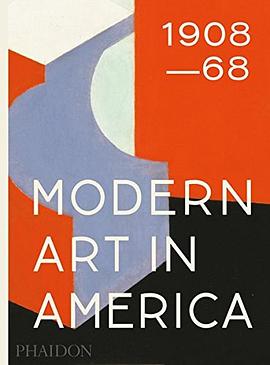
评分这本书的封面设计就足够吸引人了,一种大胆而充满活力的色彩组合,瞬间将我拉回了那个充满变革的美国现代艺术时代。阅读《Modern Art in America 1908-68》的过程,更像是进行了一场穿越时空的艺术朝圣。作者以其深厚的学术功底和引人入胜的叙述方式,将这个时期在美国艺术史上至关重要、却又常常被边缘化的篇章,生动地展现在读者面前。从早期欧洲现代主义思潮的引入,到本土艺术家们如何消化、吸收并最终发展出独具特色的艺术语言,书中对每一个关键节点都进行了详尽的梳理。我特别喜欢作者对当时社会文化背景的解读,艺术从来都不是孤立存在的,它深受时代思潮、社会事件甚至国际政治的影响。书中不仅描绘了艺术家们的创作历程,更深入探讨了画廊、评论家、收藏家以及公众舆论是如何共同塑造了现代艺术在美国的生态。阅读过程中,我仿佛置身于纽约的画廊,耳边回响着关于抽象表现主义、波普艺术的争论,眼前浮现出一幅幅充满生命力和想象力的画面。这本书让我对美国艺术史有了全新的认识,也让我更加珍视那些敢于突破、勇于创新的艺术家们。
评分这本书的魅力在于其深度和广度并存。作者在《Modern Art in America 1908-68》中,将1908年至1968年这段美国现代艺术的黄金时期,进行了全景式的展现。我惊喜地发现,书中对一些关键艺术家的分析,不仅仅停留在作品本身,更深入挖掘了他们创作的动机、灵感来源以及他们在艺术界中的地位。例如,对乔治亚·奥基夫的描绘,就让我对这位女性艺术家的坚韧和独特视角有了更深刻的理解。同时,我也很欣赏作者对不同艺术流派之间界限的探讨,以及它们是如何随着时间推移而发生演变和融合的。这本书提供了一个宏大的视角,让我们能够审视艺术在美国是如何从模仿走向创新,从边缘走向主流。每一次阅读,都能带来新的启发,也让我对美国艺术的未来充满了期待。这本书不仅仅是一本关于艺术的书,更是一部关于美国文化发展和自我认同的书。
评分《Modern Art in America 1908-68》是一本充满激情的作品,它成功地将美国现代艺术史的复杂性呈现在读者面前,但又以一种引人入胜的方式进行。我特别着迷于作者如何将那些抽象的艺术理念,用生动形象的语言解释清楚。例如,在描述早期立体派对视觉表现的颠覆时,作者的文字就如同画面一样,在我脑海中展开。这本书不仅关注了纽约等艺术中心,还辐射到了美国其他地区的艺术发展,让我看到了现代艺术在美国的多元化和地域性。我喜欢书中对一些非主流但同样具有重要意义的艺术运动的关注,例如达达主义在美国的短暂却影响深远的存在,以及后来出现的硬边绘画等。这些细节的呈现,让整部艺术史的画卷更加完整和饱满。阅读此书,就像是与一群才华横溢的艺术家们进行了一场跨越时空的对话,我从中汲取了艺术的养分,也感受到了那个时代蓬勃的创造力。
评分这本书所带来的不仅仅是知识的填充,更是一种精神上的洗礼。作者对1908年至1968年间美国现代艺术的阐释,充满了智慧和洞察力。我曾以为自己对那个时期的艺术已经有所了解,但《Modern Art in America 1908-68》却像打开了一扇新的大门,让我看到了更广阔的视野。书中对艺术家个体命运的描绘,常常让我为之动容。他们中有的人经历了辉煌,有的人却默默无闻,但他们的艺术都为我们留下了宝贵的财富。作者在分析艺术作品时,也常常结合当时的社会语境,使得我们能够更深刻地理解作品背后的意义。例如,在探讨抽象表现主义时,作者不仅分析了其形式上的突破,还将其与二战后的美国社会心理紧密联系起来,揭示了艺术家们试图在混乱和不确定中寻找秩序和意义的努力。这本书的叙述风格非常流畅,即使是非艺术专业背景的读者,也能轻松地跟随作者的思路,领略那个时代艺术的魅力。
评分Exactitude is not truth. (Matisse) // The best abstract art communicates an overwhelming sense of reality. (Fairfield Porter)
评分Exactitude is not truth. (Matisse) // The best abstract art communicates an overwhelming sense of reality. (Fairfield Porter)
评分Exactitude is not truth. (Matisse) // The best abstract art communicates an overwhelming sense of reality. (Fairfield Porter)
评分Exactitude is not truth. (Matisse) // The best abstract art communicates an overwhelming sense of reality. (Fairfield Porter)
评分Exactitude is not truth. (Matisse) // The best abstract art communicates an overwhelming sense of reality. (Fairfield Porter)