
具体描述
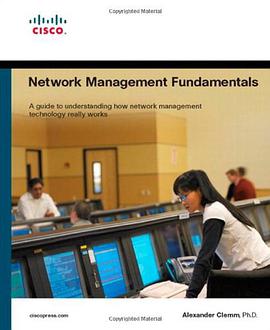
Network Management Fundamentals A guide to understanding how network management technology really works Alexander Clemm, Ph.D. Network management is an essential factor in successfully operating a network. As a company becomes increasingly dependent on networking services, keeping those services running is synonymous with keeping the business running. Network Management Fundamentals provides you with an accessible overview of network management covering management not just of networks themselves but also of services running over those networks. Network Management Fundamentals explains the different technologies that are used in network management and how they relate to each other. The book focuses on fundamental concepts and principles. It provides a solid technical foundation for the practitioner to successfully navigate network management topics and apply those concepts to particular situations. The book is divided into four parts: * Part I provides an overview of what network management is about and why it is relevant. It also conveys an informal understanding of the functions, tools, and activities that are associated with it. * Part II examines network management from several different angles, culminating in a discussion of how these aspects are combined into management reference models. * Part III provides more detail into different building blocks of network management introduced in Part II, such as management protocols, management organization, and management communication patterns. * Part IV rounds out the book with a number of management topics of general interest, including management integration and service-level management. Dr. Alexander Clemm is a senior architect with Cisco(R). He has been involved with integrated management of networked systems and services since 1990. He has provided technical leadership for many leading-edge network management development, architecture, and engineering efforts from original conception to delivery to the customer, and he has also served as technical program co-chair of the 2005 IFIP/IEEE International Symposium on Integrated Network Management. * Grasp the business implications of network management * Examine different management reference models, such as Fault, Configuration, Accounting, Performance, and Security (FCAPS)* Understand the building blocks of network management and their purposes * Assess the implications and impact of management technologies and put them in perspective * Prepare for decisions about network management that require an understanding of the "big picture" This book is part of the Cisco Press(R) Fundamentals Series. Books in this series introduce networking professionals to new networking technologies, covering network topologies, example deployment concepts, protocols, and management techniques. Category: Networking Covers: Network Management
作者简介
目录信息
读后感
用户评价
我是一名在网络安全领域摸爬滚打了多年的技术人员,原本以为《网络管理基础》这本书对我而言可能只是“温故而知新”的作用,但事实证明我的想法过于片面了。这本书的视角非常独特,它并没有将网络管理仅仅视为一个技术操作层面,而是将其置于更宏观的战略和运维视角下进行阐述。我特别喜欢其中关于网络安全与网络管理协同发展的章节,它深入分析了如何在进行日常网络管理的同时,有效地提升整体的网络安全防护能力。书中关于访问控制、流量分析以及安全策略实施的论述,为我提供了一些新的思路和方法。尤其是在提到网络弹性建设的时候,让我对如何构建更健壮、更能抵御攻击的网络系统有了更深刻的认识。虽然这本书的篇幅不算很长,但其内容却非常凝练,每一部分都充满了作者的真知灼见,读来令人茅塞顿开。对于想要提升自身网络管理和安全技能的专业人士来说,这本书绝对是一份不可多得的宝藏。
评分作为一名在企业IT部门工作的运维工程师,每天面对的就是各种各样的网络设备和系统。我们部门最近接手了一个全新的网络建设项目,急需一本能够快速上手、并且能够指导我们进行规范化管理的书籍。《网络管理基础》恰好填补了这一空白。这本书的实用性是我最看重的方面。它不仅仅讲解理论,更注重实践操作。书中关于设备配置、网络拓扑规划、服务质量保障(QoS)以及自动化管理等方面的内容,都非常贴合我们日常工作的需求。我特别对其中关于网络文档管理和变更控制的章节印象深刻,它强调了标准化流程的重要性,这对我们避免因为人为失误导致网络故障非常有帮助。这本书的语言通俗易懂,即使是非技术背景的人员也能很快理解。而且,书中提供的许多最佳实践和经验分享,更是让我们少走了很多弯路。
评分这本《网络管理基础》真是一本让人爱不释手的书!我最近刚开始涉足网络管理领域,一直觉得概念繁杂,像无头苍蝇一样摸不着方向。偶然间翻到这本书,简直如同拨云见日。作者的语言非常平实,一点也不像那些学院派的教科书那样枯燥乏味。他并没有一开始就抛出一堆晦涩难懂的术语,而是循序渐进地引导读者理解网络管理的核心概念。我尤其喜欢其中关于网络架构章节的讲解,通过生动形象的比喻,让我一下子就明白了OSI模型和TCP/IP模型的区别和联系,不再是死记硬背。而且,书中还穿插了很多实际案例,让我能够将理论知识与实际工作联系起来,体会到这些基础知识的重要性。比如,当他讲到SNMP协议的时候,我立刻想到了我们公司之前遇到的一个网络故障,如果当时能掌握这些知识,也许就能更快速地定位问题了。这本书的排版也很舒服,图文并茂,重点突出,读起来一点也不费力。对于初学者来说,这本书无疑是一个非常好的起点,它为我构建了一个扎实的基础,让我对接下来的学习充满了信心。
评分坦白说,我抱着试试看的心态拿起《网络管理基础》这本书的,毕竟“基础”这个词有时候会让人觉得过于浅显。然而,这本书的深度和广度却让我惊喜不已。作者在阐述核心原理时,并没有停留在表面,而是深入剖析了背后的逻辑和运行机制。例如,关于路由协议的部分,书中不仅仅列举了RIP、OSPF、BGP等,还详细讲解了它们的工作原理、优缺点以及适用的场景,甚至还提到了它们在实际网络部署中的一些优化技巧。这对于我这种需要理解更深层次的网络运作机制的人来说,价值非凡。我特别欣赏书中关于网络性能监控和故障排除的章节,它们提供了一套系统性的方法论,让我能够从不同的维度去分析和解决问题,而不是仅仅依靠经验。书中提供的很多实用的命令行示例和工具介绍,更是让我受益匪浅,我已经在自己的实验环境中进行了一些实践,效果显著。这本书的叙述风格也十分吸引人,充满了逻辑性和条理性,读起来让人觉得思路清晰,受益匪浅。
评分我是一名在读的计算机专业学生,对网络技术充满了好奇和热情。在学习过程中,我接触了很多关于网络知识的书籍,但《网络管理基础》这本书给我留下了尤为深刻的印象。它以一种非常易于理解的方式,将复杂的网络管理概念变得生动有趣。我之前对网络故障的排除一直感到很头疼,总是不知道从何下手。而这本书的故障排除章节,通过清晰的逻辑步骤和丰富的案例分析,让我学会了如何系统地分析问题,如何使用各种工具来诊断和解决网络故障。例如,它讲解了如何利用ping、traceroute等命令来定位网络延迟和丢包的原因,这对我来说是一个巨大的进步。而且,书中关于网络监控和性能优化的部分,也让我明白了如何提前预防问题的发生,如何让网络运行得更高效。这本书就像一位循循善诱的老师,不仅教会了我知识,更教会了我如何思考和学习。
评分 评分 评分 评分 评分