
具体描述
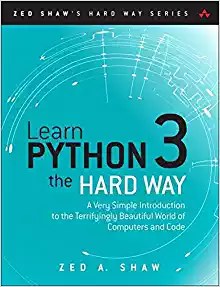
You Will Learn Python 3!
Zed Shaw has perfected the world’s best system for learning Python 3. Follow it and you will succeed—just like the millions of beginners Zed has taught to date! You bring the discipline, commitment, and persistence; the author supplies everything else.
In Learn Python 3 the Hard Way, you’ll learn Python by working through 52 brilliantly crafted exercises. Read them. Type their code precisely. (No copying and pasting!) Fix your mistakes. Watch the programs run. As you do, you’ll learn how a computer works; what good programs look like; and how to read, write, and think about code. Zed then teaches you even more in 5+ hours of video where he shows you how to break, fix, and debug your code—live, as he’s doing the exercises.
Install a complete Python environment Organize and write code Fix and break code Basic mathematics Variables Strings and text Interact with users Work with files Looping and logic Data structures using lists and dictionaries Program design Object-oriented programming Inheritance and composition Modules, classes, and objects Python packaging Automated testing Basic game development Basic web development
It’ll be hard at first. But soon, you’ll just get it—and that will feel great! This course will reward you for every minute you put into it. Soon, you’ll know one of the world’s most powerful, popular programming languages. You’ll be a Python programmer.
This Book Is Perfect For
Total beginners with zero programming experience Junior developers who know one or two languages Returning professionals who haven’t written code in years Seasoned professionals looking for a fast, simple, crash course in Python 3
作者简介
About the Author
Zed A. Shaw is the author of the popular online books Learn Python the Hard Way, Learn Ruby the Hard Way, and Learn C the Hard Way. He is also the creator of several open source software projects and has been programming and writing for nearly 20 years. Most of his free time is devoted to the study of painting and art history.
Read more
目录信息
Acknowledgments xx
Exercise 0: The Setup 2
macOS 2
Windows 3
Linux 4
Finding Things on the Internet 5
Warnings for Beginners 6
Alternative Text Editors 6
Exercise 1: A Good First Program 8
What You Should See 10
Study Drills 12
Common Student Questions 12
Exercise 2: Comments and Pound Characters 14
What You Should See 14
Study Drills 14
Common Student Questions 15
Exercise 3: Numbers and Math 16
What You Should See 17
Study Drills 17
Common Student Questions 17
Exercise 4: Variables and Names 20
What You Should See 21
Study Drills 21
Common Student Questions 21
Exercise 5: More Variables and Printing 24
What You Should See 24
Study Drills 25
Common Student Questions 25
Exercise 6: Strings and Text 26
What You Should See 27
Study Drills 27
Break It 27
Common Student Questions 27
Exercise 7: More Printing 28
What You Should See 28
Study Drills 29
Break It 29
Common Student Questions 29
Exercise 8: Printing, Printing 30
What You Should See 30
Study Drills 31
Common Student Questions 31
Exercise 9: Printing, Printing, Printing 32
What You Should See 32
Study Drills 33
Common Student Questions 33
Exercise 10: What Was That? 34
What You Should See 35
Escape Sequences 35
Study Drills 36
Common Student Questions 36
Exercise 11: Asking Questions 38
What You Should See 38
Study Drills 39
Common Student Questions 39
Exercise 12: Prompting People 40
What You Should See 40
Study Drills 40
Common Student Questions 41
Exercise 13: Parameters, Unpacking, Variables 42
Hold Up! Features Have Another Name 42
What You Should See 43
Study Drills 44
Common Student Questions 44
Exercise 14: Prompting and Passing 46
What You Should See 46
Study Drills 47
Common Student Questions 47
Exercise 15: Reading Files 48
What You Should See 49
Study Drills 49
Common Student Questions 50
Exercise 16: Reading and Writing Files 52
What You Should See 53
Study Drills 53
Common Student Questions 54
Exercise 17: More Files 56
What You Should See 56
Study Drills 57
Common Student Questions 57
Exercise 18: Names, Variables, Code, Functions 60
What You Should See 61
Study Drills 62
Common Student Questions 62
Exercise 19: Functions and Variables 64
What You Should See 65
Study Drills 65
Common Student Questions 65
Exercise 20: Functions and Files 68
What You Should See 69
Study Drills 69
Common Student Questions 69
Exercise 21: Functions Can Return Something 72
What You Should See 73
Study Drills 73
Common Student Questions 74
Exercise 22: What Do You Know So Far? 76
What You Are Learning 76
Exercise 23: Strings, Bytes, and Character Encodings 78
Initial Research 78
Switches, Conventions, and Encodings 80
Disecting the Output 82
Disecting the Code 82
Encodings Deep Dive 84
Breaking It 85
Exercise 24: More Practice 86
What You Should See 87
Study Drills 87
Common Student Questions 87
Exercise 25: Even More Practice 90
What You Should See 91
Study Drills 92
Common Student Questions 93
Exercise 26: Congratulations, Take a Test! 94
Common Student Questions 94
Exercise 27: Memorizing Logic 96
The Truth Terms 96
The Truth Tables 97
Common Student Questions 98
Exercise 28: Boolean Practice 100
What You Should See 102
Study Drills 102
Common Student Questions 102
Exercise 29: What If 104
What You Should See 104
Study Drills 105
Common Student Questions 105
Exercise 30: Else and If 106
What You Should See 107
Study Drills 107
Common Student Questions 107
Exercise 31: Making Decisions 108
What You Should See 109
Study Drills 109
Common Student Questions 109
Exercise 32: Loops and Lists 112
What You Should See 113
Study Drills 114
Common Student Questions 114
Exercise 33: While Loops 116
What You Should See 117
Study Drills 117
Common Student Questions 118
Exercise 34: Accessing Elements of Lists 120
Study Drills 121
Exercise 35: Branches and Functions 122
What You Should See 123
Study Drills 124
Common Student Questions 124
Exercise 36: Designing and Debugging 126
Rules for if-statements 126
Rules for Loops 126
Tips for Debugging 127
Homework 127
Exercise 37: Symbol Review 128
Keywords 128
Data Types 129
String Escape Sequences 130
Old Style String Formats 130
Operators 131
Reading Code 132
Study Drills 133
Common Student Questions 133
Exercise 38: Doing Things to Lists 134
What You Should See 135
What Lists Can Do 136
When to Use Lists 137
Study Drills 137
Common Student Questions 138
Exercise 39: Dictionaries, Oh Lovely Dictionaries 140
A Dictionary Example 141
What You Should See 142
What Dictionaries Can Do 143
Study Drills 144
Common Student Questions 144
Exercise 40: Modules, Classes, and Objects 146
Modules Are Like Dictionaries 146
What You Should See 150
Study Drills 150
Common Student Questions 151
Exercise 41: Learning to Speak Object-Oriented 152
Word Drills 152
Phrase Drills 152
Combined Drills 153
A Reading Test 153
Practice English to Code 155
Reading More Code 156
Common Student Questions 156
Exercise 42: Is-A, Has-A, Objects, and Classes 158
How This Looks in Code 159
About class Name(object) 161
Study Drills 161
Common Student Questions 161
Exercise 43: Basic Object-Oriented Analysis and Design 164
The Analysis of a Simple Game Engine 165
Top Down versus Bottom Up 169
The Code for “Gothons from Planet Percal #25” 170
What You Should See 176
Study Drills 176
Common Student Questions 177
Exercise 44: Inheritance versus Composition 178
What Is Inheritance? 178
The Reason for super() 183
Composition 184
When to Use Inheritance or Composition 185
Study Drills 185
Common Student Questions 186
Exercise 45: You Make a Game 188
Evaluating Your Game 188
Function Style 189
Class Style 189
Code Style 190
Good Comments 190
Evaluate Your Game 190
Exercise 46: A Project Skeleton 192
macOS/Linux Setup 192
Windows 10 Setup 194
Creating the Skeleton Project Directory 195
Testing Your Setup 197
Using the Skeleton 198
Required Quiz 198
Common Student Questions 198
Exercise 47: Automated Testing 200
Writing a Test Case 200
Testing Guidelines 202
What You Should See 202
Study Drills 203
Common Student Questions 203
Exercise 48: Advanced User Input 204
Our Game Lexicon 204
A Test First Challenge 206
What You Should Test 207
Study Drills 209
Common Student Questions 209
Exercise 49: Making Sentences 210
Match and Peek 210
The Sentence Grammar 211
A Word on Exceptions 211
The Parser Code 211
Playing with the Parser 214
What You Should Test 215
Study Drills 215
Common Student Questions 215
Exercise 50: Your First Website 216
Installing flask 216
Make a Simple “Hello World” Project 216
What’s Going On? 218
Fixing Errors 218
Create Basic Templates 219
Study Drills 221
Common Student Questions 221
Exercise 51: Getting Input from a Browser 224
How the Web Works 224
How Forms Work 226
Creating HTML Forms 227
Creating a Layout Template 229
Writing Automated Tests for Forms 230
Study Drills 232
Breaking It 232
Exercise 52: The Start of Your Web Game 234
Refactoring the Exercise 43 Game 234
Creating an Engine 239
Your Final Exam 241
Common Student Questions 242
Next Steps 244
How to Learn Any Programming Language 245
Advice from an Old Programmer 246
Appendix Command Line Crash Course 248
Introduction: Shut Up and Shell 248
The Setup 249
Paths, Folders, Directories (pwd) 253
If You Get Lost 255
Make a Directory (mkdir) 255
Change Directory (cd) 258
List Directory (ls) 261
Remove Directory (rmdir) 265
Moving Around (pushd, popd) 268
Making Empty Files (touch/New-Item) 271
Copy a File (cp) 272
Moving a File (mv) 275
View a File (less/more) 277
Stream a File (cat) 278
Removing a File (rm) 280
Exiting Your Terminal (exit) 282
Command Line Next Steps 283
Index 284
· · · · · · (收起)
读后感
Just finished the book and exercises, although took only a glimpse at the last seven ones. There is no doubt that it's a better introduction book than others. After I wrote down the first python program at 27th September, I spent a total of 20 hours on the...
评分Get hands dirty right from the start, this book consists of 50 mini exercises to get familiar with coding step by step. Admittedly learners sometimes have to swallow some ugly rules first before they reach the next level where these rules can be appropriate...
评分1、总结 评分:★★★★☆ 花了大半个月,断断续续的把这本书看完了。平心而论,这本书还是不错的,写法别具一格,但是Python入门的话仅仅靠这一本书是不够的,最好能配上搜索引擎和类似于《C++ Primer》那样字典类的书籍,因为LPTHW很少讲解一个具体的函数是什么样的,对于...
评分《笨方法学 Python》叫《笨方法练 Python》更准确。 古时的「学」有效法、模仿的意思,模仿就照着去做,一定要行动,不行动就算学,孔子曰「学而时习之」的意思就是说模仿行动后就要练习,反复练习才能增进技能。这样要注意,「习」的意思不是复习,而是练习。 现在「学」的意...
评分最近在看Redis in Action,里面用Python讲解。我记得第一次接触Python还是大二,当时好像随便翻了翻,就没怎么发展了= =。近来发展了想学Flask, Django的兴趣,就准备拿本基础的书热热身。 内容很简单,这本书应该是针对无任何编程经验的初学者的,看了一天,做了几页笔记,...
用户评价
说实话,我之前尝试过一些其他的Python入门书籍,但很多都让我感觉像是在背公式,学到的知识点零散,而且很快就会忘记。直到我开始看《Learn Python the Hard Way 3》,我才真正体会到什么叫做“学以致用”。这本书最大的特点就是它的实践性,每一章都设置了大量的代码练习,而且这些练习都非常贴近实际应用。我感觉自己就像一个学徒,跟着师傅一步步地敲代码,虽然有时候会遇到很多bug,需要花费大量时间去调试,但这反而让我对Python的理解更加深入。我记得有一次,我在做一个小小的命令行工具,需要读取用户输入并进行处理。在书中,我看到了一个非常相似的例子,通过模仿那个例子的结构,我很快就完成了我的程序。更重要的是,在调试的过程中,我学会了如何使用print语句来追踪变量的值,如何理解错误信息,这些都是非常宝贵的实战经验。这本书没有回避编程中的困难,反而鼓励你去面对它,去征服它,这种“硬碰硬”的学习方式,让我觉得特别踏实。
评分对于我这样一个编程新手来说,《Learn Python 3 the Hard Way》这本书简直就像一座宝藏。它没有那些花哨的图表和复杂的理论,而是回归到最本质的学习方式——动手实践。我喜欢这本书的“少即是多”的风格,每一章都聚焦于一个核心概念,然后通过大量的代码练习来巩固。我记得在学习列表(List)的时候,作者通过一个一个小的例子,让我体会到了列表的神奇之处,如何存储多个元素,如何进行增删改查。在这个过程中,我遇到的每一个bug,都促使我更深入地去理解代码的执行流程。这本书没有回避编程的难度,反而鼓励你去直面它,去解决它。我感觉自己就像一个在编程的荒野中探险的旅人,每克服一个难关,都能获得新的发现和进步。它教会我的不仅仅是Python的语法,更重要的是一种独立解决问题的能力,一种不断探索的精神。
评分我一直认为,学习任何一门技术,最重要的就是能够真正理解它的底层逻辑,而不是仅仅停留在表面。而《Learn Python 3 the Hard Way》这本书,恰恰满足了我对深度学习的渴望。它不是那种“拿来主义”的书,不会直接给你写好所有东西,而是引导你一步步地去构建,去思考。我记得在学习函数那一章的时候,作者并没有直接给出复杂的函数定义,而是从最简单的输入输出开始,然后逐渐引入参数、返回值,以及如何组织代码。在这个过程中,我反复地敲代码,反复地测试,感觉自己仿佛在搭建一座小小的编程积木。当我写出一个能够正确运行的函数时,那种满足感是无法言喻的。这本书的难度梯度设计得非常好,它不会一开始就给你扔一堆复杂的概念,而是循序渐进,让你在不知不觉中掌握越来越深入的知识。我感觉自己不再是被动地接受信息,而是主动地去探索,去发现,这才是真正的学习。
评分我一直对编程充满好奇,但又觉得很多入门教程都太过理论化,看得我云里雾里。《Learn Python 3 the Hard Way》这本书,我是在一个偶然的机会下发现的,当时就被它的名字吸引了——“Hard Way”,感觉就是要自己动手、一点点摸索,而不是直接给答案。拿到书后,我迫不及待地翻开,发现它确实如其名,并没有太多废话,而是直接切入代码,通过大量的练习题来引导读者学习。一开始,我甚至有点害怕,生怕自己跟不上,但作者的讲解方式非常有耐心,每一个概念都通过一个实际的例子来解释,让我觉得不那么抽象。我记得有一次,我写了一个循环,怎么也达不到我想要的效果,盯着屏幕看了好久,正当我准备放弃的时候,我重新回顾了书里那个关于“while”循环的练习,突然灵光一闪,找到了问题所在。这种自己解决问题的过程,虽然有时候会很“Hard”,但带来的成就感是无与伦比的。它教会我的不仅仅是Python的语法,更重要的是一种解决问题的思维方式,一种不轻易放弃的精神。
评分一直以来,我都有一个模糊的编程梦想,但总觉得遥不可及。直到我遇到了《Learn Python 3 the Hard Way》,我才发现,原来编程并没有我想象的那么难。这本书就像一位循循善诱的导师,它不会给你太多理论上的束缚,而是鼓励你直接上手实践。我记得刚开始学的时候,我写了一个非常简单的“Hello, World!”程序,然后作者就引导我去做一些小的改动,比如改变输出的文字,或者让它输出多行。这些看似微小的步骤,却让我体会到了编程的乐趣。随着学习的深入,我开始尝试写一些更复杂的程序,比如计算器,或者一个简单的文本游戏。在这个过程中,我遇到了很多问题,但每一次解决问题,都让我更加坚定了我学习编程的决心。这本书的语言风格非常直接,没有太多华丽的辞藻,就是纯粹地教你如何写代码,如何让代码按照你的想法去运行。我感觉自己不再是旁观者,而是真正地参与到了编程的世界里。
评分确实适合新手,行文也很接地气,最后一章的建议也挺搞笑的哈哈哈
评分python 入门最佳书籍
评分相当于大一上半学期,挺好上手的。但交作业如果像作者一样不写docstring是会被挂掉的。
评分看看有啥遗漏的概念
评分把书里的大多数代码都码了一遍。。。