
具体描述
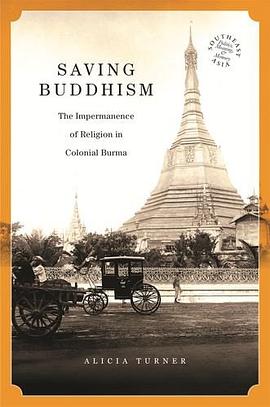
Saving Buddhism explores the dissonance between the goals of the colonial state and the Buddhist worldview that animated Burmese Buddhism at the turn of the twentieth century. For many Burmese, the salient and ordering discourse was not nation or modernity but sāsana, the life of the Buddha’s teachings. Burmese Buddhists interpreted the political and social changes between 1890 and 1920 as signs that the Buddha’s sāsana was deteriorating. This fear of decline drove waves of activity and organizing to prevent the loss of the Buddha’s teachings. Burmese set out to save Buddhism, but achieved much more: they took advantage of the indeterminacy of the moment to challenge the colonial frameworks that were beginning to shape their world.
Author Alicia Turner has examined thousands of rarely used sources-- newspapers and Buddhist journals, donation lists, and colonial reports―to trace three discourses set in motion by the colonial encounter: the evolving understanding of sāsana as an orienting framework for change, the adaptive modes of identity made possible in the moral community, and the ongoing definition of religion as a site of conflict and negotiation of autonomy. Beginning from an understanding that defining and redefining the boundaries of religion operated as a key technique of colonial power―shaping subjects through European categories and authorizing projects of colonial governmentality―she explores how Burmese Buddhists became actively engaged in defining and inflecting religion to shape their colonial situation and forward their own local projects.
Saving Buddhism intervenes not just in scholarly conversations about religion and colonialism, but in theoretical work in religious studies on the categories of “religion” and “secular.” It contributes to ongoing studies of colonialism, nation, and identity in Southeast Asian studies by working to denaturalize nationalist histories. It also engages conversations on millennialism and the construction of identity in Buddhist studies by tracing the fluid nature of sāsana as a discourse. The layers of Buddhist history that emerge challenge us to see multiple modes of identity in colonial modernity and offer insights into the instabilities of categories we too often take for granted.
作者简介
目录信息
读后感
用户评价
这本书给我的整体感受,就像是走进了一个久违的、光线柔和的园林。它的文字有一种独特的韵律感,读起来非常流畅,仿佛能听到一种缓慢而坚定的心跳声。在节奏的把握上,作者处理得非常高明,长篇的论述之后,总会穿插一些富有诗意的禅宗公案或者简短的箴言,像是在疲惫的旅途中突然发现了一汪清泉,让人精神为之一振。我常常在夜晚,伴着昏黄的台灯,沉浸在这种宁静的文字氛围中。它有一种神奇的治愈力,能够抚平我因白日奔波而产生的焦虑和躁动。与其说是在阅读,不如说是在进行一场深度的自我对话。书中对于“放下”的探讨,不是那种轻飘飘的劝慰,而是结合了心理学和存在主义的深刻剖析,让人真正理解“放下”背后的力量所在,那是一种主动的选择,而非无奈的放弃。这本书,是现代人对抗信息过载和精神内耗的一剂良药。
评分说实话,我拿到这本书的时候,心里是带着一丝忐忑的,毕竟我对东方哲学了解有限,担心内容会过于晦涩难懂,需要耗费大量精力去啃读。然而,作者的叙事方式彻底打消了我的顾虑。他采用了一种非常亲切、近乎闲聊的口吻,仿佛是一位经验丰富的向导,牵着我的手走过那些复杂交织的教理迷宫。特别是在解释一些关键概念时,作者总是能举出非常贴近生活的生动例子,比如用“水滴入海”来比喻个体与整体的关系,这种“场景化”的教学方法,极大地降低了理解门槛。更让我感到惊喜的是,书中穿插了不少当代社会的热点议题,作者并未回避现代生活的诸多挑战,而是探讨了如何在快节奏的都市生活中保持精神的定力。这种与时俱进的探讨,让这本书散发出强大的生命力,让人觉得它不是躺在书架上积灰的古籍,而是活生生的、可以指导当下生活的智慧之源。读完后,我迫不及待地想向身边那些同样在精神世界里探索的朋友们推荐它,因为它确实做到了将深奥智慧大众化的典范。
评分这本书的封面设计简直是一场视觉盛宴,那种深邃的蓝色调和古朴的字体搭配,让人一眼就能感受到它蕴含的厚重与宁静。我是在一家独立书店偶然发现它的,当时就被那种沉静的气质所吸引。翻开扉页,首先映入眼帘的是作者对佛法核心精神的精辟概括,寥寥数语却直抵人心,仿佛被一位饱经风霜的智者轻轻点拨了一下。文字的排版也极为考究,留白恰到好处,让读者有充分的时间去消化每一个词语所承载的重量。我尤其欣赏作者在行文中所展现出的那种对传统教义的尊重与现代视角的巧妙融合,它不是僵硬的教条复述,而是一种充满生命力的对话。读完整本书,我感觉自己仿佛经历了一次深入内心的冥想之旅,那些关于“空性”和“慈悲”的阐释,不再是抽象的理论,而是能切实应用于日常生活的指南。这本书的深度和广度都令人赞叹,它不仅仅是关于佛教的介绍,更是一部关于如何安顿心灵、如何看待世事的哲学著作。它教会我用更宽广的胸襟去接纳生命中的不完美,用更平和的心态去面对无常的变迁。
评分从一个纯粹的阅读体验角度来说,这本书的装帧和印刷质量也值得称赞。纸张的选择,那种略带粗粝却又触感温和的质地,让人爱不释手,忍不住想反复摩挲。更不用说,这本书的翻译功力了,很多本应是难以言喻的东方概念,通过译者的妙笔,竟然变得清晰而富有画面感,这本身就是一项巨大的成就。我注意到书中对一些关键梵文或巴利文术语的解释非常到位,附注详实,为那些希望进一步深入研究的读者提供了坚实的阶梯。这表明作者和出版团队对这本书的定位非常明确:它既是面向大众的精神启迪之作,也是能经受住专业人士检验的严肃文本。它成功地搭建了一座跨越文化和语言鸿沟的桥梁,让那些遥远的智慧之光,能够以如此清晰、温暖的方式照亮我们当下的生活。这是一本我愿意珍藏在床头,随时翻开就能获得片刻安宁的宝藏之书。
评分我通常对这类主题的书籍持有一种批判性的阅读态度,总觉得很多作品在追求“心灵鸡汤”的效果时,会牺牲掉内容的严谨性。然而,这本书在保持易读性的同时,却展现出令人惊叹的学术功底和历史洞察力。作者对不同学派的观点梳理得井井有条,无论是历史脉络的梳理,还是对文本的细致考据,都体现出严谨的治学态度。我特别欣赏作者在处理争议性话题时所采取的平衡立场,他从不强行灌输某种“唯一真理”,而是鼓励读者去独立思考,去亲身体验。书中关于“觉悟的路径”那几个章节,结构设计极其精妙,如同一个层层递进的迷宫,每当你以为到达终点时,又会发现新的岔路口和更广阔的天地。这种引导式的写作,让人感到被充分尊重,也激发了强烈的求知欲,让人愿意反复咀嚼、反复品味其中的深意。它不是给你答案,而是教你如何更好地提问。
评分Turner博士论文改动和增补内容后出版的代表作。最主要的贡献是很好地追溯了缅甸佛教徒在面对殖民统治对佛教地位的挑战时对自我认识、组织架构等方面进行的各种调整,是殖民统治时期缅甸佛教在家众社会运动、缅甸佛教民族主义运动研究的重要书目。
评分Turner博士论文改动和增补内容后出版的代表作。最主要的贡献是很好地追溯了缅甸佛教徒在面对殖民统治对佛教地位的挑战时对自我认识、组织架构等方面进行的各种调整,是殖民统治时期缅甸佛教在家众社会运动、缅甸佛教民族主义运动研究的重要书目。
评分Buddhism as a site of collective self-re-formation during the colonial era after 1885; Sasana rather than nation as a reference point of collective identity; enduring effects of old discourses and new initiatives after the fall of royal patronage
评分Turner博士论文改动和增补内容后出版的代表作。最主要的贡献是很好地追溯了缅甸佛教徒在面对殖民统治对佛教地位的挑战时对自我认识、组织架构等方面进行的各种调整,是殖民统治时期缅甸佛教在家众社会运动、缅甸佛教民族主义运动研究的重要书目。
评分Turner博士论文改动和增补内容后出版的代表作。最主要的贡献是很好地追溯了缅甸佛教徒在面对殖民统治对佛教地位的挑战时对自我认识、组织架构等方面进行的各种调整,是殖民统治时期缅甸佛教在家众社会运动、缅甸佛教民族主义运动研究的重要书目。