
具体描述
Hugh arose and stood in the moonlight in the cabbage field, his arms still going stiffly up and down. The great length of his figure and his arms was accentuated by the wavering uncertain light. The laborers, aware of some strange presence, sprang to their feet and stood listening and looking. Hugh advanced toward them, still muttering words and waving his arms. Terror took hold of the workers. One of the woman plant droppers screamed and ran away across the field, and the others ran crying at her heels. "Don't do it. Go away," the older of the French boys shouted, and then he with his brothers also ran.
作者简介
Form Wikipeida:http://en.wikipedia.org/wiki/Sherwood_Anderson
Sherwood Anderson (September 13, 1876 – March 8, 1941) was an American writer, mainly of short stories, most notably the collection Winesburg, Ohio. That work's influence on American fiction was profound,[1] and its literary voice can be heard in Ernest Hemingway, William Faulkner, Thomas Wolfe, John Steinbeck, Erskine Caldwell and others.[2]
Anderson was born in Camden, Ohio, the third of Erwin M. and Emma S. Anderson's seven children. After his father's business failed, they were forced to move frequently, finally settling down at Clyde, Ohio, in 1884. Family difficulties led his father to begin drinking heavily, and Anderson's father died in 1895. Partly as a result of these misfortunes, Anderson found various odd jobs to help his family, which earned him the nickname "Jobby." He left school at 14.
Anderson moved to Chicago near his brother Karl's home, and worked as a manual laborer until near the turn of the century, when he enlisted in the United States Army. He was called but did not see action in Cuba during the Spanish-American War. After the war, in 1900, he enrolled at Wittenberg University in Springfield, Ohio. Eventually he secured a job as a copywriter in Chicago and became more successful. In 1904 he married Cornelia Lane, the daughter of a wealthy Ohio family.
Anderson fathered three children while living in Cleveland, Ohio, and later Elyria, Ohio, where he managed a mail-order business and paint manufacturing firms. In November 1912 he disappeared for four days after suffering a mental breakdown. Soon he left his job and his marriage broke up. Anderson described the entire episode as "escaping from his materialistic existence," which garnered praise from many young writers, who used his "courage" as an example. Anderson moved back to Chicago, working again for a publishing and advertising company.
In 1916, he divorced Lane and married Tennessee Mitchell. That same year, his first novel, Windy McPherson's Son, was published. Three years later, his second major work, Marching Men, was published. However, he is most famous for his collection of interrelated short stories, which he began writing in 1919, known as Winesburg, Ohio. He claimed that Hands, the opening story, was the first "real" story he ever wrote. His themes are comparable to those of T. S. Eliot and other modernist writers.
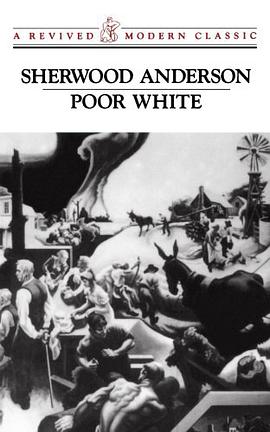
Although his short stories, especially those mentioned, were very successful, Anderson felt the need to write novels. In 1920, he published Poor White, a rather successful novel. He wrote various novels before divorcing Mitchell in 1922 and marrying Elizabeth Prall, two years later.
In 1923, Anderson published Many Marriages, the themes of which he would carry over into much of his later writing. The novel had its detractors, but the reviews were, on the whole, positive. F. Scott Fitzgerald, for example, considered Many Marriages and "Circle Of Death" Anderson's finest novels.
Beginning in 1924, Anderson lived in the historic Pontalba Apartments (540-B St. Peter Street) adjoining Jackson Square in New Orleans. There he and his wife entertained William Faulkner, Carl Sandburg, Edmund Wilson and other literary luminaries. Of Faulkner, in fact, he wrote his ambiguous and moving short story "A Meeting South," and, in 1925, wrote Dark Laughter, a novel rooted in his New Orleans experience. Although the book is now out of print (and was satirized by Ernest Hemingway in his novel The Torrents of Spring), it was Anderson's only best-seller.
Anderson's third marriage also failed, and Anderson married Eleanor Copenhaver in the late 1920s. They traveled and often studied together. In the 1930s, he published Death in the Woods Puzzled America (a book of essays), and Kit Brandon, which was published in 1936.
Anderson dedicated his 1932 novel Beyond Desire to Copenhaver. Although he was much less influential in this final writing period, many of Anderson's more significant lines of prose were present in these works, which were generally considered sub-par compared to his other works.
Anderson died in Panama of peritonitis after accidentally swallowing a piece of a toothpick embedded in a martini olive at a party, aged 64. He was buried at Round Hill Cemetery in Marion, Virginia. His epitaph reads, "Life Not Death is the Great Adventure".
Anderson's final home, known as Ripshin, still stands in Troutdale, Virginia, and may be toured by appointment.
目录信息
读后感
用户评价
坦率地说,这本书初读起来并不轻松,它需要你付出相当的专注力和耐心。它没有迎合现代读者对快速叙事和即时满足的期待。相反,它似乎在故意设置障碍,让你去体验书中人物所经历的那种缓慢、重复、近乎徒劳的挣扎。书中的一些环境描写,虽然极尽详尽,但并不是为了炫技,而是为了强调那种环境对人性的塑造和异化作用。我甚至能想象出作者在写作过程中所付出的巨大心力,去考证和还原那种特定的物质条件和精神面貌。这使得这本书具备了一种近乎纪录片式的真实感,让你忍不住去探究其背后的历史脉络。我注意到作者在处理阶层差异时,并没有采取简单的道德审判,而是展现了即使是处于不同阶层的人,也同样被困在各自的“命运之网”中,只是网眼的大小和韧性不同而已。这种复杂性和层次感,是许多同类题材作品所缺乏的。它迫使我重新思考“贫穷”这个概念,它不仅仅是物质的匮乏,更是一种精神的继承和循环。
评分这本书的封面设计得非常引人注目,那种粗粝的质感和略显褪色的字体,一下子就将人拉入了一个特定的历史氛围之中。我翻开扉页的时候,就被作者那种近乎冷酷的叙事笔触所吸引。故事似乎是从一个极其微小、几乎不为人注意的家庭片段切入的,没有宏大的开场白,只有日常生活的琐碎和难以言喻的沉重。我特别欣赏作者在描绘人物内心挣扎时的细腻,那种在尊严与生存之间摇摆不定的状态,刻画得入木三分。特别是主角在面对外界审视时的那种小心翼翼和强撑的姿态,让人感同身受。你仿佛能闻到那个时代空气中弥漫的尘土和绝望的气息。情节推进得不快,但每一步都走得异常坚实,仿佛作者是在用雕刻刀而不是笔来书写,每一个细节都经得起推敲。读到一半时,我甚至暂停了好几次,不是因为无聊,而是需要时间来消化那种压抑却又充满韧性的生活图景。这本书的魅力就在于,它没有提供廉价的希望或简单的答案,而是将生活的真相赤裸裸地呈现在你面前,让你自己去寻找光亮。这本书无疑是一部需要静下心来慢慢品味的杰作,它对人性的探讨深刻而持久。
评分我是在一个非常喧嚣的环境中开始读这本书的,但神奇的是,这本书仿佛自带了一种“降噪”功能。它构建的世界是如此封闭、如此自我循环,以至于外界的干扰都变得无关紧要了。这本书最让我震撼的地方,在于它对“社群”和“个体”之间张力的处理。它并非简单地歌颂集体主义的温暖,也没有一味地批判孤立无援的个体。相反,作者极其巧妙地展示了在某种特定的生存压力下,社群是如何成为个体生存的必要枷锁,而个体又如何在僵化的传统中寻求一丝喘息。书中的一些场景,关于邻里之间的互相审视和无声的规训,简直是教科书级别的社会心理学描绘。你看到那些被社会边缘化的人物,他们相互取暖的方式,既温暖又带着深深的自我毁灭倾向。这使得整本书的基调充满了悲剧性的张力。我尤其喜欢作者对“沉默”的处理,很多关键的情绪和信息都不是通过激烈的言语表达出来的,而是通过人物长久的凝视、不自然的肢体语言,或者长时间的停顿来传达。这种“留白”的艺术,使得读者必须主动参与到意义的构建中去,极大地提升了阅读的深度。
评分这本书给我的感觉是,它像一块陈年的琥珀,将某段光阴、某一群人的生命状态,以一种近乎矿物学的精确度保存了下来。我很少读到如此不带多余情绪的叙述,作者几乎是将自己抽离出来,像一个冷静的观察者,记录下那些细微的、转瞬即逝的人类情感波动。这种克制,反而带来了更强大的情感冲击力。书中那些关于“希望”的描绘,也处理得极其微妙,它不是那种如太阳般耀眼的光芒,更像是地底深处偶尔闪烁的微弱磷光,转瞬即逝,却又足以证明“生命”这件事依然在顽强地进行着。我特别留意了作者对“家”这个概念的诠释,它在书中既是最后的避难所,也是最沉重的牢笼,这种辩证关系处理得非常深刻。这本书的后劲非常大,读完后,我会时常回想起某些场景中的光影和人物的对望,它们如同碎片一样散落在我的日常思考中,让我对生活中的“边缘”和“被忽视”有了更深层次的同情与理解。这绝对是一部值得反复阅读、每次都能带来新发现的文学作品。
评分这本书的语言风格,简直就是一场酣畅淋漓的文字盛宴,但又带着一种令人心悸的朴实感。作者似乎有一种魔力,能将最寻常的对话,赋予一种史诗般的重量。我发现自己常常会不自觉地放慢语速来阅读,生怕错过了一个介词或一个形容词的妙处。它不是那种华丽辞藻堆砌的文字,而是像极了经过千锤百炼的铁器,每一句话都干净利落,却又锋芒毕露。例如,书中对某个小镇秋日景象的描写,寥寥数笔,却精准地勾勒出了那种萧瑟中蕴含的生命力,那种“白”与“冷”的意象反复出现,构建了一种独特的美学基调。更令人称奇的是,作者处理时间线的方式,时而跳跃,时而又极其缓慢地拉长某个瞬间,这种节奏感处理得极高明,让读者在迷失于过去与现在之间时,反而更能体会到命运的无常。这本书在结构上的野心是显而易见的,它试图在一个有限的叙事空间内,捕捉到一种广阔的历史回响。读完之后,我需要很长时间才能抽离出来,因为它在你脑海中留下的回声太大了,久久不散。
评分额,我就是舍伍德·安德森笔下的人物···
评分教科书,其实我没看完
评分a panoramic depiction of the throughly alteration engendered by mechanism,moreover,it echoed and re-echoed the unfilled souls' perplexity.
评分a panoramic depiction of the throughly alteration engendered by mechanism,moreover,it echoed and re-echoed the unfilled souls' perplexity.
评分教科书,其实我没看完