
具体描述
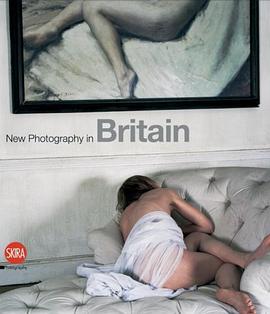
New Photography in Britain
Sunday 20th April at 11.30am at the Galleria Civica di Modena sees the opening of the exhibition In Our World. New Photography in Britain, curated by Filippo Maggia.
Organised and produced by the Galleria Civica di Modena and the Fondazione Cassa di Risparmio di Modena this group show has been put together in collaboration with the Royal College of Art of London and presents the research works of 18 artists who over the last 10 years have attended the Photography Master offered by the prestigious British institution, which now seems to have taken the place of many others (Goldsmiths University, Saint Martin’s College etc.) as the place to train in Europe in the field not only of photography but also in visual arts in general.
The artists presented in the show come from various parts of the world, drawn to London by the very excellence of the College, and have been chosen by the curator, who has been given a year’s visiting fellowship for this project as a researcher by the RCA. The artists involved are: Becky Beasley (1975, UK), Bianca Brunner (1974, Chur, Switzerland), Lisa Castagner (1975, Northern Ireland), Simon Cunningham, Annabel Elgar (1971, Aldershot, UK), Anne Hardy (1970, London), Lucy Levene (1978, London), Gareth McConnell (1972, Northern Ireland), Brígida Mendes (1977, Tomar, Portugal), Suzanne Mooney (1976, Ireland), Melissa Moore (1978, Nottingham), Harold Offeh (1977, Accra, Ghana), Kirk Palmer (1971, Northampton, UK), Sarah Pickering (1972, Durham City, Uk) Sophy Rickett (1970, London), Esther Teichmann (1980, Karlsruhe, Germany), Heiko Tiemann (1968, Bad Oeynhausen, Germany), and Danny Treacy (1975, Manchester).
The exhibition includes photographs, videos and films: a range of expressive media and a sufficient number of works to make the artistic development of each artist clear. Many of them have already exhibited in galleries both in Britain and around the world: in London, the Maureen Paley, the National Portrait Gallery, the Whitechapel and the Tate Modern among others; in Europe, to name but a few, the Fundação Colouste Gulbenkian in Lisbon, the Musée de l'Elisée in Lausanne, the Fotomuseum Winterthur in Winterthur, the Centre Pompidou in Paris; and in Italy, at the Nepente Gallery in Milan, at the Galleria Alberto Peola in Turin, as well as at the Venice Biennale.
Housed in Palazzo Santa Margherita, in corso Canalgrande 103 in Modena until 13th July, the exhibition is accompanied by a detailed catalogue published by Skira, the first of a new series dedicated to the young blood emerging in various countries of Europe and beyond. The catalogue features a rich selection of images for each artist, along with a statement on each artist’s work and a complete bio-bibliography.
In Our World provides an up-to-date and extremely contemporary overview of photographic research in England. The presence of artists from a variety of nations (Germany, Portugal, the United States, Switzerland, Ireland etc.) yet who have been living in London for some time, underlines the key role played today by the capital of the UK in contemporary arts, and in particular, by the Royal College of Art, which (as mentioned above) has become a new point of reference.
Although it is hard to pin down a dominant current or trend that characterises all the works on show, all the artists present in the exhibition share a strong sense of interaction with the world around them. Not content with merely representing it, in a certain sense they act as a sort of filter, giving it a new and personal interpretation, transforming, inventing and putting together the pieces of a tangible reality, or providing a first person account (in some cases featuring directly as protagonists of the works) of their own relationship with life and society at large.
Despite dealing with personal experiences, in many cases very different from one another, there is a shared sense of melancholy, one of the here and now needing to be lived to the full, faced with eyes wide open and then pieced back together through their images. Another feature common to many of their works is their reconstruction of precise situations in which the photographic act defines and redraws the lines and proportions of a new sense of reality, one made up of intimate relationships, multiple meanings that the photographer tries to put across through a pondered and selective gaze.
This may certainly be said of Mooney’s work, focused on a reconsideration of the modus vivendi though which we are used to looking upon the world; Rickett seems to go beyond this, in her attempt to reveal that which is not immediately obvious in her film Auditorium; Pickering’s research moves along the thin and fragile line between the real and the imaginary; the human figure performs an act of metamorphosis in its moulding into different spaces in the works of Moore; while the figure is in movement, and interacts both with itself and the space around it in the works of Cunningham; Levene’s images of the couple constitute an outright act of non-conformism; while Castagner’s images become a manifesto against the glossy glamour of a false femininity. The place and its history, its cultural and anthropological identity are the key to the research carried out by Palmer in his poignant videos; and the origins of cultural roots also lie at the heart of the reasoning on which the work of Mendes is based, with images straddling fiction and reality; while Tiemann approaches photography as a means of observing and decoding the world, based on experience and waiting; while the constitution of a means to foster communication between different cultures fills the video works of Offeh, who often interacts with the characters portrayed; images are treated as a visual epic poem in McConnell’s slide show, a long personal story lived from within; just like the highly personal and intimate relationships, or rather the emotions, portrayed in the works of Teichmann. Startling, disturbing figures are those that take on human connotations in the works of Treacy; and it is also an imaginary world that forms the backdrop to the works of Brunner’s research, in which it is the objects that mutate and change form; just like in the relationship between the objects and their representation as photographic objects underpins Beasley’s research; a reflection on the use of photography as a creative instrument that induces us to take on new forms of perception is that which leads Hardy to put together environments which are full of details and different elements, yet ones in which man is absent; an absence interpreted in terms of vulnerability in the characters and images of Elgar, in whose work the details are in actual fact symbols that provide us with the key to interpret the work.
作者简介
目录信息
读后感
用户评价
这本书的编辑选择似乎非常大胆,甚至可以说有些偏执。它更像是一份策展人的个人宣言,而不是一本全面的时代概览。你几乎找不到任何关于名人肖像或者那种标志性的、用于展览的“大制作”作品。相反,它专注于那些极其私密、甚至有些难以接近的个人项目。举个例子,有一组关于家庭相册的“再创作”,摄影师用极其微小的改动——比如用铅笔在老照片的边缘涂抹、或者用透明胶带小心翼翼地撕开人物的脸部——来解构记忆的可靠性。这种手法非常微妙,需要你在光线下仔细辨认才能察觉,但一旦发现,那种心理上的冲击是巨大的。它让我联想到福柯关于知识权力与规训的讨论,只不过在这里,规训的对象是我们对历史的集体记忆。此外,排版设计也极其讲究,很多照片采用了非常规的出血和留白处理,甚至有些跨页的对开页上,两边的图片在内容上似乎毫无关联,却在色彩、饱和度或构图的某个几何元素上形成了某种若隐若现的对话。这种编排方式迫使读者必须主动地去建立联系,而不是被动地接受信息流。这无疑是一本“需要努力去阅读”的摄影书,它挑战了我们阅读图像的习惯。
评分这本书的叙事节奏非常不稳定,这可能是我感到困惑的主要原因。它在不同章节之间,风格的跳跃之大,几乎像是同时翻阅了好几位完全不同世代艺术家的作品集。有一部分作品,我几乎可以判定是借鉴了上世纪七八十年代的社会纪实风格,使用了鲜艳但失真的色彩,聚焦于街头亚文化中那种无所事事的青春群像,具有一种明显的时代烙印。然而,紧接着,你就会被拉入一个完全数字化的、高度合成和操纵的图像世界,那些作品充满了超现实主义的几何抽象和对人体形态的解构,看起来像是科幻电影中的概念图。这种强烈的割裂感,让人不禁怀疑,这本书是否真的在探讨“当代”这一概念,还是说它本质上是一个收集了不同时期实验性成果的“案例研究汇编”。如果目标是展示英国摄影的当下趋势,那么这种巨大的风格差异反而模糊了“趋势”本身。我更倾向于将其视为一个展示“摄影作为工具的多样性”的平台,而非一个连贯的视觉论述。
评分这本摄影集简直是打开了一扇通往当代英国视觉文化心脏地带的窗户,但奇怪的是,它似乎避开了所有我期待看到的那些标志性的名字和主题。我翻阅着这些作品,感受到一种强烈的、近乎挑衅的陌生感。摄影师们似乎刻意选择了那些边缘化的、日常生活中不引人注目的角落。比如,有一组关于后工业时代城市边缘地带的废弃工厂内部的影像,光线处理得极其晦涩,几乎要吞噬掉主体,那种冷峻的、近乎纪录片式的冷静,却又带着一种超现实的诡谲感。它不是在歌颂英国的田园风光,也不是在捕捉伦敦金融城的浮华,而是深入到那些被遗忘的灰暗地带,用近乎残酷的真实去拷问观看者。我尤其喜欢其中一位艺术家的作品,他似乎痴迷于纹理和表面的磨损——锈迹斑斑的金属、剥落的油漆、潮湿的砖墙。这些细节被他用极其精细的对焦和巨大的印刷尺寸呈现出来,让你不得不去直视这些“无用之物”所蕴含的时间的重量。这是一种反叙事的摄影实践,它不提供答案,只呈现问题,而且提出的问题是关于我们如何看待“存在”本身。看完之后,我感觉自己对英国的理解被颠覆了,它不再是明信片上的样子,而是成了一堆破碎的、有待重构的碎片。
评分我得承认,这本书在技术层面上展现了当代英国摄影师对媒介材质的深刻理解,但这种理解似乎服务于一种相当晦涩的概念表达。他们对胶片的运用达到了令人咋舌的程度,特别是对高对比度和颗粒感的极致追求。我印象最深的是那些采用大画幅相机的户外景观,但它们并非传统意义上的优美风景。光线处理得非常极端,天空是死一般的白,而阴影则深不见底,仿佛是刻意抹去了所有中间调的细节,只留下黑与白的纯粹对抗。这种处理方式使得画面充满了焦虑感和紧张感。如果说传统英国摄影是关于“光线与氛围”,那么这里的作品更像是关于“结构与侵蚀”。更有趣的是,书中收录的几篇短小的、几乎像脚注一样的文本,完全没有解释任何作品的背景或意图,反而引用了大量晦涩的哲学理论,这让这本书的阅读体验变得非常学术化,甚至有点拒人于千里之外。它似乎在说:如果你不懂这些背景,你就无法真正理解我们正在做什么。这种高冷的姿态,虽然令人气馁,但也确实体现了一种不迎合大众的艺术决心。
评分最让我感到意外的是,这本书似乎对“人”这个主体保持了一种持续的疏离感。即使是那些明显是肖像的作品,人物也往往被处理成环境的附属品,或者被模糊、遮挡,甚至是用物品代替。例如,有一个系列是对着某栋公寓楼的窗户拍摄的,但你永远看不到住户的脸,只能通过窗帘的褶皱、窗台上摆放的物件,去“推断”住在里面的人的生活状态和情感波动。这与我习惯的,那种关注个体生命力的英国肖像摄影大相径庭。这种对具象人物的规避,使得整本书弥漫着一种集体性的、难以言喻的孤独感。它探讨的不是“我是谁”,而是“我们在哪里”——一个被消费符号、被信息流包裹,但情感核心却日益空洞的地理空间。摄影师们似乎在用镜头测量这种空间的疏离感,他们捕捉的不是个体的心灵,而是社会结构在物理空间中的冰冷投射。这种冷峻的社会观察,确实是英国当代艺术中一个持续存在的母题,但在这里被推向了一个近乎病态的纯粹。
评分喜欢sophy rickket。可以了解的一本书。
评分印象深刻的有:拍摄体育场-音乐厅,注重捕捉建筑物自身的光影变化与后现代意识-意境,人物-甚至音乐家都不过是陪衬。人像人体摄影体现着凝固了的逝去-曾经的美或丑,让人思索‘意义’到底是什么。
评分印象深刻的有:拍摄体育场-音乐厅,注重捕捉建筑物自身的光影变化与后现代意识-意境,人物-甚至音乐家都不过是陪衬。人像人体摄影体现着凝固了的逝去-曾经的美或丑,让人思索‘意义’到底是什么。
评分其实我顶不爱看这种介绍一个群体的书 艺术家就应该看画册 看这么一本综合书谁也记不住 不过里面有一个艺术家叫SarahPickering烟头系列拍的是烟头把自家房子点着了 拍的很冷静很稳定一看就是用三脚架拍的慢门 那组就应该叫《看热闹》不该叫《烟头》
评分其实我顶不爱看这种介绍一个群体的书 艺术家就应该看画册 看这么一本综合书谁也记不住 不过里面有一个艺术家叫SarahPickering烟头系列拍的是烟头把自家房子点着了 拍的很冷静很稳定一看就是用三脚架拍的慢门 那组就应该叫《看热闹》不该叫《烟头》