
具体描述
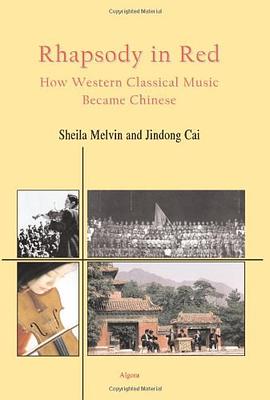
Western classical music has become as Chinese as Peking Opera, and it has woven its way into the hearts and lives of ordinary Chinese people. This lucidly written account traces the biographies of the bold visionaries who carried out this musical merger.
Rhapsody in Red is a history of classical music in China that revolves around a common theme: how Western classical music entered China, and how it became Chinese.
China’s oldest orchestra was founded in 1879, two years before the Boston Symphony. Since then, classical music has woven its way into the lives of ordinary Chinese people. Millions of Chinese children take piano and violin lessons every week. Yet, despite the importance of classical music in China — and of Chinese classical musicians and composers to the world — next to nothing has been written on this fascinating subject.
The authors capture the events with the voice of an insider and the perspective of a Westerner, presenting new information, original research and insights into a topic that has barely been broached elsewhere.
The only other significant books touching on this field are Pianos and Politics: Middle Class Ambitions and The Struggle Over Western Music by Richard Kurt Kraus (1989), and Barbara Mittler's Dangerous Tunes - The Politics of Chinese Music. Both target the academic market. Pianos focuses narrowly on the political aspects of the Cultural Revolution and subsequent re-opening. Rhapsody in Red is a far better read and benefits from considerably more research with primary source material in China over the past decade; and it covers classical music in general over all the history of East-West interaction.
This book will appeal to a general readership interested in China - the same readers who made "Wild Swans" a bestseller. It will also appeal to all who are interested in the future of classical music. It could easily be used for college courses on modern China, cultural history, and ethnomusicology.
作者简介
Sheila Melvin lived in China from 1995 until September of 2000. She now splits her time between the US and China, with bases in Baton Rouge and Beijing.
Sheila Melvin is a regular contributor to The Asian Wall Street Journal, The Wall Street Journal, The International Herald Tribune, and The New York Times. She often writes on music-related subjects, including Western classical music in China, and Chinese opera. In 1998-99, she wrote a series of ten articles for The Wall Street Journal on the Kunju opera “Peony Pavilion,” which was produced by Lincoln Center. Ms. Melvin’s stories on the arts, travel, business, politics, human interest, and economics in China have been carried by a number of publications, including USA Today, The Washington Post, The Chicago Tribune, The Los Angeles Times, Opera News, The South China Morning Post and Catholic Digest. She is a native of Washington, DC and a graduate of the University of Pennsylvania and the Johns Hopkins School of Advanced International Studies.
Conductor Jindong Cai was born in Beijing, and became his career during the Cultural Revolution. He has first-hand knowledge of many of the movements and events described in Rhapsody. In 1985, he went on to study with Leonard Bernstein at Tanglewood. He graduated from New England Conservatory and he received his Doctor of Musical Arts degree in Conducting from the College-Conservatory of Music in Cincinnati.
Prof. Cai is also the Director of Orchestral Studies at Stanford University. He has conducted many professional and university orchestras in the United States and China. He has a special interest in the works of Chinese composers. He received the ASCAP award for his support of contemporary music in 1998 and 2002.
Ms. Melvin and Mr. Cai are married and have two children.
目录信息
读后感
用户评价
这本书的叙事节奏简直令人拍案叫绝,作者对情节的把控犹如一位技艺精湛的指挥家,时而如行云流水般舒缓,让人沉浸在角色细腻的情感波澜中,时而又骤然加快,如同疾风骤雨般将读者卷入一场意想不到的冲突与转折。特别是其中关于时间线索的处理,它并非简单地线性推进,而是巧妙地运用了闪回和预示,使得整个故事的结构如同一个复杂的万花筒,每一次翻转都呈现出全新的、令人震撼的画面。我特别欣赏作者在刻画人物动机时的那种深入骨髓的挖掘,即便是那些看似不合逻辑的行为,在故事的后半段都会被赋予一个令人信服的、甚至带着悲剧色彩的合理性。阅读的过程中,我几次因为书中某个关键情节的揭示而猛地停下来,需要时间消化那种强烈的冲击感。那种感觉就像是看着一个精密的钟表,突然发现其中一个齿轮的位置被调换了,但最终的结果却是让整个机制运行得更加完美、更加令人叹服。这本书的魅力就在于,它不只是在讲一个故事,它在构建一个世界,一个复杂到让你愿意迷失其中,并渴望探寻其每一个角落的迷宫。
评分我必须提及这本书在构建其独特的“地方感”上的非凡成就。它描绘的那个背景设定,不是一个简单的旅游景点式的介绍,而是一个有呼吸、有历史重量、有自身独特法则的有机体。无论是对建筑细节的冷峻刻画,还是对当地风俗习惯的微妙捕捉,都显示出作者深厚的田野调查功底,或者说,是一种对生活细致入微的观察力。这个“地方”本身就是故事的一个重要角色,它的气候、它的光线、它的气味,都在潜移默化地塑造着登场人物的命运与性格。当我读到关于那条古老街道的描述时,我几乎能闻到雨后泥土和某种特定香料混合的味道。这种地方的真实感,不是通过简单的标签堆砌达成的,而是通过氛围的渗透,让你相信,这个虚构的世界,在我们的现实中是真实存在过的,并且带着它特有的、难以磨灭的印记。这使得故事的根基异常稳固,即便情节走向魔幻,读者也心甘情愿地跟随。
评分从主题的深度来看,这本书展现出了一种罕见的哲学思辨的勇气。它毫不回避地探讨了诸如记忆的不可靠性、个体身份的流动本质,以及在宏大历史背景下个体选择的徒劳与重要性这些宏大命题。但它最成功的地方在于,它没有将这些思考束之高阁,而是将它们深深地嵌入到角色日常的、琐碎的挣扎之中。我们看到,一个微不足道的决定,如何像蝴蝶的翅膀一样,引发了连锁反应,最终影响到角色的自我认知。作者似乎在不断地向读者抛出难题:我们所坚信的“真实”究竟是基于何种证据?我们如何定义“自我”?然而,他并不提供简单的答案,而是通过故事的展现,引导我们进行自我反思。这种开放式的处理方式,使得这本书的生命力得以延续——读完合上书的那一刻,争论与思考才刚刚开始。它成功地将严肃的哲学讨论转化为令人心碎的人性探索。
评分这本书的配乐感极强,我阅读时脑海中总是不自觉地浮现出某种特定的旋律。这并非指书中明确提到了音乐,而是作者在构建场景和情绪张力时,所使用的节奏和强弱对比,如同精妙的配器编排。例如,在描述某个充满压抑氛围的段落时,文字的排列和断句变得异常紧凑,如同小提琴在高音区拉出的令人神经紧绷的颤音;而在转入角色内心平静或回忆的场景时,文字则变得开阔、舒展,仿佛是圆号悠扬的长音。这种内在的音乐性,极大地增强了场景的代入感和情绪的共鸣度。我甚至可以想象,如果将这本书改编成舞台剧或电影,它的配乐将是决定成败的关键。作者构建的这种听觉空间,使得即便是纯文字的阅读,也拥有了强大的现场感和层次感,让人体验到一种超越视觉的叙事张力。
评分这部作品的语言风格可以说是独树一帜,充满了令人耳目一新的文学想象力。它不是那种教科书式的优美辞藻的堆砌,而更像是某种古老的、被遗忘的诗歌形式在现代语境下的重生。作者似乎拥有一种近乎魔力的能力,能将最寻常的景象描绘得具有某种超现实的质感。比如,他对“寂静”的描述,不是简单的“没有声音”,而是将其塑造成一种有形、有重量、甚至带着某种气味的实体,仿佛你可以伸手去触摸那份沉重。这种对感官细节的极致捕捉,让整个阅读体验从单纯的视觉输入,升级成了一场全方位的沉浸式体验。我常常需要放慢速度,反复咀嚼某些句子,因为它们不仅仅是信息的载体,本身就是艺术品。这种语言上的大胆尝试,虽然偶尔会让初次接触的读者感到一丝门槛,但一旦适应了作者的韵律,你会发现这是一种极度丰沛、极度令人满足的阅读享受。它挑战了我们对传统叙事语言的预期,提供了一种全新的审美维度。
评分此类题材的英文专著太少,故而算重要。不是学术专著,平铺直叙的史实较多(多为二手材料,少量采访等一手材料)。有时显的过于关注无关紧要的琐碎细节,不能适当剪裁,突出重点,有“失焦”之感。没有argument,但非学术书,也就不过多要求了。
评分。。最后看哭了-__-
评分研究啊研究
评分。。最后看哭了-__-
评分。。最后看哭了-__-