
具体描述
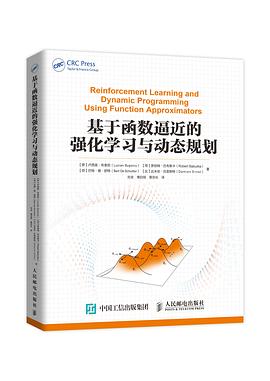
本书讨论大规模连续空间的强化学习理论及方法,重点介绍使用函数逼近的强化学习和动态规划方法。该研究已成为近年来计算机科学与技术领域中最活跃的研究分支之一。全书共分6 章。第1 章为概述;第2 章为动态规划与强化学习介绍;第3 章为大规模连续空间中的动态规划与强化学习;第4 章为基于模糊表示的近似值迭代;第5 章为用于在线学习和连续动作控制的近似策略迭代;第6 章为基于交叉熵基函数优化的近似策略搜索。本书可以作为理工科高等院校计算机专业和自动控制专业研究生的教材,也可以作为相关领域科技工作者和工程技术人员的参考书。
作者简介
Lucian Buşoniu
荷兰代尔夫特理工大学代尔夫特系统与控制中心博士后研究员。2009 年获得代尔夫特理工大学博士学位,2003 年获得罗马尼亚克卢日·纳波卡科技大学硕士学位。他目前的主要研究方向包括强化学习与近似动态规划、面向控制问题的智能与学习技术以及多Agent学习等。
Robert Babuška
荷兰代尔夫特理工大学代尔夫特系统与控制中心教授。1997 年获得代尔夫特理工大学控制专业博士学位,1990 年获得布拉格捷克技术大学电机工程专业硕士学位。他目前的主要研究方向包括模糊系统建模与识别、神经模糊系统的数据驱动结构与自适应、基于模型的模糊控制和学习控制,并将这些技术应用于机器人、机电一体化和航空航天等领域。
Bart De Schutter
荷兰代尔夫特理工大学代尔夫特系统与控制中心海洋与运输技术系教授。1996 年获得比利时鲁汶大学应用科学博士学位。他目前的主要研究方向包括多Agent 系统、混杂系统控制、离散事件系统和智能交通系统控制等。
Damien Ernst
分别于1998 年和2003 年获得比利时列日大学理学硕士及博士学位。他目前是比利时FRS-FNRS 的助理研究员,就职于列日大学的系统与建模研究院。Damien Ernst在2003—2006年间为FRS- FNRS 的博士后研究人员,并在此期间担任剑桥管理机构、麻省理工学院和美国国立卫生研究院的访问研究员,2006—2007学年在高等电力学院(法国)担任教授。他目前的主要研究方向包括电力系统动力学、最优控制、强化学习和动态治疗方案设计等。
目录信息
1.1 动态规划与强化学习问题 2
1.2 动态规划与强化学习中的逼近 5
1.3 关于本书 7
第2章 动态规划与强化学习介绍 9
2.1 引言 9
2.2 马尔可夫决策过程 12
2.2.1 确定性情况 12
2.2.2 随机性情况 16
2.3 值迭代 20
2.3.1 基于模型的值迭代 20
2.3.2 模型无关的值迭代与探索的必要性 25
2.4 策略迭代 27
2.4.1 基于模型的策略迭代 28
2.4.2 模型无关的策略迭代 33
2.5 策略搜索 35
2.6 总结与讨论 38
第3章 大规模连续空间中的动态规划与强化学习 40
3.1 介绍 40
3.2 大规模连续空间中近似的必要性 43
3.3 近似框架 45
3.3.1 带参近似 45
3.3.2 无参近似 48
3.3.3 带参与无参逼近器的比较 49
3.3.4 附注 50
3.4 近似值迭代 51
3.4.1 基于模型的带参近似值迭代算法 51
3.4.2 模型无关的带参近似值迭代算法 54
3.4.3 无参近似值迭代算法 58
3.4.4 非扩张近似的作用及收敛性 59
3.4.5 实例:用于直流电机的近似Q值迭代 62
3.5 近似策略迭代 67
3.5.1 用于近似策略评估的类值迭代算法 68
3.5.2 基于线性带参近似的模型无关策略评估 70
3.5.3 基于无参近似的策略评估 80
3.5.4 带回滚的基于模型的近似策略评估 80
3.5.5 策略改进与近似策略迭代 81
3.5.6 理论保障 84
3.5.7 实例:用于直流电机的最小二乘策略迭代 86
3.6 自动获取值函数逼近器 90
3.6.1 基函数最优化方法 91
3.6.2 基函数构造 93
3.6.3 附注 95
3.7 近似策略搜索 95
3.7.1 策略梯度与行动者-评论家算法 96
3.7.2 梯度无关的策略搜索 101
3.7.3 实例:用于直流电机问题的梯度无关策略搜索 103
3.8 近似值迭代、近似策略迭代及近似策略搜索算法的比较 106
3.9 总结与讨论 108
第4章 基于模糊表示的近似值迭代 110
4.1 引言 110
4.2 模糊Q值迭代 112
4.2.1 模糊Q值迭代的近似和投影映射 112
4.2.2 同步和异步模糊Q值迭代 116
4.3 模糊Q值迭代的分析 119
4.3.1 收敛性 119
4.3.2 一致性 126
4.3.3 计算复杂度 131
4.4 优化隶属度函数 132
4.4.1 隶属度函数优化的一般方法 132
4.4.2 交叉熵优化 133
4.4.3 基于交叉熵隶属度函数优化的模糊Q值迭代 135
4.5 实验研究 137
4.5.1 直流电机:收敛性和一致性研究 137
4.5.2 双连杆机械臂:动作插值的效果以及与拟合Q值迭代的比较 142
4.5.3 倒立摆:实时控制 146
4.5.4 过山车:隶属度函数优化的效果 149
4.6 总结与讨论 152
第5章 用于在线学习和连续动作控制的近似策略迭代 154
5.1 引言 154
5.2 最小二乘策略迭代的概述 155
5.3 在线最小二乘策略迭代 157
5.4 使用先验知识的在线LSPI 161
5.4.1 使用策略近似的在线LSPI 161
5.4.2 具有单调策略的在线LSPI 162
5.5 采用连续动作、多项式近似的LSPI 165
5.6 实验研究 167
5.6.1 用于倒立摆的在线LSPI 167
5.6.2 用于双连杆机械臂的在线LSPI 178
5.6.3 使用直流电机先验知识的在线LSPI 181
5.6.4 在倒立摆中使用带有连续动作逼近器的LSPI 183
5.7 总结与讨论 187
第6章 基于交叉熵基函数优化的近似策略搜索 189
6.1 介绍 189
6.2 交叉熵优化方法 190
6.3 交叉熵策略搜索 192
6.3.1 一般方法 192
6.3.2 基于径向基函数的交叉熵策略搜索 197
6.4 实验研究 199
6.4.1 离散时间二重积分 199
6.4.2 自行车平衡 206
6.4.3 HIV传染病控制的计划性间断治疗 212
6.5 总结与讨论 215
附录A 极端随机树 217
附录B 交叉熵方法 221
缩略语 227
参考文献 232
· · · · · · (收起)
读后感
用户评价
《基于函数逼近的强化学习与动态规划》——仅仅是这个书名,就足以让我在浩瀚的AI知识海洋中,找到一个精确的坐标,并燃起探索的欲望。我一直对“智能”的本质,特别是“决策”的形成过程,有着强烈的求知欲。 动态规划,作为一种经典的优化方法,以其清晰的结构和理论上的最优性,深深吸引着我。它所倡导的“最优子结构”和“重叠子问题”的思想,在很多问题领域都有着广泛的应用。然而,我也深知,当问题的规模急剧增大,特别是当状态空间和动作空间变得连续、高维甚至无限时,传统的动态规划方法,其基于表格的存储和计算方式,将面临严重的“维度灾难”,变得难以实施。 正是在这个关键的转折点上,“函数逼近”的概念,就显得尤为重要和迷人。这本书的书名,正是点明了解决这一难题的核心技术。我迫切地希望,书中能够详细解释,如何利用各种函数模型(从简单的线**模型,到复杂的、能够捕捉非线性关系的深度神经网络)来近似表示那些我们难以精确计算或存储的价值函数(Value Function)或策略函数(Policy Function)。 我非常期待书中能够深入阐述,函数逼近是如何被整合到动态规划的框架中的。例如,它是否会讨论如何选择合适的函数逼近器来匹配特定问题的特性?又是否会深入分析在近似过程中引入的误差,以及这些误差如何影响算法的收敛性和最终的决策质量? Moreover, I am eager to understand the theoretical foundations that underpin the combination of dynamic programming principles with function approximation techniques. How does one ensure that the iterative updates inherent in dynamic programming remain stable and converge to a desirable solution when the functions are approximated? Are there specific theoretical guarantees or bounds provided for such methods? 我对于书中是否会提供一些具体的算法实例,例如如何利用梯度下降来优化一个基于神经网络的策略,或者如何通过迭代更新来训练一个能够近似价值函数的模型,抱有极大的期待。这些实例将是我理解抽象理论概念的绝佳途径。 Furthermore, the title suggests a comprehensive treatment that likely covers both the theoretical aspects of dynamic programming and the practical implementation of function approximation in reinforcement learning. I anticipate a discussion on the trade-offs between different approximation methods, the challenges encountered in practice, and potential solutions or best practices. I am also curious about the book's perspective on the relationship between dynamic programming and reinforcement learning. While dynamic programming often assumes a known model of the environment, reinforcement learning typically deals with scenarios where the model is unknown and must be learned through interaction. How does function approximation facilitate this learning process? Ultimately, the title of this book points to a critical area of research for building intelligent systems that can operate effectively in complex and uncertain environments. I am looking forward to gaining a deep and practical understanding of these advanced concepts.
评分《基于函数逼近的强化学习与动态规划》——这本书的书名,在我看来,不仅仅是一个简单的标签,更像是对人工智能领域一个核心难题的精准诊断和治疗方案。我对如何让机器能够像人类一样,在复杂多变的环境中做出“智慧”的决策,有着近乎执着的探索。 动态规划,作为一种数学上的强大工具,为我们提供了解决最优控制问题的理论基础。它的核心思想在于通过分解大问题为小问题,并利用最优子结构来构建全局最优解,其逻辑的严谨性令人赞叹。然而,在现实世界的许多应用场景中,状态空间和动作空间往往是连续的、高维度的,甚至可能是无限的。这种情况下,传统的基于表格(tabular)的动态规划方法,由于其巨大的存储和计算需求,很快就会面临“维度灾难”的困境,变得难以实施。 正是在这一挑战面前,“函数逼近”技术,如同一把关键的钥匙,为打开高维或连续状态空间问题的大门提供了解决方案。这本书的书名,恰恰精准地指出了这一核心的技术方向。我非常期待书中能够深入探讨,如何利用各种函数模型(从简**的线**模型,到能够捕捉复杂非线性关系的深度神经网络)来近似表示那些我们难以精确计算或存储的价值函数(Value Function)或策略函数(Policy Function)。 我迫切地想了解,函数逼近的引入,是如何被整合到动态规划的迭代过程中的。例如,它是否会讨论如何选择合适的函数逼近器来匹配特定问题的特性?又是否会深入分析在近似过程中引入的误差,以及这些误差如何影响算法的收敛性和最终的决策质量? Moreover, I am keen to understand the theoretical foundations that enable the combination of dynamic programming principles with function approximation techniques. How does one ensure that the iterative updates, which are central to dynamic programming, remain stable and converge to a desirable solution when the functions are approximated? Are there specific theoretical guarantees or bounds provided for such methods? 我对于书中是否会提供一些具体的算法实例,例如如何利用梯度下降来优化一个基于神经网络的策略(策略梯度方法),或者如何通过迭代更新来训练一个能够近似价值函数的模型(如DQN),抱有极大的期待。这些具体的例子将是我理解抽象理论概念的绝佳途径。 Furthermore, the title suggests a comprehensive treatment that likely covers both the theoretical aspects of dynamic programming and the practical implementation of function approximation in reinforcement learning. I anticipate a discussion on the trade-offs between different approximation methods, the challenges encountered in practice, and potential solutions or best practices. I am also curious about the book's perspective on the relationship between dynamic programming and reinforcement learning. While dynamic programming often assumes a known model of the environment, reinforcement learning typically deals with scenarios where the model is unknown and must be learned through interaction. How does function approximation facilitate this learning process? Ultimately, the title of this book points to a critical area of research for building intelligent systems that can operate effectively in complex and uncertain environments. I am looking forward to gaining a deep and practical understanding of these advanced concepts.
评分《基于函数逼近的强化学习与动态规划》——这本书的书名,在我看来,就像是打开智能决策宝藏的一把钥匙,精确地指引着我前进的方向。我对如何让机器在复杂且充满不确定性的环境中做出“明智”的决策,有着近乎着迷的探索欲。 动态规划,作为一种经典的优化理论,其将复杂问题分解为更小的、可管理的子问题的思想,以及利用最优子结构来构建全局最优解的原则,一直深深吸引着我。然而,我也清楚地认识到,当问题的状态空间和动作空间变得连续、高维甚至无限时,传统的基于表格(tabular)的动态规划方法,由于其巨大的存储和计算开销,很快就会面临“维度灾难”的困境,变得难以有效实施。 正是在这样的背景下,“函数逼近”技术,犹如一道划破黑暗的曙光,为解决高维或连续状态空间问题提供了核心的解决方案。这本书的书名,恰恰精准地指出了这一关键技术。我非常期待书中能够深入探讨,如何利用各种函数模型(从简**的线**模型,到能够捕捉复杂非线性关系的深度神经网络)来近似表示那些我们难以精确计算或存储的价值函数(Value Function)或策略函数(Policy Function)。 我迫切地想了解,函数逼近的引入,是如何被整合到动态规划的迭代过程中的。例如,它是否会讨论如何选择合适的函数逼近器来匹配特定问题的特性?又是否会深入分析在近似过程中引入的误差,以及这些误差如何影响算法的收敛性和最终的决策质量? Moreover, I am keen to understand the theoretical foundations that enable the combination of dynamic programming principles with function approximation techniques. How does one ensure that the iterative updates, which are central to dynamic programming, remain stable and converge to a desirable solution when the functions are approximated? Are there specific theoretical guarantees or bounds provided for such methods? 我对于书中是否会提供一些具体的算法实例,例如如何利用梯度下降来优化一个基于神经网络的策略(策略梯度方法),或者如何通过迭代更新来训练一个能够近似价值函数的模型(如DQN),抱有极大的期待。这些具体的例子将是我理解抽象理论概念的绝佳途径。 Furthermore, the title suggests a comprehensive treatment that likely covers both the theoretical aspects of dynamic programming and the practical implementation of function approximation in reinforcement learning. I anticipate a discussion on the trade-offs between different approximation methods, the challenges encountered in practice, and potential solutions or best practices. I am also curious about the book's perspective on the relationship between dynamic programming and reinforcement learning. While dynamic programming often assumes a known model of the environment, reinforcement learning typically deals with scenarios where the model is unknown and must be learned through interaction. How does function approximation facilitate this learning process? Ultimately, the title of this book points to a critical area of research for building intelligent systems that can operate effectively in complex and uncertain environments. I am looking forward to gaining a deep and practical understanding of these advanced concepts.
评分《基于函数逼近的强化学习与动态规划》——这几个字组合在一起,就已经为我勾勒出了一幅探索智能决策机制的宏伟蓝图。我一直对机器学习,特别是强化学习领域,有着浓厚的兴趣,并且深知其在解决复杂问题中的巨大潜力。 动态规划,作为强化学习理论的重要支柱,为我们提供了理解和求解最优控制问题的强大框架。它通过将复杂问题分解为更小的、可管理的子问题,并利用最优子结构和重叠子问题来逐步构建全局最优解,其思想的精妙之处不言而喻。然而,在实际应用中,我们常常会遇到状态空间和动作空间极其庞大,甚至连续的情况。这使得传统的基于表格(tabular)的动态规划方法,由于其巨大的存储和计算需求,很快就会陷入“维度灾难”的困境,变得难以有效实施。 正是在这样的背景下,“函数逼近”的概念,犹如一道曙光,为解决高维或连续状态空间问题提供了关键的技术路径。这本书的书名,正是精确地捕捉到了这一核心的解决方案。我非常期待书中能够深入探讨,如何利用各种函数模型(从简**的线**模型,到强大的、能够捕捉复杂非线性关系的深度神经网络)来近似表示那些难以直接计算或存储的价值函数(Value Function)或策略函数(Policy Function)。 我迫切地想了解,函数逼近的引入,是如何被整合到动态规划的迭代过程中的。例如,它是否会讨论如何选择合适的函数逼近器来匹配特定问题的特性?又是否会深入分析在近似过程中引入的误差,以及这些误差如何影响算法的收敛性和最终的决策质量? Moreover, I am keen to understand the theoretical foundations that enable the combination of dynamic programming principles with function approximation techniques. How does one ensure that the iterative updates, which are central to dynamic programming, remain stable and converge to a desirable solution when the functions are approximated? Are there specific theoretical guarantees or bounds provided for such methods? 我对于书中是否会提供一些具体的算法实例,例如如何利用梯度下降来优化一个基于神经网络的策略(策略梯度方法),或者如何通过迭代更新来训练一个能够近似价值函数的模型(如DQN),抱有极大的期待。这些具体的例子将是我理解抽象理论概念的绝佳途径。 Furthermore, the title suggests a comprehensive treatment that likely covers both the theoretical aspects of dynamic programming and the practical implementation of function approximation in reinforcement learning. I anticipate a discussion on the trade-offs between different approximation methods, the challenges encountered in practice, and potential solutions or best practices. I am also curious about the book's perspective on the relationship between dynamic programming and reinforcement learning. While dynamic programming often assumes a known model of the environment, reinforcement learning typically deals with scenarios where the model is unknown and must be learned through interaction. How does function approximation facilitate this learning process? Ultimately, the title of this book points to a critical area of research for building intelligent systems that can operate effectively in complex and uncertain environments. I am looking forward to gaining a deep and practical understanding of these advanced concepts.
评分这本书的名字,光是听起来就透着一股“硬核”的味道,《基于函数逼近的强化学习与动态规划》。这几个关键词组合在一起,直击我一直以来对人工智能和决策科学领域最感兴趣的核心问题——如何在面对海量、复杂、动态变化的环境时,让智能体能够做出最优的决策。 传统意义上的动态规划,其优雅和强大之处在于提供了一种系统性的方法来求解最优控制问题,通过分解大问题为小问题,并利用最优子结构和重叠子问题来构建全局最优解。然而,当问题规模不断膨胀,尤其是当状态空间和动作空间变成连续或者高维度时,传统的基于表格的动态规划方法便显得捉襟见肘,甚至无法进行计算。 正是在这样的背景下,“函数逼近”这一概念的引入,在我看来,无疑是为解决上述难题打开了一扇新的大门。这本书的书名直接点明了这个关键的技术手段,让我对其中如何利用各种函数(无论是线**的、非线**的,还是深度神经网络等)来近似表示那些难以直接求解的价值函数或策略函数充满了好奇。 我迫切地希望书中能够详细解释,函数逼近的引入会对动态规划的迭代过程带来怎样的影响。例如,是否会讨论如何选择合适的函数逼近器来匹配问题的特性?又是否会深入分析在近似过程中引入的误差,以及这些误差如何影响算法的收敛性和最终的决策性能? Furthermore, I’m particularly interested in the interplay between the iterative nature of dynamic programming and the continuous or high-dimensional nature of function approximation. How does one bridge the gap between the discrete, step-by-step updates of traditional DP and the gradient-based optimization or other approximation techniques used in function approximation? 我非常期待书中能够提供一些经典的算法案例,比如如何将线性函数逼近应用于早期的强化学习算法,或者如何利用深度神经网络来实现更强大的函数逼近能力,从而驱动像DQN、A3C等现代深度强化学习算法的发展。这些案例不仅能够帮助我理解理论知识,更能让我看到这些技术在实际应用中的巨大潜力。 Moreover, the book’s title suggests a focus on both the theoretical underpinnings of dynamic programming and the practical implementation aspects of function approximation in reinforcement learning. I anticipate a comprehensive treatment that covers both the mathematical derivations and the algorithmic design choices that are crucial for building effective intelligent systems. 我对书中对于“稳定性”和“收敛性”的讨论尤其关注。在函数逼近引入误差的情况下,如何保证强化学习算法不会发散,并且能够最终收敛到一个令人满意的策略,这无疑是整个领域的核心挑战之一。我希望书中能提供深刻的见解和严谨的数学分析来解答这些问题。 总而言之,这本书的书名所揭示的研究方向,正是当前人工智能和机器学习领域最前沿、最具挑战性也最具潜力的交叉点之一。我期待它能为我提供一个全面而深刻的理解,使我能够更好地把握这一领域的发展脉络,并为未来的学习和研究奠定坚实的基础。
评分《基于函数逼近的强化学习与动态规划》——这本书的书名,瞬间就勾起了我对人工智能领域最核心挑战之一的浓厚兴趣:如何在复杂、动态且信息不完全的环境中,让智能体能够做出接近最优的决策。 我一直认为,动态规划是理解智能决策过程的基石,它提供了一种系统性的方法来求解最优控制问题。通过将一个复杂问题分解为一系列相互关联的子问题,并利用动态规划的原理,我们可以有效地计算出最优的行动策略。然而,在现实世界中,我们常常面临着状态空间和动作空间极其巨大,甚至是连续的情况。在这种情况下,传统的基于表格(tabular)的动态规划方法,由于其巨大的存储和计算开销,往往显得捉襟见肘,甚至无法应用。 正是在这个关键的瓶颈处,“函数逼近”的概念应运而生,并且成为了解决高维或连续状态空间问题的关键手段。这本书的书名,精准地捕捉到了这一核心技术。我非常期待书中能够深入探讨,如何利用各种函数模型(从简单的线**模型到复杂的深度神经网络)来近似表示那些难以直接计算或存储的价值函数(Value Function)或策略函数(Policy Function)。 我特别希望书中能够详细阐述,函数逼近的引入如何改变了动态规划的迭代过程。例如,是否会讨论如何选择合适的函数逼近器来捕捉问题的本质?又是否会深入分析近似过程中引入的误差,以及这些误差对最终决策的影响? Furthermore, I am eager to understand the theoretical underpinnings of combining dynamic programming principles with function approximation methods. How does one ensure that the iterative updates of dynamic programming remain stable and convergent when the value or policy functions are approximated? Are there established theoretical frameworks or convergence proofs for such methods? 我对于书中是否会提供一些实际的算法示例,例如如何利用梯度下降来优化神经网络表示的策略函数(策略梯度方法),或者如何通过迭代更新来训练一个能够近似价值函数的神经网络(如DQN),抱有极大的期待。这些具体的例子将有助于我更直观地理解抽象的理论概念。 Moreover, the book's title suggests a focus on both the theoretical foundations of dynamic programming and the practical aspects of implementing function approximation in reinforcement learning. I anticipate a balanced treatment that covers the mathematical derivations, algorithmic design, and potential challenges in real-world applications. What are the trade-offs associated with different function approximation techniques? For instance, how do linear function approximators compare to non-linear ones in terms of expressiveness, computational cost, and convergence properties? Finally, I am interested in the book's perspective on the broader implications of these techniques. How do they contribute to the development of more general and capable artificial intelligence systems? What are the future research directions in this area? This book title points to a crucial area of modern AI research, and I am confident it will provide valuable insights into how we can build more intelligent and adaptive systems.
评分这本书的名字叫做《基于函数逼近的强化学习与动态规划》,光是这几个字就已经充满了学术的厚重感,而且直接点出了核心的技术方向,让我这个对前沿AI领域充满好奇心的读者,在看到书名的一瞬间就产生了强烈的阅读欲望。我一直对机器学习中“学习”这个过程的内在机制非常着迷,而强化学习,特别是它与动态规划的结合,更是让我觉得找到了通往理解智能决策过程的关键钥匙。 这本书的书名让我联想到,在现实世界中,很多决策问题都无法精确求解,比如我们日常生活中做出的各种选择,从选择哪条路去上班,到如何管理个人的财务,抑或是更复杂的公司运营决策,都充满了不确定性和潜在的成本。而动态规划的核心思想,在于将一个大问题分解成一系列更小的、可管理的问题,并利用子问题的解来构建整个问题的最优解。然而,在实际应用中,状态空间和动作空间往往是连续的、高维度的,这使得传统的动态规划方法难以直接应用。这时候,函数逼近技术就显得尤为重要了,它能够用更紧凑的函数来表示价值函数或策略函数,从而克服维度灾难。 我期待在这本书中能够深入理解,当我们将函数逼近技术融入到动态规划的框架中时,究竟会发生什么?它们是如何相互作用,取长补短的?例如,是否会讨论如何选择合适的函数逼近器(如神经网络、支持向量机、决策树等)来模拟和优化复杂的决策过程?又是否会阐述在函数逼近存在误差的情况下,如何保证学习算法的稳定性和收敛性?这些都是我非常关心的问题。 我还好奇这本书会如何处理“函数逼近”与“强化学习”之间的辩证关系。强化学习本身就强调通过与环境的交互来学习最优策略,而函数逼近则是为了让学习过程在面对复杂问题时更加高效和可行。那么,在实际的算法设计中,是先选择函数逼近器,再进行强化学习的训练,还是在强化学习的过程中动态地调整和优化函数逼近器?书中是否会提供一些经典的算法案例,比如基于神经网络的Q-learning(DQN)或者策略梯度方法,来生动地展示这些理论是如何落地应用的? 此外,动态规划作为强化学习的理论基石之一,其重要性不言而喻。这本书的书名中包含了“动态规划”四个字,让我对书中对该理论的讲解抱有很高的期望。我希望书中不仅仅是简单地介绍贝尔曼方程等基本概念,而是能够更深入地探讨动态规划在函数逼近场景下的挑战与机遇。比如,在状态空间无限或连续的情况下,如何有效地计算贝尔曼最优方程?是否存在一些近似的动态规划算法,能够在大规模问题中找到近优解? 而且,“函数逼近”这个词本身就暗示着误差和近似。在真实世界的应用中,我们很难获得完全精确的价值函数或策略函数。因此,如何量化和控制这种近似带来的误差,以及这种误差对最终决策的影响,是我非常感兴趣的内容。书中是否会提供一些理论分析,比如误差界限的推导,或者一些鲁棒性的分析,来帮助读者理解在近似情况下算法的可靠性? 同时,这本书的书名也让我想到了,学习的过程本身就是一种动态的逼近。我们通过不断的试错和反馈,逐步调整我们的行为模式,最终达到一个我们认为最优的状态。强化学习正是对这一过程的数学建模,而函数逼近则为这一模型提供了强大的工具。 这本书的书名所蕴含的深度和广度,让我对未来在人工智能和决策科学领域的研究充满了信心。我希望通过阅读这本书,能够构建起一个坚实的理论基础,并掌握实用的技术方法,从而能够解决更复杂、更具挑战性的实际问题。 这本书的名字《基于函数逼近的强化学习与动态规划》,光是读起来就有一种扑面而来的严谨与前沿感。我一直对如何让机器在不确定环境中做出智能决策感到好奇,而强化学习无疑是目前最激动人心的方向之一。特别是当涉及到现实世界中往往无限或高维的状态和动作空间时,传统的基于表格的动态规划方法就显得力不从心了。 因此,“函数逼近”这个词在我眼中,就像是为解决这个棘手问题量身定做的“魔法棒”。它意味着我们可以用更紧凑、更灵活的函数模型(比如各种神经网络)来近似表示复杂的价值函数或策略函数,从而使得动态规划的原理能够在更广泛、更实际的问题上得到应用。我迫切地想知道,书中会如何详细阐述这一过程。 我特别期待书中能够深入讲解,当我们将函数逼近的误差引入到动态规划的迭代过程中时,会发生什么?如何保证整个学习过程的稳定性和收敛性?是否会有关于不同函数逼近器(例如,线**函数、多项式函数、径向基函数、以及各种深度学习模型)在强化学习中的适用性、优缺点以及理论保证的详细讨论? 我脑海中浮现的场景是,书中会通过丰富的数学推导和算法伪代码,清晰地展示如何将梯度下降、最小二乘法等函数逼近技术,与贝尔曼方程的迭代思想结合起来,形成具体的强化学习算法。例如,如何利用神经网络的自动求导能力来计算策略梯度,或者如何设计合适的损失函数来训练价值网络。 此外,“动态规划”这个词的出现,让我对本书在理论层面的深度也充满了期待。我希望书中不仅仅是机械地介绍DQN等深度强化学习算法,而是能从更根本的动态规划原理出发,解释这些算法为何有效,它们是如何巧妙地利用函数逼近来克服维度灾难的。 我对书中是否会涉及一些更高级的话题也颇感兴趣,比如如何处理部分可观测性问题(POMDPs),或者在多智能体环境下如何应用函数逼近和动态规划。如果书中能够提供一些关于“探索-利用”权衡的深入分析,以及如何设计更有效的探索策略,那将是对我极大的帮助。 总而言之,这本书的书名本身就为我勾勒了一个充满吸引力的学习蓝图,它指向了如何克服复杂性、实现智能决策的关键技术路径,让我对未来的学习和研究充满了期待。
评分《基于函数逼近的强化学习与动态规划》——这本书的书名,如同一个精确的定位器,在我探索人工智能领域深度问题的过程中,指明了一个至关重要的方向。我对机器如何在不确定和复杂的环境中做出最优决策,一直抱有极大的热情。 动态规划,作为一种经典的运筹学理论,其将大问题分解为小问题的精妙思想,以及通过最优子结构构建全局最优解的逻辑,深深吸引着我。然而,我也深知,在现实世界中,我们常常面临着状态空间和动作空间极其巨大,甚至连续的情况。在这种情况下,传统的基于表格(tabular)的动态规划方法,由于其庞大的存储和计算需求,很容易陷入“维度灾难”的泥沼,使其应用受到极大的限制。 正是在解决这一重大挑战的时刻,“函数逼近”技术,如同及时雨一般,为突破高维或连续状态空间问题提供了关键的解决方案。这本书的书名,精准地捕捉到了这一核心的技术路径。我非常期待书中能够深入探讨,如何利用各种函数模型(从简**的线**模型,到能够捕捉复杂非线性关系的深度神经网络)来近似表示那些我们难以精确计算或存储的价值函数(Value Function)或策略函数(Policy Function)。 我迫切地想了解,函数逼近的引入,是如何被整合到动态规划的迭代过程中的。例如,它是否会讨论如何选择合适的函数逼近器来匹配特定问题的特性?又是否会深入分析在近似过程中引入的误差,以及这些误差如何影响算法的收敛性和最终的决策质量? Moreover, I am keen to understand the theoretical foundations that enable the combination of dynamic programming principles with function approximation techniques. How does one ensure that the iterative updates, which are central to dynamic programming, remain stable and converge to a desirable solution when the functions are approximated? Are there specific theoretical guarantees or bounds provided for such methods? 我对于书中是否会提供一些具体的算法实例,例如如何利用梯度下降来优化一个基于神经网络的策略(策略梯度方法),或者如何通过迭代更新来训练一个能够近似价值函数的模型(如DQN),抱有极大的期待。这些具体的例子将是我理解抽象理论概念的绝佳途径。 Furthermore, the title suggests a comprehensive treatment that likely covers both the theoretical aspects of dynamic programming and the practical implementation of function approximation in reinforcement learning. I anticipate a discussion on the trade-offs between different approximation methods, the challenges encountered in practice, and potential solutions or best practices. I am also curious about the book's perspective on the relationship between dynamic programming and reinforcement learning. While dynamic programming often assumes a known model of the environment, reinforcement learning typically deals with scenarios where the model is unknown and must be learned through interaction. How does function approximation facilitate this learning process? Ultimately, the title of this book points to a critical area of research for building intelligent systems that can operate effectively in complex and uncertain environments. I am looking forward to gaining a deep and practical understanding of these advanced concepts.
评分《基于函数逼近的强化学习与动态规划》——这本书的书名,对于我这样的学习者来说,简直就像是一张藏宝图,指引着通往智能决策核心的神秘之地。我对如何让机器在复杂且充满不确定性的世界中做出“明智”的选择,有着近乎执着的探索欲。 动态规划,作为运筹学和控制论中的经典理论,其核心思想的精妙之处在于将一个宏大的问题分解成一个个可管理的子问题,并通过递推的方式找到全局最优解。然而,现实世界的许多决策问题,其状态空间和动作空间往往是连续的、高维度的,甚至在某些情况下是无限的。在这种情况下,传统的基于表格的动态规划方法,由于需要存储和处理海量的数据,很快就会面临“维度灾难”的困境,变得不切实际。 而“函数逼近”的引入,在我看来,正是解决这一难题的关键所在。这本书的书名恰恰点明了这一核心技术。我希望书中能够详细阐述,如何利用各种形式的函数(例如,线**的模型、多项式、决策树,乃至于强大的深度神经网络)来近似表示那些我们难以精确计算的价值函数(Value Function)或策略函数(Policy Function)。 我迫切地想了解,当我们将函数逼近技术融入到动态规划的框架中时,究竟是如何实现的?书中是否会详细介绍各种函数逼近技术在强化学习中的应用,例如,如何通过最小二乘法来拟合价值函数,或者如何利用梯度下降来优化策略函数? Furthermore, I am very keen to understand the theoretical implications of using approximation in the context of dynamic programming. How does the introduction of approximation errors affect the optimality guarantees of dynamic programming? Are there theoretical bounds on these errors, and how can we minimize their impact on the overall performance of the learning agent? 我特别期待书中能够深入探讨,在函数逼近存在误差的情况下,如何保证强化学习算法的稳定性和收敛性。这无疑是该领域面临的最大挑战之一。书中是否会提供一些关于算法稳定性分析的工具和方法,或者介绍一些能够有效处理近似误差的算法设计技巧? Moreover, I am eager to learn about the practical aspects of implementing these algorithms. What are the common pitfalls and challenges encountered when applying function approximation techniques to real-world reinforcement learning problems? Are there any best practices or guidelines that the book will offer to help practitioners navigate these complexities? I am also curious about the book's perspective on the relationship between dynamic programming and reinforcement learning. While dynamic programming provides the theoretical foundation, reinforcement learning often deals with scenarios where the system dynamics are unknown and must be learned through interaction. How does function approximation help bridge this gap and enable learning from experience? In essence, the title of this book promises a deep dive into the techniques that enable intelligent agents to learn and make optimal decisions in complex environments, which is a fundamental goal in artificial intelligence. I am looking forward to gaining a comprehensive understanding of these advanced concepts.
评分《基于函数逼近的强化学习与动态规划》——这本书的书名,在我看来,简直就是人工智能领域的一条“黄金法则”,它精确地指出了如何驾驭复杂决策问题的关键技术。我对如何让机器在充满不确定性的环境中做出“聪明”的决定,一直有着强烈的好奇心。 动态规划,作为一种经典的优化方法,其精妙之处在于将一个宏大问题分解为一系列可管理的子问题,并通过最优子结构和重叠子问题的原理,最终求解出全局最优解。然而,现实世界的许多决策问题,其状态空间和动作空间往往是连续的、高维度的,甚至可能无限大。在这种情况下,传统的基于表格(tabular)的动态规划方法,由于其巨大的存储和计算开销,很快就会面临“维度灾难”的困境,变得不切实际。 正是在这个关键的瓶颈处,“函数逼近”的概念,犹如一道希望之光,为解决高维或连续状态空间问题提供了核心的解决方案。这本书的书名,正是精准地捕捉到了这一关键技术。我非常期待书中能够深入探讨,如何利用各种函数模型(从简**的线**模型,到强大的、能够捕捉复杂非线性关系的深度神经网络)来近似表示那些我们难以精确计算或存储的价值函数(Value Function)或策略函数(Policy Function)。 我迫切地想了解,函数逼近的引入,是如何被整合到动态规划的迭代过程中的。例如,它是否会讨论如何选择合适的函数逼近器来匹配特定问题的特性?又是否会深入分析在近似过程中引入的误差,以及这些误差如何影响算法的收敛性和最终的决策质量? Moreover, I am keen to understand the theoretical foundations that enable the combination of dynamic programming principles with function approximation techniques. How does one ensure that the iterative updates, which are central to dynamic programming, remain stable and converge to a desirable solution when the functions are approximated? Are there specific theoretical guarantees or bounds provided for such methods? 我对于书中是否会提供一些具体的算法实例,例如如何利用梯度下降来优化一个基于神经网络的策略(策略梯度方法),或者如何通过迭代更新来训练一个能够近似价值函数的模型(如DQN),抱有极大的期待。这些具体的例子将是我理解抽象理论概念的绝佳途径。 Furthermore, the title suggests a comprehensive treatment that likely covers both the theoretical aspects of dynamic programming and the practical implementation of function approximation in reinforcement learning. I anticipate a discussion on the trade-offs between different approximation methods, the challenges encountered in practice, and potential solutions or best practices. I am also curious about the book's perspective on the relationship between dynamic programming and reinforcement learning. While dynamic programming often assumes a known model of the environment, reinforcement learning typically deals with scenarios where the model is unknown and must be learned through interaction. How does function approximation facilitate this learning process? Ultimately, the title of this book points to a critical area of research for building intelligent systems that can operate effectively in complex and uncertain environments. I am looking forward to gaining a deep and practical understanding of these advanced concepts.
评分 评分 评分 评分 评分