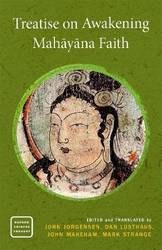

具体描述
Dasheng qixin lun, or Treatise on Awakening Mahayana Faith has been one of the most important texts of East Asian Buddhism since it first appeared in sixth-century China. It outlines the initial steps a Mahayana Buddhist needs to take to reach enlightenment, beginning with the conviction that the Mahayana path is correct and worth pursuing. The Treatise addresses many of the doctrines central to various Buddhist teachings in China between the fifth and seventh centuries, attempting to reconcile seemingly contradictory ideas in Buddhist texts introduced from India. It provided a model for later schools to harmonize teachings and sustain the idea that, despite different approaches, there was only one doctrine, or Dharma. It profoundly shaped the doctrines and practices of the major schools of Chinese Buddhism: Chan, Tiantai, Huayan, and to a lesser extent Pure Land.
It quickly became a shared resource for East Asian philosophers and students of Buddhist thought.
Drawing on the historical and intellectual contexts of Treatise's composition and paying sustained attention to its interpretation in early commentaries, this new annotated translation of the classic, makes its ideas available to English readers like never before. The introduction orients readers to the main topics taken up in the Treatise and gives a comprehensive historical and intellectual grounding to the text. This volume marks a major advance in studies of the Treatise, bringing to light new interpretations and themes of the text.
作者简介
Edited and translated by John Jorgensen, Edited and translated by Dan Lusthaus, Edited and translated by John Makeham, and Edited and translated by Mark Strange
John Jorgensen studied in Australia, Japan, and Korea. His publications deal mainly with Chan/Son Buddhism and include six volumes of translations. He has written articles and encyclopedia entries on Chinese, Japanese, and Korean Buddhism, as well as Korean new religions. Dan Lusthaus specializes in the transmission of Buddhism from India to China, with special focus on Yogacara Buddhism. The Treatise on Awakening Mahayana Faith is the first Buddhist text he read in Chinese, and he has been studying it ever since. John Makeham specializes in Chinese intellectual history. He has a particular interest in Confucian thought throughout Chinese history and, in more recent years, in the influence of Sinitic Buddhist thought on pre-modern and modern Confucian philosophy. Mark Strange studies the intellectual and political history of medieval China. Before moving to the Australian National University, he taught at the University of Warwick, University of Oxford, and University of Cambridge.
目录信息
Acknowledgments
Translators
List of Maps
Abbreviations
Introduction
Treatise on Giving Rise to Faith in the Great Vehicle
Bibliography
English-to-Chinese Glossary
Chinese-to-English Glossary
Index
· · · · · · (收起)
读后感
用户评价
作为一名具有实用主义倾向的读者,我最初对这种偏重形而上学探讨的著作持保留态度。然而,这本书出乎意料地提供了许多可以落地的视角。它并非仅仅停留在抽象的思辨层面,而是巧妙地将宏大的宇宙观与个体的日常行为规范联系起来。比如,作者在论述“慈悲”时,所采用的切入点并非空泛的道德说教,而是基于对“我执”如何具体影响人际互动的细致入微的观察,这种细腻的洞察力令人印象深刻。我发现,通过理解这些理论,我开始对自己的情绪反应模式有了更清晰的认识,从而在处理冲突时,多了一份从容和超然。唯一让我略感遗憾的是,在讨论如何将这些高阶的理解融入到现代社会的高压节奏中时,内容略显不足,或许是受限于文本的时代背景,但我相信,即便如此,它所提供的精神锚点已足够强大,足以支撑我们应对世俗的种种挑战。
评分这部书的装帧实在是太讲究了,从封面到内页的纸张选择,都能感受到出版者对佛学经典的尊重。尤其是那些繁复的图案和精妙的排版,让每一次翻阅都像是在进行一场仪式。虽然我对佛教教义的理解尚浅,但仅仅是触摸着这些文字和图像,就能感受到一种沉静的力量。书中的章节划分非常清晰,逻辑链条紧密得令人惊叹,即便是初学者也能大致跟上作者的思路,这一点非常难得。我特别欣赏作者在阐述复杂概念时所采用的类比和譬喻,它们如同黑暗中的火把,照亮了那些晦涩难懂的佛理。当然,对于某些资深修行者来说,或许会觉得这些基础的阐释有些冗余,但对我而言,这种层层递进的讲解方式,极大程度地降低了入门的门槛,让我有信心可以继续深入阅读下去。整体而言,这本书不仅是一本知识的载体,更是一件值得珍藏的艺术品,它的物理形态本身就在诉说着一种对真理的敬畏。
评分这本书的结构安排,在我看来,是一种精妙的螺旋上升结构。它不像一些教科书那样线性推进,而是不断地回到核心主题,但每一次回归都带来了更深一层的理解,就像是绕着一座山峰攀登,每次转角看到的风景都截然不同。作者似乎对读者的耐心有着精准的把握,他从不急于抛出最终的结论,而是耐心地铺陈论据,引导读者自己去“发现”真理,而不是被动地“接受”教义。这种“引导式”的写作手法,极大地提升了阅读的主动性和参与感。读完后,我感受到的不是知识的堆砌,而是一种心境上的拓宽。这本书最宝贵的地方,或许在于它提供了一种看待世界和自我存在方式的全新框架,这个框架坚固而富有弹性。对于那些渴望超越表面现象、探寻生命终极意义的求索者来说,这本书无疑是一盏照亮前路的恒星之光,其价值难以用简单的星级评分来衡量。
评分我花了整整一周的时间来消化这本书的前三分之一内容,坦白说,这绝对不是一本可以“速读”的书籍。作者的文字风格极其凝练,每一个句子都似乎蕴含着千钧之力,需要反复咀嚼才能体会其深层含义。我不得不承认,在某些关于“空性”和“缘起”的讨论中,我多次停下来,合上书本,走到窗边,试图在现实世界的景象中寻找理论的对应点,这种思考的过程是痛苦却又极其充实的。我尤其欣赏作者在处理历史背景和哲学思辨之间的平衡,他没有将教义孤立起来,而是将其置于广阔的时代洪流中进行考察,使得理解不再是僵硬的教条,而是一种流动的生命体验。不过,我个人希望能有更多的脚注或参考资料,以便于我对引用的古老文献进行交叉验证,毕竟在探讨深奥的智慧时,严谨的考据是至关重要的基石。对于那些追求真正智慧的读者,请做好准备,这是一场精神上的马拉松,而非短跑冲刺。
评分这本书的语言组织方式非常具有启发性,它有一种独特的节奏感,仿佛作者在与你进行一场跨越时空的对话。我感觉作者的笔触时而如同冷静的哲学家在剖析结构,时而又像一位慈悲的长者在温柔地引导迷途的羔羊。我特别喜欢那些被我圈起来的段落,它们往往是作者对某一核心概念的精辟总结,简洁有力,直接击中要害。阅读过程中,我发现自己开始不自觉地审视日常生活中的细微之处,过去那些司空见惯的现象,突然间蒙上了一层新的光芒,这正是一种深刻的“觉醒”体验的初步迹象。当然,这本书的深度意味着它可能并不适合那些刚开始接触东方哲学的读者,它要求你有一定的心理准备去面对自我认知的局限性。我甚至觉得,这本书应该被放在图书馆的“需要定期重读”的书架上,因为随着个人阅历的增长,每一次重读都会带来新的领悟,这才是真正有价值的文本所具备的特质。
评分 评分 评分 评分 评分