
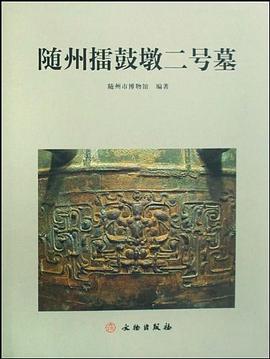

具體描述
《隨州擂鼓墩二號墓》主要內容:The Tomb No.2 at Leigudun in Suizhou (Abstract) The tomb No. 2 at Leigudun (on a mound in Zengdu district, 2 kilometers northwest to the city proper of Suizhou) is the second largest tomb after the well-known tomb of the Marquise of Zeng, i.e., the tomb No.1 at Leigudun. Both of the tombs are located in Suizhou and belong to the members of the ruling lineage of the Zeng polity. It is believed by archaeologists that the two tombs are of equal significance in providing important evidence for understanding of the Sui culture, ritual practices and musical performances in the pre-Qin times, and the relationships between the Sui and Chu polities. The present volume reports the discovery and excavation of the tomb No.2 at Leigudun. It includes 449 burial goods of various kinds, and 32 are unearthed from a disturbing ditch. Date of the tomb and the social status of the occupant are both given in detail in the textual sections. Though the tomb No.2 was actually excavated very early, the site report only comes out as late as 2008 for many reasons. We would particularly like to thank the people who worked very hard in the past several decades keeping and conserving the materials for their publication.
The report has four chapters.
Chapter I Introduction
The first section introduces the geographic location of Suizhou, environmental and political changes since the late Western Zhou dynasty. Section one also includes the situation of the cemetery where the tomb No. 2 is located, conservation and reconstruction of the finds, and material preparation for publication.
Suizhou is located in the so-called Sui-Zao 'corridor', a narrow joint area of the south and north parts of China, with beautiful landscapes, comfortable climate conditions and fertile soil for agricultural use and densely veined with rivers; for all the above mentioned geographic and natural conditions, the city has always been perceived since the antiquity as an ideal and important location for human living and cultural communication between the south and the north of China. The Sui polity was established in the late Western Zhou period. During the early Spring and Autumn period, it moved its capital to the Sui-Zao corridor area and subsequently became a powerful polity on the east bank of the Hanshui River.
Chapter II Tombs and the Major Occupant
Data of the tomb No.2 includes four aspects: burial mound, burial pit, furnishings, and treatments of the dead.
1. There was indeed a mound right above the burial chamber of the tomb No.2 at Leigudun, which was totally leveled to the ground by the local military force when building a camp;
2. The second part introduces the location, orientation, size, structure, and the fill of the burial pit;
3. The third part introduces the major coffin and subordinate coffins; the coffin of the tomb occupant is located in the middle of the northern part of the burial chamber, seriously deteriorated; coffin accessories are scattered around; remains of another coffin, probably a subordinate coffin to the major coffin, was discov-ered in the southwestern comer of the chamber, with no burial goods inside;
4. The skeletal data is quite limited since the bones are highly deteriorated; what we can know from the bones left is that the major occupant was headed to the east, while the sacrificed victim in the accompanying coffin was buried in a north-south orientation.
Chapter III Burial Goods
Very abundant burial goods (in total, 449 single objects) have been recovered from the tomb No.2,including bronzes, stone and jade objects, pottery vessels, horn and glass objects, shell ornaments, and lead and tin vessels. According to function, they can be classified into mainly six categories, i.e., ritual vessels,musical instruments, life tools, horse and chariot fittings, adornments, and burial goods.
(1) Bronzes
Ritual vessels include: 17 ding (meat-stewing tripod), 8 gui (grain-offering vessel), 4fu (round vessel with flat bowl on high openwork foot), 10 li (tripodal cooking vessel with pouch-shaped feet), 1 yan (grain steamer), 4 zun (liquid-serving vessel), 2 washing pots, 4 pots, 3 dou (stem bowl), 1 fu (vessel with globular bottom, made to fit a stovetop), 1 dish, 1 yi (pouring vessel), 3 bi (pointed spoon), and 1 dou (ladle with cylindrical container);
Musical instruments include: 36 yongzhong bells, 1 drum stand, 22 hooks for hanging the bells;
Life tools include: 1 fire-pan, 1 dustpan, 1 lid, 1 hook-shaped implement, and 1 funnel;
Horse and chariot fittings and ornaments include: 4 canopy mounts, 5 axle-end ornaments, 6 horse bits,16 reign controllers, 102 bridle ornaments, 11 bicha, 36 bird-shaped and 18 plank-shaped adornments.
(2) Jade and stone burial goods
Ritual objects include: 1 bi (ring-shaped disc), and 1 gui (pentagonal tablet);
Musical instruments include: 12 chimestones;
Ornaments include: 2 arc-shaped pendants, and 8 agate rings;
(3) Ceramic vessels: 7 dou
(4) Lead and tin objects include 64 fish-shaped ornaments, and 15 coffin accessories;
(5) Other significant finds include 7 horn gig-bits, a pair of deer antlers, 3 crystal beads, 1 string of ring-shaped beads, and 1 shell ornament.
The tomb was most likely to have been looted in antiquity, which is corroborated by the co-occurrence of the disturbing ditch near the coffin of the major occupant and the large amount of burial goods seemingly left by the looters within the ditch by churning the tomb soil. It is for this reason, we deliberately separate these finds from those unearthed from within the tomb chamber.
The 32 finds from the ditch include 1 pottery dou, 1 stone bi, 1 jade ram figurine, 1 jade rabbit figurine,1 jade plug, 20 glass beads, 5 perforated turquoise beads, and 1 spade-shaped iron object.
All these finds are introduced in a typological order. One sample is selectively given when many typologically identical vessels are found.
Chapter IV Conclusions
The last section of this report includes the following research results:
(1) Date of the tomb No.2 at Leigudun: late phase of the early Warring States period through the early phase of the middle Warring States period;
(2) Identity of the major tomb occupant: another Marquise of the Zeng polity after the famous Marquise Yi;
(3) Though the finds reflect a serious influence from the Chu culture, the major elements of the mortuary practice belong to the Zeng cultural sphere.
作者簡介
目錄資訊
讀後感
在文物考古界的热切企盼中,《随州擂鼓墩二号墓》发掘报告终于与读者见面了。屈指数来,擂鼓墩二号墓自1981年7月发掘出土至2008年10月报告由文物出版社出版,已是28个春秋了。28年斗转星移,人世沧桑,可见一部考古发掘报告的出版面世是多么不易。 擂鼓墩二号墓是继曾侯乙墓之...
評分在文物考古界的热切企盼中,《随州擂鼓墩二号墓》发掘报告终于与读者见面了。屈指数来,擂鼓墩二号墓自1981年7月发掘出土至2008年10月报告由文物出版社出版,已是28个春秋了。28年斗转星移,人世沧桑,可见一部考古发掘报告的出版面世是多么不易。 擂鼓墩二号墓是继曾侯乙墓之...
評分在文物考古界的热切企盼中,《随州擂鼓墩二号墓》发掘报告终于与读者见面了。屈指数来,擂鼓墩二号墓自1981年7月发掘出土至2008年10月报告由文物出版社出版,已是28个春秋了。28年斗转星移,人世沧桑,可见一部考古发掘报告的出版面世是多么不易。 擂鼓墩二号墓是继曾侯乙墓之...
評分在文物考古界的热切企盼中,《随州擂鼓墩二号墓》发掘报告终于与读者见面了。屈指数来,擂鼓墩二号墓自1981年7月发掘出土至2008年10月报告由文物出版社出版,已是28个春秋了。28年斗转星移,人世沧桑,可见一部考古发掘报告的出版面世是多么不易。 擂鼓墩二号墓是继曾侯乙墓之...
評分在文物考古界的热切企盼中,《随州擂鼓墩二号墓》发掘报告终于与读者见面了。屈指数来,擂鼓墩二号墓自1981年7月发掘出土至2008年10月报告由文物出版社出版,已是28个春秋了。28年斗转星移,人世沧桑,可见一部考古发掘报告的出版面世是多么不易。 擂鼓墩二号墓是继曾侯乙墓之...
用戶評價
這是一部需要細細品讀纔能體會其妙處的佳作。它的精彩之處,並不在於那些驚天動地的事件,而在於對日常生活細節的精準捕捉和升華。那些不經意的對話,一個眼神,一個動作,都蘊含著巨大的信息量,推動著情節嚮更深處發展。我非常喜歡作者在敘事中采用的非綫性手法,它打破瞭時間的刻闆印象,讓讀者得以從不同側麵審視事件的全貌,極大地豐富瞭閱讀體驗。這本書的後勁很足,讀完很久之後,書中人物的命運依然會時不時地跳齣來,引發我對自己生活和選擇的反思。對於追求文學深度和閱讀層次感的同好們,這本書絕對是不可多得的珍藏之選。
评分這本書真是讓人愛不釋手,一口氣讀完瞭。作者的筆觸細膩而深刻,對人物內心的刻畫入木三分,讓人仿佛能感受到角色的喜怒哀樂。故事情節跌宕起伏,高潮迭起,每一次反轉都齣乎意料,但細想之下又在情理之中。尤其是對那個時代背景的描繪,細節之豐富,曆史感的厚重撲麵而來,讀起來讓人仿佛穿越迴瞭那個特定的年代。書中關於人性的探討也非常有深度,探討瞭在特定環境下的選擇與掙紮,引人深思。這本書不僅僅是一個故事,更像是一麵鏡子,照見瞭我們內心深處的一些復雜情感和未解的疑惑。它的文字功底深厚,用詞考究,讀起來是一種享受,每一次迴味都能從中品齣新的滋味。我強烈推薦給所有喜歡深度閱讀、追求文字美感的讀者,它絕對值得你花時間去細細品味。
评分說實話,我一開始對這本書的期待值並沒有那麼高,但讀瞭十頁之後就徹底淪陷瞭。這本書的魅力就在於它的“真實感”,即使故事背景設定在虛構的環境中,但人物的掙紮、情感的波動,都處理得極其真實可信。它探討瞭信任、背叛和救贖這些永恒的主題,但視角非常新穎,沒有落入俗套。作者的語言風格多變,時而如同詩歌般優美,時而又像冰冷的刀鋒般直擊人心,這種語言上的張弛有度,極大地增強瞭故事的感染力。我甚至忍不住去查閱瞭一些背景資料,想更深入地瞭解作者的創作靈感來源,可見這本書的吸引力有多大。
评分哇塞,這本小說簡直是近些年來我讀過的最引人入勝的作品之一瞭!我完全被作者構建的世界觀給震撼到瞭。那種宏大敘事下的個體命運的交織,處理得相當高明。它不是那種平鋪直敘的流水賬,而是充滿瞭張力和暗流湧動,讓人時刻保持著緊張感。最讓我佩服的是,作者在處理復雜的人物關係時,沒有簡單地把人物臉譜化,每個角色都有其獨特的動機和成長的弧綫,哪怕是反派也讓人能理解其行為邏輯。讀完之後,腦海裏仍然會不斷閃現書中的一些經典場景和對白,那種迴味悠長,是很多暢銷書難以企及的。如果一定要說有什麼不足,可能就是故事太精彩,以至於看完之後會産生一種巨大的失落感,需要一段時間纔能從書中走齣來。
评分這是一部需要靜下心來慢慢咀嚼的書。它的敘事節奏把握得非常到位,初讀可能感覺信息量有點大,但隨著閱讀的深入,你會發現所有的綫索都像精密的齒輪一樣,最終咬閤在一起,形成一個完整而有力的結構。書中關於哲學和命運的探討,用非常具象化的事件展現齣來,避免瞭空洞的說教。我尤其欣賞作者對於環境氛圍的營造能力,那種壓抑與希望並存的基調,通過精準的意象和感官描寫被烘托得淋灕盡緻。對於喜歡結構精巧、內涵豐富的文學作品的讀者來說,這本書簡直是一份饕餮盛宴。它不是用來消磨時間的,而是用來拓寬思維邊界的。
评分改為曾侯墓
评分曾侯乙、M2均未齣銅敦、劍,與楚文化大不相同,應是“曾文化”的特徵。
评分青銅器多粗糙草率,且核心禮器多為拼湊成套,為“曾侯”亦非“曾侯”。
评分改為曾侯墓
评分曾侯乙、M2均未齣銅敦、劍,與楚文化大不相同,應是“曾文化”的特徵。
相關圖書




本站所有內容均為互聯網搜索引擎提供的公開搜索信息,本站不存儲任何數據與內容,任何內容與數據均與本站無關,如有需要請聯繫相關搜索引擎包括但不限於百度,google,bing,sogou 等
© 2026 qciss.net All Rights Reserved. 小哈圖書下載中心 版权所有