
具体描述
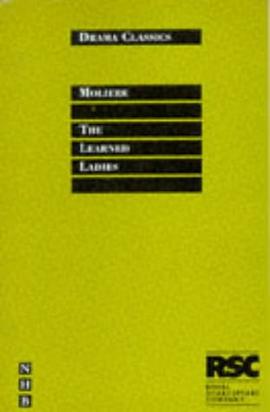
Two young people, Henriette and Clitandre, are in love, but in order to marry, they must overcome an obstacle; the attitude of Henriette's family. Her sensible father and uncle are in favour of the marriage; but unfortunately her father is under the thumb of his wife, Philaminte, Henriette's mother. And Philaminte, supported by Henriette's aunt and sister, wishes her to marry Trissotin, a "scholar" and mediocre poet with big teeth, who has these three women completely in his thrall. For these three ladies are "learned"; their obsession in life is learning and culture of the most pretentious kind, and Trissotin is their special protégé and the fixture of their literary salon.
作者简介
Jean-Baptiste Poquelin, also known by his stage name Molière, (January 15, 1622 - February 17, 1673) was a French playwright and actor who is considered one of the greatest masters of comedy in Western literature.[1] Among Molière's best-known dramas are Le Misanthrope, (The Misanthrope), L'Ecole des femmes (The School for Wives), Tartuffe ou l'Imposteur, (Tartuffe or the Hypocrite), L'Avare ou l'École du mensonge (The Miser), Le Malade imaginaire (The Imaginary Invalid), and Le Bourgeois Gentilhomme (The Bourgeois Gentleman).
From a prosperous family and having studied at Clermont College (now Lycée Louis-le-Grand), Molière was well suited to begin a life in the theatre. Thirteen years as an itinerant actor helped him polish his comic abilities whilst he also began writing, combining Commedia dell'Arte elements with the more refined French comedy.[2]
Through the patronage of a few aristocrats, including the brother of Louis XIV, Molière procured a command performance before the King at the Louvre. Performing a classic play by Pierre Corneille and a farce of his own, Le Docteur amoureux (The Doctor in Love), Molière was granted the use of Salle du Petit-Bourbon at the Louvre, a spacious room appointed for theatrical performances. Later, Molière was granted the use of the Palais-Royal. In both locations he found success among the Parisians with plays such as Les Précieuses ridicules (The Affected Ladies), L'École des maris (The School for Husbands) and L'École des femmes (The School for Wives). This royal favour brought a royal pension to his troupe and the title "Troupe du Roi" (The King's Troupe). Molière continued as the official author of court entertainments.[3]
Though he received the adulation of the court and Parisians, Molière's satires attracted criticisms from moralists and the Church. Tartuffe ou l'Imposteur (Tartuffe or the Hypocrite) and its attack on religious hypocrisy roundly received condemnations from the Church while Don Juan was banned from performance. Molière's hard work in so many theatrical capacities began to take its toll on his health and, by 1667, he was forced to take a break from the stage. In 1673, during a production of his final play, Le Malade imaginaire (The Imaginary Invalid), Molière, who suffered from pulmonary tuberculosis, was seized by a coughing fit and a haemorrhage while playing the hypochondriac Argan. He finished the performance but collapsed again and died a few hours later. In his time in Paris, Molière had completely reformed French comedy.[3]
目录信息
读后感
用户评价
说实话,最初翻开这本书时,我对它的期待值并不高,总觉得这类题材的作品难免落入俗套。然而,情节的巧妙设计彻底颠覆了我的预期。作者展现出一种近乎魔术师般的手法,总能在你以为已经猜到下一步发展时,优雅地甩出一个完全意料之外的转折。这种新鲜感贯穿始终,让阅读过程充满了探索的乐趣。特别是几位主要人物之间的复杂关系网,如同一张精密编织的蛛网,每个人都深受其害,又互相牵制。我特别喜欢作者用来讽刺当时社会现象的手法,它并非直白的批判,而是通过夸张、反讽和荒谬的情境来完成,显得既尖锐又充满了幽默的张力,读到某些地方,我不禁失声笑出来,但笑声背后却带着一丝寒意。这本书的结构是高度对称且富有韵律感的,不同的章节主题相互呼应,形成一个闭环,让人不得不佩服作者在构建宏大叙事框架时所展现出的惊人耐心与天赋。
评分从纯粹的阅读快感角度来看,这本书的节奏掌控简直是大师级的。它知道何时该让你屏息凝神,何时又可以适当地放松,给予喘息的空间。最让我印象深刻的是作者对“沉默”的处理艺术。很多关键的冲突和情感的爆发并非通过激烈的争吵来展现,而是通过长时间的、充满张力的沉默来达成,这种“无声胜有声”的叙事技巧,远比直白的宣泄来得更有力量。那些未说出口的话语,那些眼神的交汇,都像是一股暗流,推动着整个故事向既定的悲剧或圆满(这一点留给读者自行判断)发展。它成功地避开了许多同类作品中常见的戏剧化滥用,一切都显得内敛而克制,却又蕴含着足以撕裂人心的能量。读完合上书本的瞬间,我感受到的是一种被深度理解和充分共情的满足感,这绝对是一部值得被反复推荐给所有严肃文学爱好者的杰作,它挑战你的思维,也抚慰你对美好叙事的渴望。
评分我花了整整一个周末才将这部作品读完,它带给我的震撼是持续性的,而非一蹴而就的。叙事节奏的把控堪称教科书级别,开篇的铺陈略显缓慢,却像是在精心调制一杯需要时间才能完全释放出香气的特制饮品,那些看似无关紧要的细节,其实都是为后续的高潮部分埋下的伏笔,一旦情节猛烈爆发,所有的等待都显得物有所值。作者对于历史环境的还原度高得惊人,那种时代特有的压抑感、社会规范对个体的规训,都被营造得真实可触。我仿佛能闻到那个年代特有的尘土气息和昂贵的香水味,感受到女性在追求自我认知时所必须面对的巨大阻力。这本书最成功的一点是,它没有提供简单的答案或廉价的胜利,而是将所有角色的命运都置于一个模糊的灰色地带,迫使读者跳出自己的既有框架去思考“合理”与“应当”之间的鸿沟。读完后我久久不能平静,脑海中不断回放着那些关键场景的画面,那种挥之不去的思辨欲,证明了这是一部真正触及灵魂的作品,远超一般的消遣读物。
评分这是一部需要静下心来,甚至需要做笔记来辅助阅读的鸿篇巨制。它的信息密度极大,不仅仅是故事层面,还渗透了大量的社会学、伦理学甚至文学流派的知识点。对于初次接触这类主题的读者来说,可能需要一些耐心去消化其中庞杂的人物谱系和错综复杂的背景设定。但我可以保证,一旦你克服了初期的门槛,沉浸其中后,你会发现每一次深入挖掘都会带来新的宝藏。作者对细节的执着令人咋舌,无论是对服饰的描述,还是对某个特定手势的捕捉,都精准得像是一份历史档案。这种对真实感的追求,使得虚构的故事拥有了近乎纪录片的严肃性。我个人的阅读体验是,它更像是一次精神上的“远征”,需要消耗大量的认知能量,但最终的回报是巨大的,它拓宽了我对特定历史时期社会运作逻辑的理解,提供了极其宝贵的第一视角体验,极具教育意义。
评分这本书的文字功底实在是令人惊叹,作者的遣词造句如同精雕细琢的艺术品,每一个词语的选择都恰到好处,为整个故事披上了一层典雅而厚重的质感。我尤其欣赏作者在描绘人物内心挣扎时的细腻笔触,那些看似微不足道的犹豫、转念,都被捕捉得丝丝入扣,让读者仿佛能切身感受到角色们在那个特定时代背景下的沉重与无奈。阅读过程中,我多次停下来,反复品味那些富有哲理性的段落,它们不仅仅是推动情节的工具,更像是作者对人性、社会现象的深刻洞察与独到见解的结晶。书中的对话设计更是高妙,不同阶层、不同学识背景的人物,其言谈举止有着天然的区分度,那种音韵上的差异,使得阅读体验极具层次感,仿佛置身于一个声色俱妙的沙龙之中,耳边是此起彼伏、意味深长的交锋。即便抛开故事本身不谈,仅从文学性的角度来衡量,这本书也足以傲立于当代文坛,值得反复研读,每次重温都会有新的感悟涌现,这是真正有生命力的文字所具备的特质。
评分Trissotin吓死宝宝了...
评分Trissotin吓死宝宝了...
评分Trissotin吓死宝宝了...
评分爱情是相互的欣赏。对方是自己想象的影子。/喜剧不是搞笑,一个美好的结局就够了。
评分爱情是相互的欣赏。对方是自己想象的影子。/喜剧不是搞笑,一个美好的结局就够了。