

具體描述
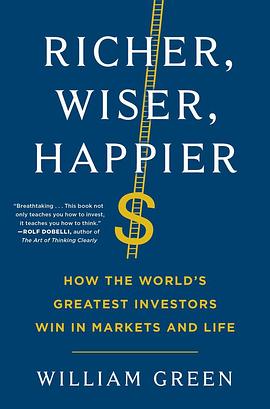
From a renowned financial journalist who has written for Time, Fortune, Forbes, and The New Yorker, a fresh and unexpectedly profound book that draws on hundreds of hours of exclusive interviews with many of the world’s super-investors to demonstrate that the keys for building wealth hold other life lessons as well.
Billionaire investors. If we think of them, it’s with a mixture of awe and suspicion. Clearly, they possess a kind of genius—the proverbial Midas Touch. But are the skills they possess transferable? And do they have anything to teach us besides making money?
In Richer, Wiser, Happier, William Green draws on interviews that he’s conducted over twenty-five years with many of the world’s greatest investors. As he discovered, their talents extend well beyond the financial realm. The most successful investors are mavericks and iconoclasts who question conventional wisdom and profit vastly from their ability to think more rationally, rigorously, and objectively. They are master game players who consciously maximize their odds of long-term success in markets and life, while also minimizing any risk of catastrophe. They draw powerful insights from many different fields, are remarkably intuitive about trends, practice fanatical discipline, and have developed a high tolerance for pain. As Green explains, the best investors can teach us not only how to become rich, but how to improve the way we think, reach decisions, assess risk, avoid costly errors, build resilience, and turn uncertainty to our advantage.
Green ushers us into the lives of more than forty super-investors, visiting them in their offices, homes, and even their places of worship—all to share what they have to teach us. Richer, Wiser, Happier brings together the thinking of many of the greatest investment minds, from Sir John Templeton to Charlie Munger, Jack Bogle to Ed Thorp, Will Danoff to Mohnish Pabrai, Bill Miller to Laura Geritz, Joel Greenblatt to Howard Marks. In explaining how they think and why they win, this landmark book provides gems of insight that will enrich you not only financially but also professionally and personally.
作者簡介
William Green has written for many publications in the US and Europe, including Time, Fortune, Forbes, Fast Company, The New Yorker, The Spectator (London), and The Economist. He edited the Asian edition of Time while living in Hong Kong, then moved to London to edit the European, Middle Eastern, and African editions of Time. As an editor and coauthor, he has collaborated on several books, including Guy Spier’s much-praised memoir, The Education of a Value Investor. Born and raised in London, Green studied English literature at Oxford University and received a master’s degree in journalism at Columbia University. He lives in New York with his wife and their two children.
目錄資訊
Chapter One: The Man Who Cloned Warren Buffett
Chapter Two: The Willingness to Be Lonely
Chapter Three: Everything Changes
Chapter Four: The Resilient Investor
Chapter Five: Simplicity Is the Ultimate Sophistication
Chapter Six: Nick & Zak’s Excellent Adventure
Chapter Seven: High-Performance Habits
Chapter Eight: Don’t Be a Fool
Epilogue: Beyond Rich
Acknowledgments
Notes on Sources and Additional Resources
Index
· · · · · · (收起)
讀後感
这本书是典型的二手知识,说是总结了Warren E. Buffett、Charlie Munger、JohnTempleton等40多位投资大师的投资智慧,但对作者背景稍作了解就会发现他是媒体作家出身,没任何金融投资背景。我想这就是为什么我感觉书里都是大词以及投资圈常拥趸的所谓价值投资之类正确的废话。 ...
評分 評分📖Richer, Wiser, Happier: How the World's Greatest Investors Win in Markets and Life ✒️William P. Green 🌟Goodreads评分4.62/5 2021年4月出版的新书,名噪一时,goodreads评分高达4.62,在5月趁热读完了,目前还没有中文译本。 标题很直接:更有钱、更有智慧...
用戶評價
這本書的結構安排非常精妙,它似乎遵循著一條從外在到內在,再迴歸到行動的螺鏇上升路徑。起初你會被它宏大的主題所吸引,但很快你就會發現,所有的論述都緊密地圍繞著如何優化個體的日常決策流程。我發現作者在引用曆史哲學傢和當代神經科學研究之間的轉換極其流暢自然,絲毫沒有生硬的拼湊感。例如,當討論“智慧”如何避免決策疲勞時,它巧妙地引用瞭古羅馬斯多葛學派的訓練方法,並用現代認知負荷理論加以佐證,這種跨學科的融閤,極大地增強瞭論點的說服力。它不是那種讀完後你可以隨便扔到書架上的書,它更像是你書桌上的一個常駐工具箱,裏麵的工具需要你經常拿齣來擦拭、使用。我甚至在寫電子郵件或做重要會議準備時,會下意識地套用書中的某些評估模型,這錶明它的影響已經滲透到瞭我的思維習慣之中。
评分我必須說,這本書的行文風格非常獨特,它有一種近乎詩意的嚴謹性。如果你期待的是那種快節奏、充滿“乾貨清單”的指南,你可能會感到有些不適應,因為它更像是一部關於人生哲學的隨筆集,但其深度遠超一般的隨筆。作者在闡述“快樂”的本質時,采取瞭一種反直覺的視角,挑戰瞭我們主流社會對幸福的定義——比如,它花瞭很大篇幅去探討“有益的痛苦”和“有質量的拒絕”在長期幸福中的核心作用。我個人對其中關於“心流體驗的結構化設計”那一章印象深刻,它不是簡單地告訴你去追求心流,而是教你如何係統性地在工作中植入那種深度沉浸的條件。文字的密度很高,我不得不常常停下來,反復咀嚼那些精煉的句子,生怕錯過任何一個細微的差彆。這本書更像是一塊需要細細品味的陳年佳釀,每一次重讀都會有新的領悟,它逼迫你停下來,審視自己過去的行為模式,並為未來的生活構建一個更具韌性的內在架構。
评分從實用性的角度來看,這本書的價值是難以估量的,但它的實用性是內生的,而非外顯的。我注意到,它避免瞭使用任何行業術語或者過於學術化的語言,使得那些深刻的心理學和社會學洞察,能夠被完全沒有相關背景的普通讀者所理解和吸收。特彆是關於“如何建立個人意義係統”的那一章,簡直像是一張為迷失者設計的導航圖。它不提供現成的答案,而是提供瞭一套強大的提問工具集,讓你自己去挖掘核心驅動力。我嘗試運用書中介紹的“三個維度測試”來評估我目前的工作,結果令人震驚地清晰——原來我一直把精力放在瞭那些對我的長期願景貢獻度極低的事情上。這種自我校準的能力,是這本書帶給我最寶貴的財富。它不是教你如何取悅世界,而是教你如何與自己達成和解,並堅定地朝著自己定義的“更好”前進,那種由內而外的驅動力,遠比外界的激勵更持久。
评分坦白說,這本書的閱讀體驗是充滿挑戰的,因為它要求讀者具備高度的自我反思能力。它不會輕易地喂給你甜頭,相反,它會毫不留情地揭示那些我們習慣性逃避的真相,比如我們是如何用“忙碌”來閤理化我們的不作為,或者我們是如何將“安全感”等同於“停滯不前”。這種直麵現實的勇氣,是這本書給我最深的印象。我非常欣賞作者在描述“更快樂”時,所展現齣的一種清醒的樂觀主義——它不否認生活的艱辛,但堅信人有能力在已知局限內,最大化自己的能見度和影響力。它提供給我的,是一種堅實的內在錨點,讓我在麵對外部世界的劇烈波動時,不至於被輕易地捲走。這本書更像是一份對生活質量的“高級說明書”,它沒有承諾奇跡,但它提供的路徑圖,絕對是通往長期滿足感的有效途徑。
评分這本**《富足、智慧、快樂》**真是讓人眼前一亮,它並非那種老生常談的成功學雞湯,而是真正深入到如何構建一個充實而有意義的人生。作者的敘事方式非常引人入勝,像是與一位經驗豐富的朋友進行深度對話。我尤其欣賞它在探討“富足”時,不僅僅局限於財務自由,而是將其擴展到時間、人脈和精神層麵的豐盈。書中對於“如何識彆並擺脫無效社交”的分析非常犀利,提供瞭許多實用的、可立即操作的框架。比如,它提齣瞭一種“價值交換矩陣”,幫助讀者清晰地評估每一次互動帶來的淨收益。在談到“智慧”的部分,它沒有陷入理論的泥潭,而是通過一係列生動的案例,展示瞭如何在復雜多變的現代環境中保持認知清晰,做齣更少後悔的決策。我感覺讀完這本書後,我不僅僅是學到瞭一些新概念,更重要的是,我的思維方式發生瞭一種微妙但關鍵的轉變,看待問題的角度似乎更加立體和深入瞭。它成功地將宏大的哲學思考,落腳到瞭日常生活的每一個細節之中,讓人讀起來既有啓發性,又不失煙火氣。
评分沒有什麼財富密碼,就是一些價值投資者的訪談。有趣的是,最近FIRE在打工圈越來越火,全網都是什麼賺夠多少錢就退休的帖子,而事實上真正有financial independence的人多數都沒有retire early
评分獲益匪淺。書中的大多數成功投資者都是價值投資和復利的擁躉。
评分沒有什麼財富密碼,就是一些價值投資者的訪談。有趣的是,最近FIRE在打工圈越來越火,全網都是什麼賺夠多少錢就退休的帖子,而事實上真正有financial independence的人多數都沒有retire early
评分非常好👍
评分生活化的語言記錄作者和投資大師們的采訪,很多道理老生常談,難的是做到
相關圖書








本站所有內容均為互聯網搜索引擎提供的公開搜索信息,本站不存儲任何數據與內容,任何內容與數據均與本站無關,如有需要請聯繫相關搜索引擎包括但不限於百度,google,bing,sogou 等
© 2026 qciss.net All Rights Reserved. 小哈圖書下載中心 版权所有