
具体描述
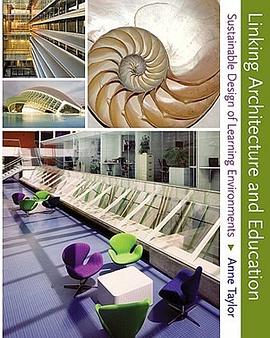
For the past forty years Anne Taylor has studied how schools, classrooms, playgrounds, homes, museums, and parks affect children and how they learn. As a result, she has developed a holistic, sustainable philosophy of learning environment design. She argues persuasively that architects must integrate their design knowledge with an understanding of the developmental needs of learners, while at the same time educators, parents, and students must broaden their awareness of the built, natural, and cultural environment to maximize the learning experience. In other words, schools and other environments can themselves become "three-dimensional textbooks." When architects are cognizant of newer models of education and educators view the environment as more than a box in which to teach prescribed lessons, the result is an informed architecture that enables children to discover the power of their own learning.The book presents numerous examples of dynamic designs that are the result of interdisciplinary understanding of place. Taylor includes designer perspectives, forums derived from commentary by outside contributors involved in school planning, and a wealth of photographs of thoughtful and effective solutions to create learning environments from comprehensive design criteria.Because the concept of "school" is enlarged to a community campus, the book also spawns a new model of teaching and learning. This book is essential reading for educators, architects, and community members who are anxious to transform education in America and elsewhere."Anne Taylor is the most outstanding educator, leading proponent, and practitioner in the three-dimensional textbook field. Her work is the finest resource available for connecting students (young and old) to their learning environments, and visa versa."--Edward E. Kirkbride, NCARB, REFP"Before Western man divided the universe into discrete subject matter areas, the order in the universe was (and still is) both interdisciplinary and holistic. The branching of trees, spiraling of shells, meandering of streams, and the radial designs of flowers, for example, represent an analogy of mathematics, biology, and art. The current artificial separation of subject matter is in contrast to the way the world is constructed and the way children perceive it. Architecture and the study of the built, natural, and cultural environment synthesize the world of material things and the world of ideas. Further more, it helps us to realize that we are a part "of" not apart "from" the environment. This book is a tool and a gift to designers, educators, and students everywhere to assist them in seeing the meaning behind all that we view and use for living on earth. To know our precious relationship to our surroundings is the intent of this book. In this way, life is a work of art and each of us is an artist."--Anne Taylor
作者简介
目录信息
读后感
用户评价
这本书的叙事节奏非常跳跃,它不像一本教科书那样循规蹈矩地铺陈知识点,反而像是一次跨越时空的田野考察日记,充满了发现的惊喜和偶发的哲学思辨。有一部分章节深入探讨了“临时性建筑”在危机教育中的角色,这部分内容非常震撼。作者没有停留在功能主义的层面,而是探讨了在灾难或快速城市化进程中,如何设计出既能提供即时庇护,又能在心理上给予受影响群体归属感的场所。书中引用了几位不同文化背景的实践者的访谈,他们的观点冲突与融合,构建了一个极富张力的理论框架。我特别喜欢其中一段关于“灰空间”的论述,它探讨了室内外、正式与非正式学习区域的模糊地带,指出正是这些“过渡地带”孕育了最具创造性的互动和非结构化的知识交流。这种对“未完成性”的赞美,与当下追求完美和确定性的教育思潮形成了强烈的反差,让人读后久久不能平静,开始反思我们是否为了效率而牺牲了成长的空间。
评分阅读体验上,这本书的排版和图文配合达到了极高的水准。它不是那种纯粹的学术著作,大量手绘草图和现场照片的穿插,使得那些抽象的建筑理论变得具象可感。特别是书中对“生态系统思维”在校园规划中的应用分析,展示了如何将建筑的学习本身变成一门活生生的自然科学课程。作者详细解析了一个零能耗校园的设计逻辑,从雨水收集到自然通风系统的运作原理,都配有极其清晰的剖面图和流程图。但这绝不是一本简单的技术手册;作者的目的是要展示,当建筑的“工作原理”对使用者完全透明化时,它对培养公民责任感和环境意识的意义有多么巨大。读到这里,我感觉自己像是在跟随一位经验丰富的导师进行现场教学,他不仅教你“是什么”,更教你“为什么是这样”,并且让你体会到设计决策背后的伦理重量。文字的严谨和视觉的直观完美结合,使得阅读过程既有学术的深度,又不失探索的乐趣。
评分这本书简直是一场关于空间叙事的盛宴,它没有急于抛出宏大的理论,而是通过一系列细致入微的案例研究,将“场所精神”与“学习体验”进行了惊人的嫁接。我尤其欣赏作者对光线和材料处理的独到见解。比如,书中对一所位于北欧的偏远学校设计分析,详细描述了如何利用漫射光最大化冬季的自然采光,以及如何通过未经打磨的本地石材营造出一种与土地紧密相连的触感。这不是简单的建筑描述,而是在探讨这些物理元素如何潜移默化地影响着学生们对知识的接受方式和对周遭环境的敬畏之心。作者的笔触充满了对细节的虔诚,让人仿佛能闻到木材的清香,感受到冷硬墙体带来的沉静感。它强迫我重新审视我过去习以为常的那些教室设计——那些千篇一律、了无生气的盒子。这本书提供了一个全新的视角:建筑不仅仅是容纳教育的容器,它本身就是一种无声的、持续进行的教学活动。它展示了如何通过巧妙的尺度变化和空间序列,引导使用者从封闭的思考转向开放的探索,这种对教育环境本体论的探讨,深得我心。
评分从批判性的角度来看,这本书的价值在于它敢于质疑那些根深蒂固的教育空间范式,尤其是对“标准化”教育模型的解构尤为有力。作者没有回避讨论全球化背景下,如何抵御那种将所有文化和地域特征剥离的“普世化”设计倾向。书中通过对比分析了几个成功抵抗这种同质化趋势的项目,着重强调了地方材料、本土手工艺以及在地社区知识在设计过程中的核心地位。与其说这本书是在倡导一种建筑风格,不如说它是在呼吁一种“设计的谦逊”——承认建筑师并非万能的创造者,而是社区需求和历史文脉的倾听者和转化者。它引导读者思考,真正的教育环境创新,不是盲目引进最前卫的技术,而是如何深入挖掘和激活现有环境中那些被忽视的文化能量。这种立足于本土、面向未来的平衡视角,使得全书具有了深远的社会意义和持久的讨论价值。
评分这本书最让我感到耳目一新的是它对“身体性”在教育场所中的重视程度。作者拒绝将学生视为抽象的、被动的知识接收器,而是把他们看作拥有复杂感知系统的有机体。其中有一章聚焦于“步态与认知关联”,通过分析不同坡度、不同材质地面设计对人行走速度和思考深度的微妙影响,来论证建筑如何通过微妙的触觉和平衡感来调节学习状态。这是一种非常细腻的、近乎于现象学的研究方法,将建筑学从宏大的结构层面拉回到最基本的生理体验层面。它成功地挑战了传统教育空间中那种僵硬的、水平平坦的设计规范,提出了更高要求的感官体验标准。读完这一部分,我立刻想起了自己童年时代那些令我感到不适或启发的小角落,这本书为理解这些无意识的身体经验提供了理论工具和词汇,让我明白,那些微小的环境差异,远比我们想象的要深刻和持久。
评分 评分 评分 评分 评分