
具体描述
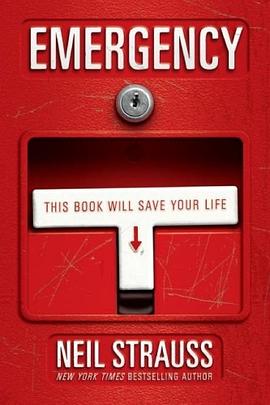
Book Description Terrorist attacks. Natural disasters. Domestic crackdowns. Economic collapse. Riots. Wars. Disease. Starvation. What can you do when it all hits the fan? You can learn to be self-sufficient and survive without the system. **I've started to look at the world through apocalypse eyes.** So begins Neil Strauss's harrowing new book: his first full-length worksince the international bestseller The Game , and one of the most original-and provocative-narratives of the year. After the last few years of violence and terror, of ethnic and religious hatred, of tsunamis and hurricanes–and now of world financial meltdown–Strauss, like most of his generation, came to the sobering realization that, even in America, anything can happen. But rather than watch helplessly, he decided to do something about it. And so he spent three years traveling through a country that's lost its sense of safety, equipping himself with the tools necessary to save himself and his loved ones from an uncertain future. With the same quick wit and eye for cultural trends that marked The Game, The Dirt, and How to Make Love Like a Porn Star, Emergency traces Neil's white-knuckled journey through today's heart of darkness, as he sets out to move his life offshore, test his skills in the wild, and remake himself as a gun-toting, plane-flying, government-defying survivor. It's a tale of paranoid fantasies and crippling doubts, of shady lawyers and dangerous cult leaders, of billionaire gun nuts and survivalist superheroes, of weirdos, heroes, and ordinary citizens going off the grid. It's one man's story of a dangerous world–and how to stay alive in it. Before the next disaster strikes, you're going to want to read this book. And you'll want to do everything it suggests. Because tomorrow doesn't come with a guarantee...
Questions for Neil Strauss
Amazon.com: What initially inspired you to write Emergency ?
Strauss: It happened over the last eight years, watching as everything that we thought could never happen in America suddenly started happening. So I decided to take control over my own life, rather than being dependent on an increasingly undependable system, and worked toward becoming as self-sufficient, independent, skilled, and experienced as I could. That journey continues today.
Amazon.com: You use the term "Fliesian" in the book (as in Lord of the Flies ). What is a Fliesian?
Strauss: Someone who believes that people, if put in a world where there are no consequences to their actions, will do horrible things.
Amazon.com: So how can we hold on to our kindness and humaneness in a crisis?
Strauss: Fortunately, in my experience, it is precisely these situations when you see the best in people come out. The worst in some tends to arise only when the resources one needs to survive are scarce and there is competition for them.
Amazon.com: Do you think that this book is catering to a fear-based culture?
Strauss: Actually, the book is less about spreading fears than getting over them. What most of us fear is the unknown, and we fret about what’s going to happen in an uncertain future when we consider the calamities of the past. I decided to no longer react to the things I read in newspapers, but instead to understand them. So I took each worst-case scenario to the extreme, and experienced many of the things that used to make me anxious. I guess, in that way, it was like a more interesting, adventurous Prozac.
Amazon.com: A lot of writers these days are basing books on various year-long stunts: read the encyclopedia for a year, always say "yes" for a year, have sex with your wife every day for a year. But your brand of immersion journalism, in Emergency and in The Game , is more open-ended--and more personal--than that. Do you draw any sort of line between the books and your life?
Strauss: My books never begin as books. They usually begin as some sort of lack I recognize in my life and try to fix with the help of the most qualified experts I can find. Often, these people are not in the public eye, but hidden in a splinter subculture. And while I’m trying to get taken under their wing, I realize at some point I’m spending so much time trying to learn and improve that I might as well have something to show for it, so I write a book.
Amazon.com: One of the first subcultures you embedded yourself in was a cabal of billionaires. Are wealthy people safer than the rest of us?
Strauss: No, they’re more scared than the rest of us. That’s why they’re taking so many precautionary measures. They are defined by their money, and now that identity is crumbling around them. You can’t buy safety. Those who are the most safe are the ones with knowledge, skills, and experience.
Amazon.com: You describe the philosophy of the sphincter in Emergency . What is that?
Strauss: I learned that from one of my defense instructors. The basic idea is that, in a high-pressure situation, the first thing that happens is people get nervous and uptight. And as soon as your sphincter tightens, as the metaphor goes, it cuts off circulation to your brain. So one of the best survival skills you can have is the ability to quickly and coolly assess a situation rather than panicking and doing something stupid.
Amazon.com: From your wilderness survival training, it sounds like you're in pretty good shape if things ever hit the fan. But what if you live in the city?
Strauss: That’s a good point. A lot of the wilderness survival skills I learned don’t take into account that, in America today, there’s little actual wilderness left. So I took a class called Urban Escape and Evasion. As the teacher put it, “Once you learn lockpicking, the world is your oyster.” He also taught car hot-wiring, evading pursuit vehicles, and, as an exam, handcuffed me, put me in a trunk, and told me I had to escape. It was one of the most interesting classes I’d taken in my life. If I’d known these skills in high school, I definitely would have been expelled.
Amazon.com: The book has a surprising trajectory--surprising to the reader and I think to you as well. You start out looking for a way to get out of Dodge if one of many possible disasters strikes, but as you develop your survival skills, instead of becoming a lone wolf in the woods, you start becoming tied to your community, as an EMT and a trained crisis management worker (not to mention a goat midwife). It's actually pretty heartwarming. Did you see any of that coming?
Strauss: Definitely not. I had no idea that when disasters happen now, instead of running away from them, I’d be running toward them and trying to be of some use to the community. I think that, if there’s a silver lining in the dark cloud that is the economy right now, it’s that hard times bring people closer together. Now is the time to get to know your neighbors. You never know when you may need them.
Amazon.com: Has your experience writing Emergency affected you differently from your experience writing The Game ?
Strauss: Yes, because now, at 3 a.m. on a Saturday night, my search-and-rescue pager will go off and I’ll have to stop doing what I learned in The Game and start doing what I learned in Emergency .
作者简介
Neil Strauss is the author of the New York Times bestselling book The Game and coauthor of three New York Times best-sellers: Jenna Jameson's How to Make Love Like a Porn Star, MÖtley CrÜe's The Dirt, and Marilyn Manson's The Long Hard Road Out of Hell -- as well as Dave Navarro's Don't Try This At Home, a Los Angeles Times bestseller. A writer for Rolling Stone, Strauss lives in Los Angeles
目录信息
读后感
用户评价
**(第五段)** 这本书的基调是压抑的,但它绝不是一部悲观的作品,恰恰相反,它蕴含着一种深沉而坚韧的希望。这种希望不是那种廉价的、空洞的口号式鼓励,而是建立在对现实最大程度的清醒认知之上的。它承认了灾难的巨大、人性的脆弱,以及系统性的失灵,正是在这种彻底的黑暗面前,那些微小的人类光芒——勇气、善良、以及对真相的执着——才显得如此耀眼和珍贵。我合上书时,心中涌起的是一种肃穆的敬意,不是对英雄主义的盲目崇拜,而是对每一个在绝境中依然选择坚守底线的人的尊重。书中对“幸存者内疚”的探讨也极其细腻,那些活下来的人所背负的道德重担,比那些未能幸存的人所承受的痛苦毫不逊色。这本书的结尾处理得非常高明,它没有给出完美的解决方案,也没有提供皆大欢喜的结局,而是留下了一个发人深省的问号,促使读者在离开书页后,依然需要继续思考:我们该如何面对下一个不可预知的“紧急时刻”。这本作品的后劲非常大,值得反复品味。
评分**(第四段)** 我被这本书的叙事视角深深吸引住了。它采用了一种非常独特的、多线平行的叙事手法,像是上帝视角和第一人称的完美融合。我们既能深入到某个特定角色的恐惧和希望之中,感受到那种近乎窒息的个人体验;同时,又能跳脱出来,看到全局的危机是如何一步步蔓延和恶化的。这种切换带来的信息差和戏剧张力是无与伦比的。当不同的线索在看似不相关的时刻交汇时,那种“原来如此”的震撼感非常强烈。作者在铺设这些线索时,如同织就一张巨大的网,每一个看似无关紧要的伏笔,最终都会在关键时刻收紧,揭示出更大的阴谋或更深的无奈。我特别喜欢作者对于时间感的处理,有时时间仿佛被无限拉长,专注于一个微小的动作,让人感受到每一个瞬间的重量;而有时,时间又被压缩成飞逝的片段,强调了事态发展的不可逆转性。这种灵活的时间叙事技巧,极大地丰富了阅读体验,让整个故事的脉络既清晰又充满迷雾。
评分**(第三段)** 这本书的知识密度高得令人咋舌,简直就是一本将高压环境下的专业技能与人性考验完美结合的教科书。我发现自己不仅是在阅读一个故事,更是在进行一次沉浸式的“压力测试”学习。作者在构建情节时,显然做了大量的背景研究,那些关于应急处理流程、资源调配的描述,都显得专业且可信,完全不是随口编造的空泛之谈。这种严谨性极大地增强了故事的说服力,让我即使在最夸张的危机场景中,也能相信“这一切都有可能发生”。更妙的是,作者并没有将技术细节堆砌成枯燥的说明文,而是将它们巧妙地融入到角色的行动和对话中,使得学习过程是动态且充满悬念的。我读完后,感觉自己对某些领域的危机应对机制都有了更直观的认识,这是一种意料之外的收获。书中对于“失败”的描绘尤其值得称赞,它没有回避错误,反而展示了从错误中迅速恢复并调整策略的重要性,这比单纯描述成功更具教育意义。那种在毫秒之间必须做出判断的紧迫感,让我深刻体会到专业知识在关键时刻的价值。
评分**(第二段)** 我必须承认,这本书的文学性处理得相当成熟老道,它不仅仅是一部快节奏的惊悚作品,更像是一部关于人类韧性的史诗。作者的文字功底扎实得惊人,对语言的掌控力达到了近乎完美的境界。无论是对宏大场面的描摹,还是对角色内心独白的刻画,都展现出一种克制而有力的美感。我特别喜欢其中穿插的一些哲学性的思考,这些思考并非生硬地插入,而是自然地融入到角色面对困境时的内心挣扎之中,它们像是黑暗中的微光,引导着人物(和读者)去思考“何为价值”和“何以为生”。书中的角色塑造立体得让人心痛,没有一个人物是扁平的符号,他们都有着各自的灰色地带和未愈合的创伤。看着他们在绝境中挣扎、成长、甚至堕落,我感同身受,为他们的每一次小小的胜利而振奋,也为他们的每一次沉重失误而感到惋惜。特别是关于团队协作的部分,写得极其真实,那种在信任与猜疑之间摇摆不定的微妙关系,被作者描绘得入木三分。这本书的结构也设计得非常精巧,像是一张层层剥开的洋葱,每揭开一层,都有新的真相浮现,但真相往往比想象的更加残酷。
评分**(第一段)** 这本书的叙事节奏简直让人喘不过气来,从翻开扉页的那一刻起,我就被卷入了一场又一场突如其来的危机之中。作者对紧张气氛的营造能力简直是登峰造极,每一个场景的切换都像是精准的手术刀,毫不留情地切入读者的神经末梢。我尤其欣赏作者对于细节的捕捉,那种环境描写的细致入微,让我仿佛能闻到空气中弥漫的硝烟味,能感受到主人公手心因恐惧而渗出的汗水。故事的主线是关于如何在极端压力下做出抉择,而这些抉择往往是“两害相权取其轻”,没有绝对正确的答案,只有最能存活下去的选择。书中对人性的探讨也极其深刻,在生死攸关的时刻,平日里那些光鲜亮丽的伪装瞬间崩塌,展露出的是最原始的求生欲望,或是最无私的奉献精神。阅读过程中,我几次不得不放下书本,深吸一口气,消化一下刚才经历的惊心动魄。这本书的开篇布局非常巧妙,它没有用冗长的铺垫来介绍背景,而是直接将读者扔进了冲突的核心,这种“先声夺人”的写法,极大地抓住了我的注意力,让我立刻成为了故事的一部分。那种被推着向前跑的紧迫感,即便在合上书本之后,依然在我脑海中回荡,让我对后续的发展充满了无尽的好奇与不安。
评分Cruel yet fun. Probably rereading while i do live alone. In attached files of mail.
评分If you're interested in USA, If you're interested in globalization, If you like his writing style - humor tone, Do not be hesitate, Just read it!
评分逃吧,地球人的英文版。laugh out loud
评分1st time: May 3, 2020~May 28,2020. Not only for coronavirus, but for future. Make me think life and its risks carefully.
评分1st time: May 3, 2020~May 28,2020. Not only for coronavirus, but for future. Make me think life and its risks carefully.