
具体描述
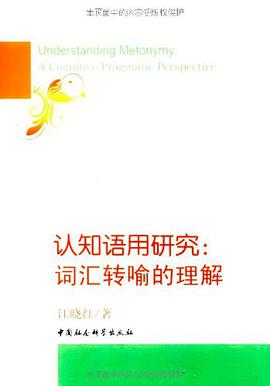
《认知语用研究:词汇转喻的理解》在吸收和融会语用学与认知语言学相关研究成果的基础上,以新颖、独特的视角,就汉语中的词汇转喻进行认知语用框架下的专题研究,探讨了转喻理解的制约因素、认知语用机制以及认知效果等问题,提供了在认知语言学和语用学之间寻求联系与统合的可能性,拓展了转喻研究的新思路。
《认知语用研究》是一本深入探讨语言使用背后的深层结构的书籍,旨在帮助读者理解词汇、句法和语义如何在实际交流中被动态地调整与应用。通过系统性的分析,该书详细描述了人在不同情境下如何运用语言来实现沟通目标,并强调语用规则对语言使用效果的重要性。书中内容丰富,涵盖了话语的组织模式、指代功能及非字面意义的处理,为语言学研究者和实践者提供了有价值的理论支持。 本书采用多层次的结构设计,首先从基本概念入手,解释语用学与语义学之间的关系,并通过具体例子辅助理解复杂的语言现象。接着,通过对不同文化背景下的交流行为进行分析,展示了语用规则在跨文化沟通中的作用。这部分内容特别适用于那些希望提升跨语言交际能力或研究语言多样性的读者。 书中还详细探讨了话语连贯性和逻辑关系的形成机制,帮助读者掌握如何在不同情境下合理安排语言信息,确保信息传递的准确性与有效性。此外,该书引入了大量相关理论案例,如会话类型、指代消除以及隐含语的处理,这些都是理解真实交流行为的重要依据。 针对读者群体,该书不仅适用于语言学专业的研究人员,也为教育工作者提供了宝贵的参考资料,以提升教学设计和语言学习方法的科学性。通过深入解析语用现象,读者能够更好地理解语言使用的灵活性与复杂性,从而在实际交流中做出更加精准的语言选择。 书中内容紧扣理论与实践相结合,力求为读者提供全面且实用的知识框架。作者特别注重突出语用规则在不同社会场景中的应用,帮助读者认识到语言不仅是符号的集合,更是交际行为的核心。这样的结构设计不仅增加了书籍的深度,也让其更具可读性和参考价值。 总体而言,这本书通过系统、细致的分析和多维度的视角,帮助读者全面掌握认知语用研究的基本理念与应用方法。它不仅为学术研究提供了坚实基础,更在实际使用中展现出其独特的重要性,为理解语言背后的智慧奠定了扎实的基础。这种内容设计使得书籍在广阔的学术领域中具有重要地位,同时也对普通读者带来深刻的启示。
作者简介
江晓红,四川泸州人,广东肇庆学院副教授、博士。2008年毕业于广东外语外贸大学外国语言学及应用语言学专业,获文学博士学位。主要研究兴趣为语用学、认知语言学和应用语言学。近年来在各类学术期刊发表学术论文20余篇;出版专著1部,参编著作4部;曾参与教育部人文社科重点研究基地重大研究项目“词汇语用学——英、汉语言中词汇使用与理解”,目前正主持广东省哲学社会科学“十一五”规划项目“英汉词汇转喻的认知语用研究”。
目录信息
Chapter One Introduction 1.1 The importance of metonymy in verbal communication 1.2 The target of research 1.3 Rationale of the research 1.4 Objectives of the study 1.5 Methodology for the research 1.6 Organization of the dissertationChapter Two Review of the Relevant Literature 2.1 Introduction 2.2 Structuralist views 2.3 The perspective of cognitive semantics 2.3.1 Reference-point phenomena 2.3.2 The idealized cognitive model 2.3.3 Meaning elaboration 2.4 The pragmatic approach 2.4.1 Previous pragmatic accounts of metonymy 2.4.2 A preliminary relevance-theoretic account of metonymy 2.5 The limitations in current accounts of metonymyChapter Three A Description of the Conceptual Framework 3.1 Introduction 3.2 The delimitation of metonymy for the present study 3.2.1 Linguistic realization of metonymy 3.2.2 The working definition of metonymy 3.2.3 Distinguishing metonymy from metaphor 3.3 Theoretical foundations 3.3.1 Relevance theory 3.3.2 Cognitive semantics 3.3.3 The complementarity of cognitive semantics and relevance theory 3.4 The characterization of the conceptual framework 3.4.1 Constraints involved in metonymy recognition 3.4.2 Comprehension heuristics employed in metonymy interpretation 3.4.3 Cognitive effects achieved in metonymy interpretationChapter Four Constraints on Metonymy Recognition 4.1 Introduction 4.2 Syntactic constraint: syntactic deviations 4.3 Semantic constraint: violations of selection restriction 4.4 Cognitive constraint: cognitive principles of relative salience 4.4.1 Human experience 4.4.2 Perceptual selectivity 4.4.3 Cultural preferences 4.5 Pragma-cognitive constraint: the constraining influence of context 4.5.1 Dynamic context 4.5.2 Mutual manifestness 4.6 ConclusionChapter Five Ad hoe Concept Construction of Metonymy 5.1 Introduction 5.2 Lexical pragmatics and ad hoe concept construction 5.3 The "transfers of meaning" issue 5.3.1 Reference transfer 5.3.2 Contextual variability of word meaning 5.4 An alternative solution to "transfers of meaning" 5.4.1 Cracking contiguity relations of metonymy 5.4.2 A refined relevance-guided comprehension heuristics 5.4.3 A cognitive pragmatic interpretation of metonymy: an application 5.5 Reference transfer and beyond 5.6 ConclusionChapter Six Cognitive Effects of Metonymy in Utterance Interpretation 6.1 Introduction 6.2 Economy considerations 6.3 Contextual implications 6.3.1 A trade-off between cognitive effort and cognitive effects 6.3.2 Highlighting of associative relations 6.4 Poetic effects 6.4.1 Strong and weak implicature 6.4.2 Speaking the unspeakable 6.4.3 Achieving interpersonal effects 6.5 ConclusionChapter Seven Conclusion 7.1 Major findings 7.2 Implications 7.2.1 Philosophical implications: sense and reference 7.2.2 Linguistic implications: semantics-pragmatics distinction 7.2.3 Logical implications: ways of inference and utterance interpretation 7.3 Suggestions for further studyBibliography后记
· · · · · · (收起)
· · · · · · (收起)
读后感
评分
评分
评分
评分
评分
用户评价
评分
评分
评分
评分
评分