
具体描述
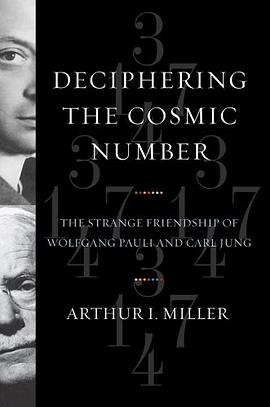
This is the extraordinary story of the famous psychoanalyst Carl Jung and the groundbreaking physicist Wolfgang Pauli’s struggle to quantify the unconscious.
Pauli was fascinated by the inner reaches of his psyche and not afraid to dabble in the occult, while Jung looked to science for answers to the psychological questions that tormented him. In 1932, they met. Their friendship led them, in Jung’s words, into “the no-man’s land between physics and the psychology of the unconscious... the most fascinating yet the darkest hunting ground of our times.” Both were obsessed with the far-reaching significance of the number “137”. Their quest to solve its enigma led them on a lifelong journey into the secrets of alchemy, the work of Johannes Kepler and the Chinese Book of Changes. This is the story of the remarkable and fruitful collaboration between two of the greatest thinkers of the twentieth century.
"The history is fascinating, as are the insights into the personalities of these great thinkers."
New Scientist
"Arthur I. Miller's thoroughly researched book gives a fascinating account of the two men's journey into the unexplored territory between the physical and the psychic..."
http://plus.maths.org/issue51/reviews/book1/index.html
"This absorbing dual biography charts the "strange friendship" between two unusual men: physicist Wolfgang Pauli and psychologist Carl Jung."
www.scotsman.com
"The book serves as the first popular biography of this outstanding scientist and is long overdue."
THE
"Miller is cleverly quizzical about two mavericks who sparked off one another in a quest for a primal number that would provide, in the words of Douglas Adams, "the answer to life, the Universe and everything"."
The Times
作者简介
I am fascinated by the nature of creative thinking – the mind’s ability to transform information from everyday experiences into the most sublime works of art, literature, music and science.
What does it mean to be creative? Is there anything that links the thought processes of the world’s greatest artists – like Picasso – and the world’s greatest scientists – like Einstein? And if so, what is it? Can it make us more creative? This has been the subject of my research for several decades.
With this as my jumping off point, I have looked into several different fields, beginning with the notion of aesthetics.
What is beauty? How do scientists use visual imagery to make their discoveries? How does the mind form images? How does it recall and process them? What makes a theory or an equation beautiful?
I have found that the best way to look into creativity and the creative process is by examining the histories of some of the world’s greatest scientists and artists and from there to work towards a theory of cognitive science for creative thinking. Seeking out what they have in common is a way of discovering how the mind works at its most creative.
This has been the subject of several of my books, including Imagery and Creativity in Science and Art, Einstein, Picasso: Space, Time and the Beauty that Causes Havoc, Empire of the Stars: Friendship, Obsession and Betrayal in the Quest for Black Holes, and my recently published, Deciphering the Cosmic Number: The Strange Friendship of Wolfgang Pauli and Carl Jung, which explores how through Jung’s psychoanalysis, Pauli came to understand his creative powers while at the same time enabling him to cope with his complex life.
Can we improve our own creativity?
Are there practical ways to improve our own creativity? This has proved to be a practical spin-off of my research. I am currently putting together some practical proposals which should be of considerable interest to the business community. Among my consultantships on this topic has been Microsoft. It involved setting up a programme which encouraged their IT staff to think of their visual representations as a component of art and technology.
目录信息
读后感
用户评价
这本书的行文节奏把握得相当到位,前半部分铺陈了宏大的宇宙观和历史背景,让人沉浸其中,对即将到来的“揭示”充满了期待。作者在构建叙事框架时,展现出了高超的技巧,他并没有急于抛出核心论点,而是像一位经验丰富的导游,带领我们缓缓走过知识的长廊。每一次深入一个新章节,都能感受到知识密度的陡然增加,但作者总能巧妙地用生动的比喻和历史轶事来缓冲这种信息量的冲击。我特别欣赏作者处理复杂问题时的那种游刃有余的态度,他不会故作高深,而是用最清晰、最直接的方式将核心思想传递出来,尽管主题本身深奥,但读起来却出奇的流畅。那种“原来如此”的顿悟感,贯穿了整本书的阅读过程,让人欲罢不能。
评分这本书的魅力,很大程度上来源于作者对于“未知”的敬畏感。他没有试图用过于绝对的语言来定义那些尚无定论的宇宙奥秘,而是始终保持着一种谦逊和探索者的姿态。读到最后,我感觉自己并没有得到一个“标准答案”,但这并非是缺点,反而是一种高级的成功。作者成功地在我心中播下了一颗“继续探究”的种子。他引导我们去关注那些悬而未决的问题,去欣赏人类心智在面对浩瀚宇宙时所展现出的那种不屈不挠的好奇心。这不仅仅是一次知识的接收过程,更像是一次精神上的洗礼,让人在合上书本后,依然能感受到头顶星空带来的无尽遐想和对自身渺小又伟大的存在感的深刻体悟。
评分我发现这本书的独特之处在于它跨越了学科的界限。它不仅仅是一本科普读物,更像是一部融合了历史学、天文学乃至一点点神话色彩的综合性研究。作者在引用不同领域专家的观点时,表现出了极高的包容性和批判性。他似乎对每一个被提及的理论都进行了深入的剖析,既不盲目崇拜权威,也不轻易否定传统观点,而是站在一个非常中立且富有洞察力的角度进行审视和整合。这种多维度的审视,使得书中的论证体系显得异常坚固和立体。每一次我以为自己已经理解了某个概念时,作者总能从一个全新的角度切入,迫使我重新思考最初的假设,这种持续的智力挑战,是我在许多同类书籍中难以寻觅的宝贵体验。
评分这本书的装帧和印刷质量简直无可挑剔,这在如今这个追求快速消费的时代,实属难得。纸张的手感厚实而细腻,油墨的印刷清晰锐利,即便是那些复杂的公式和细小的图示,也毫无模糊不清之感。我甚至特意在夜间台灯下阅读,发现即便是对比度极高的黑白文字和图表,阅读起来也丝毫没有视觉疲劳。这种对实体书制作工艺的重视,本身就体现了作者和出版方对这部作品应有的尊重。我个人很偏爱这种有重量感、可以被认真对待的书籍,它能让人慢下来,专注于内容本身,而不是被屏幕的蓝光所驱使。这本书的物理存在感,为它所承载的宏大主题增添了一种庄重感。
评分这本书的封面设计简直是一场视觉盛宴,深邃的星空背景中穿插着错综复杂的数学符号,像是某种古老的密码等待着被破解。我拿到这本书时,立刻被它散发出的那种神秘和深邃感所吸引。迫不及待地翻开第一页,我发现作者的文字功底非常扎实,语言既富有诗意又充满了严谨的逻辑。他似乎总能找到一种奇妙的方式,将那些抽象的概念具象化,让读者在阅读的过程中仿佛真的能触摸到宇宙的脉搏。尤其是在讨论早期文明对数字的理解时,那种娓娓道来的叙述方式,让我感觉自己不是在阅读一本理论性的著作,而是在参与一场穿越时空的哲学对话。书中的插图和图表也做得极其精美,色彩搭配和谐,排版考究,无疑为阅读体验增添了极佳的质感。这不仅仅是一本书,更像是一件艺术品,值得放在书架上反复品味。
评分以泡利,特别地以泡利和荣格的交往为线索,讨论了心理学,特别是科学发现中的心理学。
评分以泡利,特别地以泡利和荣格的交往为线索,讨论了心理学,特别是科学发现中的心理学。
评分以泡利,特别地以泡利和荣格的交往为线索,讨论了心理学,特别是科学发现中的心理学。
评分以泡利,特别地以泡利和荣格的交往为线索,讨论了心理学,特别是科学发现中的心理学。
评分以泡利,特别地以泡利和荣格的交往为线索,讨论了心理学,特别是科学发现中的心理学。