
具体描述
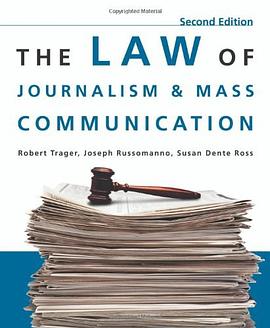
Journalism and communication law is anything but dry and boring, so why should learning about it be? Getting away from densely written text, The Law of Journalism and Mass Communication offers readers essential coverage and substantive discussion, but brings the subject to life with an abundance of photographs, useful feature boxes, timelines, a marginal glossary, and a colorful interior design.
With an approach geared toward journalists (and future journalists), not future lawyers, the authors provide a foundation for understanding the law by balancing conceptual learning with practical guidance. All of the book's features advance that goal and include:
Suppose... chapter-opening cases hypothetical scenarios offer the perfect jumping-off point for students to situate legal issues and get them thinking critically;
Landmark Cases in Context graphic timelines at the start of each chapter help students link landmark cases to key historical events;
realWorld Law boxes engaging stories of the law in practice lend human interest while illustrating contemporary examples or emerging topics;
Points of Law boxes nuggets of essential information underscore key points, crystallize knowledge, and often include legal tests and handy checklists;
Cases for Study two excerpted cases complete with case facts, an explanatory headnote, and questions conclude each chapter and give readers an opportunity to grapple with justices opinions without sending them to a companion casebook.
Bolded key terms and a marginal glossary students quickly and easily master key legal terms and concepts;
More than 75 photos compelling images give readers a window into the drama and importance of events, and keep them turning the pages.
Timely updates, a revamped interior design, and a new publisher committed to independent publishing and editorial quality, make the second edition of The Law of Journalism and Mass Communication a must-see offering.
作者简介
Robert Trager teaches courses in communication law, freedom of expression, and media institutions at the University of Colorado. He is the founding editor of Communication Law and Policy. Before joining the University of Colorado faculty, Trager was an attorney with a major cable television company and practiced media law with a firm in Washington, D.C.
Joseph Russomanno is associate professor in the Walter Cronkite School of Journalism and Mass Communication at Arizona State University. He has worked as a news reporter in radio and television and as a television news writer, newscast producer and executive producer at stations in St. Louis and Denver. He has received several awards for his broadcast work. His teaching and research focus on broadcast issues and First Amendment law.
Susan Dente Ross is professor at Washington State University where she serves as the associate dean for research in the College of Liberal Arts. She conducts research on the freedoms of speech and press and the ways in which these rights can help advance greater global equity and justice. She also is a leader in international initiatives to increase the ability of media to contribute to conflict transformation and resolution.
目录信息
读后感
用户评价
这本书的排版和装帧设计确实让人眼前一亮,那种带着历史厚重感的封面材质,摸上去有一种踏实可靠的感觉,仿佛握住的不是一本简单的教科书,而是一块历经风霜的基石。内页的纸张选择也颇为考究,墨色清晰,字迹分明,即便是长时间阅读也不会让人感到视觉疲劳。特别是那些关键术语的标注和引文的格式,都体现出出版方在细节处理上的专业和用心。阅读过程中,我发现作者在构建章节逻辑时,似乎花费了大量精力来确保读者能够循序渐进地理解复杂的概念。每一章的开头都有清晰的导读,像是为迷途的读者点亮了一盏指路明灯,让人在投入阅读前就能对即将探索的领域有一个大致的把握。更值得称赞的是,书中穿插的一些案例分析,不仅仅是枯燥的法律条文引用,而是融入了生动的行业背景和实际操作层面的思考,使得原本可能显得僵硬的法律条文瞬间活了起来,变得触手可及,这一点对于初学者来说,无疑是极大的福音,它成功地架起了一座理论与实践之间的坚实桥梁。
评分这本书的语言风格,起初读起来需要一些适应,它带着一种独特的、近乎古典的严谨性,但一旦习惯了这种节奏,你就会发现其中蕴含着极大的魅力。它绝不是那种迎合大众口味、用大量俚语和口语来降低门槛的读物,相反,它要求读者投入相应的智力资源去解码那些精确而沉重的词汇。我体会到作者在遣词造句上是极其克制的,每一个词语的选择都似乎经过了深思熟虑,力求达到最精确的语义表达。这种严谨性在阐述复杂的判例法逻辑时尤其明显,作者能够将那些冗长晦涩的法庭意见提炼成清晰的逻辑链条,让人不得不佩服其文字驾驭能力。这种写作风格,虽然可能让某些读者感到稍显“高冷”,但对于那些真正渴望深入理解专业领域的人来说,这恰恰是专业精神的体现,它培养的不仅仅是知识储备,更是一种精确、审慎的思维习惯。
评分坦白说,我对这本书的深度和广度感到有些意外,它远超出了我对一本入门级读物的预期。作者对相关法律体系的梳理,简直像是一位经验丰富的外科医生在进行精细解剖,每一个切口都精准地指向了问题的核心。我尤其欣赏作者在处理那些灰色地带和新兴技术带来的法律挑战时的审慎态度。他没有急于给出绝对化的结论,而是倾向于展示不同司法管辖区和学派的观点差异,引导读者进行批判性思考,而不是被动接受单一的教条。书中对媒体伦理与法律界限的探讨,尤其发人深省,它迫使读者去反思,在追求新闻自由和维护社会秩序之间,那条微妙且不断变动的平衡线究竟应该如何把握。那种不偏不倚、力求公正的叙事风格,让人在阅读时始终保持着一种高度的智力参与感,仿佛参与了一场高水平的学术辩论,而不是仅仅单方面接受知识灌输,这种高质量的学术对话体验,在同类书籍中是十分罕见的。
评分这本书最让我感到惊喜的是它在内容更新上的及时性。在这个信息爆炸、技术迭代飞快的时代,法律的更新速度往往跟不上现实的步伐,但这本书似乎努力在弥补这种差距。我注意到其中对近年来新兴媒体平台责任界定、数据隐私保护等热点问题的探讨,其分析的切入点非常具有前瞻性,甚至比一些专业的法律期刊还要敏锐。作者似乎拥有超凡的洞察力,能够预判哪些现存的法律框架将很快受到冲击,并提前准备好理论应对。这种与时俱进的编撰态度,极大地提升了这本书的实用价值,它不仅仅是一本记录历史的文献,更像是一份指导当下从业者应对未来挑战的行动指南。对于任何希望在这个领域保持领先地位的人来说,这本书提供的不仅是知识,更是一种宝贵的“预判能力”。
评分从结构上来看,这本书的组织脉络清晰得令人赞叹,它仿佛是按照一部宏大的史诗来编排的。它不是简单地堆砌法规条文,而是为我们勾勒出了一个动态发展的法律图景。开篇部分对历史沿革的追溯,如同为理解当下的法律困境打下了坚实的时代基础;随后过渡到对核心原则的系统梳理,如同构建起了坚固的理论框架;而结尾部分对未来趋势的展望,则像是一面魔镜,照见了行业可能面临的冲击与变革。这种“立足过去,深耕现在,展望未来”的叙事结构,极大地增强了内容的连贯性和说服力。阅读体验非常顺畅,它不像其他教材那样容易让人迷失在细节的泥沼中,而是始终保持着对整体视野的关注,确保读者在学习每一个细枝末节时,都能清晰地知道它在整个法律大厦中处于什么位置。
评分 评分 评分 评分 评分