
具体描述
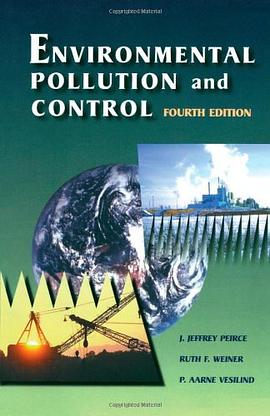
Complex environmental problems are often reduced to an inappropriate level of simplicity. While this book does not seek to present a comprehensive scientific and technical coverage of all aspects of the subject matter, it makes the issues, ideas, and language of environmental engineering accessible and understandable to the nontechnical reader. Improvements introduced in the fourth edition include a complete rewrite of the chapters dealing with risk assessment and ethics, the introduction of new theories of radiation damage, inclusion of environmental disasters like Chernobyl and Bhopal, and general updating of all the content, specifically that on radioactive waste. Since this book was first published in 1972, several generations of students have become environmentally aware and conscious of their responsibilities to the planet earth. Many of these environmental pioneers are now teaching in colleges and universities, and have in their classes students with the same sense of dedication and resolve that they themselves brought to the discipline. In those days, it was sometimes difficult to explain what indeed environmental science or engineering was, and why the development of these fields was so important to the future of the earth and to human civilization. Today there is no question that the human species has the capability of destroying its collective home, and that we have indeed taken major steps toward doing exactly that. And yet, while, a lot has changed in a generation, much has not. We still have air pollution; we still contaminate our water supplies; we still dispose of hazardous materials improperly; we still destroy natural habitats as if no other species mattered. And worst of all, we still continue to populate the earth at an alarming rate. There is still a need for this book, and for the college and university courses that use it as a text, and perhaps this need is more acute now than it was several decades ago. Although the battle to preserve the environment is still raging, some of the rules have changed. We now must take into account risk to humans, and be able to manipulate concepts of risk management. With increasing population, and fewer alternatives to waste disposal, this problem is intensified. Environmental laws have changed, and will no doubt continue to evolve. Attitudes toward the environment are often couched in what has become known as the environmental ethic. Finally, the environmental movement has become powerful politically, and environmentalism can be made to serve a political agenda. In revising this book, we have attempted to incorporate the evolving nature of environmental sciences and engineering by adding chapters as necessary and eliminating material that is less germane to today's students. We have nevertheless maintained the essential feature of this book - to package the more important aspects of environmental engineering science and technology in an organized manner and present this mainly technical material to a nonengineering audience. This book has been used as a text in courses which require no prerequisites, although a high school knowledge of chemistry is important. A knowledge of college level algebra is also useful, but calculus is not required for the understanding of the technical and scientific concepts. We do not intend for this book to be scientifically and technically complete. In fact, many complex environmental problems have been simplified to the threshold of pain for many engineers and scientists. Our objective, however, is not to impress nontechnical students with the rigors and complexities of pollution control technology but rather to make some of the language and ideas of environmental engineering and science more understandable.
作者简介
目录信息
读后感
用户评价
这本书的配套资源和线上支持系统(如果存在的话)感觉上并没有跟上其纸质版本的专业水准。例如,书中提到的许多专业软件模拟的案例数据,如果能提供一个可供下载和实践操作的版本,那将是极大的加分项。目前我只能根据文字描述和静态截图来理解复杂的模拟过程,这是一种非常被动的学习体验。此外,虽然书本内容覆盖了大气、水体、土壤等多个污染介质,但在处理“多介质协同污染”及“环境风险评估”这些日益重要的交叉学科问题时,各个章节之间的关联性处理得不够流畅。每一个污染类型似乎都是独立存在的知识模块,缺乏一个统一的、整合性的框架来指导读者如何将这些分散的知识点联系起来,评估一个综合性污染事件带来的全方位影响。对于从事环境管理和政策制定的人员而言,这种缺乏系统整合性的论述方式,使得他们难以快速构建一个宏观的、跨介质的风险视角,这是一个值得改进的关键点。
评分这本书的语言风格,用一个词来形容就是“严谨到近乎古板”。每一个句子的结构都极其工整,充满了大量的技术术语和从句,这对于母语非英语的读者,或者说对于需要快速吸收信息的读者来说,构成了一道不小的阅读障碍。我经常需要反复阅读同一段落,才能完全捕捉到作者想要表达的精确含义,这极大地拖慢了我的学习进度。更让我感到困惑的是,尽管它力求面面俱到,但对于一些特定区域性环境问题的讨论却显得有些保守和概括。例如,在讨论水资源污染时,对于发展中国家普遍面临的地下水超采与污染共存的复杂情境,似乎只是点到为止,缺乏深入的区域差异化分析。我期待的是一种更具对话性和启发性的写作方式,而不是这种教科书式的、密不透风的知识灌输。如果作者能在保持学术严谨性的同时,适当引入一些更生动、更具批判性的反思,或者增加一些可以引发课堂讨论的开放性问题,这本书的吸引力无疑会大大提升。
评分这本书的排版和设计确实让人眼前一亮,装帧的质感拿在手里就感觉沉甸甸的,用料很扎实。我特别喜欢它在视觉元素上的处理,图表的清晰度和专业性是无可挑剔的,即便是复杂的化学结构图或污染扩散模型,也能通过精心的设计变得直观易懂。不过,在内容组织上,我个人感觉有些地方的逻辑跳跃性稍微大了那么一点点。比如在讨论某一特定污染物治理技术时,前一章还在强调其理论基础,下一章就直接跳到了大规模工程案例分析,中间缺乏足够的过渡性论述,对于初学者来说,可能需要花费更多时间去自行搭建知识的桥梁。当然,对于那些已经有扎实背景知识的专业人士来说,这种直接切入核心问题的叙述方式或许效率更高,能更快地定位到关键信息。总的来说,这本书在“呈现美学”和“信息密度”上达到了一个很高的水准,但如果能更细致地打磨一下章节间的衔接,让知识的流动更加平滑自然,那体验感会更上一层楼。我希望未来版本能在这方面有所加强,毕竟一本优秀的教材,不仅要教会你知识点,更要引导你建立完整的知识体系框架。
评分这本书的理论深度毋庸置疑,它对环境污染的源头分析以及控制策略的探讨,展现了作者深厚的学术功底。我尤其赞赏它对新兴污染物,比如微塑料和新型有机污染物(POPs)的关注,这部分内容紧跟当前国际研究的前沿动态,提供了很多引人深思的案例和数据模型。然而,我在阅读过程中发现,尽管理论阐述得非常透彻,但在实际应用层面的“接地气”程度略有不足。很多先进的治理技术,虽然在实验室或中试阶段表现优异,但书中对于将其转化为大规模、低成本、可长期运行的工业化解决方案时,所涉及的经济性评估、政策法规障碍、以及跨部门协调等现实阻力,提及得相对较少,或者说篇幅不够。这使得这本书更像是一本偏向“学术研究参考书”,而非一本面向“工程实践指导手册”。对于我们这些需要将科学原理转化为实际治理方案的工程师来说,增加一些关于“技术经济性分析”和“工程放大效应”的章节会更有价值,让理论不再仅仅停留在纸面上,而是真正能够指导实际操作。
评分从收藏价值的角度来看,这本书的权威性是毋庸置疑的,它无疑是环境科学领域一个重要的里程碑式著作。它所引用的参考文献列表非常庞大且具有极强的代表性,几乎涵盖了过去几十年该领域所有具有里程碑意义的研究成果。然而,正是这种对“历史全景”的追求,使得某些章节显得有些臃肿和冗余。部分早期的、已经被更高效技术取代的污染控制方法,仍然占据了相当大的篇幅进行详尽的原理介绍,这在时间宝贵的学习和研究过程中,显得有些效率低下。我希望能看到更多对“未来方向”的聚焦,比如人工智能在环境监测中的应用、碳捕集与封存(CCS)的最新突破、以及生态修复工程中生物技术的前瞻性应用等。当前的第四版虽然更新了部分内容,但整体的结构依然带着浓厚的“百科全书”色彩,如果能更果断地进行内容的“瘦身”和“前瞻性重构”,将其打造成一本更具时效性和指导意义的“行动指南”,而非仅仅是“知识的仓库”,那就更完美了。
评分 评分 评分 评分 评分