具体描述
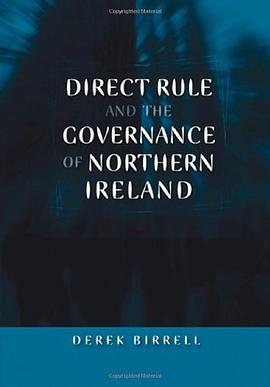
This is the first comprehensive study of direct rule as the system of governance which operated in Northern Ireland for most of the period between 1972 and 2007. The major institutions of governance are described and examined in detail, including the often neglected sectors of the role of the Westminster parliament, the civil service, local government, quangos, ombudsmen offices, cross-border structures and the public expenditure process. The book explains how the complex system covering transferred, reserved and excepted functions worked and provided viable governance despite political violence, constitutional conflict and political party disagreements. In addition, a comparison is drawn between direct rule and devolution, analysing both the positive and negative impact of direct rule, as well as identifying where there has been minimal divergence in processes and outcomes. It will prove an invaluable reference source on direct rule and provide a comparative basis for assessing devolution for students of public administration, government, politics, public policy and devolution.
Direct Rule and the Governance of Northern Ireland: A Comprehensive Examination This book delves into the complex and multifaceted history of Direct Rule in Northern Ireland, offering a rigorous analysis of its implementation, evolution, and enduring impact. Moving beyond simplistic narratives, it seeks to provide a nuanced understanding of how the British government assumed direct control over the governance of Northern Ireland, the mechanisms through which this control was exercised, and the profound consequences for the region and its people. The genesis of Direct Rule was rooted in the sectarian violence and political instability that plagued Northern Ireland from the late 1960s. The book meticulously traces the events leading up to the imposition of Direct Rule in March 1972, examining the breakdown of devolved government and the escalating demands for intervention from Westminster. It explores the political considerations, security concerns, and constitutional debates that ultimately led to this pivotal moment in the region's history. Central to the analysis is an exploration of the institutional framework of Direct Rule. The book scrutinizes the role of the Secretary of State for Northern Ireland, the Northern Ireland Office (NIO), and the various government departments responsible for administering policy across the province. It investigates how these institutions were structured, their powers and responsibilities, and the complex relationships they maintained with both the central government in London and local stakeholders. The book also examines the evolution of these institutions over time, highlighting any significant reforms or shifts in their operational approaches. Furthermore, the volume undertakes a detailed examination of the policy areas subject to Direct Rule. This includes a comprehensive review of the government's approach to security and law and order, the controversial use of emergency legislation, and the ongoing efforts to combat paramilitary violence. It analyzes the effectiveness of these security policies, their social and political ramifications, and the debates surrounding their implementation and eventual reform. Beyond security, the book offers in-depth discussions on the socio-economic policies enacted under Direct Rule. This encompasses the administration of public services, including healthcare, education, and housing, and the challenges faced in addressing deep-seated inequalities and disparities. It investigates the impact of economic policies on the region's development, employment, and social cohesion, considering both intended and unintended consequences. A significant portion of the book is dedicated to understanding the political dynamics that shaped Direct Rule. It explores the evolving relationships between the British government, the Unionist and Nationalist communities, and their respective political representatives. The book examines the challenges of representing and governing a deeply divided society, the complexities of seeking political consensus, and the often-fraught negotiations that characterized the path towards peace and power-sharing. It critically assesses the various attempts at constitutional reform and the obstacles that hindered the restoration of devolved government for extended periods. The book also engages with the broader constitutional questions surrounding Direct Rule. It explores the legal basis for Westminster's authority over Northern Ireland, the arguments for and against the principle of self-determination, and the ongoing debate about Northern Ireland's constitutional future within the United Kingdom. The impact of European Union membership and its subsequent departure on the governance of Northern Ireland under Direct Rule is also a key area of focus. In its examination of Direct Rule, the book acknowledges and critically assesses the perspectives of various actors and stakeholders. It draws upon a wide range of primary and secondary sources, including government documents, parliamentary debates, academic research, and journalistic accounts, to provide a balanced and authoritative account. The authors aim to offer a multifaceted understanding of the lived experiences of those affected by Direct Rule, incorporating diverse viewpoints and interpretations. Ultimately, Direct Rule and the Governance of Northern Ireland seeks to provide readers with a comprehensive and insightful understanding of a critical period in the region's history. It moves beyond mere description to offer analytical depth, exploring the underlying causes, complex mechanisms, and far-reaching consequences of Direct Rule, and its enduring legacy on the political landscape and societal fabric of Northern Ireland. The book aims to foster informed discussion and further research into this pivotal aspect of modern Irish and British history.