
具体描述
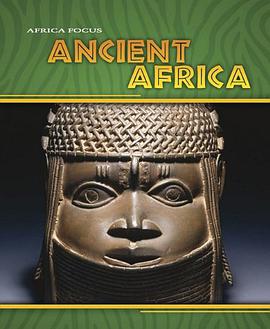
Ancient Africa: Echoes of a Continent's Dawn The very mention of "Ancient Africa" conjures images of sun-baked savannas, towering pyramids, and whispered legends of powerful empires. Yet, the continent's past is far richer, far more intricate, and far more foundational to the human story than these popular, often superficial, associations might suggest. This is not merely a chronicle of kings and conquests, nor a simple chronological march through millennia. Instead, it is an endeavor to unearth the multifaceted tapestry of human experience on the African continent, stretching back to the very cradle of our species. It is an exploration into the deep roots of human ingenuity, social organization, cultural expression, and technological advancement, all unfolding against the diverse and often challenging landscapes of Africa itself. Our journey begins not with the grandeur of stone monuments, but with the intimate details of early human life. We will delve into the archaeological evidence that illuminates the daily existence of our hominin ancestors. Imagine the scent of woodsmoke from their hearths, the feel of meticulously chipped stone tools in their hands, the communal spirit that bonded them as they navigated a world teeming with both opportunity and peril. We will examine the earliest forms of tool-making, the foundational skills that allowed early humans to adapt, hunt, gather, and eventually, to shape their environment. This is not just about the objects left behind, but about reconstructing the thought processes, the problem-solving, and the sheer resilience that characterized these pioneering stages of human development. The discovery of fire, the development of language – these are not abstract concepts, but transformative leaps that fundamentally altered the trajectory of human evolution, and their origins are inextricably linked to the African soil. As human societies grew more complex, so too did their interactions with the land. We will explore the diverse ecosystems of Ancient Africa – from the lush rainforests of the Congo basin to the arid expanses of the Sahara, from the fertile river valleys to the coastal plains. Each environment presented unique challenges and opportunities, shaping the subsistence strategies, migratory patterns, and social structures of its inhabitants. We will investigate the early development of agriculture, a pivotal revolution that allowed for settled communities, population growth, and the specialization of labor. The cultivation of indigenous crops, the domestication of animals – these were not adopted wholesale from external influences, but were organic innovations born from deep understanding of local flora and fauna. The intricate knowledge of plant properties for food and medicine, the careful observation of animal behavior for domestication, all speak to a profound connection with the natural world. The rise of settled agriculture paved the way for the emergence of villages, towns, and eventually, sophisticated urban centers. We will examine the remarkable achievements of these early African civilizations, often overlooked in broader historical narratives. Consider the sophisticated irrigation systems developed in the Nile Valley, supporting a flourishing agricultural economy for millennia. Think about the architectural marvels, the monumental structures that stand as testaments to advanced engineering, organizational capacity, and profound cosmological beliefs. These were not built by enslaved masses alone, but by societies with complex social hierarchies, skilled artisans, and a deep understanding of mathematics and astronomy. The construction of these edifices was often intertwined with religious practices and the assertion of political power, reflecting a holistic worldview where the earthly and the divine were inextricably linked. Beyond the tangible achievements, we will delve into the vibrant cultural and intellectual life of Ancient Africa. This encompasses a vast array of artistic expressions – from intricate pottery and beadwork to powerful sculptural forms and vibrant rock art. These creations were not merely decorative; they served as vehicles for storytelling, religious expression, and the transmission of cultural values. We will explore the rich oral traditions, the genealogies, the epic poems, and the proverbs that formed the intellectual backbone of many societies, preserving history, ethics, and a collective identity across generations. The development of complex belief systems, the reverence for ancestors, the understanding of the cosmos – these spiritual and philosophical frameworks provided meaning and order to human lives. The study of Ancient Africa is also an exploration of the dynamic forces of trade and interaction. Long before the trans-Saharan trade routes became widely known, intricate networks of exchange existed across the continent. These networks facilitated the movement of goods, ideas, and technologies, fostering cultural diffusion and shaping the development of diverse polities. From the exchange of salt and grain to precious metals and luxury goods, these trade relationships fostered interdependence and spurred innovation. We will investigate the emergence of powerful trading states and kingdoms, whose wealth and influence were often built on their strategic control of these vital arteries of commerce. These were not isolated societies, but engaged participants in a continental and, at times, intercontinental web of interaction. Moreover, we will confront the complex realities of political organization and societal governance in Ancient Africa. The forms of leadership and administration were incredibly diverse, ranging from decentralized kinship-based societies to highly centralized kingdoms and empires. We will examine the mechanisms of authority, the systems of law and justice, and the ways in which social order was maintained. The concept of divine kingship, the role of elders, the influence of warrior classes – these were all integral components of the political landscape. Understanding these structures requires moving beyond simplistic notions of "tribalism" and appreciating the sophisticated systems of governance that emerged. This exploration is also an honest reckoning with the challenges and conflicts that were an inherent part of human history, even in ancient times. Warfare, resource competition, and social stratification were realities that shaped societies and influenced their development. Understanding these aspects, however, is not about sensationalizing or perpetuating negative stereotypes. Instead, it is about recognizing the full spectrum of human experience, the struggles for survival, and the complex interplay of power and resistance. Ultimately, this is an invitation to look beyond the veil of mystery and exoticism that has often shrouded the history of Ancient Africa. It is an invitation to recognize the continent's profound and enduring legacy – a legacy that has shaped human civilization in ways we are only beginning to fully comprehend. It is about understanding that the story of humanity is not a singular, linear progression, but a richly interwoven narrative, and that Ancient Africa holds some of its most critical and compelling chapters. This is an endeavor to bring these stories to light, to honor the ingenuity and resilience of its people, and to appreciate the immense contributions of this vast and diverse continent to the unfolding saga of humankind. It is a deep dive into the foundations of human society, art, belief, and governance, all rooted in the soil and spirit of Ancient Africa.
作者简介
目录信息
读后感
评分
评分
评分
评分
评分
用户评价
评分
评分
评分
评分
评分