
具体描述
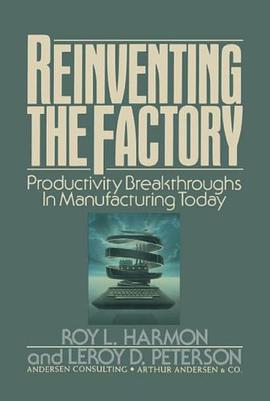
The "factory of the future" is here. We have the technology and professional knowledge, say leading manufacturing consultants Roy Harmon and Leroy Peterson, to implement revolutionary concepts that many managers might regard as futuristic. In this path-breaking book, Harmon and Peterson move beyond theory to document more than a hundred real-life applications of productivity improvement -- from the focused factory and assembly process design to the plantwide plan -- gathered from Andersen Consulting, Arthur Andersen & Co.'s offices around the world. The reorganization of existing plants into multiple "factories within a factory" is the single most important feature of productivity improvement, according to Harmon and Peterson. These smaller units known as subplants, are honed to the smallest practical size to ensure the highest level of productivity. Multiple subplants can be clustered to focus accountability and authority for production of product families into easily managed groups of processes. With hundreds of diagrams and using examples of companies that operate focused factories in dozens of countries, Harmon and Peterson detail both the physical and organizational changes required to make the focused factory a successful and profitable feature of a plant's modernization. In addition to creating subplants and subplant clusters, Harmon and Peterson show how manufacturers can dramatically increase productivity by adopting a plantwide plan. In its most basic form, the plantwide plan is a layout of a single factory. It includes, to the extent practical, not only the ideal layout but also step-by-step strategies for movement of individual processes from their current locations in the factory to final target destinations. Harmon and Peterson explain how managers can use the plantwide plan to eliminate the common problem of compromising ideals too early to accommodate assumed constraints and turn an existing factory into a competitive factory of the future -- today. Flexibility, creativity, and dynamic planning are key concepts for attaining superior manufacturing results. For plant modernization to be profitable, the organizational structure must keep pace. Achieving world class status is not enough. The new hallmark of excellence must be continuous improvement to maintain a superior position. The plans and suggestions outlined in Reinventing The Factory allow the entrepreneur the responsibility and authority to effect ongoing improvements and render processes adaptable to reflect additions or removals of product lines, changes in sales volume over time and modifications resulting from previous or concurrent improvements. Harmon and Peterson provide the valuable tools and methods necessary to attain such goals. They highlight the dynamic nature of progress itself and show how managers can overcome the most tenacious habit: the resistance to change.
作者简介
目录信息
读后感
用户评价
这本书的结构安排堪称教科书级别,它循序渐进地引导读者完成了从“是什么”到“为什么”再到“该怎么做”的认知飞跃。我尤其喜欢其中关于“人才”的论述,作者非常清醒地指出,在高度自动化的未来,对蓝领工人的要求不再是重复性劳动,而是复杂故障诊断、系统优化和跨学科协作的能力。这种对劳动力市场未来图景的预判,让我对公司内部的培训和招聘策略进行了重新评估。书中对比了几个不同国家在推行智能制造过程中的政策差异和文化影响,这种跨文化的比较分析极大地丰富了我的理解,让我明白制造的“最佳实践”从来都不是一成不变的,它必须植根于特定的社会经济土壤之中。这本书的叙述中偶尔流露出一种对传统工匠精神的怀念,但绝非是守旧的姿态,而是在提醒我们,无论技术如何进步,对精湛技艺和对细节的极致追求,永远是制造业的灵魂所在。它是一部充满洞察力、同时又饱含人文关怀的佳作。
评分这本书的文字功底实在了得,它成功地将原本枯燥的工业工程概念,转化为引人入胜的故事。作者似乎拥有将冷冰冰的机器拟人化的魔力,每一个生产环节的描述都充满了动感和张力。我最欣赏的地方在于,它清晰地勾勒出了“韧性”在未来生产体系中的核心地位。在过去几十年里,效率和低成本是唯一的王道,但现在,供应链中断的风险和突发公共事件的教训,迫使人们重新审视冗余和弹性的价值。书中关于“影子工厂”和“分布式制造”的章节,为我打开了一个全新的视角,即未来的工厂可能不再是一个固定的地理实体,而是一个由无数节点构成的、可以快速自我修复的网络。这种去中心化的思考,与当前强调地域主权和供应链安全的国际趋势高度吻合。此外,书中对可持续制造的探讨也相当深入,它不再是简单的环保口号,而是与盈利能力、品牌声誉深度捆绑的战略要素。读起来,感觉就像是跟着一位经验老到的工程师兼哲学家,一起漫步在时间长河中的制造现场。
评分这本新书真是让人耳目一新,它巧妙地将宏大的历史叙事与微观的行业观察融合在一起,构建了一个关于现代制造业转型的复杂图景。作者以一种近乎诗意的笔触,描绘了那些曾经支撑起工业时代的庞大机器,如何在新一轮技术浪潮的冲击下,面临着被彻底解构和重塑的命运。尤其让我印象深刻的是,书中对“智能工厂”概念的阐述,并非停留在对自动化设备堆砌的简单罗列上,而是深入探讨了数据流、人机协作以及供应链韧性等更为本质的议题。它迫使我们跳出传统的生产效率至上的思维定式,去思考未来的工厂究竟应该具备何种形态,才能适应一个充满不确定性的全球市场。阅读过程中,我不断地在思考,究竟是技术驱动了变革,还是变革的需求催生了新的技术路径。这种思辨的深度,让这本书超越了一般的商业管理类读物,更像是一部探讨人类社会生产力演进的深刻哲学著作。作者的叙事节奏张弛有度,从蒸汽时代的轰鸣到工业4.0的静默,每一步过渡都显得水到渠成,让人心甘情愿地跟随他的思路,探索这条漫长而曲折的工业进化之路。
评分老实说,我一开始对这类宏观叙事类的书籍抱有保留态度,总担心内容会过于空泛,但这本书出乎意料地扎实。它没有沉溺于对未来愿景的过度美化,而是将笔触聚焦于实现这些愿景过程中必然要面对的“卡脖子”技术难题和组织文化惯性。书中关于“技术采纳悖论”的分析尤其精妙——为什么一些企业明明拥有先进的技术储备,却迟迟无法将其转化为实际的竞争优势?作者归因于组织僵化和中层管理的阻力,这绝对是高层管理者们最不愿听却又必须面对的真相。这本书的语言风格非常直接,不玩弄晦涩的学术术语,而是用清晰、有力的论证来引导读者。它像是一面镜子,照出了我们这个时代在追求“快”的同时,是如何在“深”上有所欠缺的。对于那些渴望从战术层面提升到战略层面思考生产运营的人来说,这本书提供了一种坚实的基础和广阔的视野,它让你明白,真正的“重塑”远比更换几台机器人要复杂得多。
评分读完此书,我感觉仿佛经历了一场酣畅淋漓的头脑风暴,它毫不留情地撕开了当前制造业诸多光鲜外表下的脆弱性。作者的分析角度极其刁钻,他没有回避那些被主流商业报道有意无意忽略的“阵痛期”——那些在新旧模式切换中被边缘化的中小型企业,以及劳动力技能结构重塑带来的社会挑战。书中对“数字化转型”的批判性审视尤其到位,指出单纯的技术堆砌往往只是徒增了系统的复杂性,而真正的价值创造,来源于对业务流程的彻底重构和对客户需求的极致洞察。我特别欣赏作者在描述全球化与本地化拉锯战时的平衡态度,他没有简单地断言哪种模式更优,而是通过大量的案例对比,展示了地缘政治、成本结构以及风险管理在工厂选址和运营中的复杂博弈。这本书的价值不在于提供一个现成的“成功手册”,而在于提供了一套更为深刻的“问题框架”,它让你在合上书本后,依然能对眼前的一切保持一份警惕和质疑。对于任何身处实体经济浪潮中的决策者而言,这无疑是一剂清醒剂。
评分 评分 评分 评分 评分