
具体描述
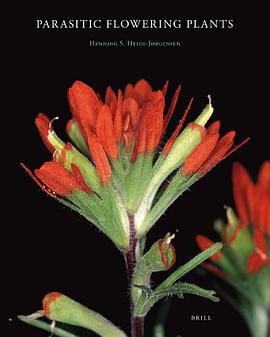
Parasitic flowering plants are strikingly impressive and beautiful and hold many surprises of both general and scientific interest. Parasites also have great influence on the quality of human life when attacking crop plants. Some parasites have since early times appealed to our imagination and have been part of religious or folkloristic events and used as gifts to royalties. This beautifully illustrated book covers all parasitic families and most of the genera. It also discusses the establishment of the parasite, the structure and function of the nutrient absorption organ (haustorium), and how the parasites are pollinated and dispersed as well as their ecology, hosts, and evolution. The book is written in a mostly non-technical language and is provided with a glossary and explanatory boxes.
作者简介
目录信息
Contents......Page 8
Preface by Job Kuijt......Page 13
Author's preface ......Page 14
What is a parasitic plant? ......Page 16
Parasite 'look alikes' ......Page 17
Box 1. Myco-heterotrophic plants ......Page 19
Types of parasites and some definitions ......Page 21
The haustorium ......Page 23
Box 3. Vascular tissue in higher plants ......Page 24
A parasitic gymnosperm ......Page 32
How many plants are parasitic? ......Page 35
History of research in parasites ......Page 38
Olacaceae ......Page 40
Schoepfiaceae ......Page 44
Box 4. Life cycle and embryology of flowering plants ......Page 45
Opiliaceae ......Page 47
Loranthaceae ......Page 48
Vegetative morphology ......Page 50
Haustorium anatomy ......Page 52
Floral structure and pollination ......Page 57
Bird pollination......Page 59
Embryology......Page 64
Dispersal biology......Page 65
The root parasites......Page 69
Loranthaceae in the New World ......Page 73
Loranthaceae in Africa ......Page 81
Loranthaceae in Eurasia......Page 89
Loranthaceae in Australia......Page 93
Loranthaceae in selected isolated islands......Page 96
Box 5. Endemism ......Page 97
Misodendraceae......Page 105
Eremolepidaceae......Page 109
Santalaceae......Page 110
Vegetative morphology......Page 112
Floral biology......Page 114
Herbaceous genera......Page 115
Woody genera......Page 117
Viscaceae......Page 128
Phoradendron......Page 132
Korthalsella......Page 138
Viscum......Page 142
Arceuthobium......Page 151
Summary ......Page 158
Krameriaceae......Page 160
Cassytha (Lauraceae)......Page 163
Cuscuta (Convolvulaceae)......Page 168
Hemiparasitic Orobanchaceae......Page 176
Habit and haustoria......Page 177
Flower biology......Page 182
Widely distributed genera......Page 184
Northern temperate zone......Page 189
Old World warm climates......Page 198
Holoparasitic Orobanchaceae......Page 204
Genera transferred from Scrophulariaceae......Page 206
Orobanchaceae (sensu stricto) ......Page 213
Cynomoriaceae......Page 222
Lennoaceae......Page 225
Mitrastemonaceae ......Page 228
Apodanthaceae......Page 230
Cytinaceae......Page 235
Rafflesiaceae......Page 238
Rafflesia......Page 242
Sapria......Page 246
Rhizanthes ......Page 247
Hydnoraceae......Page 250
Hydnora ......Page 252
Prosopanche ......Page 254
Vegetative morphology and anatomy......Page 255
Inflorescences and flowers......Page 258
The most widely distributed genera......Page 260
Amerian genera......Page 263
African genera......Page 270
Southeast Asian-Pacific genera ......Page 274
Seed dispersal strategies......Page 278
Germination and host recognition ......Page 282
Haustorial development......Page 284
Haustorial initiation ......Page 285
Development of the holdfast......Page 286
Box 6. The plant cuticle ......Page 288
Development of the endophyte......Page 291
Differentiation of the xylem bridge ......Page 299
The mature haustorium ......Page 300
Graniferous tracheary elements......Page 302
The interface......Page 304
Phoradendron case story......Page 306
Water relations (Transpiration) ......Page 310
Box 7. Absorption and transport of nutrient ions ......Page 311
Nutrient absorption and translocation......Page 312
Translocation from parasite to host......Page 315
Box 8. Photosynthesis......Page 316
Photosynthesis......Page 317
Further physiological topics......Page 320
Host specificity......Page 322
Determining the host range......Page 323
Species delimitation and host range......Page 327
Host specificity in various taxa ......Page 330
Epi- and self parasitism......Page 341
Mimicry ......Page 344
Biochemical defence ......Page 346
Hypertrophy and hormonal disorder ......Page 348
Mechanical defence ......Page 350
Flowers and fruits as food sources......Page 351
Herbivory......Page 352
Vegetation ecology......Page 358
Arid vegetation - xerophytism......Page 360
Box 9 . Xerophytism......Page 361
Coastal vegetation - salt tolerance......Page 363
Temperate and tropical forests......Page 365
Arctic vegetation......Page 366
Cultivated and urban land......Page 367
Ecosystems - fires ......Page 368
7. Harmful parasites and control methods......Page 372
Parasitic plants in agriculture......Page 373
Cuscuta and Cassytha on crops......Page 375
Striga on crops......Page 376
Orobanche and Phelipanche on crops......Page 380
Other root parasites on crops......Page 382
Control methods ......Page 384
Parasites in forestry and orchards......Page 391
Arceuthobium ......Page 392
Other stem parasites......Page 394
Control methods ......Page 397
8. Ecology and evolution......Page 400
Evolution of different modes of parasitism......Page 401
Convergent evolution......Page 413
Co-evolution and bird pollination ......Page 416
Phylogeny......Page 418
Transfer of genetic information......Page 419
The phylogenetic tree......Page 420
Nature conservation ......Page 421
Glossary......Page 429
Selected literature......Page 432
List of photographers......Page 436
Index......Page 440
· · · · · · (收起)