
具体描述
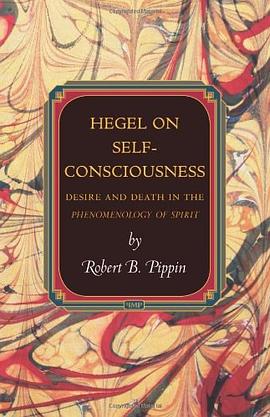
In the most influential chapter of his most important philosophical work, the "Phenomenology of Spirit", Hegel makes the central and disarming assertions that 'self-consciousness is desire itself' and that it attains its 'satisfaction' only in another self-consciousness. "Hegel on Self-Consciousness" presents a groundbreaking new interpretation of these revolutionary claims, tracing their roots to Kant's philosophy and demonstrating their continued relevance for contemporary thought. As Robert Pippin shows, Hegel argues that we must understand Kant's account of the self-conscious nature of consciousness as a claim in practical philosophy, and that therefore we need radically different views of human sentience, the conditions of our knowledge of the world, and the social nature of subjectivity and normativity. Pippin explains why this chapter of Hegel's Phenomenology should be seen as the basis of much later continental philosophy and the Marxist, neo-Marxist, and critical-theory traditions. He also contrasts his own interpretation of Hegel's assertions with influential interpretations of the chapter put forward by philosophers John McDowell and Robert Brandom.
作者简介
目录信息
读后感
用户评价
皮平老是强调社会,他怎么就不懂得“内在理由”------一个虚拟的社会、一个自以为是的是呢?
评分从这份提纲里大概可见皮平转向逻辑学的思路
评分没觉得有什么高明之处。
评分皮平老是强调社会,他怎么就不懂得“内在理由”------一个虚拟的社会、一个自以为是的是呢?
评分将精神现象学第四章视为形而上学与认识论再度统一的起点,是西方哲学走向社会历史化的起点。讨论自我意识如何为什么是一种欲望,以及该欲望的满足为何又与另一种自我意识不可分割。