
具体描述
Arduino boards have impressed both hackers and professional engineers. Whether you're a hobbyist or a professional, it isn't just a breadboard and a hazy idea that keeps you going. It's essential to institute a proper design, device instrumentation and, indeed, test your project thoroughly before committing to a particular prototype. Practical Arduino Engineering begins by outlining the engineering process, from the basic requirements and preliminary design to prototyping and testing. Each and every chapter exemplifies this process and demonstrates how you can profit from the implementation solid engineering principles--regardless of whether you just play in your basement or you want to publicize and sell your devices. Arduino is a brilliant prototyping platform that allows users to test and iterate design ideas. Imitation by other Arduino makers, hackers and engineers often proves your design's popularity. Practical Arduino Engineering will teach you to follow the engineering process carefully; over time, you will be able to review and improve this process, and even extend its scope. Practical Arduino Engineering is not purely theoretical. In addition, you'll learn the process of hardware engineering as applicable to Arduino projects, and the importance of the process in each and every project presented in this book. To set the stage, Practical Arduino Engineering begins by reviewing the Arduino software landscape, then shows how to set up an Arduino project for testing. Even if you already know your compiler toolchain and the basics of Arduino programming, this refresher course can help fill in the gaps and explain why your compiler may spit out certain error messages. Practical Arduino Engineering then gradually builds up the engineering process, from single devices like LCDs, potentiometers and GPS modules, to the integration of several modules into larger projects, such as a wireless temperature measurement system, and ultimately an entire robot. The engineering projects become progressively more challenging throughout the first 4 engineering chapters. Next, you'll proceed with simple steps towards the first intelligent part of a robot: the object detector. You'll find yourself teaching your robot how to avoid very hot objects or insurmountable obstacles. The basic design requirements for a complete robot and, indeed, the detailed design and prototyping for robots can be extremely tricky, which is why engineering discipline is invaluable. Practical Arduino Engineering then enters the world of domestic engineering by introducing home alarm systems--not quite as simple as they seem. A solid, robust system can only be built by following the engineering process detailed in previous chapters, and this section reinforces that process. You'll then take a step further in your Arduino engineering process: instrumentation and control, and some error messaging using GSM. Control is introduced via the Xbox controller, a very powerful piece of technology able to play a considerable role in robotics projects. Having already learned to control motion and to sense and avoid objects, you'll learn how to debug your Arduino projects of varying complexities via the hardware instrumentation software LabVIEW. To complete the journey into Practical Arduino Engineering, you'll discover how to use a special Arduino board to rely on Bluetooth Mate Silver for control of domestic and mobile Arduino projects. Using Bluetooth Mate Silver, you'll learn to implement basic engineering design with almost any Arduino project, and be able to justify, build, debug, and extend Arduino-based designs using a solid engineering approach. Please note: the print version of this title is black & white; the eBook is full color. What you'll learn * Practical engineering principles: from collecting requirements onwards * To instrument Arduino hardware for debugging * To build stationary Arduino home projects with varying degrees of complexity * To construct Arduino-based robots and vary your design until an optimal solution is reached * To add instrumentation software to the hardware design process * How to move from being a good hacker to being a solid engineer Who this book is for This book is geared toward engineers and makers used to a rigorous approach to hardware hacking, Arduino hackers aiming to get to the next level, and Arduino hackers interested in instrumenting their projects using Arduino and other software. Table of Contents * The Process of Arduino Engineering * An Arduino Software Review * Controlling Robot Motion with a Potentiometer * Adding an LCD to the Robot * Engineering a GPS Module for the Robot * Home Engineering I: Temperature Sensors * Object Detection for the Robot * Home Engineering II: Alarm System Using Arduino * Integrating GSM Technology with the Robot * Xbox Controller and the LabVIEW Process * Controlling Your Robot: Bluetooth Arduino
作者简介
目录信息
读后感
用户评价
如果用一句话来概括我的阅读体验,那就是“颠覆性重塑了我对‘工程’的理解”。这本书并不是教你如何‘玩转’Arduino,而是教你如何像一个真正的嵌入式工程师那样去‘构建’一个可靠、可维护、可扩展的系统。我过去总觉得Arduino只是一个很“玩具化”的平台,但读完这本书后,我明白了只要运用正确的工程原则,它完全可以支撑起相当复杂的任务。书中对于错误处理和异常恢复机制的探讨尤其深刻,它不像其他书只是简单地加一个`if`语句就完事了,而是详细论述了看门狗定时器(WDT)在确保系统鲁棒性中的作用,以及如何设计优雅的故障上报机制。这种对系统可靠性的执着追求,是这本书与其他同类书籍拉开档次的关键。它不仅仅是关于代码和电路,它更像是一本关于“构建质量”的哲学书,强烈推荐给所有打算从“创客”迈向“工程师”的实践者。
评分坦白讲,这本书的深度远超我的预期,它简直就像是一本面向准专业人士的参考手册,而不是一本面向初学者的指南。我原以为它会涵盖像“点亮一个LED”或者“读取一个按钮”这样基础到不能再基础的内容,但出乎意料的是,它几乎是从“如何选择合适的微控制器架构以满足特定功耗要求”这个层面开始的。特别是关于实时操作系统(RTOS)在嵌入式系统中的应用那一节,讲解得极其透彻,它没有停留在理论层面,而是详细对比了FreeRTOS和Zephyr在资源受限环境下的优劣,并给出了实际的移植和调试步骤。这种级别的深入探讨,在市面上流通的Arduino相关书籍中是极为罕见的。我甚至发现,书中引用的很多技术细节,我都需要回溯去查阅更底层的Datasheet才能完全理解,这迫使我不仅仅是会用Arduino库函数,而是真正开始去理解底层硬件是如何响应我的指令的。这本书更像是一个引路人,它不会把所有答案都喂给你,而是告诉你如何通过严谨的工程思维去推导出这些答案,极大地提升了我解决未知问题的能力。
评分这本书的配套资源和实验设置部分,体现了作者极高的职业素养。很多技术书籍在配套方面往往草草了事,但这本书的附录部分做得堪称典范。它不仅提供了所有示例代码的Git仓库链接,而且还附带了一个非常详细的物料清单(BOM),精确到每一个电阻的封装和功率等级,甚至给出了几个可靠的供应商参考。更令人印象深刻的是,书中描述的几个大型项目——比如一个基于CAN总线的工业监控单元——的PCB设计文件是开放的,我甚至可以对照着学习布局布线的心得。这对于那些想把自己的作品推向实际应用的读者来说,提供了巨大的便利。我尝试着按照书中的指导搭建了一个中等复杂度的传感器阵列,整个过程的顺畅程度让我惊叹。作者似乎预见到了读者在搭建过程中可能遇到的所有常见错误——从面包板接触不良到软件库的版本冲突,都在后续的“故障排除与优化”环节中被提前预警和解决了。这使得整个学习过程的挫败感被降到了最低,完全可以专注于学习核心逻辑。
评分这本书的语言风格,说实话,一开始让我有些“紧张”。它不像市面上很多Arduino书籍那样,用一种非常口语化、甚至有点卖萌的语气来降低读者的门槛。恰恰相反,它的措辞非常精准、严谨,充满了工程文档的专业气息。举个例子,当它描述PID控制算法的实现时,几乎没有使用任何多余的形容词,直接就切入了数学模型和硬件接口的耦合点。这对于我这种目标明确、希望快速掌握工业级应用技巧的学习者来说,简直是太对胃口了。它不浪费时间在不必要的背景介绍上,而是直奔核心技术点。我最喜欢的部分是关于电源管理和电磁兼容性(EMC)那一章。很多初级读物会忽略这些“不那么酷”但却是决定项目能否商业化的关键环节,但这本书却花了大量的篇幅去探讨如何设计一个健壮的PCB布局,以及如何有效过滤噪声。读到这里,我真切地感受到作者不仅仅是一个业余爱好者,他绝对是带着解决真实世界问题的经验来撰写这本书的。读起来虽然需要一定的专注力,但每读完一页,都会有一种“我的知识体系又坚实了一块”的踏实感,这比读十本浮于表面的教程都有用。
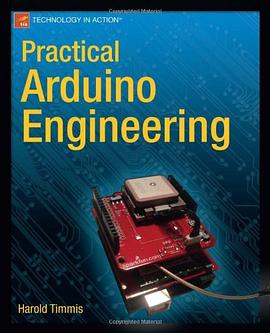
评分这本书的封面设计简洁有力,封面上那块标志性的Arduino Uno板子,带着一种工业设计的硬朗美感,一下子就抓住了我的眼球。我拿到书的时候,首先感受到的是它的重量——挺实在的,这通常意味着内容是扎实的,不是那种轻飘飘的入门速成读物。内页的排版非常清晰,代码块和电路图的对比度做得很好,即使在不太明亮的环境下阅读也不会感到吃力。而且,我注意到这本书的插图质量非常高,那些复杂的模块连接图,每一个焊点、每一条导线都画得一丝不苟,对于像我这种动手能力还处于“菜鸟”阶段的人来说,简直是救星。我尤其欣赏作者在介绍基础概念时所采用的类比手法,他没有直接抛出那些晦涩的术语,而是将它们融入到实际的工程案例中去解释,比如讲解定时器中断时,那个关于“工厂流水线调度”的比喻,让我瞬间就理解了它的核心逻辑。这本书的结构安排也很合理,它不是简单地罗列各个传感器的使用方法,而是围绕着几个大型的、具有实际应用价值的项目逐步深入,这种由浅入深的学习路径,极大地增强了我完成整个学习过程的信心。它给人的感觉就像是一位经验丰富的老工程师,耐心地坐在你旁边,手把手地教你如何将理论知识转化为可靠的产品原型。
评分 评分 评分 评分 评分