
具体描述
Book Description
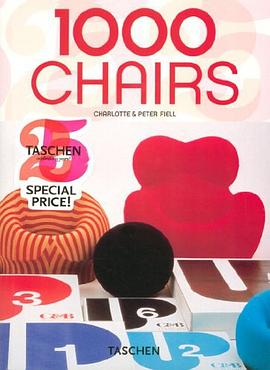
The ubiquitous chair in all its shapes and forms (TASCHEN's 25th anniversary special edition) More than any other piece of furniture, the chair has been subjected to the wildest dreams of the designers. The particular curve of a back-rest, or the twist of a leg, the angle of a seat or the colour of the entire artefact all reflect the stylistic consciousness of each era. From Gerrit Rietveld and Alvar Aalto via Verner Panton to Eva Zeisel; from Art Nouveau to International Style, from Pop Art to Postmodernism, the phenomenon of the chair is so complex that it requires a reference work as comprehensive as this to do it full justice. They are all here: Thonet's bentwood chairs and Hoffmann's sitting-machines, Marcel Breuer's Wassily chair and Ron Arad's avant garde armchairs. The book, a slightly abbreviated version of our classic title 1000 Chairs, devotes one page to each chair, displayed on its own as pure form, with biographical and historical information about the chairs and their designers. A special treat for anyone who loves design and a must for collectors!
Amazon.com
Sleek, stuffed, buttoned, or bent, in the den or the dining room, the chair is an indicator of its owner's identity. Chairs make up much of the interior landscape of our homes and workplaces, and a comfortable chair is considered a great asset in either location. A rigorous survey of the last 150 years of chairs, 1000 Chairs is a pictorial guide to the axiom "you are where you sit." Writers Charlotte and Peter Fiell argue that, as well as being an icon of identity, the chair is a form through which designers engage in social, political, and even ergonomic rhetoric. A good example is George Nelson's mass-produced modular seating system. Geometrical in design, its austere, mostly rectilinear lines are efficient and economical. The book follows developments and mutations in chair design from the days before art deco through the rise of modernity and into the mid-'90s, when designers like Philippe Starck used such materials as recycled plastic and injection molded polypropylene.
In total there are more than the 1000 advertised illustrations, and each is accompanied by a small text describing the significance of the chair and its designer. The book includes more than 100 capsule biographies of such designers as Charles Rennie Mackintosh, Adolph Loos, and Marcel Breuer. The only problem with 1000 Chairs is, ironically, its own ergonomics. At about eight by six inches and nearly 800 pages, it is an unwieldy little tome. That aside, this is a great book--a must for anyone interested in sitting down.
--Loren E. Baldwin
Book Dimension:
length: (cm)19.5 width:(cm)14
作者简介
目录信息
读后感
用户评价
这本书的装帧设计简直是一场视觉盛宴,触感上乘的布面封面,散发着一种低调而沉稳的质感,配合着烫金的字体,透露出一种跨越时代的精致感。我尤其喜欢它内页纸张的选择,那种微微泛黄的米白色调,拿在手里仿佛捧着一件古董,每一次翻页都能听到纸张轻微的摩擦声,让人心神宁静。排版布局也极为考究,留白处理得恰到好处,文字与图片之间的呼吸感很强,即便是那些大幅的、细节丰富的插图,也丝毫没有显得拥挤或压迫。那些黑白照片的颗粒感和光影处理,仿佛能将人瞬间拉回那个特定的历史瞬间,让我不禁对着那些家具的线条和材质冥想了许久。而且,书脊的装订工艺也十分扎实,即便是频繁翻阅,也丝毫没有松动的迹象,看得出出版方在实体制作上投入了巨大的心血,这绝对是一本值得被珍藏在书架最显眼位置的艺术品,光是摆着,就能提升整个房间的格调。
评分我发现这本书的叙事视角非常独特,它没有采用那种传统的、板着面孔的历史梳理方式,反而更像是一系列精心策划的“会谈录”,那些被访者——无论是家具设计师、历史学家还是资深收藏家——他们的语言充满了鲜活的生命力和个人色彩。有些段落的对话极其尖锐和富有洞察力,直指设计哲学最核心的命题,比如“形式是否真的追随功能?”或者“一件物品的‘灵魂’是如何被赋予的?”这种充满思辨性的探讨,远超出了我原本对一本关于“家具”书籍的期待。读到某些关于材料科学和工艺伦理的章节时,我甚至产生了一种想要立刻去木工房里摸一摸刨子的冲动。作者巧妙地将宏大的社会变迁熔铸在这些微观的物件背后,让我深刻体会到,每一个角度、每一条曲线都不是随意的,它们是时代精神、社会压力和工匠心血的复杂投影,读起来酣畅淋漓,让人欲罢不能,那种知识密度和情感张力是罕见的。
评分这本书的图文结合达到了一个近乎完美的平衡点,简直是教科书级别的范例。它没有陷入那种“图文无关”的尴尬境地,也不是简单地用图片来点缀文字。恰恰相反,每一张照片、每一幅剖面图,都是对文本论述的有力支撑和必要补充。我特别欣赏那些对家具结构进行拆解分析的线描图,它们以一种近乎手术刀般精准的方式,揭示了椅子内部承重和连接的秘密,这种透明化的展示,极大地满足了我作为一名好奇心强烈的爱好者的求知欲。同时,那些全景照片的布光和景深控制,将家具置于其诞生的环境中,使得读者能够清晰地捕捉到光线与材质相互作用产生的微妙美感。这种高度统一的视觉语言和信息传达效率,让我在阅读过程中几乎不需要停下来去猜测作者的意图,一切都显得清晰、有力且美得惊心动魄。
评分这本书的编辑工作简直可以用“庖丁解牛”来形容,信息的组织逻辑严密得令人拍案叫绝。它不是简单地按照时间线或者地域来划分,而是采用了一种主题式、交叉对比的方式来构建知识网络。比如,某一章节可能会将十八世纪洛可可风格的繁复与二十世纪初包豪斯极简主义的克制放在一起进行深入对比,这种跳跃式的对比分析,极大地拓宽了我的横向思维。更让人惊喜的是,那些被引用或提及的背景资料,比如相关的建筑运动、当时的经济背景,甚至是流行的音乐风格,都有清晰且简洁的注释或附录索引,使得读者在深入了解某件家具的背景时,能够随时快速地导航到更广阔的文化脉络中去。这种细致入微的结构设计,让阅读过程从被动接受信息,转变为主动探索知识的链条,极大地提升了学习的效率和趣味性。
评分老实说,我最初是被它那近乎学术研究的严谨性所吸引,但真正沉浸进去后,我却收获了一种出乎意料的哲学反思。这本书中反复探讨了一个核心母题:人类与“容器”的关系。这些被精雕细琢的椅子,作为我们生命中度过时间最多的“容器”,它们如何塑造了我们的坐姿、我们的社交礼仪,甚至是我们对“休息”的理解?书中通过对不同文化中“坐”的仪式感的描述,让我意识到,我们对物质的依赖远比想象中深刻。特别是当我读到某位评论家对“永久性”和“可替换性”的讨论时,我开始审视自己家中那些被随意丢弃的现代家具,它们短暂的生命周期是否也映照了我们生活节奏的碎片化?这种由物及人的深度挖掘,使得这本书远远超越了设计评论的范畴,变成了一部关于现代人存在状态的寓言。
评分为之疯狂的一本书。我被家具诱拐由此开始
评分和梧桐树一起淘来的书,喜欢得不得了。购于08年10月12日
评分虽然是TASCHEN出版的书,但是这一系列的图片质量和色彩好像被诅咒了。
评分和梧桐树一起淘来的书,喜欢得不得了。购于08年10月12日
评分"less is more" "less is a bore" "less is more, more or less"