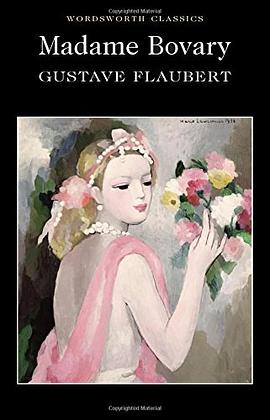

具体描述
Book Description
The Wordsworth Classics covers a huge list of beloved works of literature in English and translations. This growing series is rigorously updated, with scholarly introductions and notes added to new titles.
This novel is a tale of human bondage. The author's realistic and explicit descriptions of the fall of Emma Bovary into adultery, debt and eventual death at her own hand, shocked the establishment at the time it was published.
Amazon.co.uk
Flaubert's "Madame Bovary" scandalised French bourgeois society of the time with its shocking depiction of an adulteress, Emma Bovary, and her lascivious liaisons. The 19th-century press denounced both the book and its author as corrupting influences. History has exonerated Flaubert and exposed the hypocrisy of a society that would deny the existence of such women.
Emma Bovary, a young woman, newly married to a provincial doctor, is dazzled when she attends her first ball, attended by high aristocracy. With the culmination of her romantic ideals realised, her head is so filled with fanciful notions that she never re-enters reality, until the damning end:
Before her wedding day, she had thought she was in love; but since she lacked the happiness that should have come from that love, she must have been mistaken, she fancied. And Emma sought to find out exactly what was meant in real life by the words felicity, passion and rapture, which had seemed so fine on the pages of the books.
Frustrated and bored by her marriage, Emma embarks on a brief, rather touching affair with one young man but soon, vulnerable and exposed, she is fitting carrion for Monsieor Rodolphe, a serial womaniser. Soon, Emma has not only ruined her own reputation but destroyed that of her husband in her ruthless bid for wealth and recognition. The cast of characters, from passers-by to the shopkeepers who take her money, act like the chorus in a Greek tragedy. Seen through their eyes and their reactions to her, Emma's downfall is recounted but also society's intolerance.
On the surface, Flaubert provides a melodramatic morality tale. Slyly, underneath it all, he is laughing. Through his voyeuristic tale, with each salacious detail recounted, he is wilfully subversive as he points the finger not only at the guilty but at those who would dare to judge.
--Nicola Perry
From The Washington Post's Book World /washingtonpost.com
It still astonishes.
If one were to ask, "World, which is the most perfect novel ever written?," the world would immediately answer: Madame Bovary. There are novels of greater structural complexity, such as Lord Jim and The Good Soldier, or of a broader social canvas, like Anna Karenina and In Search of Lost Time, or of more stylistic dash -- Ulysses, Lolita -- and many far more beloved (Pride and Prejudice, The Great Gatsby, The Leopard), but Madame Bovary still stands as the most controlled and beautifully articulated formal masterpiece in the history of fiction.
Flaubert's artistic sensibility veered most naturally to gaudy excess, not to say a voyeuristic passion for the fleshy, sanguinary and transgressive. A little too much was hardly enough for him. In The Temptation of St. Anthony (three versions, 1849, 1856, 1874), the Queen of Sheba offers herself to the austere saint as a sexual paradise, which she sums up in the quite believable assertion, "I am not a woman, I am a world." Similarly, Salammbo (1862) -- an utterly static novel about ancient Carthage -- presents painterly tableaux of orgy, battle and torture. (I like its overripe sickly-sweetness, but am nearly alone in this taste -- it should have been illustrated by the Delacroix of "The Death of Sardanapalus.") By contrast, Flaubert's most ambitious completed novel, A Sentimental Education (1869) -- a vast social portrait of Paris in the 1840s -- errs in being too dry, too slow-moving, too programmatic. Yet its final pages -- in which the callow Frederic again meets the once-adored but now white-haired Madame Arnoux -- remain among the most honest and disillusioning in all fiction. Only in Madame Bovary (1857) -- and the story "A Simple Heart" (1877) -- did the novelist find just the right style, serene in tone, mildly ironic, tightly organized (partly through the use of unobtrusive symbolism), concise, exact and virtually without stylistic grand-standing. You can shake Madame Bovary and nothing will fall out.
Like certain other classics (The Scarlet Letter, for instance), Flaubert's tale of adultery in the provinces suffers from being a staple of the school curriculum. Generations of French-language students have parsed their way through its paragraphs, noting Emma's future ruination because of her romantic reading and brief glimpse of aristocratic life, speculating about the horse or butterfly symbolism, dissecting the stichomythia of the scene at the country fair where the announcement of agricultural prizes alternates with Rodolphe's honeyed words of seduction. Such linguistic close analysis, which Flaubert invites and rewards, may nonetheless displace attention from an equally important aspect of the novel: its narrative economy and speed. Here is one advantage to reading a translation, particularly a fine one like Margaret Mauldon's: You don't need to pause to look up all those mots justes in a dictionary. Too often students merely work their way through the text with the same grim determination that its author relied on to compose it.
In Madame Bovary Flaubert never allows anything to go on too long; he can suggest years of boredom in a paragraph, capture the essence of a character in a single conversational exchange, or show us the gulf between his soulful heroine and her dull-witted husband in a sentence (and one that, moreover, presages all Emma's later experience of men). Returning from their wedding, the newlyweds and the bridal party must cross a farmer's field:
"Emma's dress was rather long and the hem trailed a bit; from time to time she would stop and lift it up, then, with gloved fingers, delicately remove the wild grasses and tiny thistle burrs, while Charles stood empty-handed, waiting for her to finish."
As in Jane Austen, there's pervasive irony throughout Flaubert, some of it verging on the heavy-handed: Charles, unaware as usual, announces to the lecherous Rodolphe "that his wife was at his disposal." But what struck me most in rereading the book this time are its tiny, almost casual, naturalistic details:
Describing the houses in Yonville, we learn that "here and there the plastered walls, crossed diagonally by black beams, support a straggly pear tree, and at the doors of the houses are miniature swinging gates, to keep out the baby chicks that cluster round the step to peck at crumbs of brown bread soaked in cider."
Leon, a young lawyer who has begun to fall in love with Emma, accompanies the young mother on a visit to the wet-nurse: "Madame Bovary blushed, and he turned away, fearful lest his glance might perhaps have been too bold. The baby had just vomited on the collar of her dress, and she put her down again in the cradle. The wet-nurse quickly came over to wipe up the mess, assuring Emma that it wouldn't show."
At the agricultural fair, "to one side, about a hundred yards beyond the enclosure, motionless as a statue of bronze, stood a great black bull wearing a muzzle, with an iron ring in its nostril. A child dressed in rags held it by a rope."
Finally, what could be more true to life than this? Leon is trying to seduce Emma inside the Rouen Cathedral, but "she seemed determined to let him talk without interrupting him. She sat with her arms crossed, looking down at the rosettes on her slippers, occasionally wriggling her toes slightly inside the satin."
Though Madame Bovary escapes Flaubert's predilection for overblown, histrionic description, his heroine is primarily a woman of gestures, a mime of the grandly operatic emotions she yearns to feel. In her love-talk Emma can be as saccharine as a P.G. Wodehouse female lyricizing over the stars as "God's daisy chain." Because she comes to fear any diminution in passion, Emma inevitably takes to growing more brazen, more desperately fantastic, with each sexual encounter. Fundamentally, she is an empty vessel, a pretty B-movie actress trying out new roles which she then overplays.
And yet it's hard not to sympathize with this doomed young woman. Flaubert may have wanted us to regard her as essentially kitsch, a creature formed by impossible reveries of blissful self-fulfillment, whether in marriage, passion or religious observance. But Emma nonetheless tries, and tries hard, to live her dreams and in this sense is hardly different from, say, Fitzgerald's Gatsby. Or any of the rest of us. Don't we all ache with unabashed hopes, unassuaged desires? For Emma, the ball at La Vaubyessard shines as a golden interlude in her drab life, a glimpse of paradise. Nonetheless, "little by little, in her memory, the faces all blurred together; she forgot the tunes of the quadrilles; no longer could she so clearly picture the liveries and the rooms; some details disappeared, but the yearning remained." The yearning always remains.
For the modern reader, familiar with adultery through magazine articles, television soap operas or personal experience, Madame Bovary shows how surprisingly common, how standardized, is the blueprint for such illicit affairs: The soft-focused imaginings, the touch of a hand, a suggestive phrase or smile, the search for seclusion, the breathless rush to the lover's arms, the fear of exposure, the financial outlay (and the need to hide it), the ever-growing recklessness, and then, more and more often, the violent arguments and impossible demands, the violation of promises, mutual recrimination and, finally, inevitably, the tearful break-up, leading to further heartache or embitterment and, sometimes, relief. As Flaubert writes about the last days of the affair with Leon, "They knew one another too well to experience that wonderment of mutual possession that increases its joy a hundredfold. She was as sick of him as he was weary of her. Emma was discovering, in adultery, all the banality of marriage."
When Emma tells her first lover, Rodolphe -- cad, bounder, scoundrel, rake -- how much she adores him, how she will be his servant, submit to his every desire as his concubine, Flaubert observes:
"He had heard these things said to him so many times that they no longer held any surprises for him. Emma was just like all his mistresses, and the charm of novelty, gradually falling away like a garment, laid bare the eternal monotony of passion, which never varies in its forms and its expression."
Such world-weary, Gallic cynicism. But Emma truly loves Rodolphe (or thinks she does). Still "he could not see -- this man of such broad experience -- the difference of feeling, beneath the similarity of expression. Because wanton or venal lips had murmured the same words to him, he only half believed in the sincerity of those he was hearing now; to a large extent they should be disregarded, he believed, because such exaggerated language must surely mask commonplace feelings: as if the soul in its fullness did not sometimes overflow into the most barren metaphors, since no one can ever tell the precise measure of his own needs, of his own ideas, of his own pain . . ." That is movingly true in itself -- how often do words fail us when we wish to express our deepest feelings -- but Flaubert, in his genius, caps even this with one of his most imaginative and disheartening similes:
" . . . and human language is like a cracked kettledrum on which we beat out tunes for bears to dance to, when what we long to do is make music that will move the stars to pity."
In his excellent introduction to this new edition, Malcolm Bowie further analyzes this passage to demonstrate how Flaubert is actively arguing with his own characters, thus enhancing the narrative dynamic of the novel. That's certainly true, but ordinary readers can think about it later. What truly matters is this: Madame Bovary is available in a superb new translation, in a handsome hardback volume, and if you've never read it, or if you've only worked through it in first-year college French, you need to sit down with this book as soon as possible. This is one of the summits of prose art, and not to know such a masterpiece is to live a diminished life. Some early critics complained that Emma's story was a sordid and commonplace one, yet that is, paradoxically, its glory. The novelist once famously proclaimed that he himself was Madame Bovary -- but failed to add that so are you, so am I. We are all the victims of unrealized or unrealizable dreams. They somehow slip from our grasp or glitter before our eyes, only a little beyond our reach. "I admire tinsel as much as gold," Flaubert once wrote in a letter. "Indeed, the poetry of tinsel is even greater, because it is sadder."
From AudioFile
The familiar music of Debussy's "Clair de Lune" begins the reading of this classic story of lost dreams, romance, infidelity and retribution. Unfortunately, the theme music is not repeated. Claire Bloom's soft, feminine voice and British accent convey the mid-nineteenth-century French setting well. The abridgment, however, is rushed. There are too many hasty transitions from scene to scene. Some of these scene changes are a quick sentence which, if half-heard because of a wandering thought or a minor interruption, leave the listener wondering what is happening. From the narration, one learns the story line but loses the impact of the novel. D.W.K.
Book Dimension :
length: (cm)19.8 width:(cm)12.6
作者简介
目录信息
读后感
毫无疑问,包法利夫人爱玛是个女文青。 她读了许多文风甜腻的浪漫骑士小册子,并把其精华融入了血液;当然,如果只读琼瑶阿姨的小说并不能算准文青,爱玛在被第一个情人抛弃的时候还读了些“适合于一位绝顶聪颖的女性阅读的好书”,像一些畅销类宗教伦理书籍,也就...
评分最近我重读了《包法利夫人》,真是好看极了。 我第一次读《包法利夫人》还是高三暑假。作为一个求知欲旺盛的16岁少女,那年夏天我囫囵读了大量名著,满脑子都是浆糊。那些浆糊在我脑子里搅拌,充满荷尔蒙和夏天的气息。其实我并不确切知道阅读的意义,那时候的阅读就像是迅速...
评分19世纪末,巴黎的文艺青年,原来是这么对话的: “这儿附近总该有些地方可以散散步吧?”包法利夫人接着前面的话茬对年轻人说。 “喔!很少,”他回答说。“有个地方,我们都管它叫牧场,在森林边缘的山坡顶上。有时候我星期天上那儿去,手里拿着本书,眺望远处的落日” “我...
评分于是撒旦从耶和华面前退去,击打约伯,使他从脚掌到头顶长毒疮。约伯就坐在炉灰中,拿瓦片刮身体。他的妻子对他说:“你仍然守你的纯正吗?你弃掉神死了吧!”约伯却对她说:“你说话像愚顽的妇人一样。哎!难道我们从神手里得福,不也受祸吗?”在这一切的事上,约伯并不以口...
评分用户评价
读完《包法利夫人》,我仿佛经历了心灵的一场洗礼。这本书,不像一般的励志小说那样给人以鼓舞,也不像简单的爱情故事那样令人沉醉,它更像一面镜子,映照出人性深处的复杂与矛盾,也映照出社会环境对个体命运的深刻影响。爱玛,这个被困在乏味生活中的少妇,她渴望的,是一种超越平凡的激情与浪漫。她从阅读中获得的,是关于爱情、关于生活的种种不切实际的幻想,这些幻想,像一颗颗种子,在她内心种下了对现实的不满与抗拒。她对物质的追求,对情人的依恋,不过是她试图填补内心空虚的徒劳尝试。她所期待的“真爱”,最终都化为了对她一次又一次的伤害。福楼拜的笔触,是如此的冷静而又犀利。他没有为爱玛的命运安排任何戏剧性的转折,也没有给她任何救赎的机会。他只是平静地,甚至可以说是残酷地,将她一步一步地推向深渊。他对细节的描绘,达到了令人惊叹的程度。无论是舞会上闪烁的烛光,还是爱玛身上华丽的服饰,亦或是她内心深处的每一次悸动,都被描绘得栩栩如生。这种极致的写实主义,让读者仿佛置身于那个十九世纪的法国乡间,亲身感受着人物的情感起伏和社会环境的压抑。爱玛的悲剧,不仅仅是个人选择的结果,更是那个时代女性命运的缩影。她被禁锢在婚姻的牢笼中,被社会的期望所束缚,她的每一次反抗,都显得那么的无力与徒劳。福楼拜的这部作品,让我深刻地理解到,理想与现实之间的巨大鸿沟,以及过度沉溺于虚幻世界所带来的毁灭性后果。
评分读完《包法利夫人》,心中百感交集,久久不能平息。这部小说,初看似乎描绘的是一个沉溺于浪漫幻想、追求虚幻爱情的少妇的悲剧,但细细品味,会发现其内涵远比这要丰富和深刻得多。福楼拜的笔触如同手术刀般精准,剥开了那个时代法国小镇的表象,露出了其下暗流涌动的现实与虚无。爱玛,这个被无数评论家褒贬不一的角色,在我看来,她是一个时代的缩影,一个被禁锢在物质和精神双重牢笼中的灵魂。她对“更高贵”生活的渴望,对文学作品中描绘的浪漫情境的迷恋,与其说是一种个人意志的追求,不如说是一种对那个时代社会规范和女性命运的无声反抗。她的每一次出轨,每一次挥霍,都像是对现实的短暂逃离,对理想世界的徒劳追寻。而那些被她视为“真爱”的对象,也无一不是肤浅、自私,甚至是卑鄙的。这无疑是作者最辛辣的讽刺之一:当一个人沉醉于虚幻的理想时,现实的醜陋便会以最赤裸裸的方式呈现在眼前。福楼拜对细节的极致刻画,对人物心理的细腻描摹,让整个故事充满了张力。那些关于服装、家居、舞会、甚至是空气中弥漫的气息的描写,都仿佛拥有了生命,将读者牢牢地吸入那个十九世纪的法国乡间。这种逼真的写实主义,在当时是具有革命性的,它打破了过去小说中过于浪漫化、理想化的叙事模式,直面生活的平庸与残酷。然而,也正是这种残酷,使得爱玛的悲剧更具警示意义。她不是一个简单的“坏女人”,她更是一个被环境塑造、被欲望吞噬的悲剧人物。她的故事,让我们反思,在追求个人幸福的过程中,我们所付出的代价,以及我们对现实的认知是否足够清醒。
评分《包法利夫人》这部作品,在我心中留下了难以磨灭的印记。它并非一个简单的故事,而是一次对人性深处隐秘角落的探索,一次对社会现实无情的解剖。主人公爱玛,她的一生,是一场关于欲望与幻灭的悲歌。她内心对美好生活、对浪漫爱情的强烈渴望,与她所处的现实环境格格不入。她从书籍中获得的,是对现实生活的扭曲认知,那些虚幻的浪漫,如同一剂鸦片,让她沉醉其中,无法自拔。她对情人的选择,对物质的挥霍,不过是她试图摆脱现实桎梏、填补内心空虚的 desesperate 尝试。然而,她所遇非人,那些她视为“救赎”的情人,最终都沦为了她痛苦的根源。福楼拜的叙事风格,是一种近乎冷酷的客观,他剥离了所有煽情的色彩,用最真实的笔触,描绘了爱玛的沉沦与毁灭。他对细节的极致追求,使得小说中的每一个场景,每一个人物,都如同跃然纸上。从舞会的奢华,到爱玛的每一次情感波动,都被描绘得淋漓尽致。这种强烈的现实主义,让读者能够深刻地感受到那个时代的社会氛围,以及人物内心世界的挣扎。爱玛的悲剧,并不仅仅是个人的道德败坏,更是时代和社会环境对个体命运的无形压迫。她被困在狭隘的社会规范中,被不切实际的幻想所蒙蔽,她的每一次努力,都走向了更深的绝望。这部作品,让我对“幸福”的定义产生了更深刻的思考,也让我警惕那些脱离现实的过度幻想。
评分《包法利夫人》是一部充满力量的作品,它不仅仅讲述了一个关于女性外遇和破产的故事,更深层次地揭示了人性的弱点、社会现实的残酷以及理想与现实之间无法逾越的鸿沟。爱玛,这个被困在庸俗生活中的女人,她对诗意与浪漫的强烈向往,源于她对现实的逃避。她将所有的希望寄托在文学作品中塑造的虚幻爱情上,试图在自己的生活中复刻那些戏剧性的情节。然而,她所遇到的,并非她想象中的“白马王子”,而是一群同样被欲望和虚荣所驱使的普通人。他们带给她的,不过是一时的欢愉和长久的痛苦。福楼拜的写作,以其极致的现实主义著称。他用一丝不苟的笔触,描绘了小镇的每一个角落,描绘了人物的每一个表情,描绘了爱玛内心的每一次悸动。这种对细节的极端关注,使得故事充满了生命的张力,让读者仿佛置身于那个时代,亲身体验着人物的喜怒哀乐。爱玛的悲剧,并非偶然,而是她个人选择与社会环境共同作用的结果。那个时代对女性的束缚,以及社会对物质和地位的过度追求,都成为了她走向毁灭的催化剂。福楼拜的叙事,没有任何道德说教,他只是冷静地呈现了一切,让读者自己去判断、去反思。这部作品,让我深刻地认识到,过度沉溺于虚幻的世界,而忽略现实的根基,最终只会导致自身的毁灭。
评分这是一部需要反复咀嚼的作品,初读时,我或许会被爱玛的种种行为所困扰,甚至感到厌烦。然而,随着阅读的深入,随着对福楼拜精妙笔触的逐渐熟悉,我开始意识到,这不仅仅是一个关于外遇和破产的故事,它更是一幅描绘十九世纪法国社会图景的宏大画卷,是一次对人性深层弱点的深刻剖析。爱玛,这个被生活辜负的女人,她渴望的并非只是情欲的宣泄,更是一种精神的慰藉,一种对庸俗现实的逃离。她将所有的希望寄托在那些虚幻的浪漫之中,无论是对男人的幻想,还是对华丽服饰和精致生活的追求,都只是她试图构建的自我救赎之路。然而,她所选择的途径,却注定是将她引向毁灭。她所依赖的男人,无一不是自私且肤浅的,他们满足了她一时的虚荣,却无法给予她长久的幸福。而她对物质的挥霍,也只是饮鸩止渴,将她推向了经济的绝境。福楼拜的写作技巧堪称一绝,他对细节的捕捉,对环境的渲染,都达到了极致。小镇的风貌,乡村的田园,舞会的奢靡,甚至是爱玛的服装和妆容,都在他的笔下栩栩如生,仿佛读者置身其中。这种强烈的现实主义风格,让读者能够真切地感受到那个时代的氛围,感受到人物所处的社会环境对他们命运的影响。而他对人物心理的刻画,更是入木三分。爱玛内心的挣扎、矛盾、渴望与绝望,都被描绘得淋漓尽致,让人不得不对其产生某种程度的同情。她不是一个脸谱化的“坏女人”,她是一个被时代、被环境、被自身欲望所裹挟的悲剧个体。她的故事,是对那个时代女性命运的控诉,也是对人类永恒的欲望与现实之间冲突的深刻反思。
评分《包法利夫人》给我带来的,是一种复杂而深刻的情感体验。爱玛,这个被誉为“史上最著名的悲剧女主角”之一,她的命运,仿佛注定是一场与现实的残酷搏斗。她对美好生活的向往,对浪漫爱情的渴望,源于她阅读的那些不切实际的文学作品,这些虚幻的憧憬,像一颗毒药,侵蚀了她对现实的认知。她无法忍受自己所处的平庸与乏味,于是,她开始在婚姻之外寻求慰藉,试图将自己的生活变成一部轰轰烈烈的爱情故事。然而,她所遇到的人,并非她想象中的英雄,而是同样被欲望和虚荣所蒙蔽的普通人。他们的爱,肤浅而短暂,最终只会将她推向更深的深渊。福楼拜的写作,堪称艺术的典范。他以一种近乎冰冷的客观态度,描绘了爱玛的每一次挣扎,每一次沉沦。他对细节的精准捕捉,对心理的细腻刻画,都达到了令人惊叹的程度。小镇的风貌,人物的言谈举止,甚至爱玛内心深处的每一次颤抖,都被描绘得淋漓尽致。这种强烈的现实主义,让读者能够深刻地感受到那个时代的社会氛围,以及人物所处的环境对他们命运的巨大影响。爱玛的悲剧,不仅仅是个人选择的结果,更是那个时代女性所面临的困境的缩影。她被禁锢在婚姻的牢笼中,被社会的道德标准所束缚,她的每一次反抗,都显得那么的无力与绝望。这部作品,让我对“幸福”的定义产生了更深刻的思考,也让我警惕那些脱离现实的过度幻想。
评分《包法利夫人》带给我的冲击,是多层面的,不仅仅是情节上的跌宕起伏,更是对人性深处某种普遍困境的揭示。主人公爱玛,她的悲剧并非源于某种外部的压迫,而是她内心世界与外部现实之间不可调和的矛盾。她对生活充满了不切实际的幻想,这些幻想很大程度上来源于她年轻时阅读的那些浪漫小说。她期望的生活应该充满了激情、诗意和地位,而她所处的现实,却是一个庸俗、沉闷、毫无色彩的小镇,她的丈夫查理,一个善良但平庸的乡村医生,更是无法满足她那颗被虚荣和浪漫主义浸染的心。爱玛的每一次尝试去摆脱这种平庸,每一次试图将自己的生活变成小说中的情节,最终都将她推向了更深的深渊。她对情人的选择,对奢侈品的追求,都像是她试图填补内心空虚的徒劳挣扎。然而,福楼拜并没有简单地将爱玛描绘成一个只知享乐的放荡女人。在他的笔下,爱玛的痛苦是真实的,她的绝望也是可以理解的。她并非不爱,她只是不懂得如何去爱,不懂得如何在现实生活中寻找真正的幸福。她所追求的,是一种不存在的“完美”,一种被文学作品“污染”的理想。这种理想与现实的巨大鸿沟,最终将她压垮。小说最令人心痛的部分,在于作者对爱玛内心世界的深入剖析。我们能看到她每一次陷入幻想时的欣喜,也能感受到她每一次幻想破灭时的痛苦。这种细致入微的描写,使得读者对爱玛产生了复杂的情感,既有对其行为的不解与批判,也有对其命运的同情。福楼拜的叙事风格,摒弃了煽情和道德说教,以一种近乎冷酷的客观态度,呈现了爱玛的罪与罚。这种“不介入”的态度,反而增强了作品的艺术感染力,让读者自己去思考,去判断。
评分《包法利夫人》是一部让我久久不能忘怀的作品,它所带来的震撼,并非源于情节的轰轰烈烈,而是来自作者对人性阴暗面、对社会现实的冷峻剖析。爱玛,这个名字本身就带着一丝脆弱与幻想,她的一生,仿佛就是一场被现实碾碎的童话。她内心深处对“美好生活”的强烈渴望,对浪漫爱情的无限憧憬,让她无法忍受自己所处的平庸与乏味。她从书籍中汲取的,是脱离现实的浪漫主义,这些虚幻的理想,如同一剂毒药,腐蚀了她对现实的判断能力。她一次又一次地将自己的情感和物质倾注到那些并不值得的人身上,企图从中寻找到那份虚无缥缈的幸福。然而,她所遇到的,不过是一群同样被欲望和虚荣所驱使的个体。他们的爱,不过是短暂的欢愉;他们的承诺,不过是空洞的谎言。爱玛的每一次沉沦,每一次被欺骗,都让她更加深陷痛苦的泥沼。福楼拜的叙事,没有道德的评判,只有冷静的呈现。他用近乎苛刻的细致,描绘了爱玛的每一次眼神的闪烁,每一次心跳的加速,每一次情感的波动。他将爱玛内心的孤独、绝望、以及对美好事物的向往,都赤裸裸地展现在读者面前。这使得爱玛的形象,变得异常立体和复杂。她不是一个单纯的罪人,她是一个被环境所塑造,被幻想所迷惑的悲剧人物。小说中对社会环境的描写,同样令人印象深刻。小镇的狭隘、村民的愚昧、医生的庸碌,都构成了爱玛逃离的诱因。这些现实的压抑,使得她对虚幻世界的向往更加强烈。最终,当她所有的幻想都被无情地戳破,当她所追求的一切都化为泡影时,她的选择,也成了对那个时代女性命运最绝望的控诉。
评分《包法利夫人》的阅读体验,与其说是一次消遣,不如说是一次深刻的灵魂拷问。爱玛,这个名字自带的柔弱感,与她身上爆发出的对现实的强烈反抗形成了鲜明的对比。她渴望的,是文学作品中描绘的那种轰轰烈烈的爱情,那种能让她摆脱小镇的平庸与乏味的激情。然而,她所处的现实,却是如此的沉闷和缺乏色彩。她的丈夫查理,善良但庸碌,无法满足她内心对浪漫的无限渴求。于是,她开始在幻想的世界中寻找慰藉,并在现实中寻求刺激。她对情人的选择,对奢侈品的追求,不过是她试图将自己的生活变成一部浪漫小说的徒劳努力。福楼拜的笔触,如同最精密的解剖刀,毫不留情地剖开了爱玛的内心世界。我们能看到她每一次沉溺于幻想时的欣喜,也能感受到她每一次幻想破灭时的痛苦。这种细致入微的心理描写,使得爱玛的形象异常丰满和复杂,让人难以简单地用“好”或“坏”来评价。小说中对社会环境的描写同样引人深思。那个时代法国小镇的狭隘、虚伪、以及对女性的束缚,都成为了爱玛悲剧的温床。福楼拜以一种近乎冷酷的客观态度,呈现了爱玛的罪与罚,他没有施加任何道德评判,而是将一切赤裸裸地展现在读者面前。这种不带情感色彩的叙事,反而增强了作品的艺术力量,让读者在震惊之余,进行深刻的反思。爱玛的悲剧,是对那个时代女性命运的控诉,也是对人类永恒欲望与现实之间难以调和的冲突的深刻写照。
评分《包法利夫人》这部作品,无疑是一部充满挑战性的阅读体验。它不提供廉价的慰藉,也不强加任何简单的道德判断。相反,它像一面棱镜,将人性的复杂、社会的阴暗以及理想与现实之间的永恒冲突,折射得淋漓尽致。爱玛,这个被困在乏味生活中的少妇,她对“更美好”生活的强烈渴求,很大程度上源于她被浪漫小说所“污染”的想象。她期待着生活能够像书本中那样充满激情、浪漫与地位,而她所处的现实,却是一个庸俗、沉闷、缺乏色彩的小镇,她的丈夫查理,一个善良但平庸的乡村医生,更是无法满足她那颗被虚荣心和浪漫主义所占据的心。爱玛的每一次尝试去摆脱这种平庸,每一次试图将自己的生活变成小说中的情节,最终都将她推向了更深的深渊。她对情人的选择,对奢侈品的追求,都像是她试图填补内心空虚的徒劳挣扎。然而,福楼拜并没有简单地将爱玛描绘成一个只知享乐的放荡女人。在他的笔下,爱玛的痛苦是真实的,她的绝望也是可以理解的。她并非不爱,她只是不懂得如何去爱,不懂得如何在现实生活中寻找真正的幸福。她所追求的,是一种不存在的“完美”,一种被文学作品“污染”的理想。这种理想与现实的巨大鸿沟,最终将她压垮。福楼拜的叙事风格,摒弃了煽情和道德说教,以一种近乎冷酷的客观态度,呈现了爱玛的罪与罚。这种“不介入”的态度,反而增强了作品的艺术感染力,让读者自己去思考,去判断。
评分十九世纪的英文翻译应该算是比较书面化的。描写非常精细,用了很多奇妙的形容词。每个人物都栩栩如生,心理活动和情感被刻画得细致入微。故事情节不太吸引我,感觉有些拖沓。
评分最感动的居然是结尾处Old Renauld白发人送黑发人的痛苦
评分这个可以算是第一本女权启蒙小说吗?里面的形容词和废话连篇之多,melancholy这个词我已经看到想吐了。后悔没看中译本。
评分十九世纪的英文翻译应该算是比较书面化的。描写非常精细,用了很多奇妙的形容词。每个人物都栩栩如生,心理活动和情感被刻画得细致入微。故事情节不太吸引我,感觉有些拖沓。
评分十九世纪的英文翻译应该算是比较书面化的。描写非常精细,用了很多奇妙的形容词。每个人物都栩栩如生,心理活动和情感被刻画得细致入微。故事情节不太吸引我,感觉有些拖沓。