
具体描述
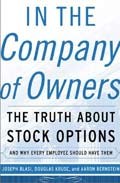
Joseph Blasi, Douglas Kruse, and Aaron Bernstein show how American companies would perform much better if they followed the lead of many high-tech firms and granted options to their entire workforce, rather than to just a tiny corporate elite. Using SEC data in a way never done before, they document the vast wealth executives have accumulated for themselves and show how the abuse of options has taken place not just at scandal-ridden companies such as Enron and WorldCom but across the entire reach of corporate America.
In the company of Owners argues that there's a better way. Broad employee ownership through stock options offers a new model for U.S. corporations and American capitalism. The authors explain how employees and shareholders alike would benefit if most large companies adopted what they call the partnership capitalism approach - using options to encourage employees to think and act like owners.
The string of business scandals that recently engulfed America painted a picture of corporate chieftains lining their pockets by cutting corners, cooking the books, and duping gullible investors. In doing so, greedy CEOs have hijacked what could be one of the most important business innovations in decades: stock options for all employees. Joseph Blasi, Douglas Kruse, and Aaron Bernstein-all leading experts on employee ownership-show how American companies would perform much better if they followed the lead of many high-tech firms and granted options to their entire workforce, rather than to just a tiny corporate elite. Using SEC data in a way never done before, they document the vast wealth executives have accumulated for themselves. It shows how the abuse of options has taken place not just at scandal-ridden companies such as Enron and WorldCom, but across the entire reach of corporate America. In the Company of Owners argues that there's a better way. Broad-employee ownership through stock options offers a new model for US corporations and American capitalism.
The authors explain how employees and shareholders alike would benefit if most large companies adopted what they call the partnership capitalism approach-using options to encourage employees to think and act like owners. A searing critique of business as usual in America's executive suites, this book offers a comprehensive vision for how stock options can enrich companies, employees, investors, and the US economy as a whole. With its remarkable new evidence and astute synthesis, In the Company of Owners will change the way America thinks about stock options. Joseph R. Blasi, a sociologist, and Douglas L. Kruse, an economist, are professors at Rutgers University's School of Management and Labor Relations. Aaron Bernstein is a senior writer at Business Week magazine.
From Publishers Weekly
Stock options have been much maligned recently, mainly because of fatcat executives who've cashed them in for millions, before the share price tanks and average shareholders suffer. But stock options can be a very good thing if handled correctly, say Rutgers University professors Blasi and Kruse and BusinessWeek editor Bernstein. They make the argument for why options-offered to all employees, not just upper-level execs-are a serious boon, "bringing about a more productive company and, ultimately, rewarding employees and outside shareholders alike." The book does seem a bit quaint at times, such as when it talks about how Silicon Valley types have got it right when it comes to options. (Many of those high-tech firms, of course, are either defunct or fighting for their lives.) The pace is somewhat plodding, as the authors recount company strategies and cite various studies, but the introduction and conclusion focus on sexier, newsier issues such as the "option-induced avarice" that led CEOs to jimmy company numbers in order to boost stock price. The authors' plea is a valid one: that "partnership capitalism" not die as a concept for the many, just because of the greedy abuses of a few.
From Library Journal
Stock options have gotten a bad name in the recent business scandals, but Rutgers professors Blasi and Douglas Kruse and Business Week editor Aaron Bernstein argue that the abuses of a few should not blind us to a very useful remuneration tool. Rather, they espouse the belief that stock options should be offered to all employees in all stock companies, calling their proposal "partnership capitalism" or "stock option capitalism." They make a strong case that offering stock options to everyone can motivate employees, foster a more efficient organization, and flatten hierarchy while remaining forthright about potential problems and abuses. The authors have published extensively in academic presses on this topic and, with this clearly written volume, are trying to spread the word to the general public. They use little jargon and put their extensive footnotes, appendixes, and other scholarly buttressing in the back of the book. Libraries that have some of Blasi and Kruse's early works can pass; otherwise, this is strongly recommended for academic and public library investment collections.
Patrick J. Brunet, Western Wisconsin Technical Coll. Lib., LaCrosse
Book Dimension
Height (mm) 235 Width (mm) 156
作者简介
目录信息
读后感
用户评价
《人人拥有公司股权IN THE COMPANY OF OWNERS》这本书,在我看来,是一部深刻洞察了时代脉搏的作品。它不仅仅停留在对经济理论的探讨,而是更加关注人的因素,关注如何在现代企业治理中实现个体价值的最大化与企业整体利益的有机统一。我一直认为,真正优秀的企业,不仅仅是靠技术和资本驱动,更重要的是依靠那些充满激情和创造力的员工。而这本书,恰恰为如何将这些宝贵的“人力资本”转化为更具实质性的“所有权”,提供了一套极具前瞻性的解决方案。它提出的“人人拥有公司股权”的理念,不仅仅是一种激励机制,更是一种组织文化的重塑,一种思维模式的转变。我被书中对“共享”与“共创”的深入解读所折服,它让我看到了一个更加扁平化、更加民主化的企业运作模式。这本书让我开始思考,如何打破传统的所有权壁垒,构建一个真正能够让所有参与者共享企业发展红利的和谐生态。
评分读完《人人拥有公司股权IN THE COMPANY OF OWNERS》,我最大的感受是震撼,同时也是一种前所未有的启迪。这本书完全颠覆了我对传统企业运作模式的认知。我一直以为,公司股权的分配是一件极其复杂且只关乎资本的游戏,但这本书却以一种更加宏大且人文的视角,将股权的概念重新定义。它不仅仅是财富的分配,更是一种权利的赋予,一种责任的担当,以及一种共同命运的体现。作者深入浅出地剖析了为何在当下这个时代,传统的一元化所有权模式可能面临瓶颈,以及如何通过更广泛的股权共享来激发企业内部的创新活力和员工的忠诚度。我特别欣赏书中对“利益共同体”和“风险共担”的论述,这让我想起了我们生活中一些成功的合作模式,它们之所以能够长久稳固,正是因为参与者之间有着深刻的认同感和共同的目标。这本书不仅提供理论框架,更似乎在指引一种实践方向,让人思考如何在实际的企业运营中,建立起真正能够让“人人拥有公司股权”的生态系统。
评分对于《人人拥有公司股权IN THE COMPANY OF OWNERS》这本书,我只能说,它是一部充满智慧的启示录。我一直对如何构建一个更加公平且可持续的企业模式感到好奇,这本书简直就像为我量身定做的答案。它并没有回避当下企业中普遍存在的利益分配不均以及员工参与度不足的问题,而是直接切入核心,探讨了“股权”这一核心要素的多元化可能性。作者的论证过程非常有说服力,通过大量的案例和深入的分析,展现了股权共享如何能够成为激发企业内在动力、提升整体效率的强大引擎。我尤其被书中关于“主人翁精神”的阐述所吸引,它不仅仅是简单的物质激励,更是一种精神上的认同和价值的实现。这本书让我看到,当员工真正拥有了公司的部分股权,他们的视角会发生根本性的转变,他们会从一个旁观者变成一个参与者,一个与企业共同成长、共同承担的伙伴。这本书让我对未来的商业世界充满了乐观的期待,看到了一个更加普惠、更具凝聚力的企业形态。
评分这本《人人拥有公司股权IN THE COMPANY OF OWNERS》实在是一本引人深思的书。我常常在想,在我们这个时代,财富分配和公司治理的议题是多么重要。这本书就像一股清流,触及了许多我一直在思考的核心问题。它探讨了 ownership 的概念,而不仅仅是资本所有权,更延伸到一种参与感、一种主人翁意识。我尤其对书中提及的“共同体”和“共享价值”的理念感到惊艳。它描绘了一种理想的公司形态,在那里,每一个贡献者,无论职位高低,都能在公司的成长中找到归属感和价值实现。作者提出的模型,不仅仅是理论上的探讨,还似乎蕴含着一种切实可行的路径,能够将这种理想落地。我一直在思考,如何在现有的商业模式中融入这种股权共享的理念,让员工不仅仅是劳动力,更是公司发展的驱动者和受益者。这本书给我提供了很多新的视角和灵感,让我开始重新审视“所有权”的边界以及它对企业文化和员工积极性的深远影响。它让我看到了一个更加公平、更具活力的商业未来,一个真正属于“我们”的公司。
评分我必须承认,《人人拥有公司股权IN THE COMPANY OF OWNERS》这本书,彻底改变了我对公司所有权和员工价值的看法。在阅读之前,我总是习惯性地将“股权”与“高管”和“投资者”划等号,认为这是少数人的特权。但这本书,以一种令人耳目一新的方式,将“股权”的概念推向了更广阔的范围。它不单单讨论了资本的分配,更深入地探讨了参与、贡献和责任如何能够成为获取股权的有效依据。作者的分析逻辑严谨,论证过程极具启发性,它描绘了一个更加公平、更加人性化的企业发展蓝图。我尤其欣赏书中关于“共同决策”和“风险共担”的论述,这让我看到了一个真正能够激发集体智慧和潜能的组织形态。这本书不仅仅是理论层面的探讨,更是一种对未来商业模式的预言,它预示着一个更加包容、更加互助的企业环境。它让我开始思考,在未来的职场中,我们如何能够从一个“打工人”转变为一个真正意义上的“企业主人”。
评分 评分 评分 评分 评分