
具体描述
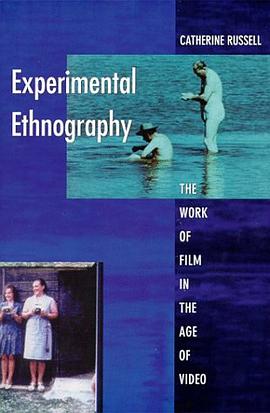
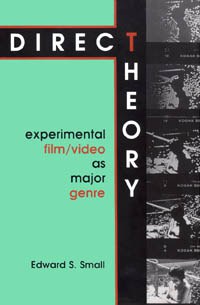
"""Art is thinking in images."--Victor ShklovskyUndulating water patterns; designs etched directly into exposed film; computer- generated, pulsating, multihued light tapestries--the visual images that often constitute experimental film and video provide the basis for Edward S. Small's argument for a new theory defining this often overlooked and misunderstood genre. In a radical revision of film theory incorporating a semiotic system, Small contends that experimental film/video constitutes a mode of theory that bypasses written or spoken words to directly connect Ferdinand de Saussure's "signifier" and "signified," the image and the viewer. This new theory leads Small to develop a case for the establishment of experimental film/video as a major genre.Small contends that the aesthetic of experimental film/video would best be understood as a coordinate major genre separate from genres such as fictive narrative and documentary. He employs eight experimental technical/structural characteristics to demonstrate this thesis: the autonomy of the artist or a-collaborative construction; economic independence; brevity; an affinity for animation and special effects that embraces video technology and computer graphics; use of the phenomenology of mental imagery, including dreams, reveries, and hallucinations; an avoidance of verbal language as either dialogue or narration; an exploration of nonnarrative structure; and a pronounced reflexivity--drawing the audience's attention to the art of the film through images rather than through the mediation of words.Along with a theoretical approach, Small provides an overview of the historical development of experimental film as a genre. He covers seven decades beginning in France and Germany in the 1920s with European avant-garde and underground films and ends with a discussion of experimental videos of the 1990s. He highlights certain films and provides a sampling of frames from them to demonstrate the heightened reflexivity when images rather than words are the transmitters: for example, Ralph Steiner's 1929 "H2""O, "a twelve-minute, wordless, realistic study of water patterns, and Bruce Conner's 1958 "A Movie, "which unites his themes of war-weapons-death and sexuality not by narrative digesis but by intellectual montage juxtapositions. Small also examines experimental video productions such as Stephen Beck's 1977 "Video Weavings, "which has a simple musical score and abstract images recalling American Indian rugs and tapestries.Small adds classic and contemporary film theory discussions to this historical survey to further develop his direct-theory argument and his presentation of experimental film/video as a separate major genre. He stresses that the function of experimental film/video is "neither to entertain nor persuade but rather to examine the quite omnipresent yet little understood pictos semiotic symbols] that mark and measure our postmodern milieu."
作者简介
目录信息
读后感
用户评价
这部作品在结构上呈现出一种令人惊叹的弹性,它仿佛在不断的自我重塑中前进。初读时,我以为这是一部聚焦于某个特定领域,有着清晰章法和逻辑递进的专著,但随着深入,我发现它更像是一张由无数条细线交织而成的挂毯,每一条线索都可能在不经意间与其他线索发生意想不到的交汇。作者对于节奏的掌控达到了炉火纯青的地步,时而急促如暴雨,信息量瞬间爆炸,将你推向思考的边缘;时而又转为舒缓的咏叹调,留出大片的空白,让情绪和想法得以沉淀。这种动态的平衡,使得阅读过程充满了发现的惊喜。它没有固定的入口,读者可以从任何一个被吸引的段落切入,并沿着那里的纹理向下挖掘。我尤其欣赏它那种对单一视角的刻意规避,每一个论点似乎都在不断地被其对立面所审视和打磨,最终呈现出的光芒是多维且复杂的,绝非二元对立所能概括。
评分这本书最吸引我的地方,在于它所蕴含的那股强劲的“反思性冲动”。它不满足于描述世界是什么样子的,而是不断地追问“为什么会是这样”以及“有没有别的可能性”。这种冲动贯穿始终,使得即便是最平静的叙述,其底层也涌动着一股不安分的能量。作者的语言风格带着一种疏离的、近乎冷峻的客观性,但正是这种冷静,才使得他笔下所揭示的人性幽微之处显得格外尖锐和真实。它不给你任何情感上的安慰剂,而是直接展示事物运作的机制,哪怕这个机制并不那么令人愉快。我发现自己经常停下来,不是因为没看懂,而是因为被某种观点猛烈地击中,需要时间去整理自己的立场。这本书像一面高精度的镜子,映照出的不仅仅是外部世界,更是阅读者内心深处那些长期被压抑或未被正视的认知盲区。读完它,你会感觉自己的思维框架被轻轻地摇晃了一下,那种“被挑战”的感觉非常酣畅淋漓。
评分这本书的文字铺陈有一种让人沉浸其中的魔力,它并非那种直接抛出结论的教科书式论述,而更像是一场精心设计的思维漫游。作者的笔触细腻,擅长捕捉那些日常生活中容易被我们忽略的微妙之处,然后将这些碎片化的观察串联成一个宏大而又极具个人色彩的叙事结构。我尤其欣赏它在处理复杂议题时展现出的那种不动声色的克制,它不急于下判断,而是引导读者自己去构建认知图景。比如,书中对某个社会现象的剖析,与其说是“解释”,不如说是一种“情境再现”,让你仿佛置身其中,亲身体验那种矛盾与张力。读完之后,脑海中留下的是一系列挥之不去的画面和疑问,而不是一套现成的答案。这种阅读体验是极其丰盈的,它要求读者付出注意力,但回报也同样丰厚,让你的思考触角延伸到意想不到的领域。这种风格,对于习惯了快餐式阅读的人来说,可能需要一点耐心去适应,但一旦进入状态,那种智识上的愉悦感是无与伦比的。
评分坦白说,这本书的阅读门槛并不低,它需要的不仅仅是文字的解码能力,更是一种对“未明言之物”的敏感度。作者似乎对“确定性”抱有一种天然的警惕,因此他所构建的世界观充满了迷雾和边界的模糊。这种模糊感并非是写作上的疏忽,而是一种高明的策略,它迫使我们去面对知识的局限性。书中引用的材料包罗万象,从晦涩的哲学典籍到街头巷尾的俚语,跨度之大令人咋舌,但所有的引用都服务于构建一种独特的“语境”,而非单纯的知识堆砌。如果你期待的是那种事无巨细的背景介绍,你可能会感到挫败。这本书更像是递给你一把钥匙,但通往哪扇门,如何开启,钥匙的正确朝向,全凭你的现场判断。每一次重读,我都会从同一个段落中发现新的侧重点,这说明它的密度极高,需要时间去消化和内化,它要求你成为一个主动的参与者,而非被动的接收者。
评分这部作品的行文节奏有一种古典音乐的韵律感,它不像现代小说那样追求紧凑的剧情驱动,而是更像是一首结构复杂的赋格曲,不同的主题在不同的声部中交织、模仿、分离,最终汇聚成一个宏大的和声。作者对于词语的选择极为考究,每一个名词和动词都仿佛经过了千锤百炼,承载了远超其字面意义的重量。你很难用简单的“有趣”或“深刻”来概括它的价值,因为它提供的更像是一种全新的“观察视角”,一种看待世界的独特透镜。它不提供任何廉价的共鸣,它提供的,是一种在智识上保持距离和警醒的能力。我感觉自己像是被邀请进入了一个极其私密但又充满公共意义的思考空间,那里没有喧嚣的干扰,只有纯粹的、高度凝练的思辨在流动。这本书的阅读,与其说是消耗时间,不如说是一种对时间的有效投资,它让那些看似虚无缥缈的思考,获得了坚实的落脚点。
评分 评分 评分 评分 评分