
具体描述
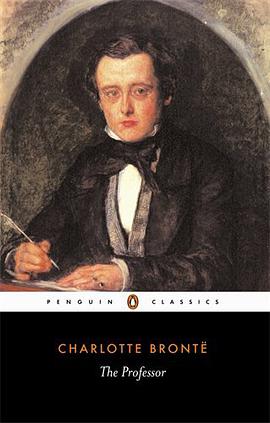
The Professor was the first novel that Charlotte Brontë completed. Rejected by the publisher who took on the work of her sisters in 1846--Anne's Agnes Grey and Emily's Wuthering Heights--it remained unpublished until 1857, two years after Charlotte Brontë's death. Like Villette (1853), The Professor is based on her experiences as a language student in Brussels in 1842. Told from the point of view of William Crimsworth, the only male narrator that she used, the work formulated a new aesthetic that questioned many of the presuppositions of Victorian society. Brontë's hero escapes from a humiliating clerkship in a Yorkshire mill to find work as a teacher in Belgium, where he falls in love with an impoverished student-teacher, who is perhaps the author's most realistic feminist heroine. The Professor endures today as both a harbinger of Brontë's later novels and a compelling read in its own right.
"The middle and latter portion of The Professor is as good as I can write," proclaimed Brontë. "It contains more pith, more substance, more reality, in my judgment, than much of Jane Eyre."
作者简介
Charlotte Brontë was born at Thornton, Yorkshire, on April 21, 1816. Her father, Patrick Brontë, became curate for life of the moorland parish of Haworth, Yorkshire, in 1820, and her mother, Maria Brontë, died the following year, leaving behind five daughters and a son who were cared for in the parsonage by their aunt, Elizabeth Branwell. The eldest daughters, Maria and Elizabeth, died in 1825 from tuberculosis contracted at the religious boarding school to which they (along with Charlotte and her younger sister Emily) had been sent. (All the Brontë children ultimately suffered from lung disease.)
Raised at home thereafter, Charlotte, Emily, their youngest sister, Anne, and brother, Branwell, lived in a fantasy world of their own making, drawing on their voracious reading of Byron, Scott, Shakespeare, The Arabian Nights, and gothic fiction, and writing elaborate poetic and dramatic cycles involving the histories of imaginary countries. Charlotte's early writings revolved around the kingdom of Angria, about which she wrote melodramatic tales of passion and revenge. She spent a year studying at Miss Wooler's school in Roe Head (later relocated to Dewsbury Moor), and went back there to teach from 1835 to 1838; subsequently she worked as a governess.
With Emily, Charlotte traveled in 1842 to study languages at a boarding school in Brussels; her close emotional attachment to her instructor, M. Heger, a married man, would later figure in her fiction. Charlotte and Emily went home after a year because of their aunt's death; Charlotte subsequently returned to Brussels for a year of teaching, 1843 to 1844. A joint collection of poems by Charlotte, Emily, and Anne--published pseudonymously as Poems by Currer, Ellis and Acton Bell--appeared in 1846. The three sisters had in the meantime each written a novel, of which Emily's Wuthering Heights and Anne's Agnes Grey were accepted in 1847 for publication the following year. Charlotte's first novel, The Professor, based on her experiences in Brussels, was rejected by a series of publishers (it finally appeared posthumously in 1857).
Jane Eyre was published under Charlotte's pseudonym, Currer Bell, in 1847 and achieved commercial and critical success; it had gone through four editions by the time of Charlotte's death. Jane Eyre won high praises; William Makepeace Thackeray (who later became a friend) declared himself "exceedingly moved and pleased," and George Henry Lewes applauded its "deep significant reality"; it was also criticized by some for the rebelliousness of its heroine and for what the Quarterly Review called "coarseness of language and laxity of tone."
During this period the Brontës underwent repeated tragedies. Branwell, despite his early promise, had been ravaged by the effects of drink and drugs, and when he found work as a tutor in the same household where Anne was a governess, his involvement with his employer's wife led to his dismissal; he died in September of 1848, followed three months later by Emily and the following year by Anne. Charlotte, the sole survivor, published two more novels, Shirley (1849), a novel of Yorkshire during the Napoleonic period, and Villette (1853), a further fictional exploration of her Brussels experiences. In 1850 she met the novelist Elizabeth Gaskell, with whom she formed a close friendship; Gaskell later wrote the classic biography of her friend, The Life of Charlotte Brontë (1857). Charlotte married her father's curate, Arthur Bell Nicholls, in 1854, and died on March 31, 1855.
Slurry retrived from asiaing.com
目录信息
读后感
用户评价
如果要用一个词来形容这本书,那就是“沉浸”。它不是那种读完就忘的爆米花小说,它更像是一场深入人心的思想漫游。作者的文笔具有极强的画面感,特别是对光影的运用,常常将人物置于一种强烈的明暗对比之中,象征着他们内心的光明与阴影的拉锯战。我特别欣赏作者在处理人物动机时的克制与精准,他没有通过大量的内心独白来解释一切,而是通过对话的潜台词、不经意的动作和场景设置,让读者自己去推敲、去构建人物的心理地图。这种“留白”的处理方式,极大地提升了读者的参与感和智力投入。最令人印象深刻的是,故事的结尾处理得极其高明,它没有给出一个一锤定音的结论,而是留下了一个充满回响的开放性结局,仿佛故事的生命力在书本合上的瞬间,仍在继续流淌。这本书成功地将古典叙事的严谨和现代文学的思辨性完美地结合在了一起,绝对值得细细品味。
评分这本书的结构设计简直是天才之作,它采用了一种非线性的叙事手法,不断地在过去和现在之间跳跃,就像在修复一幅被打碎的复杂马赛克。起初,这种跳跃会让人感到些许迷惘,但一旦你接受了这种叙事节奏,就会发现这种布局是如何精妙地服务于主题的。每一次时间线的交错,都揭示了前一刻还被视为理所当然的“真相”的一个新的、令人不安的侧面。这种不断推翻既有认知的体验,带来了一种持续的智力上的刺激。此外,作者对于场景的氛围营造能力一流,无论是描绘暴风雨之夜灯塔下的孤寂,还是繁华都市中人潮汹涌下的疏离感,都通过精确的词汇选择,让读者仿佛能亲身感受到那种湿冷的空气和心理上的压抑。我特别喜欢其中关于“失语症”的描写,那种无法言说、只能通过肢体和眼神交流的痛苦,被刻画得入木三分,展现了作者深厚的人文关怀。
评分我通常不喜欢篇幅过长的作品,但这一本,我希望它永远不要结束。它给我的感觉更像是一部精心制作的艺术品,而不是单纯的娱乐读物。它的优点不在于提供了多少惊天动地的反转,而在于它构建了一个极其真实、可信且充满道德灰色地带的世界。书中的角色们,他们所做的每一个选择,都似乎是在一个道德的悬崖边上行走,没有绝对的好人或坏蛋。作者非常擅长使用象征和隐喻,比如反复出现的“断裂的罗盘”意象,它贯穿始终,暗示着角色们在人生的航向上迷失方向,这种深层的象征意义,让我在阅读后久久不能释怀,甚至开始在自己的生活中寻找类似的“罗盘”。语言的密度很高,每一句话似乎都承载着双重甚至三重含义,初读可能错过一些精妙之处,但随着阅读的深入,会不断有“啊哈!”的顿悟时刻,这才是真正的高级阅读体验。
评分这本小说简直是引人入胜的杰作,作者的笔触细腻得令人难以置信,仿佛每一页都散发着墨香和尘封的秘密。故事的开篇就将我牢牢地拽进了那个充满迷雾和未解之谜的维多利亚时代伦敦。主角的内心挣扎和对真理的执着追求,那种近乎偏执的探索精神,让我感同身受。我尤其欣赏作者对于细节的把控,无论是街角咖啡馆里弥漫的烘焙香气,还是阴暗图书馆里古籍泛黄的书页质感,都描绘得栩栩如生。书中人物的塑造更是高明,他们绝非扁平的符号,而是有着复杂的动机和人性的弱点,即便是最不起眼的小角色,也仿佛有着自己完整的一生和不为人知的故事。这种层次感,使得整个叙事如同一个精密的瑞士钟表,每一个齿轮都咬合得恰到好处,推动着情节向着一个意想不到的高潮疾速奔去。我读到凌晨三点,完全停不下来,那种被故事完全吞噬的感觉,实在是太久违了。它不仅仅是一个故事,更像是一次深刻的文化和心理体验,让人在合上书本后,仍需时间来消化其中蕴含的哲思。
评分老实说,我一开始是冲着封面和书名来的,带着一种对老派悬疑小说的期待。然而,这本书远超出了我的预期,它更像是一场对时间、记忆和身份认同的哲学辩论,只是披着一层精巧的侦探外衣。叙事节奏处理得非常巧妙,时而紧凑得让人喘不过气,充满了追逐和对峙的张力;时而又慢下来,沉浸在对某个抽象概念的深入探讨中,这种张弛有度让阅读过程充满了乐趣,完全没有一般推理小说那种公式化的套路感。最让我拍案叫绝的是,作者对“旁观者效应”的解读,将不同视角下同一事件的不同面貌展现得淋漓尽致,让你不得不反思自己所相信的“事实”究竟有多么可靠。我甚至开始在现实生活中审视我自己的记忆和判断力。文字的运用上,作者偏爱使用一些古典而富有韵律的句式,读起来有一种古典音乐般的庄重感,虽然偶尔需要放慢速度细细品味,但这恰恰是它魅力所在——它要求读者投入心神,而非走马观花。
评分 评分 评分 评分 评分