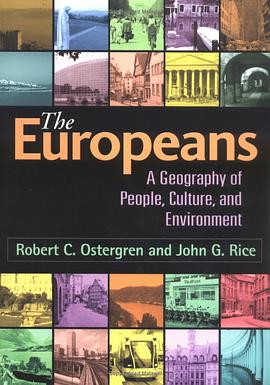

具体描述
"Written by two highly knowledgeable experts in the geography of Europe, this book provides a welcome and comprehensive view of the continent and its peoples. Structured around themes, rather than by country, it introduces readers to key geographical issues past and present. It has the dual virtue of combining a discussion of physical resources with an analysis of human activities, and of explaining concepts as well as providing information. Written in a clear and direct style, the text is complemented by an inclusive array of maps and photographs. Rice and Ostergren provide vivid portraits of specific places and issues, covering such topics as environmental problems in this densely occupied continent, social and economic matters, changes in eastern and central Europe following the collapse of the Berlin Wall, and the anticipated further expansion of the European Union in the years to come. Essential references are supplied to help readers deepen their understanding of specific issues. As an introductory text for undergraduates in geography, European studies and related programs, this is an excellent, up-to-date synthesis."--Hugh Clout, Department of Geography, University College London, UK
"An outstanding, timely text. This book synthesizes a wealth of knowledge to help the reader gain an accurate understanding of not only who the Europeans are, but also where Europe is heading in the 21st century. Organization is both historical and spatial, and the text is well illustrated with photos, maps, and tables. The book is a 'must read' for students of European geography and for others who are interested in the region."--Robert G. Wingate, Department of Geography/Earth Science, University of Wisconsin-La Crosse
"This book captures the historical significance of Europe, from early agricultural settlements to postmodern urbanization. The authors examine the complexities of the European landscape in a way that acknowledges regional differences in the context of current unification. Rich textual descriptions are complemented by remarkable illustrations and informative tables and maps. A welcome contribution for those of us who teach European geography."--Ann Oberhauser, Department of Geology and Geography, West Virginia University
"Students will find this well-written book accessible and readable. The emphasis is on major themes: the physical environment, population, cultures, politics, urbanization, economy, and the future of Europe. The text is well grounded in geographical principles and concepts are explained with the use of clear, nontechnical language. The distinguished authors are to be congratulated on having written a book that will handily introduce students to the European culture realm."--Brian Blouet, Department of Government, College of William and Mary
"This compact and handy, although quite comprehensive, volume is an excellent general text for undergraduate students of geography and all others interested in a thorough introduction to this most important region. It is very well written, tightly edited and nicely structured so that it holds the reader's attention throughout its 12 chapters....This book's structure is refreshing and engaging....Richly illustrated with over 200 photographs and 45 maps, virtually every important point made in the text is supplemented by a map, table or photograph. The maps are especially clear, well chosen, and useful....a very useful and informative book."--Regional Studies
"...cover[s] every imaginable component of European culture, economics, and politics as well as the historical background needed to effectively understand the contemporary continent. The authors have also incorporated the maps, charts, diagrams, and photographs needed to make the book useful to the undergraduate audience at which the text is aimed. Perhaps most important of all, the book does not shortchange smaller countries such as Iceland, Monaco, or Vatican City, which are all too often considered peripheral to European events. Finally, the authors conclude with a valuable "Epilogue" in which they anticipate future developments on the continent....This valuable contribution to understanding the evolution of contemporary institutions is sure to become a standard textbook in the field and will undoubtedly be widely used in university classes on European geography....Highly recommended. All undergraduate collections."--Choice
"An extremely well-written and current account of the modern European scene coauthored by two academics with impeccable European credentials."--The Professional Geographer
"The book is in general to be praised for being clearly and unpretentiously written, without any "dumbing down"....I gain the impression that both of the authors have plenty of experience in teaching courses on European geography. This book possesses confidence and poise. I recommend it for use when teaching the human geography of Europe."--Geographical Review
作者简介
目录信息
读后感
用户评价
这本关于欧洲的书,光是书名就透着一股子宏大的气息,那种横跨大陆、试图捕捉“人、文化与环境”之间复杂纠葛的野心,让人忍不住想一探究竟。我原以为这会是一本干巴巴的学术著作,充斥着人口统计数据和气候带划分,但翻开后才发现,作者的笔触远比我想象的要生动和细腻。它更像是一部由无数小故事编织而成的织锦,每一条线索都代表着一种特定的地域精神。比如,书中对阿尔卑斯山脉两侧,意大利和瑞士居民生活方式的对比描述,简直入木三分。意大利人对家庭、美食和慢节奏生活的执着,与瑞士人对秩序、精确和自然景观的敬畏之心,并非孤立存在,而是被山脉这条天然的地理屏障,以一种微妙而深刻的方式塑造出来的。作者并没有简单地将地理决定论套用在欧洲这片多样的土地上,而是展示了文化如何反作用于地理,如何用人类的习俗和信仰去“驯服”或“适应”脚下的土地。这种视角让我开始重新审视自己对欧洲大陆的刻板印象,不再仅仅停留在巴黎铁塔或伦敦大本钟的表面,而是开始好奇那些隐藏在山谷深处、海岸线边缘,那些真正定义了“欧洲人”生活形态的细微之处。这本书的魅力就在于,它让你在学习地理知识的同时,也进行了一次深度的文化人类学考察。
评分初读这本书时,我最大的感受是其叙事节奏的巧妙安排。作者似乎深谙如何引导读者穿越漫长的时间和广阔的空间,而不会让人感到迷失或疲倦。它没有采用传统的按国家或按历史时期划分的章节结构,而是围绕着几个核心的地理主题展开,比如“河流的塑造力”、“海洋的召唤”以及“边界的流动性”。这种主题驱动的叙事方式,使得即便是像莱茵河这样看似普通的地理特征,也被赋予了史诗般的意义。它不再仅仅是一条水系,而是欧洲内部贸易、冲突和文化交融的生命线。我特别喜欢它对不同时期欧洲人如何看待“环境”这一概念的探讨。从中世纪那种对自然的恐惧与崇拜并存的心态,到启蒙运动时期对自然规律的理性剖析,再到工业革命后对资源的掠夺性开发,这种历史的纵深感,让读者得以站在一个更高的时间维度上,去理解当代欧洲社会对可持续发展和环境保护的重视并非凭空而来,而是经过了数百年与自然博弈后沉淀下来的集体智慧与教训。读完关于波罗的海沿岸的章节,我感觉自己仿佛也沾染上了那种清冷、务实的北欧气质,那种对有限资源的精打细算,深深植根于冰雪覆盖的漫长冬季之中。
评分坦率地说,这本书的深度和广度,远超出了我最初的预期。我原本只是想找一本作为旅行参考的背景读物,结果却陷入了一场关于欧洲文明起源和演变的深刻对话。它最让我感到震撼的,是它对“边界”的定义——地理上的边界是清晰的,但文化和认同的边界却永远是模糊不清、充满张力的。作者巧妙地利用了那些“过渡地带”来阐释欧洲的本质:无论是巴尔干半岛上宗教与民族交织的复杂网络,还是法德边境地区语言和身份认同的不断拉锯,都证明了欧洲的特性并非来源于铁板一块的单一文化,而是源于这些不断碰撞、融合、冲突的边缘地带。这种对“中间状态”的关注,为我理解当今欧洲的政治动态提供了坚实的地理和文化基础。每一次阅读,都像是推开了一扇通往不同历史切面的窗户,每一次呼吸到的空气似乎都带着不同区域特有的味道——时而是北欧的松针味,时而是南欧的香料味。这本书的复杂性,恰恰是它最大的魅力所在,它拒绝简单化,拥抱欧洲自身的矛盾性。
评分对于那些对欧洲历史和文化有一定了解的读者而言,这本书提供了一个极佳的“再连接”机会。它像一把精密的钥匙,将我过去零散了解的知识点——某个建筑风格的起源、某种饮食习惯的地域性、某场战争爆发的深层原因——通过地理的逻辑链条重新串联起来。比如,书中对黑海贸易路线的分析,让我瞬间明白了东欧与西欧在经济结构上的长期差异,这种差异远比冷战时期的意识形态划分要古老得多,它深植于地理的馈赠与限制之中。阅读过程中,我最大的收获是理解了欧洲的“多样性是如何被地理固化,又是如何通过人类活动被持续地书写和重塑”的过程。作者的行文风格非常注重细节的准确性,但即便是最严谨的数据和案例,也服务于宏大的叙事目的,而不是为了炫耀学识。总而言之,这是一部需要慢读、细品的著作,它不是用来快速获取信息的工具书,而是用来深化理解、拓宽视角的思想伙伴。它成功地将地图上的线条和书页上的文字,转化为了一种可感知的、活生生的地理现实。
评分这本书的文字功底令人惊叹,它在严谨的学术框架下,保持了一种近乎散文的流畅和诗意。我经常需要停下来,反复品味某些段落,因为它们不仅仅是信息的传递,更是一种意境的营造。例如,作者在描述地中海地区时,那种阳光炙烤下岩石的纹理、橄榄树的坚韧生命力,以及与之相伴的,那种略带慵懒却又充满激情的地中海生活哲学,都被描绘得栩栩如生。这种对“氛围感”的精准捕捉,使得阅读体验从单纯的知识吸收,升华为一种沉浸式的感官体验。更重要的是,作者在描述这些地理与文化互动时,没有落入那种“异域风情”的窠臼,而是始终保持着一种冷静的、批判性的观察视角。它揭示了地理环境如何无意中催生了特定的社会结构——比如,内陆多山地区更容易形成地方割据和独特的方言,而广阔的平原则天然地适合建立中央集权的大帝国。这本书的价值,恰恰在于它提供了一种理解欧洲复杂性的新工具箱,不再仅仅依赖政治史或艺术史,而是将脚下的泥土和头顶的气候纳入考量,从而构建了一个更加立体、更有层次的欧洲形象。
评分 评分 评分 评分 评分