
具体描述
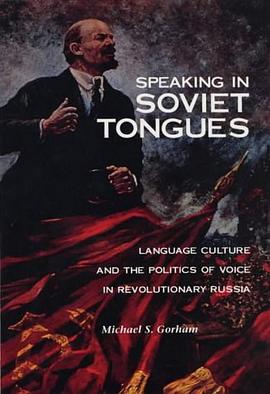
From the classical dialogues of Plato to current political correctness, manipulating language to advance a particular set of values and ideas has been a time-honored practice. During times of radical social and political change, the terms of debate themselves become sharply contested: how people reject, redefine, and reappropriate key words and phrases gives important symbolic shape to their vision of the future. Especially in cataclysmic times, who one is or wants to be is defined by how one writes and speaks.
The language culture of early Soviet Russia marked just such a tenuous state of symbolic affairs. Partly out of necessity, partly in the spirit of change, Bolshevik revolutionaries cast off old verbal models of identity and authority and replaced them with a cacophony of new words, phrases, and communicative contexts intended to define and help legitimatize the new Soviet order. Pitched to an audience composed largely of semiliterate peasants, however, the new Bolshevik message often fell on deaf ears.
Embraced by numerous sympathetic and newly empowered citizens, the voice of Bolshevism also evoked a variety of less desirable reactions, ranging from confusion and willful subversion to total disregard. Indeed, the earliest years of Bolshevik rule produced a communication gap that held little promise for the makings of a proletarian dictatorship. This gap drew the attention of language authorities--most notably Maxim Gorky--and gave rise to a society-wide debate over the appropriate voice of the new Soviet state and its citizenry.
Drawing from history, literature, and sociology, Gorham offers the first comprehensive, interdisciplinary analysis of this critical debate, demonstrating how language ideologies and practices were invented, contested, and redefined. "Speaking in Soviet Tongues" shows how early Soviet language culture gave rise to unparalleled verbal creativity and utopian imagination while sowing the seeds for perhaps the most notorious forms of Orwellian "newspeak" known to the modern era.
作者简介
目录信息
读后感
用户评价
翻开这本书的扉页,一股浓郁的学术气息便扑面而来,但令人欣喜的是,这种气息并没有让人感到枯燥,反而有一种智识上的吸引力。我一直认为,语言是思想的载体,而苏联时期的语言,无疑承载着一个庞大而复杂的社会体系的意识形态和权力结构。作者在书名中使用的“Tongues”(舌头/语言)一词,就已经暗示了一种多层次的解读。我推测,这本书会从多个维度来探讨苏联时期的语言现象,可能包括官方宣传口号的演变,文学作品中对特定语言风格的运用,以及普通人在特定历史时期如何通过语言来表达自己的生存状态和情感。我特别想知道,作者是如何定义和分析这些“苏联的语言”的,它们是如何在特定的政治和社会环境下形成,又如何随着时间的推移而发生变化的。我期待作者能够提供一些具体的语言案例,通过对这些案例的细致分析,让我们窥见那个时代人们的思维模式和价值取向。例如,某些政治术语是如何被创造和推广的?它们在传播过程中又经历了怎样的变形?民间口语又如何在官方话语的夹缝中寻找表达的空间?我对此充满了好奇,因为我认为,理解一个时代的语言,就等于理解了那个时代的灵魂。这本书的价值,或许就在于它能够为我们提供一把钥匙,让我们能够深入地解锁苏联社会的复杂性。
评分这本书的书名“Speaking in Soviet Tongues” immediately piqued my interest. It suggests a focus on the nuances of language within the Soviet context, a topic I find endlessly fascinating. I envision this book delving into how language was not merely a tool for communication, but also a powerful instrument of ideology, shaping public discourse and individual thought during the Soviet era. I am particularly eager to understand the specific linguistic characteristics that defined Soviet speech – perhaps the adoption of certain jargon, the evolution of political slogans, or even the subtle ways in which language was used to foster a sense of collective identity or to suppress dissent. I hope the author provides concrete examples, analyzing specific phrases or texts to illustrate how Soviet language functioned in practice. Was there a distinct “Soviet accent” in written and spoken communication? How did the language adapt to different historical periods within the Soviet Union? My anticipation lies in uncovering the intricate relationship between language, power, and societal transformation as depicted through the lens of Soviet tongues. This book promises to offer a unique perspective, allowing me to “hear” the echoes of a bygone era through its distinctive linguistic patterns.
评分As a keen observer of historical and cultural phenomena, the title "Speaking in Soviet Tongues" immediately resonated with me. It hints at a deep dive into the linguistic landscape of the Soviet Union, a topic that, I believe, holds the key to understanding the era's unique social and political fabric. I am eager to explore how the Soviet regime leveraged language as a tool for propaganda, nation-building, and social control. My expectation is that the book will meticulously dissect the vocabulary, syntax, and rhetorical strategies that characterized Soviet discourse. I’m particularly interested in learning about the evolution of these linguistic norms over time and across different spheres of Soviet life – from political speeches and official documents to literature and everyday conversations. How did the language reflect the prevailing ideologies? Were there specific linguistic innovations or transformations that are uniquely Soviet? I hope the author illuminates these aspects with compelling analysis and perhaps even illustrative anecdotes that bring the “Soviet tongues” to life. This book, I suspect, will offer a crucial framework for interpreting Soviet history not just through events, but through the very words that defined it, allowing for a richer and more nuanced understanding of this complex period.
评分The very title, "Speaking in Soviet Tongues," conjures a rich tapestry of associations for me, evoking a sense of a deeply ingrained, almost unique way of communicating that was characteristic of the Soviet Union. I anticipate that this book will not shy away from the complexities and often ideological underpinnings of Soviet language. My primary curiosity lies in understanding how language was consciously manipulated and utilized to construct a particular social and political reality. I'm keen to discover the author's methodology in identifying and analyzing these “Soviet tongues.” Will it involve a deep textual analysis of official pronouncements, literary works, or even personal accounts? I hope the book sheds light on the specific linguistic mechanisms that were employed to promote certain values, foster a sense of unity, or perhaps even to subtly obscure inconvenient truths. How did the language evolve in response to internal and external pressures? I’m particularly interested in the potential for exploring the nuances that might differentiate the language of the early Soviet period from that of its later years, or even the subtle variations in language use across different social strata or geographical regions. This book promises a journey into the very heart of Soviet communication, allowing me to grasp the intricate ways in which language shaped and was shaped by this pivotal historical era.
评分Upon encountering the title "Speaking in Soviet Tongues," my immediate thought was of the pervasive and distinctive linguistic environment that characterized the Soviet Union. This book, I surmise, will offer a profound exploration into how language functioned not just as a means of communication, but as a critical element in the construction and maintenance of Soviet ideology and social order. I am particularly eager to learn about the specific linguistic innovations and patterns that emerged during this period. What were the key terms, phrases, or rhetorical devices that defined “Soviet speech”? How did these linguistic tools contribute to shaping public perception and fostering a sense of shared identity or political conformity? I anticipate that the author will provide a thorough analysis, possibly examining a range of sources, from political manifestos and official publications to literary works and even everyday conversations. My hope is to gain an understanding of how language was strategically employed to convey specific messages, enforce particular norms, and navigate the complexities of Soviet society. This book, I believe, will offer a unique and insightful lens through which to understand the Soviet experience, allowing me to appreciate the power of language in shaping historical narratives and individual consciousness.
评分The striking title "Speaking in Soviet Tongues" immediately captured my imagination, promising a journey into a less-explored facet of the Soviet experience – its unique linguistic landscape. I envision this book as an intellectual exploration into how language was not merely a passive medium but an active agent in shaping the Soviet identity and its cultural output. My keenest interest lies in understanding the specific characteristics of these “Soviet tongues” and how they were employed to construct and disseminate ideology, foster collective sentiment, and articulate the lived realities of people within the Soviet system. I am particularly curious about the author’s approach to this subject. Will it be a meticulous linguistic analysis of specific texts and historical periods? Or will it be a more thematic exploration of how language evolved to reflect the shifting political and social currents? I eagerly anticipate learning about the subtle nuances, the official jargon, and perhaps even the underground vernacular that characterized Soviet communication. Understanding these linguistic particularities, I believe, is crucial to gaining a deeper and more nuanced appreciation of the Soviet era, its triumphs, its failures, and the complex human experiences that unfolded within it. This book, I feel, will offer a vital framework for deciphering the echoes of that past.
评分这本书的封面设计就足够吸引我,一种复古又充满力量的视觉冲击力扑面而来。拿到书后,我立刻被它沉甸甸的质感和略带磨砂感的纸张所吸引,这似乎在预示着这本书将是一次深入而扎实的阅读体验。我一直对苏联时期的历史和文化有着浓厚的兴趣,尤其是那种独特的语言风格和思想表达方式,总觉得其中蕴含着某种不易察觉的魅力。这本书的标题“Speaking in Soviet Tongues”更是精准地捕捉到了我心中的那份好奇。我开始想象,作者将如何剥开历史的层层迷雾,带领我们进入那个曾经叱咤风云的时代,去聆听那些属于那个时代的“语言”。我尤其期待作者能够如何深入浅出地解析苏联时期的官方宣传、文学作品,甚至民间口语,从中发掘出那些隐藏的意义和时代烙印。我希望这本书不仅仅是简单地罗列事实,而是能够通过对语言的剖析,让我们更真切地感受到那个时代人们的思想是如何被塑造,他们的情感是如何被表达,以及这种表达方式又如何反过来影响了历史的进程。我迫不及待地想知道,作者是如何将这些零散的片段串联起来,构建出一个完整而生动的苏联语言图景。我甚至开始思考,在信息爆炸的今天,理解“苏联的语言”是否还能为我们提供某种独特的视角,去审视我们自身所处的时代和我们赖以生存的语言环境。这本书无疑为我打开了一扇通往过去的大门,而门后又将是怎样一番景象,我充满了期待。
评分拿到这本书,我脑海中立刻浮现出那个红色年代的种种影像。这本书的标题“Speaking in Soviet Tongues”本身就充满了象征意义,它似乎暗示着一种独特的交流方式,一种只有身处那个环境的人才能真正理解的“语言”。我一直在思考,为什么苏联时期的语言会形成如此鲜明的风格,它究竟是时代塑造的结果,还是政治宣传有意为之?我期待这本书能够为我解答这些疑问。我猜想,作者很可能从多个角度来探讨“苏联的语言”,或许会分析官方文献中的规范用语,探讨文学作品中的语言创新,甚至会触及民间流传的俚语和谚语。我尤其希望作者能够深入挖掘那些看似寻常的词语和句子,揭示它们在特定历史时期所承载的特殊含义和政治寓意。比如,某个政治术语的出现和流行,是否标志着某种思想的崛起或压制?文学作品中对语言的实验和革新,又如何在时代的洪流中被接受或遗忘?我期待这本书能带给我一种“拨云见日”的感觉,让我能够真正“听懂”那些“苏联的语言”,从而更深入地理解那个时代人们的思维方式和情感世界。
评分我最近一直在寻找能够帮助我深入理解苏联历史的读物,而这本书的出现,无疑像是一股清流。它的标题“Speaking in Soviet Tongues”给我一种非常独特的联想,似乎它不是一本传统的历史叙述,而是要从一个更具象、更生动的角度来切入。我猜想,这本书会着重于探讨苏联时期语言的特殊性,包括那些我们今天可能已经不太熟悉的词汇、表达方式,甚至是一些被刻意构建出来的宣传语。我好奇的是,作者是如何将这些语言元素进行梳理和分类的?是按照时间顺序,还是按照不同的社会领域?我期待作者能够不仅仅停留在语言的表面,而是能够深入挖掘这些语言背后所蕴含的社会、政治和文化信息。比如,某些词语的使用频率和场合,是否能够反映出当时社会的权力分配和意识形态导向?文学作品中对语言的运用,又如何体现了那个时代的精神风貌和情感表达?我希望这本书能够提供一些生动有趣的例子,让我能够身临其境地感受到那个时代的语言魅力,甚至能够从中体味到那个时代人们的生活细节和内心世界。总而言之,我对这本书充满期待,希望它能为我打开一扇新的窗户,让我以一种全新的方式来认识和理解那个曾经辉煌而又复杂的时代。
评分一直以来,我对苏联时期那种独特的语言风格都感到好奇,它似乎带着一种与众不同的力量和质感。这本书的标题“Speaking in Soviet Tongues”正中我的下怀,我迫不及待地想知道作者将如何阐释这个概念。我猜测,这本书并非仅仅是关于苏联的政治史或社会史,而是将焦点放在了“语言”这个载体上。我期待作者能够深入剖析苏联时期那些标志性的语言特征,例如那些充满力量的口号、官方宣传中的特定词汇,以及文学作品中对语言的精妙运用。更重要的是,我希望作者能够揭示这些语言是如何被建构、传播,并最终影响人们的思想和行为的。我特别好奇作者将如何解读那些在今天看来可能有些晦涩的苏联式表达,它们背后是否隐藏着更深层次的意义?是否能够反映出那个时代的集体意识、个体情感,甚至是那些被压抑的、未曾言说的东西?我希望这本书能够为我提供一种全新的视角,让我能够通过语言这面镜子,更清晰地看见那个时代的社会肌理和文化脉络。我期待这本书能够带来一种“听见”苏联的声音的体验,而不仅仅是“看见”历史的陈迹。
评分 评分 评分 评分 评分