
具体描述
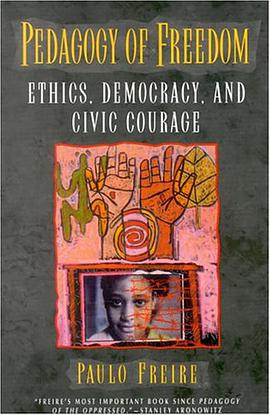
In this work from a new publisher of scholarly books, the late Brazilian educator argues against "progressive" liberalism and its passive acceptance of a world where poverty and hunger coexist with affluence. The book is read by Julius Wong Loi Sing, a theology professor at Moody Bible Institute.
Review
Pedagogy of Freedom, Paulo Freire’s last will and testament, is his best book since Pedagogy of the Oppressed. (Aronowitz, Stanley )
Pedagogy of Freedom, Paulo Freire’s last will and testament, is his best book since Pedagogy of the Oppressed. (Aronowitz, Stanley )
Pedagogy of Freedom is a stirring culmination of Paulo Freire’s life work. It is in no way a conclusion or a summation: it is a text that urges its readers to become, to reach towards still untapped possibility. The themes of Freire’s earlier writing are extended here into thoughtful explorations of ethics and democracy and the ways in which they may release a sense of agency in the long exploited and cruelly silenced. Moreover, he has new things to say about ideology and freedom in a world marked by a threatening 'globalization' and an unprecedented manipulation by media. As before, he speaks of ‘passion,’ ‘love,’ and ‘caring;’ and, each time he does so, it is as if his hand grasps each one of our shoulders, urging us on and on. (Maxine Greene )
Pedagogy of Freedom is a stirring culmination of Paulo Freire’s life work. It is in no way a conclusion or a summation: it is a text that urges its readers to become, to reach towards still untapped possibility. The themes of Freire’s earlier writing are extended here into thoughtful explorations of ethics and democracy and the ways in which they may release a sense of agency in the long exploited and cruelly silenced. Moreover, he has new things to say about ideology and freedom in a world marked by a threatening 'globalization' and an unprecedented manipulation by media. As before, he speaks of ‘passion,’ ‘love,’ and ‘caring;’ and, each time he does so, it is as if his hand grasps each one of our shoulders, urging us on and on. (Maxine Greene )
Braiding bold vision with precision, Freire, in his brilliance, allows us to imagine a tomorrow of democracy and freedom. Insisting on the 'incompleteness' of us all and on a 'dreamer’s right to dream,' Pedagogy of Freedom reminds us that our work is never done; that change is always possible, always essential, always unfinished. (Fine, Michelle )
Braiding bold vision with precision, Freire, in his brilliance, allows us to imagine a tomorrow of democracy and freedom. Insisting on the 'incompleteness' of us all and on a 'dreamer’s right to dream,' Pedagogy of Freedom reminds us that our work is never done; that change is always possible, always essential, always unfinished. (Fine, Michelle )
With Pedagogy of Freedom, Paulo Freire enriches the dialogical perspectives with a call for universal ethics that establishes a better foundation for education in the next century. (Flecha, Ramón )
With Pedagogy of Freedom, Paulo Freire enriches the dialogical perspectives with a call for universal ethics that establishes a better foundation for education in the next century. (Flecha, Ramón )
At the threshold of the twenty-first century, we face the need to learn a new and more communicative way of constructing educational theory. With Pedagogy of Freedom, Freire contributes a unique guide to such a mission. . . . While social sciences are witnessing the revival of the idea of deliberative democracy (Elster, 1988), as well as the possibility of transforming social positions through dialogue (Giddens, 1994), we now have a book that discusses how to develop such dialogic democracy in education. In Pedagogy of Freedom, Freire defends a universal human ethic that extends not only to schools but also to teachers' training. (Harvard Educational Review )
At the threshold of the twenty-first century, we face the need to learn a new and more communicative way of constructing educational theory. With Pedagogy of Freedom, Freire contributes a unique guide to such a mission. . . . While social sciences are witnessing the revival of the idea of deliberative democracy (Elster, 1988), as well as the possibility of transforming social positions through dialogue (Giddens, 1994), we now have a book that discusses how to develop such dialogic democracy in education. In Pedagogy of Freedom, Freire defends a universal human ethic that extends not only to schools but also to teachers' training. (Harvard Educational Review )
This book is a repository of Freire's wisdom, the wisdom that informs his philosophy of education and his educational approach. . . . I would recommend this one as very important. (Studies In The Education Of Adults )
Pedagogy of Freedom is almost an elegy. In looping around themes that have run through his work, Freire's book is a reminder of his fundamentally optimistic vision of the radical possibilities for education. (College English )
Pedagogy of Freedom is almost an elegy. In looping around themes that have run through his work, Freire's book is a reminder of his fundamentally optimistic vision of the radical possibilities for education. (College English )
Paulo Freire is one of the ideological giants. . . . In this book, Freire remains passionately idealistic and inspirational, without denying the complexity of the work or the difficulty of creating real change. It is one of the rare tomes to which one can return again and again... (What On Earth )
作者简介
目录信息
读后感
用户评价
《自由的教育学》这本书,对我而言,更像是一份关于教育的哲学宣言。作者并没有提供一套可以直接复制的“成功秘籍”,而是提供了一套深刻的思考框架,引导读者去理解教育的真正意义。他关于“解放性教育”的论述,让我对教育的社会功能有了更深层次的认识。教育不仅仅关乎个体的成长,更与社会的进步和变革息息相关。 我特别欣赏书中对“权威”的探讨。作者认为,真正的教育权威不是基于压制和控制,而是建立在尊重、对话和共同探索的基础之上。他提醒我们,教育者需要警惕成为“驯服者”,而是应该成为“解放者”,帮助学生摆脱那些限制他们思想和行动的束缚。这本书让我开始重新思考自己在学习过程中的角色,以及我希望在未来成为一名怎样的教育者。它让我意识到,培养一个有批判性思维、有独立人格的个体,才是教育的终极目标,而“自由”正是实现这一目标的关键所在。
评分读完《自由的教育学》这本书,我的内心久久不能平静。这本书不是那种能让你快速get到结论的快餐读物,而是需要你沉下心来,一点一点地去咀嚼,去体会。作者对于教育的理解,充满了深刻的洞察和人文关怀。他没有给出僵化的教学模式,也没有提供一蹴而就的解决方案,而是引导读者去思考教育的本质,去探索那些被我们日常教学忽略的、却至关重要的东西。 我尤其被书中关于“批判性意识”的阐述所打动。在如今信息爆炸的时代,我们常常被动地接受各种信息,却很少停下来问“为什么”。作者提醒我们,教育不仅仅是知识的灌输,更重要的是培养学生独立思考、质疑精神的能力。这种能力,是自由的前提,也是社会进步的基石。这本书让我反思自己过去作为学生的经历,也让我对未来想要成为的教育者有了更清晰的愿景。我不再满足于简单的知识传递,而是渴望成为那个能够点燃学生求知欲、引导他们探索未知、并最终拥有属于自己思想火花的引路人。它像是一面镜子,照出了我作为学习者的盲点,也指引了我作为未来教育者的方向。
评分《自由的教育学》这本书,是一次充满智慧的阅读体验。它没有提供现成的答案,而是引导读者去寻找属于自己的答案。作者对于“民主教育”的理解,让我深受启发。他认为,教育应该是一个充满对话和协商的过程,鼓励学生参与到学习的规划和评估中来,让他们感受到自己是学习的主体,而不是被动的接受者。 我被书中对“希望”的解读深深吸引。作者将希望视为一种实践性的力量,一种推动个体和社会不断前进的动力。他认为,教育应该致力于培养学生的希望感,让他们相信自己有能力改变现状,创造更美好的未来。这本书的阅读,让我对教育的潜在力量有了全新的认识。它让我明白,真正的教育,是能够点燃希望、激发潜能、并最终引导个体走向自由与解放的。我希望能够将书中的这些宝贵思想融入到未来的学习和工作中,成为一个能够为他人带来希望和自由的教育者。
评分《自由的教育学》这本书,可以说是我近期阅读体验中最具挑战性,也最富有启发性的一本书了。它探讨的不是具体的教学技巧,而是更加宏观、更加哲学层面的教育理念。作者的笔触非常细腻,他深入剖析了教育在个体解放和社会发展中的作用,强调了“赋权”而非“控制”的重要性。读这本书的过程,就像是在和一位智者进行一场深入的对话,他抛出的每一个问题都像一颗种子,在我心中发芽、生长。 书中对于“自由”的定义,让我重新审视了传统教育模式的局限性。我们常常将自由等同于放任自流,但这恰恰是作者想要纠正的误区。真正的自由,是建立在自我认知、批判性思考和责任感之上的。作者通过大量的理论阐述和案例分析,清晰地展现了如何在教育实践中培养这种内在的自由。我发现,很多时候,我们无意识地在束缚学生,而不是在引导他们成长。这本书为我打开了一个全新的视角,让我开始质疑一些根深蒂固的教育观念,并思考如何才能真正地为学生创造一个让他们能够自由呼吸、自由探索的学习环境。
评分读完《自由的教育学》,我感觉自己仿佛经历了一场思想的洗礼。这本书没有华丽的辞藻,也没有故弄玄虚的理论,而是以一种近乎质朴的语言,直击教育的核心。作者对于“自由”的理解,是一种非常深刻的、与个体成长和解放紧密相连的观念。他认为,教育的首要任务是帮助个体认识到自身的潜能,并赋予他们实现这些潜能的力量。 我印象最深刻的是书中关于“反思性实践”的论述。作者强调,教育者需要不断地反思自己的教学行为,审视其背后的动机和可能产生的影响。这种自我审视,是避免教育沦为一种强制性灌输的关键。它要求我们不仅要了解“教什么”,更要思考“如何教”,以及“为什么要这样教”。这本书的阅读过程,促使我不断地将书中的理念与自己的学习和生活经验进行对照,从中汲取了宝贵的智慧。它让我明白,教育不是一个单向输出的过程,而是一个双向互动、共同成长的旅程,而“自由”则是这场旅程中最珍贵的指引。
评分finished CH2
评分finished CH2
评分不帶這樣搞難度跳躍的...我要瘋了...
评分finished CH2
评分迷迷糊糊地大致知道Freire想說什麽,但不愧為一本啟發性的好書